Follow us on Instagram @tractortavern
Willi Carlisle - The Universal Bubba Tour w/ Amelia Day
Thu, 10 Dec, 8:00 PM PST
Doors open
7:00 PM PST
Tractor
5213 Ballard Avenue NW, Seattle, WA 98107
Event Information
Age Limit
21+
Folk
Willi Carlisle
Willi Carlisle
Folk
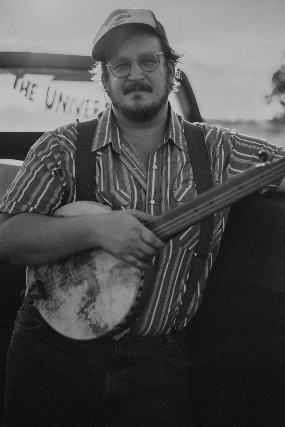
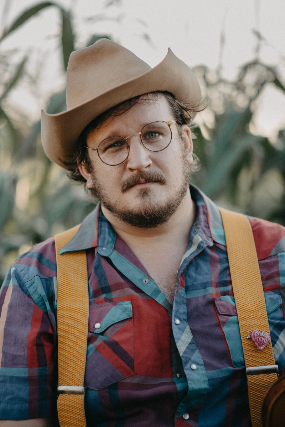
With a heavy-duty catalog of new material for a career first double album, The Universal Bubba marks a half dozen releases for folksinger Willi Carlisle and reaches new heights with the added accelerant of first time producer Tyler Childers. In an all-time DIY effort, Childers and his band convened to a makeshift home studio nestled in the Bywater District of New Orleans for two weeks to cut 17 tracks that expand Carlisle’s sonic scrapbook and capture the off-kilter characters living in his songs.
“I think this one goes to outer space,” says Carlisle. “I think this is the widest range of influences that I’ve ever had. It touches on funk, it touches on Americana, Cajun, oldtime, and experimental music.” With Childers’ band behind him, Carlisle embraced the freedom to wander across genres both familiar and new, testing out instrumentation and toying with the surreality of traditions being turned on their head. “It feels like getting drunk at the Civil War reenactment, or cruising at the cattle auction, or doing molly at the square dance,” says Carlisle. “It’s the first time I’ve ever used synthesizers and double electric guitars. There’s also more fretless 19th century style banjo on it than any record I’ve ever made.”
Exploration aside, Carlisle’s mission as a folksinger largely remains the same - documenting the stories and struggles of the people and balancing the humor and hope of existence. “I want to make a universal folk music. Songs for all kinds of weirdos,” says Carlisle. “With the idea that there is nobody that doesn’t have folk songs and everyone deserves folk songs. I want to write songs that prove the old weird America didn’t go anywhere, that we are living and dying for it everyday. I believe there’s noble work to do in that context. That if we feel despair, we don’t need to because there’s so much good work to do.”
A top candidate for encapsulating the energy of The Universal Bubba, “Gas Station” is a driving recollection of life on the road with a sing-along chorus. Created largely on the fly and beginning with Childers’ jokingly referring to a knife-fight, the end result was Carlisle’s only co-write with his producer on the record. “We sat in a circle with pen, paper, instruments,” says Carlisle, “Tyler suggested, ‘goodle days’ instead of ‘good old days.’ We kept shaping verses, agreeing that my choruses were working. Suddenly I realized, this was a co-write! But the red light was already on. We were co-writing and recording at the same time. Wild as hell.”
Of the anarchist anthem “The Master’s Hammer”, Childers wanted a pure, essential folk song ringing out with harmonica, banjo and three part harmonies. ”I was trying to boil my ideology down into something I can sing for my friends,” says Carlisle.
The title tracks sprawl gloriously in two parts, giving praise to do-it-yourselfers that corral the cosmos into being. Carlisle sings for “booty shaking rock and rollers” and “small town hellraisers” and “unofficial mayors” the world over.
Taking on a project of this size with Tyler Childers as debut producer requires hard work, camaraderie and supreme self confidence. Undeterred by the challenge and grounded in his beliefs, Carlisle has proved that it really does “take a Universal Bubba doin’ it for themselves.”
Music
Amelia Day
Amelia Day
Music
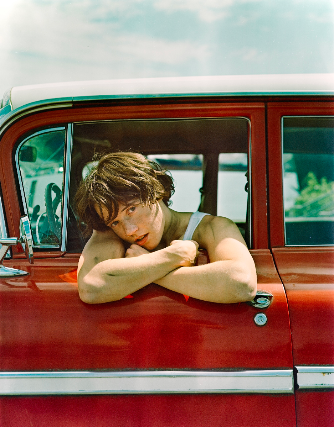
It took a world-shaking breakup for Amelia Day to find her true sound — and herself.
"I knew you then, before all of this…but you left me for your ego trip," she sings to her ex-girlfriend on "Ego Trip," the title track from her newest EP. Stacked high with alt-rock guitars, pop hooks, and swooning keyboards, the song is more than a genre-bending kiss-off to a no-good lover; it's also a reminder that true artists remember where they came from, honoring their roots instead of chasing after trends.
For Amelia, those roots began growing in her childhood home of Sumner, Washington. Raised in the Pacific Northwest, she leaned into the music of her parents' CD collection — from folk icons like Simon & Garfunkel to rock pioneers like Queen and Creedence Clearwater Revival — before falling in love with the empowered, electrifying frontwomen of the 1990s. Songwriters like Alanis Morissette and Sheryl Crow would eventually inspire the gritty, rock-influenced textures on EGO TRIP, but not before a cross-country move took Amelia to Nashville. There, she did more than strengthen her storytelling skills by earning a college degree in English; she discovered a new world of house shows and open mic nights, too. Those performances were formative experiences, showcasing Amelia's ability to blend her chops as a wordsmith with her decades-spanning range of influences.
"I'd grown up listening to different kinds of music, so it felt natural to lean into all of those sounds once I started playing shows," she remembers. Whenever aspiring managers or booking agents came calling, they'd often push her to narrow her approach by choosing a single genre. Amelia refused, building a national audience on her own terms with diverse tracks like the soulful, jazz-influenced “Skippin' Down the Sidewalk" and the indie folksong "Eastward of Eden."
"If you're writing material that feels very true and personal, you'll develop a sound that's signature to you, regardless of genre," she says, speaking with a perspective that belies her 23 years. "And it's affirming to hear that people like that material, because it means they like your music, not just a style."
Before long, Amelia's schedule of open-mic gigs had given way to something bigger: sold-out shows that stretched from Seattle to Boston, as well as high-profile slots at Bumbershoot, Capitol Hill Block Party, Folklife Festival, and Seattle PrideFest. For an artist who'd battled stage fright until her college years, never envisioning herself playing to large crowds, this felt like life-changing progress. Amelia's life changed once again after graduation, when a 2,500-mile road trip with her longtime partner ended in a sudden, heartbreaking split. The separation was jarring, and in its aftermath, she found comfort in her favorite '90s rock records. Amelia began writing new songs inspired by that timeless music, creating a soundtrack for her long journey from heartbreak to healing.
"That breakup changed my perspective on the world," she admits. "It took away some of my naïveté and helped me settle into who I really am as an artist. When I started making new music, it felt more adult, more rock-based, and more tied to the strong, powerful, wise women who've always said what they wanted to, without holding their tongues."
That outspoken freedom springs to life on EGO TRIP. Amelia co-produced the album with Taylor Carroll, handling much of the album's instrumentation — including guitar, piano, keys, and auxiliary percussion — herself. To capture the album's mix of mood, muscle, and melody, she headed back home to Washington State, where she set up camp at Bear Creek Studio. Songs like the countrified "Margie" nod to the studio's woodsy setting, but EGO TRIP is a record that creates its own geography, from the Laurel Canyon-worthy folk-rock of "Lady Los Angeles" to the raw attitude that fuels "GET OUT OF TOWN!" Amelia hasn't abandoned the diversity that's always permeated her catalog, but she's more focused this time around. As a result, EGO TRIP doesn't sound like anyone else; it just sounds like Amelia.
"Usually, I'll use a lot of metaphors in my songs," she says. "But songs like 'EGO TRIP,' 'LOVE ME / LOVE ME NOT,' and 'GET OUT OF TOWN!' are very direct and very angry, which is why they're capitalized. They're grounded in the way I personally feel."
Other tracks dig into her longtime roots as a storyteller. With "Margie," Amelia flips tradition on its head, turning an all-too-common country storyline into something novel. "It's the very simple trope of a man who's head over heels for a wild woman, but approached from a queer perspective," she explains. "Lady Los Angeles" is a personified tale of infidelity and seduction, inspired by those who choose fame and attention over meaningful connections. "False Prophet" even gets Biblical, with religious imagery weaving its way through a song about fame, power, grief, acceptance, and — ultimately — a new path forward.
That path has led to a place of self-actualization and purposeful, proud musical identity. Amelia has never sounded more like herself, and she's never exhibited the full range of her abilities this clearly before. EGO TRIP — whose name references not only the fateful road trip that ended in heartbreak, but also her ex's self-image and her own reflections on fame and celebrity worship — reintroduces its creator as a sharp-eyed songwriter, singer, co-producer, and multi-instrumentalist. She's breathing new life into the classic sounds that first inspired her to pick up an instrument at 5 years old, bringing the gap between past and present. For Amelia Day, the trip continues.