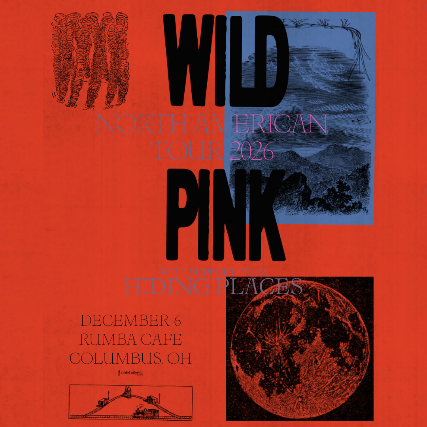
Celebrity Etc presents
Wild Pinkw/ Hiding Places
Sun, 6 Dec, 5:00 PM EST
Doors open
4:30 PM EST
Rumba Cafe
2507 Summit St, Columbus, OH 43202
Event Information
Age Limit
All Ages
Pop
Wild Pink
Wild Pink
Pop
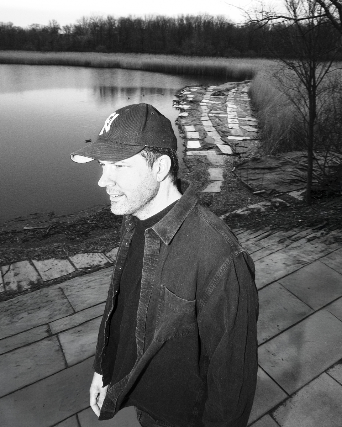
There’s a novelistic impression to the songs of Wild Pink, where characters peer over the edge of potential futures, past mistakes and paths not taken. Backed by a dive bar hue, NYC-based frontman John Ross blends the existential with the celestial, gathering pieces of passer-bys, fictional figures, and historical idiosyncrasies to make sense of what’s in front of him. It’s on their sixth album, Still Coming Down, that Ross cements the voice he’s been steadily honing over the years.
The album pokes fun at the listlessness of consumerism, coping through detachment and finding the punchline of it all. Ross is a consummate of curiosity, becoming a narrator of a warped and unpredictable America, morphing everyday mundanity into a cinematic, sepia-toned flipbook. Propelled by the witty and ravenous wisdom of 2024’s Dulling the Horns, Ross’ poetic form has only gained traction, as jocular, heartfelt stories pour with a clever and distinctive ease. NFL bros cruise alongside big guys in grocery stores with even bigger tattoos; ghost stories and references from the cinematic haze of movies like Heat, Moneyball and The Town buzz in the background while Ross also points to Waterworld and The Perfect Storm––heroes who wander, looking for answers at the end of the world.
After battling––and beating––cancer, and now becoming a father for the first time, Ross’ outlook has hairpin-bent its way into a simpler significance, where creating music is less about the bigger picture, and more about being present in the moment. It’s a genuine rock record, leaning into the dynamics of open-armed arrangements, inviting huge chords, harmonicas, horns, keys and pedal steel to morph and blend into a cathartic swirl. Ross looked back to the grunge bands he was obsessed with as a teen, and found that it sparked a deeper presence with his own voice, both in lyrics and performance. He endeavoured to create an album that is as fun to play live as it is for the audience to witness, harkening back to the enthusiasm and motivation he felt growing up. “Strangely, I feel like I've found my voice on this record,” he says.
Still Coming Down was recorded in one week in Asheville, NC at the renowned Drop of Sun studios with producer and engineer Alex Farrar (Bnny, Wednesday, Samia). Vocal takes were done in two to three bursts, marking a less laborious process than previous records. “There was not a ton of overthinking,” Ross says. He invited friends to collaborate throughout, mimicking the carousel of characters that comes with living a life on the road. Longtime Wild Pink member Dan Keegan lends his percussive talents, with Meg Duffy (Hand Habits), MJ Lenderman and Lenderman’s The Wind bandmates Landon George and Xandy Chelmis adding a raucous vigor to the arrangements.
On opener “Box Store” Ross is that college buddy lamenting the empty desires of folks strolling the strip mall and the irony of AC units blocking the view during one of the year’s best seasons. Hearty keys and groaning steel are teamed with electric plucks, piecing together a bursting introduction. “500 is in the New 250” bounces between scuzzy guitars and softer, reflective moments, portraying the push-and-pull of cacophonous rock clubs and the long, quiet drive to the next hotel, bandmates silently staring into their phones. The sauntering “Still Coming Down” captures Ross’ ability to pinpoint some of the more painful parts of life with an eye on a more hopeful horizon. All’s not lost despite the darkness, as Ross relays “I used to be pure / I just try
to be good now,” over Duffy’s guitar and George’s fiddle. “Round of Applause At The End Of The World” points to the whirlpools of conspiracy theories and the cloud of misinformation that can take over entire communities. “I don’t know what my idea of fun is anymore,” Ross calls, wry and weary, as distorted guitars respond resolute. The song ends abruptly, like a person you can’t convince otherwise.
Still Coming Down is a storied expedition that welcomes in the drifters and the kids kicking up dust; the brokenhearted and the cursed; the ones looking for an answer and the ones who simply couldn’t care less. Ross gives movement to the characters in our heads, the faces we see every few years and the ones who pass us by. It’s proper rock meant to be played loud, with your hand out the car window, riding the air as you bound down some highway in the early hours. Forming soon-to-be-classics that soak in their ability to impact without unnecessary frills, Still Coming Down is about the very nature of songwriting and instinct, learning to trust the process and staying open to the lessons you might learn along the way.
Indie Rock
Hiding Places
Hiding Places
Indie Rock
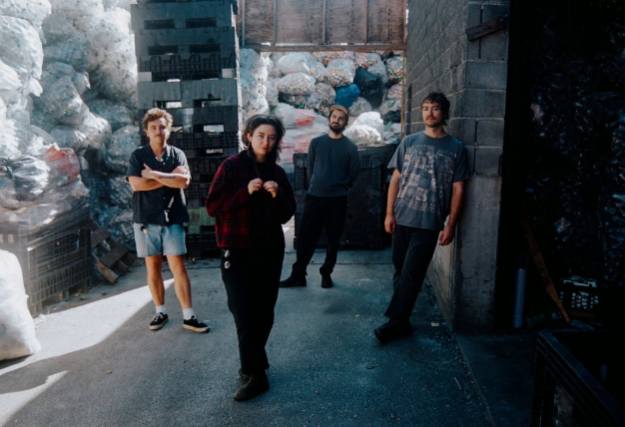
Shortly after forming, the members of the New York-via-North Carolina indie rock band Hiding Places noticed a secret power. During their live sets, no matter the loudness, scuzziness, or mayhem of the venues they played, their tender, atmospheric sound became the focus of the room, quieting their surroundings as audiences became hypnotized by their steady, rhythmic interplay and bittersweet vocal melodies. From these experiences, the band developed a credo of close listening. If one member plays too fast, they won’t try to nudge down the tempo; if someone’s volume rises above the rest, they adapt their levels accordingly. The goal, always, is togetherness—to maintain a unified whole, always in sync. This philosophy is part of what makes the quartet’s cozily intricate and hard-hitting Keeled Scales debut, The Secret to Good Living, feel like a bold introduction as much as a well-worn mixtape, passed down from a trusted friend.
It makes sense that the band formed while three of its members were DJs at their college radio station at the University of North Carolina at Chapel Hill. They embrace music as a means of communication, identity-forming, and deeper understanding of human nature. Songwriters/guitarists Audrey Keelin and Nicholas Byrne alternate between fronting the band, sharing lead vocals and lending the 10-song record the tone of an intimate conversation with room for silence and deeper concentration. Rounded out by a rhythm section of drummer Henry Cutting and bassist/producer Michael Matsakis, they’ve developed a forward-thinking sound with a sense of nostalgia built into it: a blend that draws from the collage-like indie rock of Yo La Tengo, the elegant slowcore of The New Year, the riffy story-songs of Drive-By Truckers, and the analog hum of The Microphones.
The Secret to Good Living, which bridges their fuzzy home-recorded demos with their first experience in a professional recording studio, helps translate their humble beginnings to the big stages for which they seem destined. It’s the product of hermetic late-night sessions, collaborative writing retreats in Athens, Georgia, and an evolving perspective on their singular dynamic. After years of working remotely, this record marks the collective result of the quartet living together in a city for the first time—an experience that amplified the band’s creative bond and connected them with fellow North Carolina transplants in the city.
“We’ve built a Southern home in New York and simultaneously get to experience the cultures of the world that collide here,” Byrne says of their tight-knit community and enduring connections to their hometowns, where they frequently return. “Within 24 hours, I could be at Myrtle Broadway and then in rural Georgia sighting in a hunting rifle. Living between Southern landscapes and New York, and carrying those lessons and experiences with us, has been the story of this band.” On The Secret to Good Living, Hiding Places follow this thread, navigating their mid-to-late 20s and using songwriting as a portal for self-discovery and exploration. Tellingly, the concept raised in the title arrives not in a prescriptive philosophy but as an ongoing inquiry: “Oh, what’s the secret to good living,” Byrne and Keelin ask in unison. “How was I supposed to know?”
Hiding Places’ songs are filled with open-ended questions, abstract imagery, and self-affirming mantras that seem designed to be shouted back from the crowd. In “Holy Roller,” a grinding, stop-starting anthem about wandering and returning, Keelin builds spiritual crescendos from the smallest details: “a little light, a little smile.” In the next song, the restrained epic “One Hand,” a brief verse is stretched across nearly six minutes through the song’s multi-part structure, building patient monuments to life’s fleeting moments. It’s a trick that’s matched by Matsakis’ meticulous production, which involved slowing down the bass and drums on tape to create a warmer, weightier effect.
For Hiding Places, each element of their sound is poised for maximum emotional impact, a strength they’ve developed from years on the road. The band formed during a fruitful period for independent music in North Carolina, and Colin Miller (MJ Lenderman, Indigo De Souza) produced the band’s previous release, 2024’s Lesson EP. Since then, they’ve shared stages with influences and peers throughout North America including Wednesday, Little Mazarn, and Friendship’s Dan Wriggins. Among these breakthrough artists blending old-school songwriting with artful, internet-age idiosyncrasy, Hiding Places have already carved their own identity: With their unassumingly cosmic observations and see-sawing delivery, their music seems to stop time.
For their full-length debut, Hiding Places took the opportunity to explore the traditional Side A/Side B structure of a vinyl record, pacing their songs to resolve each other and find new modes of storytelling. The lyrical inspiration ranges from introspective coming-of-age tales (“I feel like validating anger is an important part of moving past trauma,” Keelin explains of her songwriting approach) to half-remembered memories from their community. In the slow-burning classic rock of “Heat Lightning,” Byrne transcribes fragments of a conversation with a local character reflecting on his young adulthood spent traveling the country by motorcycle: “All there was to do was drink and fight,” he sings, sounding equally broken by the memories and proud to have survived to tell the tale. For Hiding Places, this is the type of insight that rises above the maelstrom of daily life: somewhere between happy and sad, honest and profound, destined to endure within the deep black grooves of your next favorite record.