TICKET SALES TERMINATED
Tickets are currently unavailable on TicketWeb
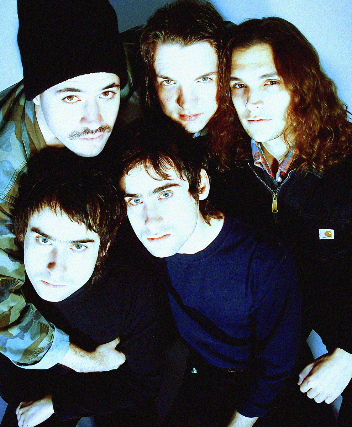
White Reaper w/ Dehd & Wombo
Thu, 19 Dec, 7:30 PM CST
Doors open
7:00 PM CST
The Basement East
917 Woodland St, Nashville, TN 37206
TICKET SALES TERMINATED
Tickets are currently unavailable on TicketWeb
Event Information
Age Limit
All Ages
Refund Policy
All sales are final. No refunds unless a show is canceled.
Alternative
White Reaper
White Reaper
Alternative
White Reaper - Only Slightly Empty
For over a decade, White Reaper has been one of modern music’s most satisfying rock bands, reliably reminding listeners how truly rewarding cranked up amps and a good chorus can be. But achieving that kind of longevity is no small feat–it’s a path that’s often full of pitfalls and frustrations no matter how carefree the actual songs might sound. White Reaper have had more than their fair share of ups and downs in recent years and the Louisville, KY-based group’s new album, Only Slightly Empty, finds them overcoming creative blocks, lineup changes, label upheaval, burnout, and more, to push their sound and create the most infectiously entertaining record of their career.
“I think we were on this kind of rocket trajectory for a while but we were also really burning out,” says keyboardist Ryan Hater. “With You Deserve Love [2019] we were riding this rollercoaster of what a major label wanted us to do and they were finding success with it. Then the pandemic hit and we were partially like ‘Thank god we can finally have some time off.’ But we had a hard time getting back in the swing of it.” White Reaper’s signature swagger was harder to muster in the midst of lockdowns and uncertainty, and their next album, Asking For A Ride, proved difficult to make. Upon its release in 2023, the band returned to a drastically changed music world where everything that had previously been working now seemed ineffective. “I think we’d sort of found the band in a different place than we’d thought we’d be,” says vocalist/guitarist Tony Esposito. “Not even in terms of success per se, but more like how we’re perceived in the world. I just felt like we were having sort of an identity crisis as a band and I was internalizing that.”
The band regrouped in 2024, aiming to shake off the rust and start writing a new album, but there were still more hurdles in store. During the initial writing and recording process, they parted ways with their rhythm section and left their label in the midst of corporate restructuring–the kinds of shakeups that have stopped plenty of bands dead in their tracks. But sometimes the only way to regain control is to steer into the skid. “I think all of these different tensions were affecting how I was writing,” says Esposito. “Like I was trying to avoid conflict even in the music. But at some point I snapped out of it and remembered it’s supposed to be fun, so let’s just write some great songs.”
With turmoil finally in the rearview, the core group of Esposito, Hater, guitarist Hunter Thompson, and engineer Joey Oaxaca (Hunny, Mamalarky, Rocket, Twen) got back to work with a renewed creative energy. The result finds White Reaper at the top of their game and exploring new musical territory. Only Slightly Empty is packed with the crunchy power pop spirit of the band’s earlier work, but it’s augmented with a grungier wall of sound that’s at times the heaviest and darkest White Reaper have ever sounded–all without ever sacrificing the instant earworm melodies that have always made the group tick. “We did revisit our older stuff to kind of see what made it go,” Esposito explains. “It’s really just melody over chords–that’s the core of it. I think with the last record being written during lockdown, I was just trying to outdo myself writing the craziest possible riffs–versus this time it was more about the songs.”
Only Slightly Empty opens with “Coma,” 106 seconds of distortion-drenched, pressure valve-release that sets the tone for the ensuing record: if White Reaper had hit a wall, they'd now crashed right through it. “I think this song is an admission of this sort of fugue state I’d been in creatively,” says Esposito. “It’s saying ‘What the fuck is going on with me?’ and snapping out of it.” And what follows makes it abundantly clear that Esposito and Co. are back and better than ever. Tracks like “Blink” and “Eraser” are fuzzed-out melody monsters that wouldn’t seem out of place sandwiched between Superdrag and Fountains of Wayne on an episode of 120 Minutes, while “Blue” and “Rubber Cement” delve into downtuned guitars and stormy chord changes that would be flat out moody if not for Esposito’s rowdy delivery. “I think I just have this sort of preschool disposition with melody,” he laughs. “So I can hear Nine Inch Nails or Alice In Chains in my head when I’m trying to make something, but then these kinds of nursery rhyme-like melodies just spin out in a way that’s unique to us.”
Album standout “Honestly” perfectly captures the musical and lyrical heart of Only Slightly Empty. Esposito’s unbeatable knack for catchiness is on full display while leftfield production choices like voice sampling and syncopated keyboard arpeggios pingpong across the speakers. “I do think a lot of this record is about me musically trying to deal with a lot of things that I was feeling but wasn’t talking about,” he explains. “‘Honestly’ is sort of me making fun of myself and my issues with conflict. The verses and choruses are totally opposite messages from each other–like how sometimes you might talk big behind someone’s back but then face to face you get more reserved.” This inward examination reoccurs throughout Only Slightly Empty before coming to a head on “Enemy John,” where Esposito personifies his self-doubt overtop of shimmering phaser guitars and a sky high chorus.
There’s a palpable energy coursing through Only Slightly Empty’s airtight half hour runtime: this is a rejuvenated White Reaper and it shows in the songs. “There’s definitely a fresh start feeling with this record,” says Esposito. “I even have more nerves leading up to people hearing it–I feel like I did back when we were putting out our first music ever. Everything’s so different now but I have that excitement again.” Fittingly, the album ends with “Touch,” an ode to love and loss that sounds as romantic as any power ballad, but is actually about Esposito’s connection to making music. “I wrote it about being younger and starting all of this, and how I thought things would go, and then where it led and where I am now… I’m not even sure what to make of all of it. When you do this–release music and tour for a decade-plus–your relationship with music is going to change and evolve. I think sometimes it loops back to where you started, and sometimes maybe not. This song is about wondering where I am now. If Only Slightly Empty is any indication, ” wherever that may be is somewhere great for White Reaper, and even better for listeners.
James Goodson
June 2025

Alternative Rock
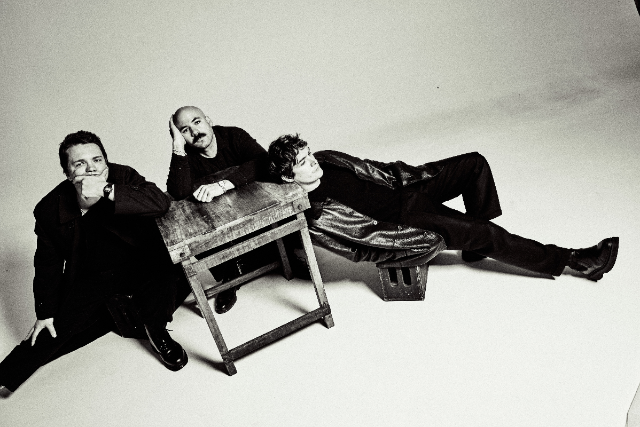
Dehd
Dehd
Alternative Rock
Upon arrival during the fraught summer of 2020, Flower of Devotion felt like Dehd’s necessary prescription for us all. That was, of course, a moment of unprecedented anxiety and uncertainty, when just contemplating the future could seem overly optimistic. But Dehd captured and shared the precarious balance between real life and real hope, a feat mirrored by instant pop melodies and infectious punk energy. The Chicago trio had the audacity to look ahead when many of us didn’t, to imagine improvement through mere existence. It was an album we needed. We need its follow-up, the triumphant Blue Skies, even more.
Dehd’s fourth album (and first for Fat Possum) is also the band’s second consecutive breakthrough, loaded with the most compelling, compulsive, and expansive songs of their career. Blue Skies offers another jolt of timely hope, only with twice the power. These 13 hits feel like flashlights in the dark, acknowledging how difficult everything from love and sex to living and dying can be while supplying the inspiration of their own experiences. “There’s a hole in my window/I was wondering how the rain was getting in,” Emily Kempf sings during the magnetic “Window,” acknowledging the problem before jubilantly exclaiming she’s moving toward something new. “Blue skies!”
The rapturous reception of Flower of Devotion gave Dehd access to more resources — budgets, studios, producers. Rather than seek something new, however, they invested in themselves, their process, and their deep belief in what they have always done. They booked the same studio where they had recorded Flower of Devotion but tripled their stay, giving themselves time to play with arrangements and delight in a wonderland of drum machines and synthesizers.
Through Dehd’s career, Jason Balla has been building his chops as a producer, so this was a chance to indulge and explore. Eric McGrady, meanwhile, considered how much more he could deliver as a drummer, adding layers to the thump of his past. And Emily, who admits that the process of making records has always been emotionally draining, focused on harnessing her indomitable energy, funneling her power into these songs without being overpowered by them. Dehd gave themselves runway to make mistakes and the space to make a statement. Blue Skies is their poignant, redemptive, and deeply fun testament to trusting and pushing yourself.
These 33 minutes run like a series of interconnected singles, each song so hooky and strong that you’ll be hard-pressed to name a favorite. The triumphant “Bad Love” is a surge of self-liberation, Emily leading the charge through an anthem about admitting your faults, seeking forgiveness, and finding a way forward. “I got a heart full/I got a heart full of redemption,” she offers at the start, a moment that suggests Springsteen writing with The Go-Go’s. A Tom Verlaine quiver to his voice, Jason takes a nighttime walk in the city as anxiety closes in during the irrepressible “Stars,” calming himself with a concrete reminder he’s still here. And there’s Eric’s splendid “Hold,” a chiming wonder with elastic bass lines and cascading piano parts that interlock beneath his hypnotic voice. He affirms the impact of simple acts of love.
But even when they sound ebullient, Dehd has never shied from troubles, the balance that has made them so magnetic. Above wafting synths and marching drum machines, “Memories” feels first like an electro dirge, memorializing lost friends. Such moments — and there are several clouds amid these Blue Skies — are pointed signals of our collective woe. Dehd presses ahead, though, into a future that offers something else if not always something better. What hope, after all, is more dependable? They end “Memories” in a refrain of pure persistence: “I’m doing all I can.” Blue Skies gets real. Blue Skies never wallows.
Toward the end of 2021, Dehd shared stages with Julien Baker, their first substantive chance to take Flower of Devotion on the road. Every night after their set, fans would tell the band how those songs had helped during the toughest times of the last two years. Those listeners had recognized what makes Emily, Jason, and Eric so compelling — they put their individual experiences on the page, then project them together with heart and empathy into instant hooks. Those post-show admissions could be a lot to process for the band, but they provided galvanizing confirmations that they’d made the right decision with Blue Skies. They would keep pulling light out of the dark with songs that feel so fucking good to hear right now.
The writing is sharper and smarter on Blue Skies. The harmonies and rhythms are more sophisticated and considered. The moods are deeper, the swings between them more inspiring. But this is still Dehd, just more wild and wonderful than ever before. “This is all we get,” Emily shouts with relish on the record’s last lines, during a song about the ways geologic deep time should free us all to live more. “Best to take the risk.” Heard, loud and clear.