TICKET SALES TERMINATED
Tickets are currently unavailable on TicketWeb
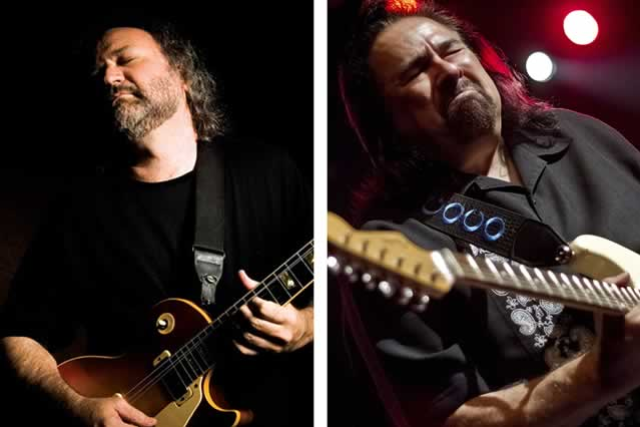
Tinsley Ellis & Coco Montoya
Fri, 1 Mar, 8:00 PM PST
Doors open
6:00 PM PST
The Coach House
33157 Camino Capistrano, Suite C, San Juan Capistrano, CA 92675
TICKET SALES TERMINATED
Tickets are currently unavailable on TicketWeb
Event Information
Age Limit
All Ages
Refund Policy
ALL SHOW DATES ARE SUBJECT TO CHANGE, ALL SALES ARE FINAL, NON REFUNDABLE, NON EXCHANGEABLE
Jazz
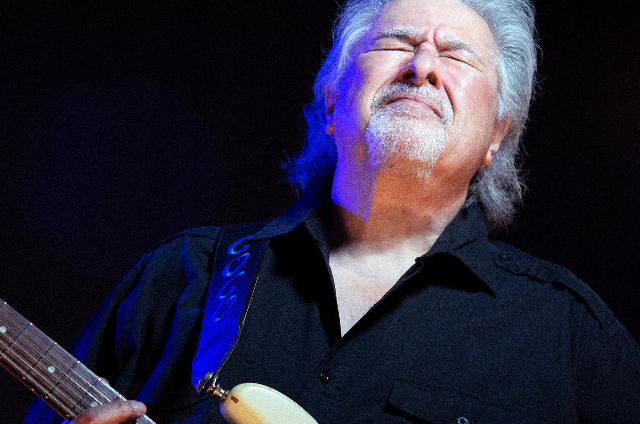
Coco Montoya
Coco Montoya
Jazz
“In a world of blues guitar pretenders, Coco Montoya is the real McCoy. He exudes power and authenticity. Be prepared to get scorched by the real thing.”
--Billboard
“Coco Montoya sings and plays with passionate abandon.”
--The Boston Globe
Though he grew up as a drummer and was raised on rock & roll, Coco Montoya became an outstanding blues guitarist after stints in the bands of Albert Collins and John Mayall. Montoya debuted as a leader in 1995 with the Blind Pig album Gotta Mind to Travel and garnered an award for Best New Blues Artist at the following year's W.C. Handy Awards ceremonies.
Born in Santa Monica, Montoya played drums for a local rock band that toured the region during the mid-'70s, playing in area clubs. Although he had recently been turned on to blues at an Albert King show, he was somewhat unprepared to sit in with another blues legend -- "the Iceman" Albert Collins -- when a bar-owner friend of Montoya invited the bluesman to play at his nightclub. Though his inexperience showed, the young drummer impressed Collins enough to hire him for a Pacific Northwest tour three months later. The tour soon ended, but the pair's affiliation remained for more than five years, while Montoya learned much about the handling of blues guitar from "the Master of the Telecaster."
By the early '80s, Coco Montoya was back in the small-time nightclub business, playing guitar with several regional bands. At one night's show, he realized that John Mayall was in the audience, so he dedicated a cover of "All Your Love" to the British blues maestro. The song prompted Mayall to hire Montoya as lead guitarist for a new version of the Bluesbreakers he had formed. Despite the enormous pressure of filling a spot once held by Eric Clapton and Peter Green, Montoya jumped at the opportunity.
His first album with the Bluesbreakers came in 1985. Mayall had not released an album in five years at that point and the Bluesbreakers had been dead for more than 15, but the live album Behind the Iron Curtain proved Mayall's viability thanks mostly to the fiery work of Montoya. The guitarist appeared on three studio albums with Mayall and the Bluesbreakers, but then struck out on his own by the mid-'90s. Signed to Blind Pig, Montoya released Gotta Mind to Travel in 1995 with help from Mayall and another former Bluesbreaker compatriot, rhythm guitarist Debbie Davies.
After years of toil under Collins and Mayall, Montoya was finally in the spotlight and his award as Best New Blues Artist of 1996 proved quite ironic, given his years of experience. His second album, Ya Think I'd Know Better, was followed by 1997's Just Let Go. At that point, Montoya and Blind Pig parted company and he signed with Alligator Records. Suspicion was released in 2000, followed two years later by Can't Look Back and by Dirty Deal in 2007. All three discs incorporated a definitive soul/R&B approach. I Want It All Back, produced by Keb' Mo' and Jeff Paris, appeared in 2010. ~ John Bush & Al Campbell, Rovi
Blues
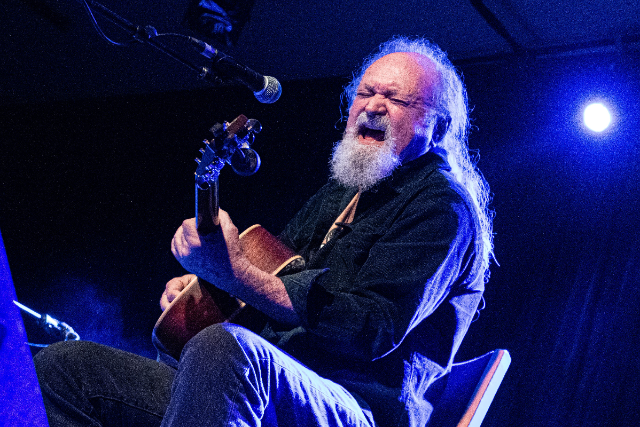
Tinsley Ellis
Tinsley Ellis
Blues
According to Atlanta-based blues guitarist, singer and songwriter Tinsley Ellis, his new, first-ever solo acoustic album, Naked Truth, is both “a departure and an arrival.” Ellis has been recording and travelling the world for over four decades, delivering his feral, guitar-fueled, original electric blues-rock to ever-growing audiences at concert halls, festivals, and clubs. Naked Truth is steeped in the folk blues traditions of Muddy Waters, Skip James, Son House, Robert Johnson and even Leo Kottke. To the casual fan, this might seem to be a new direction, but for Ellis, it’s an extension of his music, as he taps into the raw essence of the blues. “This is a record I’ve always wanted to make, and one that my longtime fans have been asking for,” he says, noting he’s included an acoustic mini-set in his concert performances for years. In the last 12 months, Ellis has already performed over 100 solo shows, many as co-bills with his Alligator label-mate Marcia Ball. “I’m having so much fun playing these shows,” he says.
On Naked Truth (his 21st album), Ellis swaps his blistering, guitar-fueled full band workouts for equally passionate, soul-searching acoustic folk blues. His famed guitar chops and musical creativity are on full display throughout the album’s 12 songs, including nine newly written originals. Naked Truth was produced by Ellis, with the foot-stomping cover of Son House’s Death Letter Blues produced by Atlanta roots musician Eddie 9V. The album was recorded live in the studio using Ellis’ beloved 1969 Martin D-35 (a gift from his father) and his 1937 National Steel O Series guitars. Whether intricately fingerpicking the Martin or playing hair-raising slide on the National Steel, Ellis delivers each song with unvarnished intimacy.
The opener, Ellis’ original Devil In The Room, comes from an expression Ellis’ close friend, the late Col. Bruce Hampton, would tell his musicians just before a show was about to begin (“We’re here to put the devil in the room,” he’d say). From the original, Skip James-inspired Windowpane to the Delta-styled Tallahassee Blues, to the humorous Grown Ass Man, Ellis goes deep, singing and playing the blues’ honest truths. The inclusion of four introspective instrumentals (including a transcendent cover of Leo Kottke’s A Soldier’s Grave On The Prairie, a song he’s been playing live for almost 50 years) adds even more depth and substance to an album overflowing with riches. Each song carries the weight, experience and hard-earned wisdom Ellis learned over four decades on the road, infusing Naked Truth with an emotional authenticity that is palpable from start to finish.
Tinsley Ellis has been immersed in music his whole life. Born in Atlanta 1957 and raised in southern Florida, he acquired his first guitar at age seven, inspired by seeing The Beatles perform on The Ed Sullivan Show. He took to guitar instantly, developing and sharpening his skills as he grew up. Like many kids his age, Ellis discovered the blues through the back door of British Invasion bands like The Yardbirds, The Animals, Cream and The Rolling Stones as well as Southern rockers like The Allman Brothers. One afternoon after high school in 1972, he and a friend were listening to Al Kooper and Michael Bloomfield’s Super Session record when his friend’s older brother told them that, if they liked Super Session, they should go see B.B. King, who was in town that week. Tinsley saw that show from the very front row. As fate would have it, King broke a guitar string while playing, and after changing it without missing a beat, he handed the broken string to young Tinsley. And yes, Tinsley still has that string.
Less than three years later, Ellis, already an accomplished teenaged musician, left Florida and moved to Atlanta. He soon joined a hard-driving local blues band, the Alley Cats. In 1981, along with veteran blues singer and harpist Chicago Bob Nelson, Tinsley formed The Heartfixers, a group that would become Atlanta’s top-drawing blues band. After cutting four Heartfixers albums (three for the Landslide label), Ellis was ready to step out on his own.
Georgia Blue, Tinsley’s first Alligator release, hit the unprepared public by surprise in 1988, as press and radio brought his music to more people than ever before. His next four releases—1989’s Fanning The Flames, 1992’s Trouble Time, 1994’s Storm Warning, and 1997’s Fire It Up—further grew his reputation as well as his audience. (His song A Quitter Never Wins, a highlight of Storm Warning, was recorded by Jonny Lang, selling almost two million copies.) Features and reviews ran in The Washington Post, The Los Angeles Times, The Boston Globe, and in many other national and regional publications. And he backed it all up performing hundreds of nights per year. Rolling Stone declared, “Feral blues guitar…non-stop gigging has sharpened his six-string to a razor’s edge…his eloquence dazzles…he achieves pyrotechnics that rival Jeff Beck and Eric Clapton.”
In the early 2000s, Ellis released albums on Capricorn Records and on Telarc, returning to Alligator in 2005 with Live–Highwayman, which captured the fifth-gear energy of his roof-raising live show. He followed it with two more incendiary studio albums, 2007’s Moment Of Truth and 2009’s Speak No Evil. He self-released four successful albums on his own Heartfixer label before coming back home to Alligator in 2018. That year, he released the fan favorite Winning Hand, followed by 2020’s Ice Cream In Hell just before the pandemic sidelined all touring. With 2022’s Devil May Care, Ellis embarked on another relentless, coast-to-coast tour, further cementing his reputation as one of the most prolific and exciting blues rockers on the scene.
Tinsley Ellis has brought his music to fans live in person to all 50 United States, as well as in Canada, across Europe, Australia and South America. He’s earned the love and respect of many of his fellow musicians, having shared stages with Christone “Kingfish” Ingram, The Allman Brothers, Warren Haynes, Oliver Wood, Buddy Guy, the Tedeschi Trucks Band, Gov’t Mule, Widespread Panic, and more. Over the years, legends including Otis Rush, James Cotton, Gregg Allman, Jimmy Buffett, Son Seals, Koko Taylor and Albert Collins invited Ellis to join them on stage. Mega-star guitarist Joe Bonamassa calls Ellis “a national treasure.”
Now, with Naked Truth, Ellis will bring his music directly to his fans. “Two guitars and a car,” he says of the simplicity of his North American touring situation. “When folks come to see me, I’ll have the guitars I used on the record with me, so what fans hear on the album is what they’ll get live. It’s not easy. Now I’m the whole band and there’s nowhere to hide. It’s scary every single time I go up on stage alone. But nothing could be more honest.”
Naked Truth is a revelation. Stripped of the electric fervor that defined his previous works, Ellis’ acoustic music carries a rawness that speaks directly from his soul. The songs unveil another side of Tinsley Ellis, but one that is totally recognizable to his fans. His gruff, full-throated vocals intertwine seamlessly with the bare, acoustic arrangements, creating an album that is both timeless and immediate. No Depression says, “Ellis shines. When the tempo slows, the intensity doesn’t waver.” Blues Music Magazine states, “Tinsley Ellis is a powerful and commanding presence. His music is impossible not to enjoy.”