TICKET SALES TERMINATED
Tickets are currently unavailable on TicketWeb
The Bones of J.R. JonesMcKinley James
Fri, 16 Mar, 7:00 PM CDT
Doors open
6:30 PM CDT
The Basement
1604 Eighth Ave South, Nashville, TN 37203
TICKET SALES TERMINATED
Tickets are currently unavailable on TicketWeb
Event Information
Age Limit
21+
Refund Policy
All sales are final. No refunds unless a show is canceled.
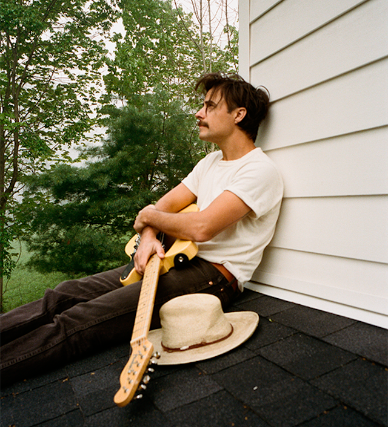
Americana
The Bones of J.R. Jones
The Bones of J.R. Jones
Americana
“There was no ‘a-ha’ moment,” says Jonathon Linaberry, “no life-changing revelation, no
singular flash of inspiration. It was just a fierce, steady, undeniable energy, a force of nature I
had to wrestle and wrangle with for years until I could harness it.”
It’s easy to understand, then, why Linaberry—better known as The Bones Of J.R. Jones—would
call his mesmerizing new album Slow Lightning. As its title would suggest, the collection is raw
and visceral, pulsating with an understated electrical current that flows just beneath its
seemingly placid surface. The songs are restless and unsettled here, often grappling with doubt
and desire in the face of nature and fate, and frequent collaborator Kiyoshi Matsuyama’s
production is eerily hypnotic to match, with haunting synthesizers, vintage drum machines, and
ghostly guitars fleshing out Linaberry’s already-cinematic brand of roots noir. The result is a
moody, ominous work that’s equal parts Southern Gothic and transcendentalist meditation, an
instinctual slice of piercing self-reflection that hints at everything from Bruce Springsteen and
Bon Iver to James Murphy and J.J. Cale as it searches for meaning and purpose in a world
without easy answers.
“I felt very lost at the time I was writing these songs,” Linaberry confesses. “It was a moment
of deep crisis and anxiety, but I knew the only way out was through, which meant I just had to
bring myself to the table every day and put in the work.”
Linaberry’s no stranger to putting in the work. Born and raised in central New York, he got his
start playing in hardcore and punk bands before becoming enamored with the field recordings
of Alan Lomax, who documented rural American blues, folk, and gospel musicians throughout
the 1930s and ’40s. Inspired by the unvarnished honesty of those vintage performances,
Linaberry launched The Bones of J.R. Jones in 2012 and, operating as a fully independent artist
over the course of the ensuing decade, released three critically acclaimed albums along with a
trio of similarly well received EPs; landed his songs in a slew of films and television series
including Suits, Daredevil, Longmire, and Graceland; and toured the US and Europe countless
times over as a one-man-band, playing guitar or banjo while simultaneously stomping a
modified drum kit everywhere from Telluride Blues to Savannah Stopover. Along the way,
Linaberry also shared bills with the likes of The Wallflowers, G. Love, and The Devil Makes
Three, soundtracked an Amazon commercial helmed by Oscar-winning director Taika Waititi,
and earned praise from Billboard, American Songwriter, and Under the Radar, among others.
After living in constant motion for the better part of ten years, though, Linaberry found himself
at an unexpected standstill in 2021. At the time, he and his wife had recently relocated from
Brooklyn to an old farmhouse in the Catskills, and the change of pace was both rewarding and
challenging all at once.
“It’s a pretty remote, rural area we moved to,” Linabery explains, “the kind of place where
spring is just a continuation of the cold, grey, muddy, brown of winter. I was exhausted by the
seasons, working on songs nine hours a day in the attic, and it all felt very isolated and insular.”
Where the most recent Bones of J.R. Jones release, 2021’s A Celebration, drew inspiration from
a trip into the vast, desert expanses of the American southwest, the songs that began taking
shape in upstate New York this time around were more difficult to pin down, seeming to come
and go of their own accord.
“That’s where the notion of ‘slow lightning’ was born,” Linaberry explains. “It’s about a power
you can’t control, a force that’s bigger than you and follows its own path no matter how badly
you want to mold or direct it. That’s what this record felt like, and it’s something I had to
figure out how to embrace.”
That kind of all-consuming power is palpable from the start on Slow Lightning, which begins
with the boisterous “Animals.” Gritty and insistent, the track taps into something primal and
uninhibited, learning to trust its gut and make peace with aiming high and sometimes falling
short. “Well my heart’s just trying to kill me,” Linaberry sings over roiling guitars and drums.
“It always vibrates above / With always grand notions / But it plays in the mud.” Like so much
of the album, it’s a testament to resilience, to letting go of failure and pressing on even when
things feel hopeless. The bittersweet title track explores tenacity in the face of
disenchantment, while the lo-fi “Blue Skies” insists on reaching for hope regardless of the cost,
and “The Flood” conjures up a wistful portrait of survival and loss as it builds from a dreamy
blur into a searing crescendo.
“I remember lying in bed in the dark hearing the coyotes laughing out in the field behind our
house just before they killed something,” Linaberry recalls. “It was so haunting and eerie, but
at the same time, you’re just so totally in awe of what’s happening right outside your window,
this elemental moment of life and death all wrapped up together.”
Despite the looming sense of danger that permeates the album, Slow Lightning still manages to
find moments of humor and levity. The darkly romantic “I’ll See You In Hell” revels in a love so
strong it carries on through eternal damnation; the sardonic “I Ain’t Through With You” gets
high on an addictively toxic relationship; and the relentlessly taut “Heaven Help Me” surrenders
to overwhelming infatuation, with Linaberry recalling, “Love is the kind of thing that will keep
you warm / That's what she said / As she was burning down my home.”
In the end, though, it’s perhaps the breezy “Salt Sour Sweet” that best encapsulates the spirit
of the record, with Linaberry looking back on a lifetime of love and heartbreak, dreams and
disappointment, success and failure, and ultimately recognizing that it’s the grand sum of them
all that make us who we are. “It’s the salt sour and sweet / That holds,” he sings in an airy
falsetto. Call it maturity, call it self-awareness; it’s the kind of wisdom that can only arrive on
a bolt of Slow Lightning.
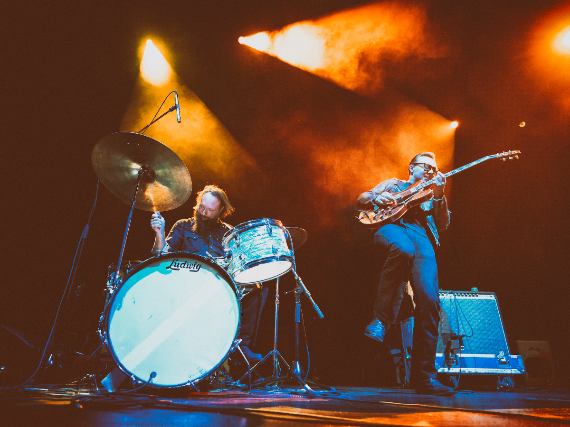
Pop Rock
McKinley James
McKinley James
Pop Rock