TICKET SALES TERMINATED
Tickets are currently unavailable on TicketWeb

AEG Presents
The Black AngelsBlack Lips
Sat, 31 March
Doors open
7:30 PM EDT
Majestic Theatre
4120 Woodward Ave., Detroit, MI 48201
TICKET SALES TERMINATED
Tickets are currently unavailable on TicketWeb
Event Information
Age Limit
All Ages
Pop
The Black Angels
The Black Angels
Pop
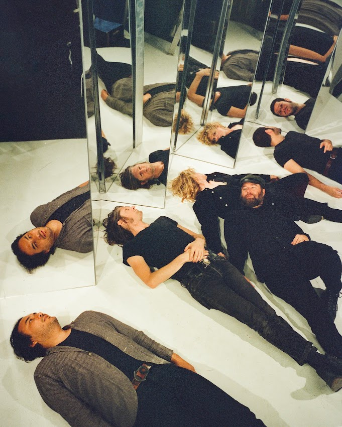
The best music reflects a wide-screen view of the world back at us, helping distill the universal into something far more personal. Since forming in Austin in 2004, The Black Angels have become standard-bearers for modern psych-rock that does exactly that, which is one of many reasons why the group’s new album, Wilderness of Mirrors, feels so aptly named.
Says vocalist/bassist Alex Maas, “a big focal point of this record is just the overall insanity that’s happening. What’s true? What’s not?” Adds guitarist Christian Bland, “We leave our music open to interpretation, but our topics are always universal themes – problems mankind has had since the beginning of time. You can relate them to any period.”
Indeed, in the five years since the release of the band’s prior album, Death Song, and the two-plus years spent working on Wilderness of Mirrors, pandemics, political tumult and the ongoing devastation of the environment have provided ample fodder for the Black Angels’ signature sonic approach. If the group’s members were terrified as they honed new music heading into an election year, they realized they didn’t even know how scary things could still get.
So, they looked inward, focusing on both their ongoing creative and musical development as well as their own struggles amid the external chaos. Wilderness of Mirrors hits even closer to home, as the group recorded solely in the friendly confines of Austin for the first time in more than a decade and entrusted co-production duties to its longtime front-of-house engineer, Brett Orrison.
“It was a really great experience, because Brett understands us a lot on a musical level. We’ve grown together,” Maas says. “We worked on this record for over a year in the studio in Austin. I don’t know any other situation where we’d have been able to do that in a 9-to-5 way.” Adds Bland, “Doing it in Austin allowed for open creativity and took away the stress of rushing to get something done. We used our time wisely.”
That methodical modus operandi can be heard throughout Wilderness of Mirrors, which expertly refines the Black Angels’ psychedelic rock attack alongside a host of intriguing sounds and textures. “History of the Future” and opener “Without a Trace” are classic blasts of fuzzed-out guitars that simultaneously perk up the ears and jumpstart the mind (“Is it still possible to be invincible when everyone else is expendable?” Maas wonders aloud on the latter), while a fast, thumping bass line and an allusion to a world leader hiding in his bunker propel “Empires Falling” into an ominous decree: “Every time you wake, I want to end you.”
“I came in with a riff that was kind of slow and mid-tempo-y,” Bland says of the song. “When I showed it to the band, [drummer] Stephanie [Bailey] started playing a quicker beat over it, [guitarist] Jake [Garcia] added this cool mercurial lead guitar line, and [multi-instrumentalist] Ramiro [Verdooren] laid down a heavy driving bass, and all the sudden it had some rock’n’roll gasoline behind it. That’s the beauty of being with these folks. Everybody brings their creativity to the table and a song could become something you never had envisioned before.”
Elsewhere, The Black Angels revel in newfound experiments like the melancholy, acoustic guitar-driven “100 Flowers of Paracusia” and “Here and Now,” two highlights of the album’s back half. “We would have never put songs like that on records before, just because we weren’t in that world,” Maas says. “I’m proud that we pushed ourselves.” There’s also the ‘60s French pop homage “Firefly,’ which features the sultry intonations of Thievery Corporation’s LouLou Ghelichkhani. “We don’t ever really bring people in to sing, but I thought it would be cool to have someone singing in French here – a back and forth, playful thing,” Maas says of “Firefly.” “It made the harmony more complete.”
Mellotron, strings and other keyboards are more prominent on Wilderness of Mirrors than ever before, and the album also benefits from the versatile contributions of new multi-instrumentalist Ramiro Verdooren, formerly of Austin band the Rotten Mangos. “Having that fresh perspective of a young person who’s a fucking incredible musician, it was a whole different ingredient,” enthuses Maas, who says Verdooren would often take in-progress songs home with him at night to experiment with tape loops and other accoutrements. Adds Bland, “If you think of something you want to add, Jake or Ramiro can do it immediately on whatever instrument.”
Another new addition to the team this time around was longtime Dinosaur Jr engineer John Agnello, who stepped in to mix Wilderness of Mirrors when The Black Angels were in need of a fresh set of ears. “When you self-produce your own record and do every single tiny little move yourself, you lose perspective,” Maas says. Adds Bland, “John’s outside perspective on it is what made the album shine. It became 3-D.”
But for all the experimentation, The Black Angels remain masterfully true to psych-rock forebears such as Syd Barrett, Roky Erickson, Arthur Lee and the members of the Velvet Underground, all of whom are namechecked on “The River.” The legacy of those artists is also at the core of the group’s beloved, long-running Levitation Festival, the veritable ground zero for the genre’s past, present and future. Says Bland, “Sitting down and channeling these spirits is something I’ve always wanted to do. It’s a little cryptic and spooky, almost like reincarnation. The river of knowledge keeps flowing, no matter what.
“The Velvet Underground song ‘I’ll Be Your Mirror’ – that’s what every Black Angels album has been about,” he continues. “You can’t work out your struggles unless you bring them to the forefront and think about them. If we can all think about them, maybe we can help save ourselves.”
Alternative Rock
Black Lips
Black Lips
Alternative Rock
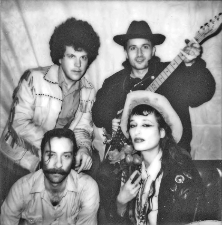
The story of the Black Lips began in Dunwoody, Georgia, a quiet, conservative suburb of Atlanta, in the year 1999. Born of a mutual love of Link Wray, The Stooges, and The Ramones, and sealed through a shared dedication to defiance, the band formed after childhood friends Jared Swilley and Cole Alexander were kicked out of Dunwoody High for separate, yet equally bad, behavior. The former classmates took their love of
music and restless energy and channeled it into their newly found free time, and joined by
friends Ben Eberbaugh and Joe Bradley, the Black Lips started playing shows around Atlanta, at house parties and bars. They spent this time honing their sound – garage rock infused with blues, psychedelia, and punk, plus a healthy dose of reckless abandon – and released their first 7-inch, “Ain’t Coming Back,” in 2002 on Die Slaughterhouse records (named in homage to the flophouse den they called home). Shortly before the band was set to head out on their first ever national tour, Eberbaugh was tragically killed by a drunk driver. Devastated but determined to carry on in Eberbaugh’s honor, the Black Lips hit the road as a trio just a few days later.
It’s been 15 years, but that passionate dedication to touring has never left the
band. The Black Lips have released eight full-length albums since that first tour, and have
traveled the country and the world extensively, making a name for themselves as an electrifying, must-see live act. It helps that the same mischievous spirit that helped speed up their exit from the educational system is still very much alive, thriving in its new environment on stage, resplendent with punk rock theatrics and miscellaneous bodily fluids, amongst other things. The band’s energy and unique “flower punk” sound helped them build a rabid fan base, and after releasing their first two albums through Bomp!, they put out the critically celebrated Let It Bloom on In The Red records. This record garnered the Black Lips features in Spin and Rolling Stone, and they were soon signed to Vice Records, subsequently releasing Los Valientos Del Mundo Nuevo, an ambitious album recorded live at a bar in Tijuana, Mexico, in February of 2007.
In their decade-long tenure with Vice, the Black Lips have evolved from wildly crooning over fuzzy, raucous music at house shows full of kids to wildly crooning over fuzzy, raucous music at international festivals in front of thousands of fans. They have toured consistently, with their zeal for travel taking them all over the world, and not without some international adventure: In 2009 the Black Lips went on their first (and last) tour of India, playing shows in Bangalore and Mumbai before chaos struck in Chennai after the band ditched their toned-down presence in favor of classic Black Lips capers, including some not so well received Lips-locking. After the same sex smooching and
also Alexander baring his butt to the rowdy crowd, the tour’s sponsors pulled out and the band was nearly jailed, their passports confiscated by the disgruntled promoters. According to Swilley: “The first few shows, we were being really reserved because we didn’t want to offend anyone, but they kept telling us to do what we wanted…I guess “do whatever you want” didn’t include kissing each other, and I think Cole mooned the crowd, which is a huge no-no. We had to physically wrestle our passports back from the promoters. It was the scariest 15 hours of my life, but we got out of there.” The band ended up taking a 200 mile cab ride to the next province and hopped a flight to Berlin, narrowly escaping Indian prison.
Undeterred, the band jumped at the chance to become the first Western punk band to tour another notoriously conservative continent, the Middle East, just a few years later. Why? “It was important for a number of reasons,” Swilley says of the tour. “We’ve always wanted to push boundaries of where we go. Plus, a lot of people told us we couldn’t do it, and anytime someone tells us we can’t do something, then we kind of have to. We have O.D.D, oppositional defiance disorder.” This time, their shows went off without a hitch, and Black Lips played shows for crowds in Jordan, Cyprus, Egypt, Lebanon, Iraqi Kurdistan, and the United Arab Emirates in 2011 in support of that year’s release of their record Arabia Mountain, produced by Mark Ronson. The title was
actually a reference to a mountain in Georgia, but that didn’t stop the Lips from playing
the record all over the Middle East, to enthused fans and without causing any further international incidents. “Everyone was really nervous about us going there, but it really went off without a hitch,” adds Swilley. The band also hasn’t abandoned plans to become the first rock band to play on all seven continents, hoping to hit their last remaining one, Antarctica in the near future, and disregarding Metallica’s claim of this achievement: “Just when we were securing the funding, Metallica sniped us. They took a boat,
probably a gold plated Versace boat, down there. But they actually didn’t play on land, and they didn’t play with amps, so technically they haven’t played Antarctica. Metallica hasn’t beat us yet.”
For their ninth studio album, the Black Lips have teamed up with Sean Lennon,
who got on board to produce Satan’s graffiti or god’s art? in 2016. The Black Lips had formerly worked with Lennon on Arabia Mountain, where Lennon played theramin on several tracks. The band moved up to Lennon’s studio compound on a remote farm in upstate New York, and spent several months living and breathing the new record. This removal from the outside world, plus the return of beloved early guitarist Jack Hines and the exciting addition of new members Oakley Munson on drums and Zumi Rosow (the first female Black Lip) on saxophone, infused the project with a focused, intoxicating liveliness, similar to the spirit that had brought the Black Lips to life in the first place, way back in 1999. Only this time, the band is drawing from nearly two decades of experience and musicianship, and the newness is tethered by familiarity: Munson is a longtime friend of the band, and Rosow has been playing live with the Black Lips for several years now. There’s even a dash of kismet: unbeknownst to the band, after being off the grid for some time, Munson had just recently moved to a cabin a short distance away from Lennon’s compound, and the first time his phone ever rang after he plugged into the wall, Alexander was on the other end, asking him to play.
All of this excitement and immersion created the perfect storm for the Black Lips’
most musically evolved album to date. “It was a really beautiful experience. We were very far from civilization, and we were all living at the studio. We weren’t going home to our own beds every night; that was our whole world, 100% of the time,” says Swilley of the experience. “Making this record was the most wonderful few months of my life. It
was by far my favorite time recording an album so far…It was just magic.” The Black Lips were joined by Saul Adamczewski of Fat White Family, who helped co-produce the record with Lennon, plus another rather magical guest: Yoko Ono. “She’s very cosmic,” Swilley says of the celebrated artist and musician, who makes an appearance on a few of the tracks. The final product is urgent and thoughtful, reflecting the growth the Black
Lips have experienced since bursting onto the scene (once or twice quite literally on fire),
but it’s also true to their original blistering, careening take on rock n’ roll: fuzzy, dirty, and rife with three and four part harmonies. Satan’s graffiti or god’s art? proves that while they may have grown up a bit and changed a few things around, the Black Lips are still as creatively unhinged and exhilarating as ever.
Satan’s graffiti or god’s art? is out May 5th on Vice Records.