TICKET SALES TERMINATED
Tickets are currently unavailable on TicketWeb

Celebrity Etc presents
Sluicew/ Hiding Places
Sat, 9 May, 8:00 PM EDT
Doors open
7:30 PM EDT
Rumba Cafe
2507 Summit St, Columbus, OH 43202
TICKET SALES TERMINATED
Tickets are currently unavailable on TicketWeb
Event Information
Age Limit
All Ages
Alternative Country
Sluice
Sluice
Alternative Country
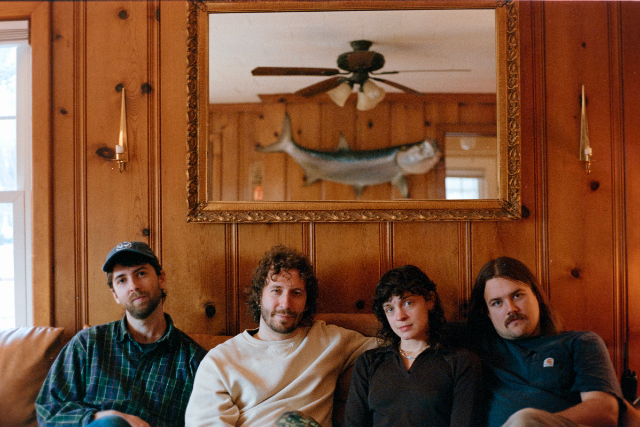
When Justin Morris moved to New York City in 2019 after a lifetime in North Carolina, he was planning to do the opposite of what people usually move to the city to do: give up on his dream. Since childhood, that dream had been simple—write songs, play in bands, live inside “indie rock.” But a run selling merch for one of the era’s biggest indie stars unsettled that conviction. From his vantage point on the bus, the everyday grind of touring felt out of step with the spellbinding shows; encores gave way to a working reality that showed him the job-like side of something he’d only ever romanticized and left him wondering where the glow had gone. To his green worldview, the gap between the fantasy of “making it” and its reality was jarring. If this was “the dream,” he thought, maybe it needed to be reconsidered. New York was meant to be a clean slate, maybe even the place he’d learn another trade and leave music behind. Then, less than a day into his Bushwick sublet, a man with a gun kicked in his bedroom door, forced him to the floor, and tied his hands with TV cables. In the days after the robbery, unable to make sense of anything except through song, he started writing again. Those songs became the beginning of a new project he called Sluice.
Sluice, now a four-piece band from Durham, North Carolina—with Morris on guitar and vocals, Oliver Child-Lanning on bass and various instruments, Avery Sullivan on drums, and Libby Rodenbough on fiddle—return with Companion, their third album and Mtn Laurel Recording Co. debut. It follows 2023’s Radial Gate, the quietly beloved record Morris made after fleeing New York for a Craigslist house in Hillsborough with then-stranger Child-Lanning, tracking songs at Sylvan Esso’s studio Betty’s while working carpentry jobs and wondering, as he sings on “What The Fuck?,” if he should do something else like “go back to school.” Radial Gate caught himhalfway out the door of music, steeped in a hermit-like loneliness of rivers, dams, andfloodgates. Instead, its release brought the dream back, but it looked different than it did to the “kid reading in a bunk” on a tour bus, crying and asking, “what happened to it all feeling so good?” that he sings about in “Vegas.” Companion begins where that disenchanted loneliness leaves off. Recorded with producer/engineer Alli Rogers at Betty’s in the winter of 2024 and slowly tended over two years, it sounds like someone deciding there may yet be a dream of music worth struggling for—and that the point of that dream isn’t stardom or escape, but companionship.
That struggle is written into the songs themselves. “Vegas” returns to the era he was on tour with Angel Olsen, whose music he loved, watching the indie machine from the loading dock and feeling, as a younger musician, quietly overwhelmed by it, before fast-forwarding to the full-circle twist when Olsen later asked Sluice to open shows for her. “Now I’m at the 40 Watt with my old friends,” he sings, as if the old dream and the new dream finally collide in a joyous scream-along. Elsewhere, songs like “Torpor” and “What The Fuck” reach back to the robbery and that period of spiritual whiplash, now re-recorded after years of being played live to show how time can turn personal crisis into determination.
Companion is a dating record, of falling in love to the big-sky choruses of Kenny Chesney and Alan Jackson. The “companion” shifts shape: sometimes she’s named (Sara, Bluey, Ol’ Doe Eyes), sometimes she’s a dog slipping out the door in the morning, sometimes it’s Morris himself catching his reflection in a bathroom mirror and muttering, “boy, do I love you. ”Sometimes it’s the carpentry crew, the townies, the bandmates, the old tour-mates who wander back into his life. In his matter-of-fact, without-irony lyrical style that Pitchfork once described as “a re-education in sincerity,” these people feel real because they are. And always close at hand is music itself, the companion that almost slipped away. Morris never lets you forget the other possible life of hard work tugging at his sleeve—ratchet straps, pressure-treated lumber, contractor licenses, working so hard you feel “fuzzy.” But Companion frames them now alongside the labor of music that challenged his expectations when he was younger: committing to the companion of music is going to be hard work.
Companion is also a healing record—a record of processing the past by returning to it with a lyrical directness and imbuing it with religious and philosophical themes. Morris was raised around Christianity, but Companion doesn’t preach: it wrestles with belief after disillusionment. These themes peak in the album centerpiece “Unknowing,” a sludgy eight-minute vocoder piece built on a prayer by Trappist monk Thomas Merton about faith without certainty. There are biblical echoes (“my redeemer liveth”) and, accordingly, a very-Sluice line from Captain Peleg in Moby-Dick that blends hard labor with mystery—“So you want to see the world, have a look there over the weather bow”—reminding you the “world,” like the drudgery of a touring musician, isn’t just postcard views but gray water and bad weather. Or, as he sings on “Gator”: “It’s parking lots and alleyways / it’s light beer piss on couch.”
This steady, spiritually inflected sense of working on oneself––and one’s expectations––in order to rise above and follow one’s deepest of dreams runs through everything in Companion, from the offhand “I got back on the SSRI” in opener “Beadie” to his confession “I think about being very wrong” in “Overhead.” In the end, Companion is the story of someone who once thought he was done with the very thing that gave his life meaning—music—and finding it again through the help of many companions: not as ladders to some imagined stardom, but as the thing that walks beside you and, in turn, keeps company with anyone who hears it.
Indie Rock
Hiding Places
Hiding Places
Indie Rock
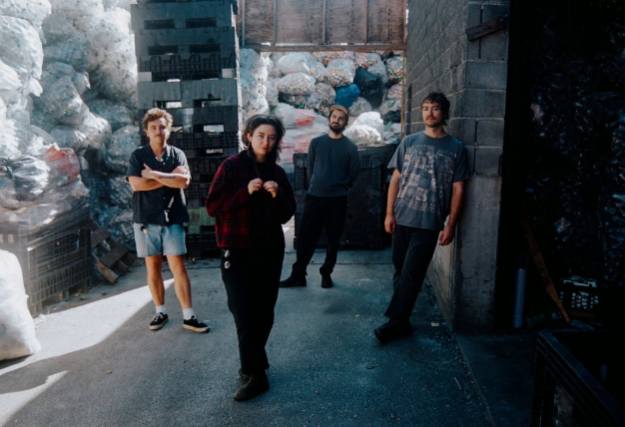
Shortly after forming, the members of the New York-via-North Carolina indie rock band Hiding Places noticed a secret power. During their live sets, no matter the loudness, scuzziness, or mayhem of the venues they played, their tender, atmospheric sound became the focus of the room, quieting their surroundings as audiences became hypnotized by their steady, rhythmic interplay and bittersweet vocal melodies. From these experiences, the band developed a credo of close listening. If one member plays too fast, they won’t try to nudge down the tempo; if someone’s volume rises above the rest, they adapt their levels accordingly. The goal, always, is togetherness—to maintain a unified whole, always in sync. This philosophy is part of what makes the quartet’s cozily intricate and hard-hitting Keeled Scales debut, The Secret to Good Living, feel like a bold introduction as much as a well-worn mixtape, passed down from a trusted friend.
It makes sense that the band formed while three of its members were DJs at their college radio station at the University of North Carolina at Chapel Hill. They embrace music as a means of communication, identity-forming, and deeper understanding of human nature. Songwriters/guitarists Audrey Keelin and Nicholas Byrne alternate between fronting the band, sharing lead vocals and lending the 10-song record the tone of an intimate conversation with room for silence and deeper concentration. Rounded out by a rhythm section of drummer Henry Cutting and bassist/producer Michael Matsakis, they’ve developed a forward-thinking sound with a sense of nostalgia built into it: a blend that draws from the collage-like indie rock of Yo La Tengo, the elegant slowcore of The New Year, the riffy story-songs of Drive-By Truckers, and the analog hum of The Microphones.
The Secret to Good Living, which bridges their fuzzy home-recorded demos with their first experience in a professional recording studio, helps translate their humble beginnings to the big stages for which they seem destined. It’s the product of hermetic late-night sessions, collaborative writing retreats in Athens, Georgia, and an evolving perspective on their singular dynamic. After years of working remotely, this record marks the collective result of the quartet living together in a city for the first time—an experience that amplified the band’s creative bond and connected them with fellow North Carolina transplants in the city.
“We’ve built a Southern home in New York and simultaneously get to experience the cultures of the world that collide here,” Byrne says of their tight-knit community and enduring connections to their hometowns, where they frequently return. “Within 24 hours, I could be at Myrtle Broadway and then in rural Georgia sighting in a hunting rifle. Living between Southern landscapes and New York, and carrying those lessons and experiences with us, has been the story of this band.” On The Secret to Good Living, Hiding Places follow this thread, navigating their mid-to-late 20s and using songwriting as a portal for self-discovery and exploration. Tellingly, the concept raised in the title arrives not in a prescriptive philosophy but as an ongoing inquiry: “Oh, what’s the secret to good living,” Byrne and Keelin ask in unison. “How was I supposed to know?”
Hiding Places’ songs are filled with open-ended questions, abstract imagery, and self-affirming mantras that seem designed to be shouted back from the crowd. In “Holy Roller,” a grinding, stop-starting anthem about wandering and returning, Keelin builds spiritual crescendos from the smallest details: “a little light, a little smile.” In the next song, the restrained epic “One Hand,” a brief verse is stretched across nearly six minutes through the song’s multi-part structure, building patient monuments to life’s fleeting moments. It’s a trick that’s matched by Matsakis’ meticulous production, which involved slowing down the bass and drums on tape to create a warmer, weightier effect.
For Hiding Places, each element of their sound is poised for maximum emotional impact, a strength they’ve developed from years on the road. The band formed during a fruitful period for independent music in North Carolina, and Colin Miller (MJ Lenderman, Indigo De Souza) produced the band’s previous release, 2024’s Lesson EP. Since then, they’ve shared stages with influences and peers throughout North America including Wednesday, Little Mazarn, and Friendship’s Dan Wriggins. Among these breakthrough artists blending old-school songwriting with artful, internet-age idiosyncrasy, Hiding Places have already carved their own identity: With their unassumingly cosmic observations and see-sawing delivery, their music seems to stop time.
For their full-length debut, Hiding Places took the opportunity to explore the traditional Side A/Side B structure of a vinyl record, pacing their songs to resolve each other and find new modes of storytelling. The lyrical inspiration ranges from introspective coming-of-age tales (“I feel like validating anger is an important part of moving past trauma,” Keelin explains of her songwriting approach) to half-remembered memories from their community. In the slow-burning classic rock of “Heat Lightning,” Byrne transcribes fragments of a conversation with a local character reflecting on his young adulthood spent traveling the country by motorcycle: “All there was to do was drink and fight,” he sings, sounding equally broken by the memories and proud to have survived to tell the tale. For Hiding Places, this is the type of insight that rises above the maelstrom of daily life: somewhere between happy and sad, honest and profound, destined to endure within the deep black grooves of your next favorite record.