Live Nation Presents:
Skullcrusher with h.pruz
Fri, 27 Mar, 8:00 PM PDT
Doors open
7:00 PM PDT
Cafe Du Nord
2174 Market St., San Francisco, CA 94114
Description
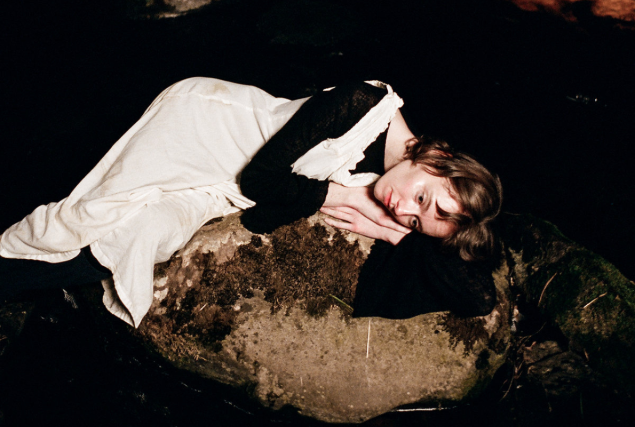
Skullcrusher returns with a haunting, shape-shifting body of work that drifts between vaporous folk and crystalline electronics. Written after leaving Los Angeles for the quiet isolation of New York’s Hudson Valley, Helen Ballentine captures the ache of grief, change, and memory through sound that blurs the line between human and machine. Each song feels like a slow attempt to trace the ungraspable with a circle drawn around fleeting moments and the spaces they leave behind.
Seated Pre-Sale: Tuesday, October 14th @ 10AM
Spotify Pre-Sale: Thursday, October 16th @ 10 AM
On Sale: Friday, October 17th @ 10AM local
Cafe Du Nord's Preferred Viewing Available, General Admission Not Included
For any event that is listed as 18 or 21 and over, ANY ticket holder unable to present valid identification indicating that they are of age will not be admitted to this event, and will not be eligible for a refund. Any event listed as All Ages, means 6 years of age or older. ALL tickets are standing room only unless otherwise specified. If you need special accommodations, contact info@cafedunord.com.
Support acts are subject to change without refund.
Professional Cameras are not allowed without prior approval. Professional Camera defined as detachable lens or of professional grade as determined by the venue staff. When in doubt, just email us ahead of the show! We might be able to get you a Photo Pass depending on Artist’s approval.
Event Information
Age Limit
21+
Alternative
Skullcrusher
Skullcrusher
Alternative
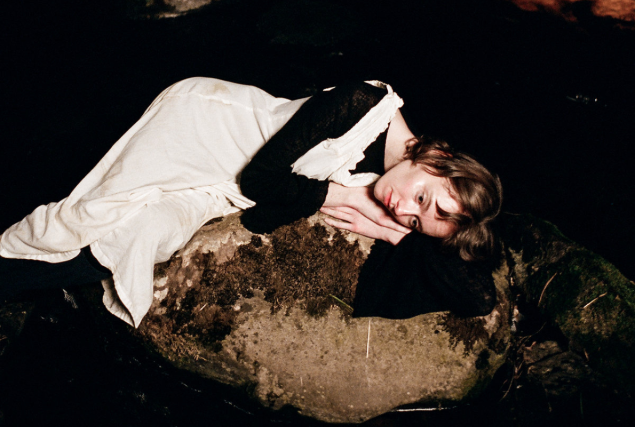
And Your Song is Like a Circle, the second album from New York-based artist Skullcrusher, a.k.a. Helen Ballentine, winds its way into an everchanging, unstable core. Recorded piecemeal over a period of years following the release of her celebrated 2022 debut, Quiet the Room, And Your Song is Like a Circle does not capture experience – it gestures toward the imprint of an experience that is uncapturable. Swaying between vaporous folk and crystalline electronics, landing somewhere in the snowfields shared by Grouper and Julia Holter, Circle probes the ways that grief turns itself inside out. Loss itself becomes as real and substantial as what's been lost.
Ballentine began writing Circle after leaving Los Angeles, a city she’d called home for nearly a decade. She ended up returning upstate to New York’s Hudson Valley, where she was born and raised. Several years of intense isolation followed, and Ballentine immersed herself in films, books, and art that reflected the rupture of relocating cross-country and its dissociative aftershocks.
Throughout the record, the line between human and machine blurs. On "Maelstrom," voices crash between echoing drumbeats like water through a cavern. The vocal filigrees on "Exhale" fan out into a haze of synthesizers and strings. "Dragon" lets piano echo over tight, gritted percussion.
If Skullcrusher’s first album rendered the detailed intimacies of domestic space, Circle finds itself vaporized across the landscape: swirling, drifting, searching. It skirts an event horizon in long, slow strokes. These are songs that vibrate with the fervency of an attempt to capture a moment, to draw a circle around it. "I like thinking about my work as a collection," Ballentine says. "Eventually it might form a circle. Each time I make something, I’m putting another line around the body of work. It feels like I’ll be trying to trace it for my whole life."
Music
h.pruz
h.pruz
Music
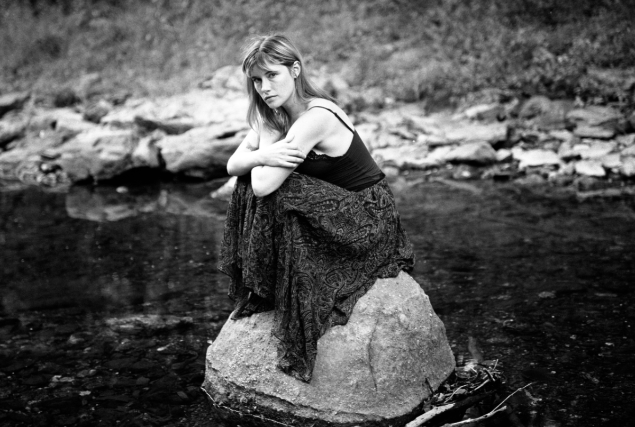
Hannah Pruzinsky is no stranger to the transience of seeking refuge. Having grown up in a conservative enclave of eastern Pennsylvania, they inevitably became adept at finding secret creative outlets at a very early age. “My mom says I sang before I talked,” Pruzinsky says, succinctly characterizing an understanding that only a child could have – sometimes simple language is too constrained, too fallible, to be truly expressive. “It was something I rejected sharing with people for a long time, never singing in front of my parents or friends, refusing to sing in cars for a long time. Pretty paralyzed with anxiety and fear.”
Pruzinsky moved to New York at the age of eighteen, a place they consider to be “extremely important” to the continued refinement of the creative spirit that predated their full grasp of a properly structured sentence. The city’s pervasive atmosphere of sonder seeped through the thinly constructed protective walls of adolescence and perfectly suited their proclivity for private worlds. In a new life entirely their own, they had found a limitless place that they could reach and pull into themselves.
However, the anxieties of being known that had gripped them from a young age matured alongside Pruzinsky. “I started to notice my invasive thoughts really spiraling and loudening as I was entering into a period of stability in my relationship, attempting to settle into a domestic homeostasis. The more time I had to sit and be still in a thing, the more I interrogated myself and my role within my own life, within a relationship, in the context of loving and being loved by another person.” It is from the blessings and curses that come from these well-worn attempts at self-recognition through the other that their newest album, Red sky at morning, was born.
If their debut record No Glory represented a sinking into a new love with a wide-eyed and vulnerable abandon, Red sky at morning reckons with the calm after the torrent, the future it may represent, and the past it may unearth. The title is lifted from a 2000+ year old proverb that finds itself cited in the New Testament:
Red sky at night, sailors' delight.
Red sky at morning, sailors take warning.
Traditionally used by mariners, Pruzinsky gives contemporary meaning to trudging forward into an unknown horizon at all costs. “I am drawn to the fact that so many people put their thoughts and beliefs into the sky, the mere color of it. That we can see things somewhere else, perhaps above, far beyond, that are to come to pass. To see a red sky above themselves, an outright warning of potential peril and collapse, and to still choose to go forward into something. If you know something is going to be uncovered or difficult or treacherous, how do you proceed with that warning sign?”
This treacherous uncovering comes to light within the album as though unearthing a pristine collection of snow globes, each track polishing them free of their obfuscation. Co-producer Felix Walworth’s time spent in seminal, cosmic indie bands like Florist and Told Slant shines through in the skittering Wurlitzer and electronics, floating errantly and quietly throughout the explorative folk framework of Pruzinsky’s storytelling. “Arrival” is a slowly unraveling negotiation between dependency and control, a frozen and fraught moment of domesticity as morphine. “Promises start in the house / Board up the doors, paradise is found / There is no point where we give out / Sure of arriving, sure to stay awhile.” There’s an undeniable warmth present throughout the album that, at times, approaches discomfort – an ozone of familiarity crackling, rupturing for a brief moment of downpour as memories swell to a potency incapable of passivity any longer. The fabled specters of love, fear, surrender, and obsession materialize, taking their seat across the table to engage in spirited debate over the places they deserve and demand in Pruzinsky’s life.
Not an inch of sonic space is wasted, with saxophone swells and meandering, plinking synths spilling across the songs like a mountain of books that quickly became too expansive to adorn shelves alone. “Krista” ups the ante of optimism several notches into siren territory, drunk on the potential of surrendering to desire – “You can feel the longing if you let it in.” The clumsy imperfections of this arrangement are something Pruzinsky takes a sly joy in. “The original form of this song was heavily reliant on a manically sloppy piano part I had written in our apartment. I pride myself on making piano parts without really knowing any music theory anymore. It feels more like a spiritual act when I don’t feel led to play certain things.” Shift only one track prior, however, and you find something that could only have been formed at the end of a divine lead – “Force” is a sparsely constructed, yet unbelievably potent, showcasing of Pruzinsky’s ability to conjure a memory:
Cars crash in a circle on the big race day
It was a killing in your pocket
Started betting on decay
Filling up my old car on the other side of town
Saw you inside at the counter
Said you’d call if you’re around.
“My mother used to quote the red sky proverb to me growing up. I didn’t realize it had biblical origins for a long time… many years have felt like a homecoming back to my creative start in childhood,” Pruzinsky admits. Wrestling with the twin fears of solitude and reliance and an escape from a life that disallowed an expression of their truest self, Red sky at morning simultaneously heeds the call of the journey while working to construct a momentary shelter from the storm – whether it arrives in the dawn or dusk of our lives. Shuffling across worn floorboards, polished from overuse, that point toward calmer waters, trying to unlearn the frantic pace of introspection, the goal is evident in the hopeful refrain of “Arrival” – “I can clear the cycle.”