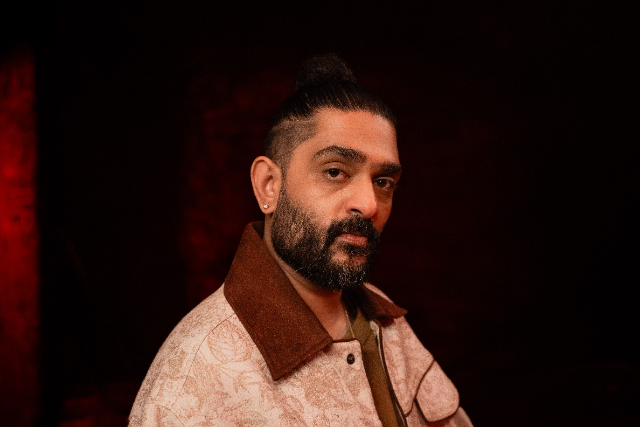
Sid Sriram
Thu, 5 Nov, 10:30 PM EST
Doors open
10:00 PM EST
Blue Note Jazz Club
131 W. 3rd St, New York, NY 10012
Description
$20 Minimum Per Person
Full Bar & Dinner Menu
NO REFUNDS OR EXCHANGES.
All seating is first come, first served.
Bar Area seating is limited and first come first served. When all available seats are occupied, the remaining bar area is standing room only.
Table Seating is all ages, Bar Area is 21+. Bar Area tickets for patrons under 21 will not be honored.
Group Reservations:
Groups larger than 8 must purchase a group package at club@bluenote.net, or by calling 212.475.8592.
Groups larger than 8 without a group package will be subject to group surcharges added to your bill.
Groups arriving late or separately are not guaranteed to be seated together. All seating is first come, first served. Arrive early for best seats.
We are not affiliated with any third-party ticket sellers. Tickets purchased directly through our official website or TicketWeb are the only authorized sources. We cannot guarantee the validity of tickets purchased through unauthorized sources. To protect against fraud and unauthorized ticket sales, management may require verification of the original purchase method, including presenting the credit card used for purchase and matching photo identification upon entry.
Event Information
Age Limit
All Ages
eTicket Delivery
Your tickets will be e-mailed closer to the event date.
Refund Policy
We do not offer any refunds, exchanges, or transfers on any ticket purchases. All sales are final. We do not have any liability or influence on tickets purchased through a ticket reselling or 3rd party site. Official ticket purchases are run through TicketWeb.com only.
R&B
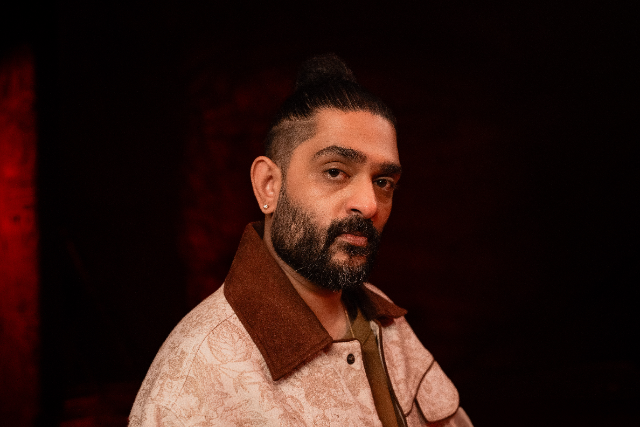
Sid Sriram
Sid Sriram
R&B
For Sid Sriram, there is a quality inherent in the Carnatic music of South India that he describes as "universal truth." The 32-year-old singer/songwriter has spent years imparting this truth to audiences in India and across the world; today, he ranks as one of the most popular Bollywood singers of the past decade. On his new English-language album Sidharth, however, he departs from the musical lineage of his family's home country, where he has lived since 2015, and draws on the R&B, indie rock, and American pop styles he grew up with as an immigrant kid in Fremont, CA, in the '90s and 2000s. Through doing so, he hoped to find a way to communicate "truth" in music through deeper personal exploration.
"For maybe the first time, I was able to make music where all these different elements that feel like part of my DNA breathed through the songs," Sid explains. "I didn't have to try and think about how to express these things. It started to come out on its own."
Sidharth is a massive-sounding record: soulful, ethereal, and emotionally dense. Many of its 14 tracks sound like they are echoing down from a mountaintop. However, the album was recorded in an intimate context. In the summer of 2021, Sid took a leap of faith and hopped on a plane to Minneapolis, where he and producer Ryan Olson (Poliça, Gayngs, Bon Iver), who had previously only met on Instagram, spent an intensive week in the studio. Most of the songs were tracked live by a small team of Olson associates, including Bon Iver's Justin Vernon, of whom Sid was a longtime fan. "There was no ego," Sid remembers. "Everyone was just really happy to be back in a room making music with each other. Granted, I didn't know any of them at the time. But it felt really quickly like a family."
Fronting this band, Sid threw his entire creative self into crafting vocal hooks and elaborate songforms on the fly. "I had to trust in chaos and let it guide me," he recalls. The music that resulted from that studio joyride is a dizzying combination of pop anthems and progressive experiments, centered on Sid's heart-wrenching vocal performances and Olson's adventurous electronics. Hook-forward tracks with dance floor energy, like the Afrobeat-inflected "Friendly Fire," slot in next to unexpected diversions like "The Hard Way," a celebration of family and loved ones featuring a hyperactive drum 'n' bass groove that splits the difference between Janet Jackson in her Velvet Rope era and post-Kid-A Radiohead.
All this may seem like a far cry from the music that has made Sid famous with Bollywood fans worldwide since breaking out with his first hit soundtrack song, "Adiye" (from 2013's Kadal), just a year out of music school. Indeed, many of the million-plus-viewed videos of Sid feature him singing ragas backed by traditional instruments, not freestyling personal narratives over glitchy 808s and Auto-Tune beds. But before his sudden success, Sriram was an American 20-something obsessed with pop and R&B; he found early viral success by posting a Frank Ocean cover ("We All Try") to YouTube. In many ways, Sidharth highlights the ways in which the musical personalities of that younger version of Sid and the Carnatic music star Sid relate to and complement one another.
During some of the record's most breathtaking moments, Sid combines contrasting these musical modes to moving effect. "Dear Sahana," a song about "yearning for companionship," mixes R&B and gospel with Indian classical melismas and country music flourishes. In a nod to his earliest musical memories, the children's choir his mother has led since Sid's youth lends support at the song's climax, a moment that always makes him tear up while listening back. Country music, on the other hand, was mostly alien to Sid, but he found that it fit naturally into his musical universe. "I realize that pedal steel lends itself to the way my voice moves," he explains. "The way it can bend felt like a cool mirror to the Carnatic-based melodies."
Though its songs often look resolutely towards an open-ended future, Sidharth also represents a homecoming of sorts for Sid, re-embracing American culture after spending years absorbed in the musical traditions of his ancestral homeland. This return to his roots is reflected in the album title, which relates to a moment of childhood self-actualization. "When we first moved to the Bay, in second grade, I decided to change my name to Sid since so many people fucked it up," he says. "Sidharth, in a way, is me reclaiming the name and everything that comes with it, not just culturally, but for me personally." It is a fitting title for a record across which Sid seems to be — as he puts it — "excavating" his life experiences in search of clues that can help him on an uncertain and exciting journey ahead.
Jazz
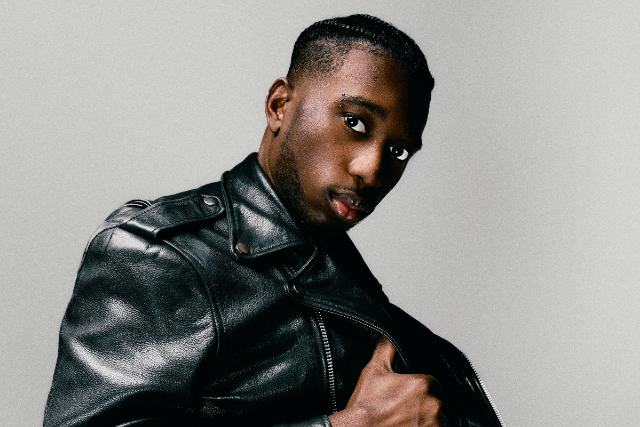
Julius Rodriguez
Julius Rodriguez
Jazz
You can find Julius Rodriguez in many places. You could walk into a packed jazz haunt and bear witness to him behind the piano with energy practically surging from his fingers through the room. You might scroll up on social media and catch him alternating from drums to bass to guitar at the speed of a jump cut. You may also step onto festival grounds and see him on stage either solo or accompanying another likeminded visionary, jamming like his life depends on it. No matter where, the New York-born and Los Angeles-based multi-instrumentalist, composer, and producer electrifies any lane. By doing so, he also transcends perceived boundaries between genres and styles, redefining the music to mirror his own fluid creative inclinations and delivering a sound that’s solely his alone.
Following widespread applause from The New York Times, Vanity Fair, The FADER, and more, collaborations with everyone from Wynton Marsalis to A$AP Rocky, and tens of millions of streams, he grows in as many directions as possible on his second full-length offering, EVERGREEN [Verve Records]. “I kept seeing the word EVERGREEN everywhere,” he recalls. “I looked up the definition, and it struck me. An ‘EVERGREEN’ is a plant whose foliage remains functional for all seasons. That’s similar to how I like to be; I want to be myself no matter the genre I’m playing or what’s going on around me. There are a lot of styles on this record, but it’s recognizably my voice.”
He's honed that voice since his childhood in New York where he participated in his first late-night downtown jam session at barely eleven-years-old. Sharpening his skills with thousands of hours and hundreds of gigs, he established himself as a highly sought-after collaborator—whether on piano, drums, synths, or bass. You could hear him loud and clear on recordings by the likes of Carmen Lundy, Lackecia Benjamin, Brasstracks, Kassa Overall, Baby Rose, Joe Farnsworth, Cautious Clay, Ian Isiah, and Braxton Cook. Moreover, he has shined on stage with the late Roy Hargrove, Remi Wolf, Dev Hynes, Lauren Spencer-Smith, Macy Gray, Kurt Elling, Gabriel Garzón-Montano, Morgan James, and Cautious Clay, to name a few. He even lent his talents to Meshell Ndegeocello’s The Omnichord Real Book—which garnered the first-ever GRAMMY® Award in the category of “Best Alternative Jazz Album.”
Julius’s signature style came to life on his solo debut, Let Sound Tell All. NPR hailed the latter as “a project so dynamic that even the umbrella of jazz couldn’t quite contain its essence,” and GRAMMY.com noted, “Rodriguez is demonstrating a lively, inspired talent within the genre’s convention while also infusing his own personal musical identity and history into the music.” Not to mention, he made his debut at North See Jazz festival in 2023, charging up the crowd.
As life changed, his music evolved. Spending the bulk of his life in New York, he relocated to Los Angeles during 2022. At this point, he had toured and performed around the globe. Moving away from home and seeing the world exerted a profound impact upon him. He notes, “You don’t understand how different these moments are until you experience them head-on.”
At the top of 2024, he entered a studio in North Hollywood, CA with producer Tim Anderson [Solange, Halsey, Billie Eilish]. They unlocked a distinct chemistry, bonding over the catalog of Herbie Hancock and seventies fusion titans Mahavishnu Orchestra.
“Tim has an appreciation for jazz and the culture, so he understood where I was coming from musically,” Julius goes on. “From there, he brought in other elements. I love what he’s done with artists outside of the tradition I come from like Solange and Banks, and he introduced me to the ambient music world.” Fittingly, Julius introduces the album with the opener and single “Mission Statement.” Steady handclaps set the track in motion as a spacey loop swims around a slick bass line. Cymbals chatter through vibrant piano, and a saxophone solo sails off towards the horizon. “‘Mission Statement’ was one of those ideas that initially came to me in the Pandemic,” he recalls. “I was figuring out how to incorporate sounds from hyperpop, drum ‘n’ bass, and other styles that I dig, but I don’t get a chance to play. In terms of the name, I’m not just trying be the jazz musician that everyone knew me as. My vision was to create a different sound that’s unique to my influence. My mission is to break out of what people know and expect of me and just do what I like.” “Love Everlasting” sees him team up with longtime friend and fellow dynamo Keyon Harold. A dreamy keyboard melody gently echoes as Keyon’s unmistakable trumpet booms in fits of emotion over robust drums and shimmering piano.
“I’ve known Keyon since college,” he goes on. “He was the first person to take me on tour in Europe, and I’d always wanted to work with him on my own material. I invited him to the studio, and he played trumpet and harmonized with himself. Thematically, it felt like a cycle of what I assumed to be a friendship. In a strong friendship, no matter what happens, you’ll always understand the love you and the other person have for each other.”
Then, there’s “Run To It (The CP Song).” It hinges on a boisterous back-and-forth between the bass, beats, guitar, and pian —akin to a vivacious Sunday on stage in a Southern church. “There’s a camaraderie to the melody,” he smiles. “It’s bound to make for a good time.”
On the other end of the spectrum, he injects a “jazz waltz vibe” into his reimagining of Dijon’s “Many Times.” The epic “Stars Talk” unites him with Nate Mercereau whose synths and freestyled guitar samples amplify an exhale of sonic bliss. “It takes you on a bit of a journey,” he notes. “Nate brought it to another level.” The album crescendos to a triumphant inflection point on the closer “Champion’s Call” [feat. Georgia Anne Muldrow]. A signature piano line from Julius brims with energy as Georgia’s deep wail resounds with earthquaking intensity in a mantra-like motion, “Champions call.” “I played some shows with Georgia, and I asked, ‘What are we going to play?’,” he remembers. “She replied, ‘I don’t do setlists; we go on stage and just trust God’. She’s big on letting her spirit flow through her from a higher power. That’s exactly what she did on ‘Champion’s Call’. It was pretty magical.” By breaking boundaries with EVERGREEN, Julius has lived up to the true spirit of jazz by ushering it towards the future freely. “I hope you hear this and forget about the whole genre labeling thing,” he leaves off. “This is just music you can dance to, feel to, and think to. It’s not about categorizing; it’s about enjoying something for what it is. EVERGREEN goes through a whole bunch of genres, but this is the world I’m seeing and hearing. This is the
feeling I’m invoking. I made a statement and said, ‘The genre is just me’.”

Ambient
Austin Williamson
Austin Williamson
Ambient