
Russian Circles w/ Pelican
Mon, 12 Oct, 8:00 PM CDT
Doors open
7:00 PM CDT
The Basement East
917 Woodland St, Nashville, TN 37206
Event Information
Age Limit
18+
eTicket Delivery
Your tickets will be e-mailed closer to the event date.
Refund Policy
All sales are final. No refunds unless a show is canceled.

Alternative Rock
Russian Circles
Russian Circles
Alternative Rock
Halfway through the four-year touring cycle for their eighth full-length record Gnosis, Chicago-based instrumental trio Russian Circles hit the two-decade anniversary of their formation. One might expect a band to capitalize on such a major milestone. Instead, guitarist Mike Sullivan, drummer Dave Turncrantz, and bassist/keyboardist Brian Cook spent 2024 unceremoniously touring in support of their most recent album across Australia, South America, Europe, and North America. After all, this is the work ethic that built Russian Circles into one of the biggest heavy instrumental rock bands in the world. This is a band with no hit songs. No fan consensus on their best album. Just a reputation for consistency and quality.
Not that things haven’t changed in the last 22 years. The band is now spread out between Chicago, Los Angeles, and a rural island off the coast of Seattle. While the trio insists their music is a confluence of broad-ranging influences—the formidable Touch & Go artists of the Midwest, the prog giants of late ‘60s and early ‘70s England, the hypnotic motorik and kosmische grooves of West Germany, the international underground’s most caustic strains of metal—it is fair to say Russian Circles’ adventurous diversity has evolved into its own distinct sound. As one of the notoriously press-shy members anonymously mentioned, “the music we make is a collective process of reconciliation, navigation, and reflection upon aging both as individuals and as a creative entity. Life has created very real distances between us, but the band continues to be at the center, and this creative collaboration is a way of charting the passage of time while also giving us a reason to look to the future.” On their latest album, Nine, the band triangulates their relative positions into singular seismic long-form album-oriented soundtracks to the trials and tragedies of life in the modern age.
For Nine, Russian Circles adhered to their strategy from Blood Year (2019) and Gnosis (2022) by teaming up with engineer Kurt Ballou (Converge, Mastodon, High on Fire). Basic tracking took place at Electrical Audio in Chicago while the finishing touches occurred at Ballou’s GodCity Studio in Salem, Massachusetts. Recording at Electrical Audio allowed the band to retain a thread to their earliest endeavors, with the band having recorded at Steve Albini’s exalted studio as far back as their debut album Enter (2006). The relationship with Ballou is a more recent development stemming back to the band’s sixth album Guidance (2016), owing to his ability to highlight the weight and entropy of metal and hardcore bands in their natural environment while enhancing the clarity and articulation often lost in walls of distortion.
Nine continues Russian Circles’ unhurried evolution and disciplined refinement, leaning into their strengths while pushing at the boundaries of their sound. Album opener “Borehole” offers what might be the band’s closest approximation of a traditional rock song schematic, with a structure of repeating parts that takes the listener on a journey promising hope only to bring them full circle to the dark, desolate, and dystopian futility of the song’s namesake: Russia’s abandoned Kola Superdeep Borehole. From there, the band launches into a ferociously concise overview of metal battle tactics with “Empath”—where a Godflesh-style bass crunch and tornado siren drone ushers in thrash-inspired guitars, venomous black metal attacks, d-beat forays, a deliciously knuckleheaded hardcore breakdown, and a final scorched earth war metal riff, all in just under five minutes. Side A closes with Nine’s grand centerpiece—the patiently cataclysmic “Eluvial.” Centered around the kind of ping-ponging delayed guitar patterns that Brian Eno and The Edge developed for The Joshua Tree, guitarist Mike Sullivan slowly unfurls a winding, linear melody against the backdrop of drummer Dave Turncrantz’s Latin-rhythm-inspired groove and Brian Cook’s pairing of grinding bass and stuttering electronics. “Eluvial” slowly builds to an apex, leaving only the vaguest breadcrumb trail of obscured percussive and melodic motifs to the song’s final cleansing tempest.
The latter half of Nine builds on Russian Circles’ aural expansion. Side B opens with bottom-end synth pulses, dubby bass lines, serpentine finger-tapped guitar patterns, and nimble rhythmic shifts on “E2.” On “Meridian,” the band once again employs the slow-build strategies of their post-rock inclinations, with Turncrantz’s propulsive drums and Sullivan’s Steve Reich-esque arpeggios giving the song a sense of constant forward momentum, perfectly suited for gliding along the expressways of towering metropolises on neon nights. The album ends with the light and dark contrast of “Arletta” and “Seventh Seal.” Much like Cliff Burton-era Metallica’s penchant of pairing melancholic classical guitar passages with the blunt force trauma of their heaviest tracks, so does the stark beauty of Sullivan’s nylon string solo composition usher in the band’s most unapologetically straightforward metallic assault.
The album art for Nine consists of photographs of Snowpile for Chicago, a sculpture by Tony Tasset that’s been on display in the windows of Chicago Public Library’s West Town Branch since 2004—the year Russian Circles formed. Constructed out of cast bronze, brass, fiberglass, resin, and oil paint, Snowpile for Chicago is a convincing recreation of the mounds of dirty snow that occupy city streets throughout Midwest winters. The inclusion of this image is partially a nod to the band’s hometown, but more importantly serves as an analogy for Russian Circles’ music. It’s a meticulously crafted piece that documents a cold, harsh, and ugly reality. Even though this artifact captures something that is unpleasant, its rendering by human hands gives it a quality of striking beauty. There is a larger conversation to be had about transgressive art, ephemera, the devaluing of art in a cultural landscape that craves constant content, the advent of AI in creative realms, and the general sense of futility that looms over musicians in the modern age, but as an instrumental band, Russian Circles opt to plant these notions in the listeners’ heads through the image of a haunting sculpture in a stark interior space rather than through crafting online manifestos, social media rants, or topical lyrics.
Reinvention is unnecessary when the path forward has always been an open horizon. When it comes to Russian Circles, you can go back through their catalog and find a vast array of moods, stylistic shifts, and timbral experiments across any given album, yet there has been a noticeable progression in the overall experience of taking in any one of their albums as a whole. Whereas earlier albums were almost playful in their traversing of territories, Nine is a document of a band that knows the lay of the land and is fortifying their dominion over the varied terrain.
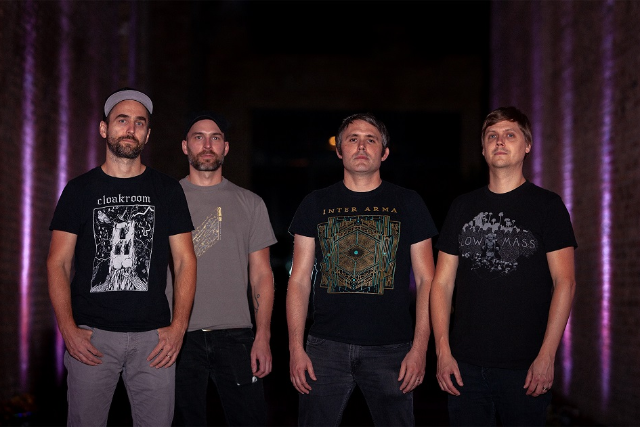
Post-Rock/Experimental
Pelican
Pelican
Post-Rock/Experimental
It’s been a long journey for Pelican—from their sludgy reductionist beginnings in the DIY spaces of Chicago, through their tenure as forerunners to the burgeoning international community of artists fusing post-rock’s dramatic melodicism with thinking man’s metal, and to their ascension into the canon of the elder statesmen in the brainy and brawny realm of the underground rock world. The band encountered no shortage of ups and downs along the way, and those peaks and valleys often found an analog in the moods and timbres of Pelican’s sonic palette, with youthful frustrations channeled into the unrepentant dirges of their self-titled debut or new opportunities afforded by their increasing popularity manifested in the expanded vistas of City of Echoes. In the process of writing their sixth album Nighttime Stories, the quartet endured a slew of realizations, tragedies, and glimmers of optimism that guided the creative process to the most potent album of their eighteen-year career.
One of the most profound shifts in Pelican’s operating procedure came with the departure of founding member Laurent Schroeder-Lebec back in 2012. Along with fellow guitarist Trevor Shelley de Brauw and drummer Larry Herweg, Schroeder-Lebec shared duties in the hallucinatory art-grind band Tusk, with the dual collaborations resulting in a near-psychic interplay between the musicians. The only added personnel for Pelican was bassist Bryan Herweg, whose familial ties within the rhythm section were evident with his in-the-pocket playing. Though Schroeder-Lebec’s exit had been planned with enough foresight for the band to gradually incorporate Dallas Thomas as a replacement, the alteration could be felt in their first album with a line-up change. Forever Becoming contained the requisite breadth and muscle of their earlier albums, but it also sounded more like a band that was focused on creating dimension in the studio as opposed to replicating the enveloping force of their live show. “It felt like it would have more musical continuity from the previous albums if the three original members handled the writing rather than approaching it with a new lineup,” Shelley de Brauw says of that album, but the subsequent years of playing together—whether in the practice space, the studio, or on stage—altered the writing chemistry for Nighttime Stories. “Rather than try to bend Dallas to fit into Pelican, we've all dug into our subconscious to find the shared similarities in our styles—particularly the era of the late 90's and early 00's where bands were beginning to push hardcore and metal in a more exploratory direction.”
While Pelican has frequently strayed from the unanimous locked-in riffage of their first few records in favor of more complex instrumental interplay, it’s hard to imagine an earlier incarnation of the band writing songs as meticulously crafted and detail-oriented as Nighttime Storiestracks like “Midnight and Mescaline” or “Abyssal Plain”, where the compositions recall everything from the triumphant call-to-arms of classic Dischord bands to the vicious troglodyte battery of the Melvins to the dynamic interwoven melodies of bottom-heavy indie cult heroes Chavez. But there’s also the requisite lurch and stomp of their early years, as evident on the unrepentant crusher “Cold Hope”. It’s the heaviest Pelican record in a long time, and it was at least partially due to the cultural climate. “We were halfway through writing the album when a significant portion of the country signaled that they were ready to publicly embrace totalitarianism, bigotry, and white supremacy, and the resulting dread and anger we experienced had a considerable effect on the shape of the material that followed,” Shelley de Brauw says with regards to the grim mood surrounding the album’s gestation period.
There were personal tragedies that informed the creative process too. Nighttime Storieswas a title originally proposed for a Tusk record that never developed. Their vocalist Jody Minnoch passed away unexpectedly in 2014, and many of the song names and aesthetic themes on Nighttime Storiesstemmed from ideas Minnoch floated past his bandmates shortly before his death. Additionally, many of the dissonant chord voicings and idiosyncratic structures that were part of Tusk’s signature sound began to surface on the album, so it felt appropriate to pay homage to their departed colleague. Thomas also experienced a heavy loss in his life with the passing of his father. The album’s opening track “WST” is a somber ballad performed on an acoustic guitar handed down from father to son, with his initials serving as the title.
Nighttime Storiesisn’t entirely mired in bleakness. Though the album certainly veers towards the darker end of Pelican’s songwriting, the energized urgency on tracks like “Arteries of Blacktop” and sublime melodicism on songs like “Full Moon, Black Water” suggest a renewed vigor for the band. Perhaps it stems from three of the four members becoming fathers in the six-year gap between albums. Maybe it’s a product of rediscovering a common musical language as a reformulated quartet. Maybe it came from reuniting with Pelican and Australasia producer Sanford Parker for the tracking of the album. Tracked in their original stomping grounds of Chicago at Electrical Audio and bolstered by Matt Bayles’ mixing skills, Nighttime Storiesthrobs with guttural force in its most malicious moments and shimmers with beauty in the moments of respite.
Pelican have always excelled at vacillating between the savage sounds of various niches of metal underground and the more delicate and nuanced sounds of Midwest’s cerebral indie community, proving that they can make either end of the spectrum more vibrant and compelling through the art of contrast. With Nighttime Stories, the pendulum has swung back to the angst and ire of their younger years while delivering it with the nuance and wisdom that’s come with nearly two decades of writing and performing. Southern Lord is proud to offer up Nighttime Stories to the world on CD/LP/digital on June 7, 2019.