TICKET SALES TERMINATED
Tickets are currently unavailable on TicketWeb
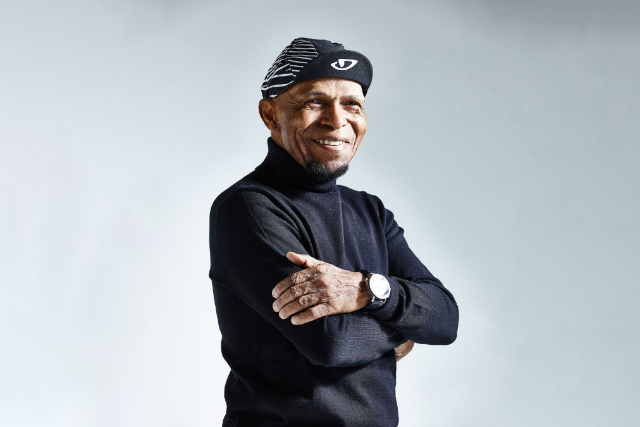
Ronnie Foster with special guests James Carter & Isaiah Sharkey
Mon, 24 Apr, 8:00 PM EDT
Doors open
6:00 PM EDT
Blue Note Jazz Club
131 W. 3rd St, New York, NY 10012
TICKET SALES TERMINATED
Tickets are currently unavailable on TicketWeb
Description
$20 Minimum Per Person
Full Bar & Dinner Menu
NO REFUNDS OR EXCHANGES.
All seating is first come, first served.
Table Seating is all ages, Bar Area is 21+. Bar Area tickets for patrons under 21 will not be honored.
Group Reservations:
Groups larger than 10 must purchase a group package at groupsales@bluenote.net, or by calling 212.475.8592.
Groups larger than 10 without a group package will be subject to group surcharges added to your bill.
Groups arriving late or separately are not guaranteed to be seated together. All seating is first come, first served. Arrive early for best seats.
Tickets for Blue Note New York shows are only available for purchase on Ticketweb. We are not affiliated with any third-party sellers. Tickets purchased on third-party sites will not be honored. The credit card used for original purchase of tickets will be required at the door upon entry.
Event Information
Age Limit
All Ages
Refund Policy
We do not offer any refunds, exchanges, or transfers on any ticket purchases. All sales are final. We do not have any liability or influence on tickets purchased through a ticket reselling or 3rd party site. Official ticket purchases are run through TicketWeb.com only.
Soul Jazz
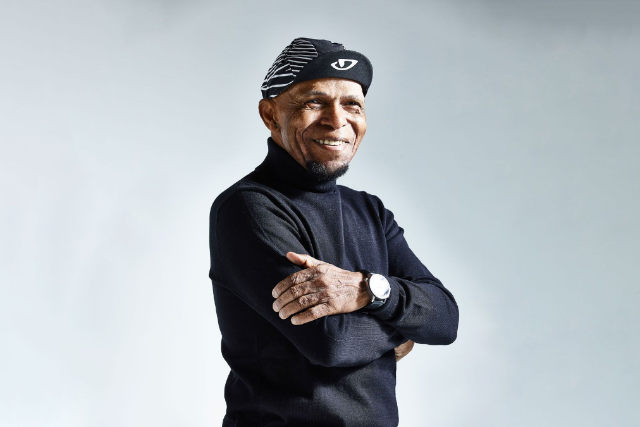
Ronnie Foster
Ronnie Foster
Soul Jazz
The 2022 return of Ronnie Foster to Blue Note Records is an event of synergistic quintessence, completeness, and cool. The organ great’s dynamic new album, Reboot, arrives upon the 50th anniversary of his 1972 Blue Note debut Two Headed Freap, which is also being reissued this year as part of the label’s Classic Vinyl Series. The first in a run of five stellar early-70s albums, Two Headed Freap featured Foster’s memorable tune “Mystic Brew,” which would later reach the ears of hip-hop fans around the world when A Tribe Called Quest sampled the track as the foundation of “Electric Relaxation” on their 1994 album Midnight Marauders.
Foster first caught the ear of Blue Note co-founder Francis Wolff when he made his first-ever recording as a sideman on jazz guitar legend Grant Green’s searingly funky Blue Note LP, Alive! in 1970. After Wolff passed away a few months later, Ronnie was officially signed to Blue Note by Dr. George Butler making him the next in an illustrious lineage of Hammond B3 organ artisans the label had presented which included the legendary Jimmy Smith, Larry Young, and Dr. Lonnie Smith. To this accord, Ronnie’s re-signing is a bold torch-passing move that brings him full circle.
“Blue Note has always stood for The Art of Jazz,” Foster marvels. “I grew up on Blue Note, listening to all the greats. It was ingrained early. I was exposed to it through my own path and other people’s paths – fans and players. I had some albums, my friends had other albums. When something new came out, we’d go to someone’s house and we’d all check it out…together. From Horace Silver and Art Blakey’s Jazz Messengers to Donald Byrd and Herbie Hancock, Blue Note’s roster was the cream of the crop – the center. And, of course, they brought Jimmy [Smith] on the scene. The stuff he was playing on The Sermon and Groovin’ at Smalls’ Paradise was crazy! Had me listening on headphones at the Buffalo Public Library.”
The nine-song Reboot marks a fresh start for Foster, who has whipped up an omnidirectional brew of Hammond Organ Groove that, yes, pays homage to the past but more often reflects Ronnie’s restlessness for ushering in the new. The album opens with the title track, “Reboot,” which he describes as “organ music…but a little different. This is where my head is at now – and where I’m going.” His journey to that destination rides on a winding melody, not one but two bridges, and a rock-steady groove kicked down by his son, drummer Chris Foster, one of four cuts he plays on here, rendering Ronnie: One Proud Papa.
Ronnie digs into ‘The Latin Bit’ on three numbers. “Sultry Song II” is an update of his own tune that he introduced on flutist Nestor Torres’ 1991 album Dance of the Phoenix (which he also produced). “Carlos” is a composition inspired by Mexican Rock legend Carlos Santana, an acquaintance who became a close compadre after Ronnie repeatedly came out to see him during his residency at The Hard Rock Café in Las Vegas—so many times that they ultimately gave him his own personal, perennially valid, laminated backstage pass! This features a flamenco guitar intro played by Jerry Lopez, simmers into a suave melody then all-out erupts with fiery solos from trio guitarist Michael O’Neill and Ronnie, spiced with the percussion of Luis Conte and Lenny Castro. The tropical trinity ends with “After Chicago,” balmy bossa evocations of one especially memorable Windy City gig trip.
“Isn’t She Lovely” is a steady grooving cover of Ronnie’s old friend Stevie Wonder’s classic song set to a backbeat shuffle, another full circle moment given that Ronnie played on Songs in the Key of Life. Then there’s the crowd-pleasing call-and-response rhythm & blues holler “Hey Good Lookin’ Woman,” road-tested around the globe to audiences of all cultures and languages that eat up the playful vocal challenge. And for those in search of some of that good ol’ burnin’ after-hours organ trio vibe, “Swingin’” more than lives up to its matter-of-fact title, fueled by drummer Jimmy Branly’s hot pepper punctuations.
The organ was originally created for churches. On Reboot, the solo “J’s Dream” marinates in that deep, warm, surround sound hug everybody could use right about now. The album closer, a piano solo entitled “After Conversation with Nadia,” points to another level of reboot for Ronnie who started out on acoustic ivories.
There’s so much synergy in the circuitry surrounding Ronnie’s return to Blue Note. The master recorded over two days at the fabled Capitol Studio in Hollywood where he first set foot in back in 1976 recording the multiplatinum-selling Breezin’ LP (to which he contributed the song “Lady”) as a member of George Benson’s band.
When Paula Salvatore, beloved Capitol Studios gatekeeper, ushered him in for a private viewing of the vault, sitting right on the desk happened to be the original 2-track master tape of Grant Green’s Alive! – Ronnie’s first record date. The sweetest treat of Reboot is that Ronnie’s daughter, Kaylie, shot the Francis Wolff-worthy session photos and also designed the secret-coded cover.
In the liner notes for Reboot, Ronnie makes sure to pay homage to one very important person in his life who passed away in 2021: “This album is dedicated to the memory of my brother, friend, Buffalo Homie and hero Dr. Lonnie Smith, who was one of the best in the world on the Hammond B3 organ.”
Mightily hoisting the Blue Note organ torch, Ronnie Foster is the last of the Mohicans yet ever the youngest and oldest man in that room thanks to the musical osmosis that was poured into him – direct jack – by all of the greats that preceded him, and his relentlessly curious spirit that keeps him giant steps ahead perched, head-bowed, before his sleek, custom hummin’ Hammond XK-5.
Jazz
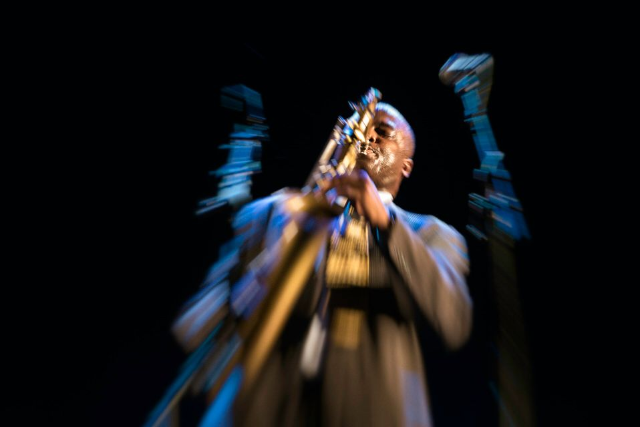
James Carter
James Carter
Jazz
An effusive, dynamically gifted jazz saxophonist, James Carter caused a critical uproar when he appeared on the New York jazz scene, having moved from his native Detroit in the early '90s. Carter's debut recording, JC on the Set, issued in Japan when he was only 23 and in the States a year later in 1993, was universally acclaimed as the finest debut by a saxophonist in decades. Critics lauded his ability to play in virtually any jazz style without appearing to ape anyone. He has continued to build upon these early accolades, exploring the music of Django Reinhardt on 2000's Chasin' the Gypsy, displaying his classical skills on 2011's Caribbean Rhapsody, and working with his soulful organ trio on 2019's Live from Newport Jazz.
Born in 1969 in Detroit, Carter began playing at age 11 and studied early on with trumpeter Marcus Belgrave. A prodigy, he progressed quickly and by 1986 at age 17 joined Wynton Marsalis on tour. Two years later, he became a member of Lester Bowie's Brass Fantasy upon relocating to New York. Carter issued no less than six recordings under his own name between 1993 and 2000, all of them with different focuses, from a set of standards, Conversin' with the Elders in 1995, to an electric funk record, Layin' in the Cut, to a simultaneously released set in tribute to Django Reinhardt,
Chasin the Gypsy. Three years later, he honored the legendary Billie Holiday with Gardenias for Lady Day.
Moving from Columbia to Warner Bros., Carter's Live at Baker's Keyboard Lounge followed in spring 2004. Another live session, Out of Nowhere, was released in 2005 on the independent label Half Note. There were also sessions and live dates with the Lincoln Center Jazz Orchestra, Cyrus Chestnut, Rodney Whitaker, Frank Lowe, the late Julius Hemphill, pop-jazz singer Madeleine Peyroux, Ronald Shannon Jackson, Tough Young Tenors, and the Charles Mingus Big Band. In 2008, he released Present Tense on Universal Jazz. Carter followed that up a year later with the live album Heaven on
Earth, featuring a jazz supergroup including, among others, organist John Medeski and bassist Christian McBride.
In 2011, Carter delivered Caribbean Rhapsody, his collaboration with classical composer Roberto Sierra featuring the piece "Concerto for Saxophone and Orchestra." Honing his craft to a jaw-dropping technical level, Carter is the master of a family of saxophones, flute and clarinet. His is a powerhouse virtuosity likened by composer Roberto Sierra to the great Paganini. It was in fact this astounding instrumental flexibility, coupled with an eclectic body of recordings that inspired the Spanish maestro to write the celebrated Concerto for Saxophones and Orchestra for the 31-year-old. Written expressly for Carter and mixing Jazz, Latin and classical elements, the work showcases the multi-instrumentalist’s outstanding technical virtuosity whilst allowing him “the freedom to improvise.”
The four-movement piece sees Carter take center stage throughout, executing swift instrument transitions between Tenor and Soprano and employing a full gamut of musical expression, from furiously-fast Coltrane like tempo to a quiet ballad.
A concert album, Live from Newport Jazz, recorded with his organ trio at the long- running festival, arrived in 2019, reaching the top 10 of Billboard's Jazz Albums chart. More eclectic projects followed, including 2022's D(IVO), the debut album from Carter's adventurous saxophone quartet with Tim Berne, Tony Malaby, and Ivo Perelman. He also joined Perelman for 2022's Reed Rapture in Brooklyn. The following year, he showcased his outsized baritone saxophone skills on the solo recording Un (Unaccompanied Baritone Saxophone).
Early 2023 brought Carter to the NYC Blue Note as special guest with DJ Logic and with Galactic. His capacious ability to cross boundaries, mesh genres, and deliver it all with mindboggling energy, clarity and that “special something” that brings audiences to their feet clamoring for more.
2023 also saw James Carter bring his Quintet to Birdland in the debut presentation of Lookin’ at Lock: The Music of Eddie “Lockjaw” Davis, featuring Satish Robertson on trumpet, Gerard Gibbs on piano, Hilliard Greene on bass, and Kahlil Kwame Bell on drums. Carter brings his Quintet to the Syracuse Jazz Festival on 29 June 2024 and returns to Birdland 13-17 August 2024.
On tour in 2026 James Carter is performing “Trane: A Centennial Supreme” with James Carter on Saxophones, Steve Turre on Trombone, Gerard Gibbs on Piano, Hilliard Greene on Bass and Alex White on Drums. This program is also available with the James Carter Organ Trio and the James Carter Quartet.
Soul Jazz
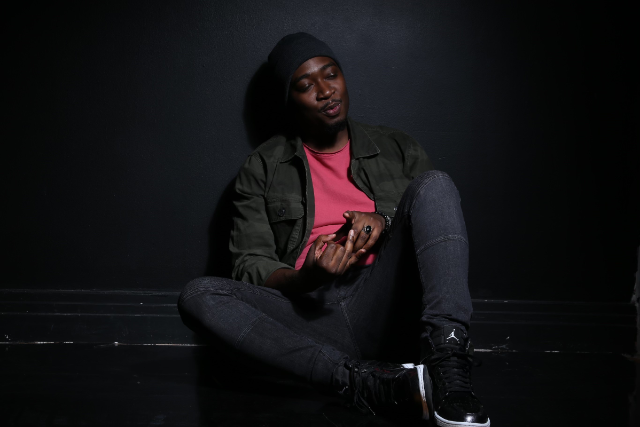
Isaiah Sharkey
Isaiah Sharkey
Soul Jazz
Guitar virtuoso, multi-instrumentalist, singer, songwriter, producer, educator and activist are just a few titles used to describe the musical powerhouse known as Isaiah Sharkey. Hailing from a musical family in Chicago, he picked up his first guitar when he was just 3 years old. Creating music came naturally to him and it wasn’t long before his family realized he had an irrefutable gift. By the age of 14, Sharkey was performing in clubs in Chicago and a few short years later he had piqued the interest of music industry giants like The Isley Brothers, D’Angelo, for whom he won his first Grammy Award, John Mayer, Patti LaBelle and many others. Blending his background in rock, gospel, jazz, R&B, blues, and funk, Sharkey has created his own original sound withan unmistakable dose of soul.