TICKET SALES TERMINATED
Tickets are currently unavailable on TicketWeb
Follow us on Instagram @tractortavern
KEXP's Roadhouse Presents: Robert Lester Folsom with special guest Kassi Valazza
Fri, 15 May, 8:30 PM PDT
Doors open
7:30 PM PDT
Tractor
5213 Ballard Avenue NW, Seattle, WA 98107
TICKET SALES TERMINATED
Tickets are currently unavailable on TicketWeb
Event Information
Age Limit
21+
Soft Rock
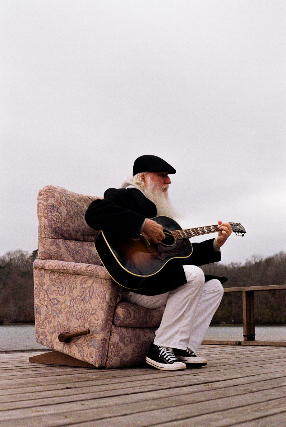
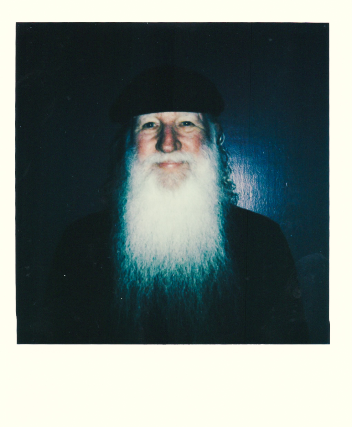
Robert Lester Folsom
Robert Lester Folsom
Soft Rock
Sunshine Only Sometimes: Archives Vol. 2, 1972–1975 continues Anthology Recordings’ excavation, and exploration, of southern singer, songwriter, and psychedelic serviceman Robert Lester Folsom’s bountiful archives. Recorded across Georgia in various bedrooms, a barn, and a motel room with a reel-to-reel and a revolving cast of whip smart studio musicians in the first half of a dazed and confused decade, Sunshine Only Sometimes furthers Folsom’s place in the canon of long lost but eventually found independently spirited, high-flying American folk rock.
When Anthology’s reissue of Music and Dreams, the sole contemporaneous album released in 1976 by Folsom, surfaced in 2010, little else was known of Folsom’s nearly five-decade deep archive of unreleased demos and fully formed studio recordings. Born and raised in Adel, Georgia—both then, and now, a sleepy hamlet with a population of less than 5,000—Folsom was fortunate to be minded after extremely supportive parents. Exhibiting a precocious affinity for music, things went widescreen when he observed the same ferry from ‘cross the Mersey as many others of his generation, carrying the four musical moptops to their paradigm shifting appearance on The Ed Sullivan Show.
Soon thereafter, Folsom began religiously absorbing every morsel of musical output The Fab Four offered, as well as that of their contemporaries. Yet, it wasn’t long before observation transformed into a motivation to create. Even a children’s record player bought by his parents as a gift to him was traded off to a neighborhood friend for a stringless, disheveled guitar (which Folsom’s father shined to prime and function for him in short order). As time went on, Folsom’s innate drive and field of vision broadened; he began enlisting neighborhood friends, classmates, and family members to fulfill his small-scale musical dreams, which would increase in weight with the passage of days.
Over the next several years, while employing ingenious, home brewed over-dubbing techniques with his “love at first sight,” a Sears 3440 two-track reel-to-reel tape recorder, Folsom served as the de facto producer/arranger for any and all scrappy garage band or aspiring singer songwriter in the radius of Adel. Abetted by his mobile recording unit, across a number of unusual locations, and assisted by guitarist and collaborator Hans VanBrackle, this period produced the bounty of Folsom’s self-penned compositions which make up Ode to a Rainy Day and Sunshine Only Sometimes. And eventually, this period of woodshedding led to the formation of his rural-tinged, progressive, southern rock outfit Abacus.
Though carrying Folsom’s own singular sound and vision, Music and Dreams, in equal measure, chartered the seas of smooth West Coast AOR before the yachts to come, while tracing the distinctly Californian sound of Laurel Canyon singer-songwriter soft rock Americana, which tussled on the waters before the large vessels overtook the big blue. Folsom’s earlier compositions found on Sunshine Only Sometimes reflect a darker-hued mixture of mellow folk, downer vibes, and rural tones, revealing his talent for melody and hook was intact far before Music and Dreams, with a keen sense of introspection making the dark and light equally resonant.
Sunshine Only Sometimes offers up another sterling set of tonally-shifting, sub-underground, alternate timeline classic rock. The C&W-influenced, sprightly-pop of George Harrison—whose Dark Horse Records is one of a handful of record companies Folsom and VanBrackle submitted demos to—is invoked in the uber-melodic “Ease My Mind.” “Julie” brings to mind Nixon-era ragged ‘n’ ramshackled country-blues from the Glimmer Twins’ pen, and the semi-acoustic, heavily-flanged, out-of-time psych-pop of “Lonely Lovers” sits somewhere between a forward-looking glimpse at Music and Dreams and a demo from a would-be Cosmic American Music king.
Unlike similar iconoclasts with crystal vision who held forth with the oppressive thumb of a musical dictator, Folsom was ever in service of song, standing equally aside his collaborators, which uniformly engendered affinity and respect lasting to this day. While a tick higher than the second-tier, the mountaintop was always narrowly out his grasp. Though, with the right set of opportunities, bolstered by talent and drive, Folsom, if not as a stand-alone, star-quality artist, could have led the career of any number of songwriters behind the curtain who rode the magical musical continuum across the decades with faceless success.
Perhaps it was Robert and company’s playing “weird spacey stuff and ballads,” as guitarist VanBrackle describes, in small town Georgia skating rinks, bowling alleys, and school dances expecting Top 40 dance-ready hits which held them down. Perhaps it was simply location. Though, the music of Sunshine Only Sometimes is composed of an intrinsic ability to hear the music truly playing, as opposed to the space in air heard by the lay-ear, which places Folsom’s music in a timeless space primed for perennial (re)discovery.
Alternative Country
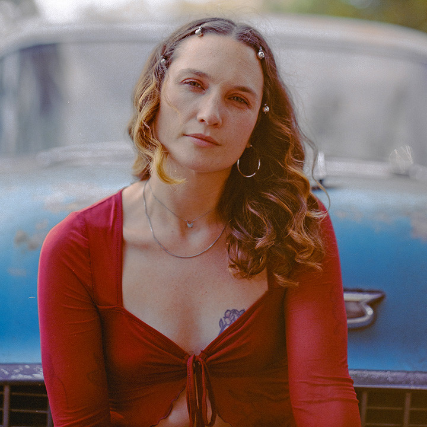
Kassi Valazza
Kassi Valazza
Alternative Country
"Sometimes it takes four or five tries to realize something just isn't working," says Kassi Valazza. "I wrote this after my thirteenth try." She's referring to the song "Roll On" specifically, but the stagnating pull of repeating patterns — and the brutalizing work of breaking them — inform every song on her new album From Newman Street. "In songwriting and in life, you can't keep expecting the same thing to work every time."
Valazza grew up between Prescott and Phoenix, Arizona. She penned her first song at age ten but in those early efforts to perform, found herself halted by stage fright of a clinical level. "I've gone to therapy for it," she says, half-laughing. She didn't stop writing music but she let less paralyzing means of expression lead the way, eventually enrolling in arts school for painting, an illustrative instinct that inevitably reveals itself in her vivid songwriting. It wasn't until she relocated to the Pacific Northwest as an adult that Valazza picked back up the proverbial — and actual — guitar.
"Zach Bryson was kind of like the honky tonk ambassador of Portland when I got there," Valazza says. "He was so welcoming and encouraging." She discovered an inspiring, supportive artistic community, a less rigid relationship with musical output, and then — vocal nodules. "It was actually kind of the best thing that could have happened, because I learned about the crossover of physical and mental that takes place in performance." Recovery entailed recognizing the reflexive functions of the voice in response to anxiety; as is the case throughout the human body, stress reactions can be damaging. "Because I suddenly understood what was happening with my voice, I could handle it, wield it. I felt more confident." Valazza recorded an album with Bryson in an old-house-turned-studio. It was an informal, friendly endeavor, though not at all small. "I think probably thirty people contributed," she says. "I listen back to that album and I think 'this was me learning how to do this.' I can hear that moment in time."
Valazza's debut Dear Dead Days fused the Southwest's rustic romance with the Pacific Northwest's rocky realism and garnered Valazza a cult following. She landed a deal with Fluff & Gravy, a label known for launching earthy, emerging treasures like Anna Tivel and Margo Cilker, and toured with folk favorites including Melissa Carper and Riddy Arman. Her sophomore album Kassi Valazza Knows Nothing followed, a glimmering set of sonic talismans among Ann Powers' Favorite Songs of 2023 for NPR and Bandcamp's Best Country Music of 2023, with praise from KEXP, Uncut, MOJO, and Brooklyn Vegan to boot.
By the time Valazza was ready to record her third album, she had spent a decade in Portland — and that, she realized, was enough. "As someone with anxiety, I always want to know what's going to happen," she says. "But knowing can be limiting. Getting comfortable with the uncomfortable, that's growth. That's what this album's about, really."
On "Weight of the Wheel," a weepy slide guitar underscores Valazza's listless lament: All things look the same / From the pillow on my bed / I'm stressed out I'm far away / There's dizzy dancing in my head. The song sounds like urgency, grief, surrender, and embrace — all at once. It's feeling like some kind of fight to outgrow / The way I fear slowing down before I'm old. By 2022, that dizzy demise of cyclical living had set Valazza still — in a basement apartment there in Portland. "You're going to be a different person after every album," she says. "And you have to keep moving forward."
Sights set on Nashville, Valazza landed in New Orleans. "It wasn't the plan. I spent three months there between tours, and it just kind of happened." The bright newness of The Big Easy illuminated fresh inspirations and unexpected love. But it also cast a stark light on Valazza's sense of self; in a new place, you can see more clearly what you want to be, as well as what you haven't been. "I discovered the less likeable parts of myself in that time," Valazza says. Album standout "Your Heart's a Tin Box" encapsulates precisely this, with a cynical-yet-sunny likeness to Joni Mitchell and lyrical acuity: I moved down to New Orleans / Thinking love would reappear / But people tell you everything / but what you wanna hear / You relied on fixated company / Now you're drowning in your ego's gluttony. The patterns of her Portland life had stalled Valazza. It wasn't the city's fault so much as the natural consequence of complacency, the stagnance that comes with too much of the same. Valazza knew she was due for a personal evolution, and when faced with those innate, bristling pangs of change, could soothe herself with that certainty.
The track sequence on From Newman Street is audibly intentional — from a deep lull and dull itch, to a barbed clash with cognitive dissonance, to humble submission, and an ultimate, open-armed acceptance of new life. Poetically enough, half the songs on the upcoming album were written in Portland, the other half in New Orleans. Valazza returned to her former hometown to record with Matt Thomson at Echo Echo Studios, and titled the release From Newman Street in tribute to an apartment she lived in deeply and left with heavy heart. The album is as much a fond farewell as it is a fervent step forward.
Valazza made the official move to New Orleans in February of 2024. "Coming from placid, wintry Portland straight into Mardi Gras — I would not recommend it." She recalls the time with humor, grace, and sensitivity for her past self, qualities that shine through the album. "I've always been a believer that music is only good if it's really raw, really honest — probably coming from a place of hurt," Valazza admits. "But I'm trying to embrace chaos these days, and bring a little more light into my life."