TICKET SALES TERMINATED
Tickets are currently unavailable on TicketWeb
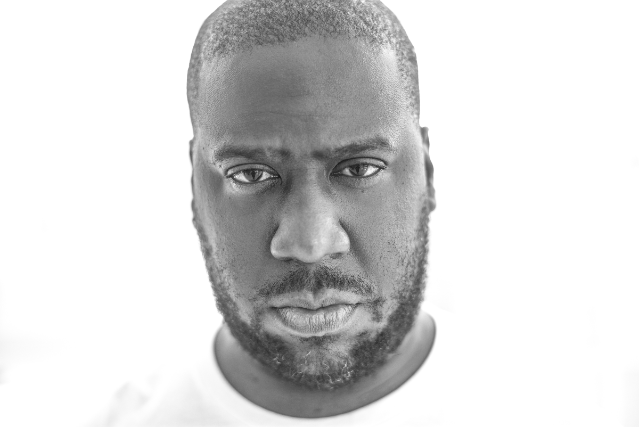
Robert Glasper X Yebba
Fri, 6 Oct, 10:30 PM EDT
Doors open
10:00 PM EDT
Blue Note Jazz Club
131 W. 3rd St, New York, NY 10012
TICKET SALES TERMINATED
Tickets are currently unavailable on TicketWeb
Description
$20 Minimum Per Person
Full Bar & Dinner Menu
NO REFUNDS OR EXCHANGES.
All seating is first come, first served.
Table Seating is all ages, Bar Area is 21+. Bar Area tickets for patrons under 21 will not be honored.
Group Reservations:
Groups larger than 10 must purchase a group package at club@bluenote.net, or by calling 212.475.8592.
Groups larger than 10 without a group package will be subject to group surcharges added to your bill.
Groups arriving late or separately are not guaranteed to be seated together. All seating is first come, first served. Arrive early for best seats.
Tickets for Blue Note New York shows are only available for purchase on Ticketweb. We are not affiliated with any third-party sellers. Tickets purchased on third-party sites will not be honored. The credit card used for original purchase of tickets will be required at the door upon entry.
Event Information
Age Limit
All Ages
Refund Policy
We do not offer any refunds, exchanges, or transfers on any ticket purchases. All sales are final. We do not have any liability or influence on tickets purchased through a ticket reselling or 3rd party site. Official ticket purchases are run through TicketWeb.com only.
Soul Jazz
Robert Glasper
Robert Glasper
Soul Jazz
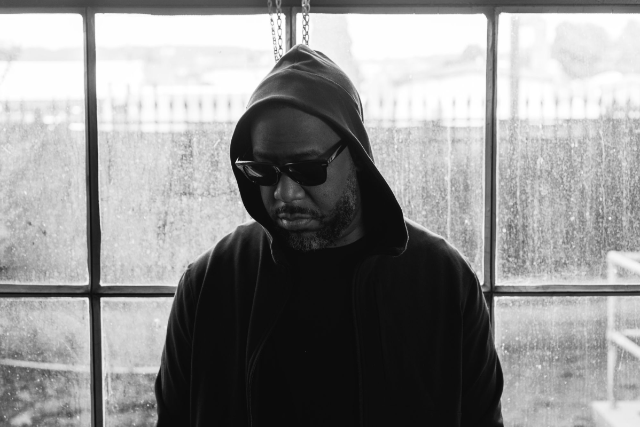
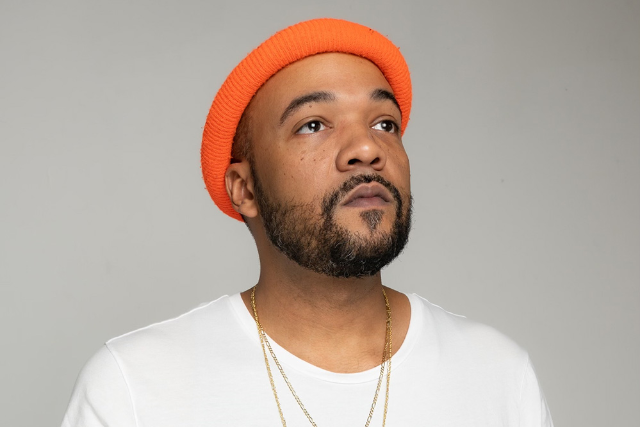
Robert Glasper is a genre-defying pianist, producer, and composer celebrated for blending jazz, R&B, and hip-hop in groundbreaking ways. With a rich catalog that includes iconic albums like Black Radio and its sequels, Glasper has redefined contemporary jazz. In 2024 & 2025, he released four new albums — Let Go, Code Derivation, Keys to the City: Volume 1, and a holiday album, In December—continuing his streak of innovative music. Glasper is a mainstay at New York's Blue Note Jazz Club, where his acclaimed “Robtober” residency, which is about to embark on its 7th year, showcases the spontaneous alchemy of his collaborations in an intimate and legendary space. His partnership with the Blue Note has never been more culturally impactful, highlighted by the success of his Black Radio Experience in Napa Valley and partnering on the opening of the brand new Blue Note Los Angeles club. Beyond the stage, his vast contributions to film scoring, including films The Photograph, Luther: Never Too Much and Miles Ahead, and Emmy-nominated series Winning Time, demonstrate his versatility as a musician. A five-time Grammy award winner with an additional 15 nominations, an Emmy award and Peabody award winner, Glasper's accolades underscore his impact on modern music, cementing his legacy as a boundary-pushing artist and cultural icon.
Alternative
Yebba
Yebba
Alternative
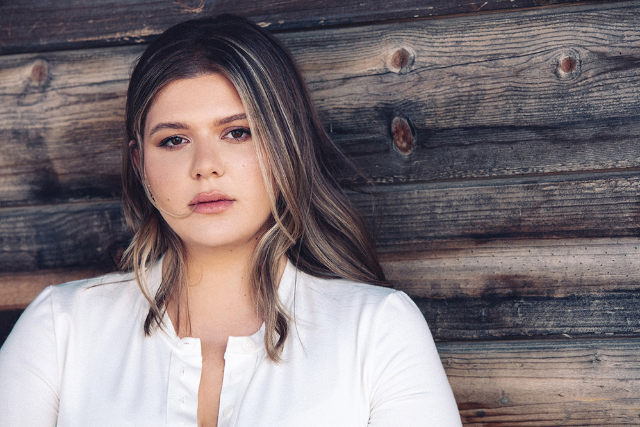
In September 2016, a 21-year-old unknown singer named Abbey Smith stepped onstage for a show for SoFar Sounds in New York City, and, accompanied only by a guitarist, pretty much re-arranged the molecules in the room. Her staggeringly emotional performance of a song she had written called “My Mind” (about facing the reality that the one you love is hung up on someone else) finds her throwing her head back and wailing while also managing to deliver remarkably controlled vocal runs. The audience’s stunned shock at witnessing what was clearly a raw expression of pain can be seen in a video of the performance that appeared on YouTube in December 2016 and has now racked up over seven million views.
Three weeks after Smith’s show for SoFar, one that would set her professional career in motion, the singer’s mother tragically took her own life in the family’s West Memphis home. “It shakes your fundamental belief in what safety is, because that was my mom,” says Smith, who changed her name to Yebba (one of her mother’s nicknames for her).
In the aftermath, Yebba, broke and grief-stricken, would wake up in her apartment in Harlem, go running, and try to tell herself something positive. “I prayed a lot, but it didn’t feel like it helped,” she says. “I started finding joy by going out to the jazz bar and watching the musicians and jamming with them,” she recalls. “That freed me up musically and the feelings just started coming out. I didn’t give a shit about what I said, or what I sounded like, and that helped me to release a lot of my rage.”
Though Yebba, a preacher’s daughter who grew up singing in church, has endured unspeakable tragedy, she is a delight to talk to. She is thoughtful, funny, and lightly profane. She is also incapable of striking a false note, whether she’s singing or chatting. Her music and her feelings cannot be untangled. “Music is the communication of my pain,” she says, adding that if she ever feels like she is faking it, she will quit, “give back all the money,” and open a dog rescue on a farm. “I will stop before I ever let anyone take that spirit away from me,” she says. “I just want to sing, whether anybody’s listening or not. Whatever capacity God wants to put me in, I’m going to be there, as long as I can keep my heart.”
Over the past three years, Yebba’s volcanic talent has been recognized by many of the industry’s most discerning tastemakers. Chance the Rapper invited her to sing back-up when he performed “Same Drugs” on Saturday Night Live in 2016, tweeting that she stole “the show with ridiculous vocals.” Sam Smith featured her on his song “No Peace.” A Tribe Called Quest featured her on their song “Melatonin.” Ed Sheeran invited her to open for him in 2017 and their duet on “Best Part of Me” is a highlight of his latest album. PJ Morton asked her to guest on his cover of “How Deep Is Your Love” — a recording that earned Yebba a 2018 Grammy Award for Best Traditional R&B Performance. And finally, Producer of the Year Grammy winner Mark Ronson features her on three songs on his latest album Late Night Feelings, including the transcendent single “Don’t Leave Me Lonely,” which they co-wrote. He is also producing Yebba’s upcoming debut album, due later this year.
Ronson, known for his work with Amy Winehouse, Adele, and Lady Gaga, has always had an ear for truly authentic artists and Yebba is no different. “We didn’t come from money, but my parents were great stewards of what they had,” she says of her upbringing. “My dad worked five jobs at one point. He always said, ‘I bust my rear to make sure that y’all have everything you need and most of what you want.’” She grew up idolizing gospel vocal group The Clark Sisters, as well as Aretha and Whitney. “I’d turn up the volume really loud on their records and sit there and cry in front of the speakers,” she recalls. “I think in my weird-ass, seven-year-old mind I felt like the speakers were crying with me.” Yebba wrote poetry for herself in high school, but said she didn’t really start writing songs until her mom passed and “I just absolutely had to.” While attending college, she expected to get her degree in Voice and be a background singer. “My wildest dream was to sing background for Aretha or D’Angelo,” she says. “That was all I expected. It didn’t occur to me that I could do anything as an artist.”
One day Yebba was out running and she had an epiphany: “I was praying while I was running and I said, ‘Father, if you really want me to be a singer, then I need you to remove these fears one by one.’ I caught the Holy Ghost right then and there. I fell to my knees and just started to weep because I knew I was going to be a singer.” She went home and created a schedule, singing four hours a day and working on her agility, musicality, and endurance. She posted a few short clips on Instagram and before she knew it, the calls started rolling in: J. Moss. Timbaland. Missy Elliott. (“I was at work taking apart a fucking laptop when she called me.”) Yebba dropped out of college and moved to Nashville. Then came her fated trip to New York to perform “My Mind” at SoFar. In 2017, she released her debut single “Evergreen,” which Rolling Stone has called “a slow-burning ballad full of mettle and longing.”
Over the past year and a half, Yebba has been holed up in New York’s Electric Lady Studios with Ronson, his frequent collaborator Andrew Wyatt, and others, including Robert Glasper, Pino Palladino, The Roots’ James Poyser, as well as her friend, the young jazz pianist James Francies, whom she collaborates with frequently. The songs are about time, grief, and a hope for healing. “Not a lot of relationship shit, because that’s really uninteresting to me at the moment,” she says. “I had to go deeper because of everything going on with my mental health since the trauma. Okay, there’s one romantic song, but the rest is about how to cope. Sometimes it’s mockery of the people who try to comfort you. One song is about the day my mom died and a bunch of church people who were in my face saying, ‘Well, now she’s with Jesus.’ That doesn’t fucking help. But creatively, so much more is available to me because I have taken time to process my trauma.”
Yebba’s songs may be borne of sadness, but there is also a tremendous amount of freedom in them. Because what is more freeing than truly giving yourself permission to express your feelings, even if they’re big, without hiding? “That is real shit, right there,” Yebba agrees. “That’s what I want people to feel when they hear the music. Complete peace. No fear. I want them to forget about all the neurotic shit that goes on in all of our heads. My problem is I get too wrapped up in my own head and think there’s something wrong with me. So when I have a moment to sing, no intrusive thought can touch me.”
Jazz
Burniss Travis II
Burniss Travis II
Jazz
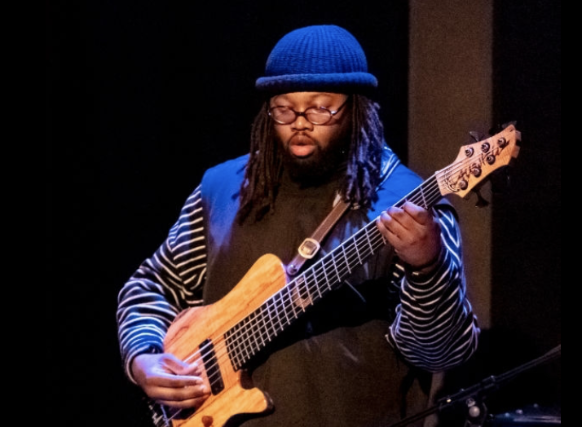
The 6 foot, Texas raised musician didn’t actually begin his career with the bass, he started as a violinist at Elementary Culture School. Only after his teacher picked him to play the large upright bass, because he was the tallest guy in the class, did he finally find his true calling. Travis was simultaneously a self-proclaimed hip-hop head who was a huge fan of acts like A Tribe Called Quest and loved the local Houston Chopped & Screwed scene birthed by DJ Screw, and didn’t feel confident about pursuing a career as a bassist. It would take a couple of encounters with vibraphonist Stefon Harris throughout his journey before he considered playing on a professional level. He developed his skills for a bit playing with a local orchestra before entering into the Houston jazz scene, and his career quickly took off from there.
Now based in Brooklyn, New York, the 23-year-old Travis is back on the live music scene after a year-long hiatus, and is ready to explore a new musical territory. Certainly not one of the gabbiest, and unsure at first exactly what he could offer our session together, it turned out that he actually was flooded with ideas once we got started, as is true with most musicians when given a chance to talk about the thing that they love most.
Electro-Jazz
DJ Jahi Sundance
DJ Jahi Sundance
Electro-Jazz
What happens when “love isn’t enough?” With his EP, multi-instrumentalist, producer, and DJ Jahi Sundance responds with a collection of break-up anthems that fuse funk and soul with heartbreak and longing, dichotomizing emotional fallout with uncompromising beats, depression with disco. Love is, after all, a paradox. And in these six songs, Sundance gifts us with an up-tempo exploration of the stages of relationship grief, acknowledging what breakthroughs may or may not come from breaking up.
With over 25 years in the music game, Sundance has created some of the most inventive DJ sets & sounds scapes in the scene today. He has toured with Robert Glasper, Me’shell N’degeocello, Christian McBride, and graced the stage of Carnegie Hall and Lincoln Center. Recent producer/writer credits include Chris Brown, Danity Kane, Miguel, Common, and The World Cup.
Jahi lives in LA where he manages his record label More Than Enough and continues work on multiple projects.

R&B
Justin Tyson
Justin Tyson
R&B
Independent gospel drummer Justin Tyson is son of the late organist Craig Tyson and Shawn Tyson's nephew.
Justin Tyson is a talented and respected up-and-coming musician living in New York City. Born in Grand Rapids, Michigan but raised in Indianapolis, Indiana, he started playing the drums at the age of three and from that day on continued to perfect his craft.
Tyson is a Berklee College of Music alumnus; there his love for the drums and music in general expanded. Justin has played for Jessie J, Estelle, Mos Def, Tyrese, Cubic Zirconia, Sirah, Ryan Leslie and is currently the drummer for Esperanza Spalding and Now vs Now.