Rayland Baxter: The True Violet Tour w/ Dylan LeBlanc
Fri, 5 February 2027, 8:00 PM CST
Doors open
7:00 PM CST
The Basement East
917 Woodland St, Nashville, TN 37206
Event Information
Age Limit
18+
eTicket Delivery
Your tickets will be e-mailed closer to the event date.
Refund Policy
All sales are final. No refunds unless a show is canceled.
Folk Rock
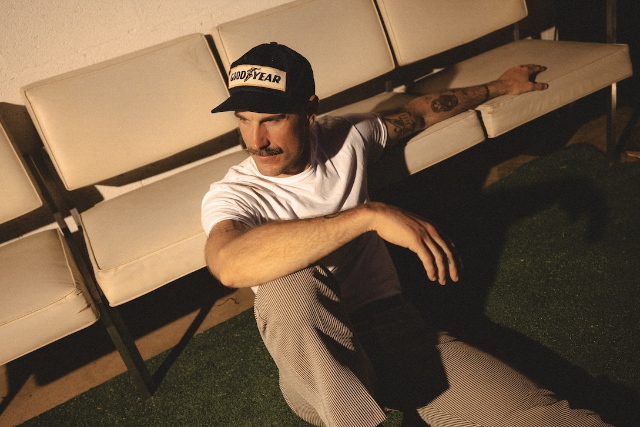
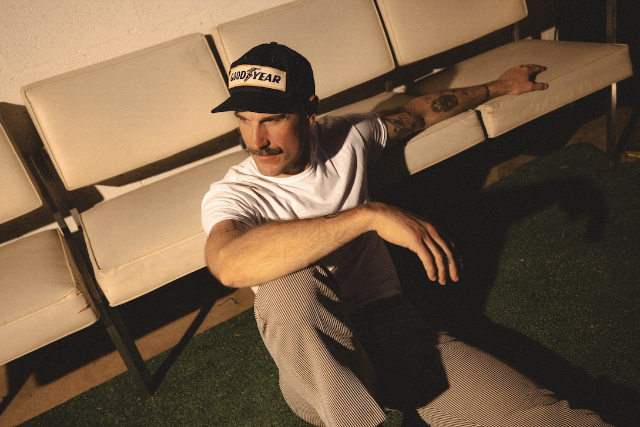
Rayland Baxter
Rayland Baxter
Folk Rock
Rayland Baxter has spent much of his career chasing clarity, but his newest record, True Violet, feels like the first time he's truly found it. His 2022 album If I Were A Butterfly evoked transformation, but in Baxter's own view, True Violet is the record where the true metamorphosis has unfolded.
Catalyzed less by a sudden realization than by hard-earned understanding, True Violet is a record about the slow, steady process of becoming someone new. It's about looking in the mirror, taking responsibility for your own life, and sitting with difficult emotions instead of trying to outrun them.
"I sat in my chair alone for a year and wrote a bunch of songs, and what started off as an attempt to write a record got sideswiped by mediocre attempts I wouldn't even sing to my dog," Baxter recalls. "Then, like many times over the last three years, I called my sister. We talked about life and family and love and heartache, and our individual experiences with all of that. She simply encouraged me to write about what I was feeling, something I was avoiding in the early stages of writing.”
Rayland took his sister's advice and began writing with a newfound vulnerability. He'd sit alone each evening with his guitar for hours, excavating experiences and emotions. If a lyric or melody didn't click, he'd stop, walk around, dig up an old tour voice memo, and return to the guitar. Movies like Dances With Wolves and The Sandlot played in the background, their colors and landscapes bleeding into his creative psyche. By the time he entered the studio, he'd amassed nearly seventy songs.
True Violet is the first Rayland Baxter record made without the presence of his father, Bucky Baxter, a multi-instrumentalist best known for his work with Bob Dylan and as a member of Steve Earle and The Dukes, whose musicianship and encouragement had shaped every previous chapter of his career. "He used to be my phone call, my confidant, my teacher, and my musical guide," Baxter says. "He still is today, but he exists more in the invisible realm now, where feeling and intuition are how I experience his wisdom."
In the wake of that loss, Baxter's sister became an essential presence in both his life and creative process. "Honestly, it was her encouragement that brought these songs to life," he says. "She was actually bringing me back to life."
These days, Baxter has a steadier hand on the sails of his life, and you can hear it in his voice as he sings about living inside a feeling for too long and the hard-won relief of finally moving beyond it. "I was just letting it go," Baxter says. "The right people were in the room bringing the songs to life. I was observing. Feeling for the first time really steady in the process."
True Violet is about what remains after the storm passes: the lessons, the scars, the gratitude, and the possibility of beginning again. The medicine of the record lies in the contrast between the hardship that inspired it and the clarity, patience, and community that finally brought it into focus.
Alternative Country
Dylan LeBlanc
Dylan LeBlanc
Alternative Country
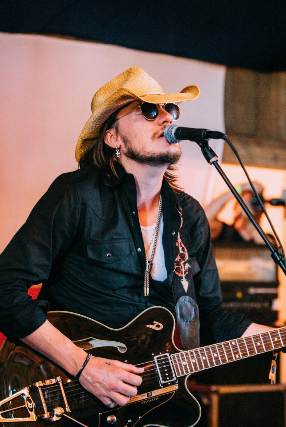
Dylan LeBlanc is a singer-songwriter and multi-instrumentalist who often finds himself flirting with the edge — or “dancing on a razor,” as he calls it — as it is all he has ever known. A verdict vagabond since he was a little boy tossed between Texas, Louisiana and Alabama, LeBlanc thrives on the precipice, never staying in one place for too long. It is that nomadic spirit that drew him not only to a life as a touring musician, but also to the beast that titles his newest record: ‘Coyote.’
LeBlanc says he has always related to the insatiable, scavenging nature of the wily coyote. Much like the animal, LeBlanc is a wanderer who knows when to trust his instincts, musically and otherwise. It is a spiritual kinship that runs deep, but he credits one particularly hair-raising face-to-face instance with solidifying his bond with the animal.
LeBlanc was in Austin, Texas, climbing the face of a 100-foot cliff, gambling with Mother Nature’s good graces as he pulled himself up by tree branches. Once he reached the top, all that laid ahead of him was a lush treeline. There was a breath of stillness, then the sound of a thunderous rustling that drew closer and closer to him. In a blink, LeBlanc watched as a frenzied raccoon came speeding out of the treeline, trailed by an animal that stopped and stared at him with striking intensity: a coyote.
“We’re looking at each other dead in the eyes…and I’m saying — out loud — ‘If it’s you or me, I am going to kick you off the side of this cliff. I’m not going down.’ It was intense, this human-animal moment,” LeBlanc recalls. “I’ve never forgotten that… he was just trying to survive and so was I.”
‘Coyote’ is LeBlanc’s first self-produced release, boasting a cherry-picked lineup of what he calls “killer session players,” such as drummer Fred Eltringham (Ringo Starr, Sheryl Crow), pianist Jim “Moose” Brown (Bob Seger), and bass player Seth Kaufman (Lana Del Rey). Though ‘Coyote’ covers familiar ground for LeBlanc of living on the edge of danger and its many consequences, the record is both autobiographical and a concept album built around the character of Coyote, a man on the run.
The story of ‘Coyote’ progresses linearly, opening with the dizzyingly declarative, strings-heavy title track which details Coyote’s arrival and quick departure as he crosses the border and gets involved with drug cartels. The trouble builds and dark waters rise until track six, “No Promises Broken,” a soaring, against-all-odds love song that marks when Coyote meets a girl, and his luck begins to change for the better. The song tells of how love heals, and places emphasis on lovers remaining open while maintaining their own freedoms, as LeBlanc believes that true devotion does not equal possession. He says that though both Coyote and his love each faced adversity, the hand of destiny put them on the same path and bound them together before they ever met: “‘No Promises Broken’ is an honest love song about two people who come from the same troubled past, and fate intertwines them together. It’s about acknowledging that there will be hard times ahead, but vowing to stick it out without making promises to each other that they know they can’t keep.”
“Wicked Kind” delves into Coyote’s addiction and warns of ever-present temptation looming on the horizon, and the restraint it takes for him to look away. The LP closes with “The Outside,” the title of which LeBlanc says is meant to be literal, as Coyote is outside of prison walls at last. With boundless slide guitar and skittish keys, it paints a haunting, desert highway vignette of Coyote fighting off lingering ghosts that breed a hesitance so potent that Coyote has to adjust his perspective and remind himself that he is free — the fight is over.
LeBlanc has seen shades of a life not unlike the character of Coyote. He, too, strayed from the straight and narrow and sparred with managing anger in his adolescence. Just as the brutal truth of “Hate” describes that the most gnarled parts of Coyote were molded by his harrowing experiences, it is something LeBlanc feels is universal, as hate does not discriminate.
“I went to school with people from all walks of life. We were different, but we thought, ‘We’re all poor,’ so we’re all in the same boat. We all grew up in chaos. It was the ‘90s in Louisiana on the border of Texas… that air was thick, man. Sink or swim type of mentality.”
LeBlanc is the first to warmly acknowledge his rough edges and tendency to chest-up to conflict, both the result of the volatility and instability of his youth. Now, no longer a boy who always had to be on alert and ready to defend himself, LeBlanc recognizes that his roots do not define or limit the man he is today. The cover art of a coyote wounded by arrows reflects just that, symbolizing LeBlanc’s resilience through what he has experienced: “The coyote is still upright, even though he’s full of arrows, even though he has been shot at and wounded many times. He still keeps going in defiance of everything that has been thrown at him. You can’t get an arrow out completely. You can break one side of it off, but the arrow is still there… there’s still a scar. It becomes a part of you… of your identity.”
Considering the distinct wisdom and lifetimes in his voice, it is no surprise that LeBlanc has known hardships, but he is a shining example of what beauty comes from perseverance. LeBlanc’s tenacity has paid off in spades, leading him to a record deal with ATO Records, releasing the critically acclaimed ‘Renegade’ in 2019, and now ‘Coyote,’ which LeBlanc says is “the record he has always wanted to make.”
Now in his thirties with a fiancé and a daughter he adores, LeBlanc is the closest he has ever been to the man he has always strived to be. With endearing candor, he confesses he is still learning to be less hot-headed and more gentle; but he doesn’t think about dying every day, like he used to. LeBlanc credits fatherhood for the perspective he has now on what matters, and his key concern is remaining devoted to those he loves most. Though far removed from a perilous life like Coyote’s, LeBlanc admits he still feels as if he is dancing on a razor’s edge all the same. The goodness he is surrounded by only gives him more to lose, with each glimmer carrying an asterisk of fear. One misstep and he worries that it all could vanish, but the lionhearted LeBlanc seems to forget he once unnerved even a wild coyote with his eyes alone.