ON SALE SOON
Friday, Apr 3 2026, 8:00 AM CDT
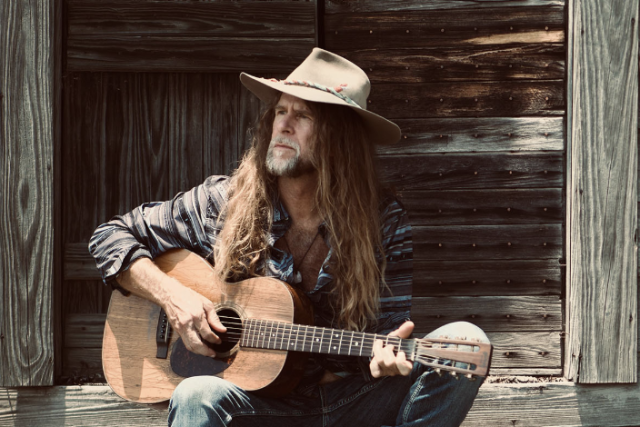
PRE-SALE: In The Round with Grayson Capps, Shannon McNally & friends
Wed, 22 Apr, 9:00 PM CDT
Doors open
8:30 PM CDT
The Bluebird Cafe
4104 Hillsboro Pike, Nashville, TN 37215
ON SALE SOON
Friday, Apr 3 2026, 8:00 AM CDT
Description
There are 18 tables, 8 bar seats and 8 church pew seats available for reservation. The remaining pew seats for this show are not reserved in advance. These seats are available on a first come/first served basis when doors open.
Ticket reservations at The Bluebird Cafe are an agreement to pay the cover charge and applicable taxes/fees and to meet the $15.00 per seat food and/or drink minimum.
Traveling to Nashville to catch a show with us? We recommend flying with Southwest Airlines®, the official airline partner of The Bluebird Cafe. Book your flights today at Southwest.com.
Ticket holders may cancel their reservation for a full refund of the ticket price and applicable tax (excluding ticketing fees) if the cancellation is made at least 48 hours before the scheduled showtime. Cancellations made within 48 hours of the show are non-refundable. To cancel, please email info@bluebirdcafe.com or call 615-383-1461. Phone line hours are Monday-Friday, 12-4 pm.
Note: When making reservations, choose the table you would like and then add the number of seats you need to your cart by using the + button. You are NOT reserving an entire table if you choose 1 (by choosing 1, you are reserving 1 seat). We reserve ALL seats at each table. If you are a smaller party at a larger table, you will be seated with guests outside your party.
Event Information
Age Limit
All Ages
Refund Policy
Ticket holders may cancel their reservation for a full refund of the ticket price and applicable tax (excluding ticketing fees) if the cancellation is made at least 48 hours before the scheduled showtime. Cancellations made within 48 hours of the show are non-refundable. To cancel, please email info@bluebirdcafe.com or call 615-383-1461.
Blues-Rock
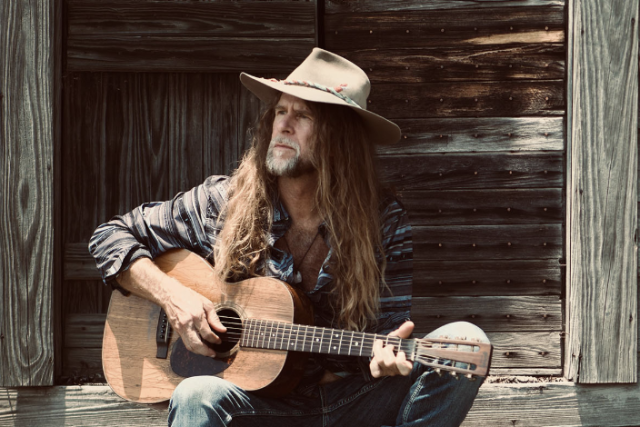
Grayson Capps
Grayson Capps
Blues-Rock
Heartbreak, Misery & Death is the seventh studio album by beloved Alabama-based troubadour Grayson Capps. For this latest effort, Capps turned his attention to 16 long-lost folk songs and traditionals performed by artists ranging from Doc Watson and Jerry Jeff Walker to Randy Newman and Gordon Lightfoot. Introduced to these timeless touchstones as a child by his father, they’d catalyze Capps’ love for music at a young age, while informing the Southern Gothic vernacular that he’s gone onto so eloquently explore and reimagine in his own body of work.
As Capps explains in his own words:
I grew up with music, whether hearing Fred Stokes, Bobby Long and my dad, Ronnie Capps, singing around the house on Fridays and Saturdays, or listening to vinyl records in the den, my youth seemed to always be surrounded with music. One of the first artists I gravitated toward was Doc Watson. I first found my own voice by emulating him singing “Wake Up Little Maggie.” We had The Essential Doc Watson and Doc Watson Memories, and I wore those records out. “Columbus Stockade Blues” was one of the first songs I learned to play on the guitar.
“Barbara Allen” was a favorite song of Bobby Long’s to sing. I remember him saying to Fred, “Come on Fred, give me a chord,” pronouncing the ‘ch’ like ‘chore.’ Fred would hit a chord, and Bobby would start in singing. I guess that’s where I learned the joy associated with singing and playing guitar.
I love Doc’s version of “Moody River,” and that song led me to appreciate more complex chord progressions. “Today” was another favorite of Bobby’s and my dad’s. I figure I’ve known that song ever since I can first remember. “Early Morning Rain” holds a special place in my heart and memory. We listened to the Peter, Paul & Mary version of the song after taking a severely hung-over Bobby Long to the airport on a rainy morning with no shoes on his feet, headed to Las Vegas. I see him there every time I sing that song.
A little later on, I discovered Randy Newman, and it wasn’t until spending some time playing on the streets of New Orleans that the song “Guilty” became a sordid truth in my life. It ties itself to “Stoney,” seamlessly sewing the fabric of my youth to the fabric of my adulthood. I learned “Stoney” for Bobby off a Jerry Jeff Walker record, and he swore it was his theme song until I wrote A Love Song for Bobby Long. The song, “I Really Don’t Want To Know” would have Bobby, Fred and my dad in three-part harmony, cracking themselves up while trying to record it into a Realistic tape recorder. “Old Maid’s Lament” was another song in their repertoire, though they called it “Sister Sarah”. I remember Fred singing “Louise,” and when I heard that baritone voice of his with that old Martin guitar, singing that sad-ass song, my soul soared like the raven from Edgar Allen Poe.
As the album title Heartbreak, Misery & Death suggests, I have always gravitated toward dark songs, and probably the darkest one on this album is “Saint James Hospital,” but no matter how forlorn it is, it somehow makes me feel good to sing it. That leads me back to Doc Watson and his most beautiful version of “Alberta.” I think you can only sing that song after having experienced unreciprocated love. The reason I gravitated toward Doc is Doc’s voice resembled Fred’s, and their baritone registers are much like my own natural voice.
Bobby, Fred and my dad had great harmonies which were highlighted when they sang “Wreck On The Highway.” When I was young, I was sure everybody knew that song. My father introduced me to all of the songs in this collection. The one song I introduced to him, a song he absolutely loved, is the Leonard Cohen classic “Hallelujah,” and I learned this song for him. My memories of the music my dad and his friends made sculpted a large part of who I am musically and spiritually. So, just as they might end a Saturday night drunk and high with “Copper Kettle,” I, too, shall end this collection with the greatest campfire song of all time.

Americana
Shannon McNally
Shannon McNally
Americana
Thom Jurek at All Music said it best, "Only Gram Parsons' term "Cosmic American Music" begins to touch her mercurial, changeling roots aesthetic, ... McNally is a Zen-like, post-Beat song poet”. For those who have followed McNally’s nearly twenty year career the thing that most sticks with the listener about her, is the timeless effortlessness that she brings to all she does. With a long catalog and longer list of peers with whom she has written, recorded and toured, McNally continues to turn out great music that defies blatant genre-fication.
At home across the American (Americana) music spectrum, the Grammy nominee who’s live music career began on the jam band circuit of the 1990’s with bands like Robert Randolph and Derek Trucks, writes as well as she interprets the songs of others, has a top tier musicality to her craft, a soul stirring voice that immediately grabs one by the heart strings and a troubadour’s wanderlust, not to mention as it turns out, she is also an excellent electric guitar player.
Like her anti-hero heros J.J. Cale, Tom Waits, Bob Dylan. Dr. John, and Jim Dickinson, McNally knows who she serves. She serves the song. Her quiet but steady plodding through the many layers of the business of music, hasn’t ever been rewarded with massive fame and fortune but in time that slow burn has become the treasure in and of itself.
The part of McNally’s narrative that is often missed is that not only has she self-managed herself for nearly all of her career but that she has also been a stout warrior-like-artist who often went toe-to-toe with label heads and A&R to defend and fight for her visions. She left the major label world after ten years at Capital/EMI to fend for herself on various smaller labels and self-release paradigms. Perhaps the business of music is finally catching up with her independent spirit. We shall see.