TICKET SALES TERMINATED
Tickets are currently unavailable on TicketWeb

Tipitina's Presents
Nick Shoulders and The Okay Crawdad
Thu, 30 Jan, 8:00 PM CST
Doors open
7:00 PM CST
Tipitina's
501 Napoleon Ave, New Orleans, LA 70115
TICKET SALES TERMINATED
Tickets are currently unavailable on TicketWeb
Event Information
Age Limit
18+
Refund Policy
All sales final
Country
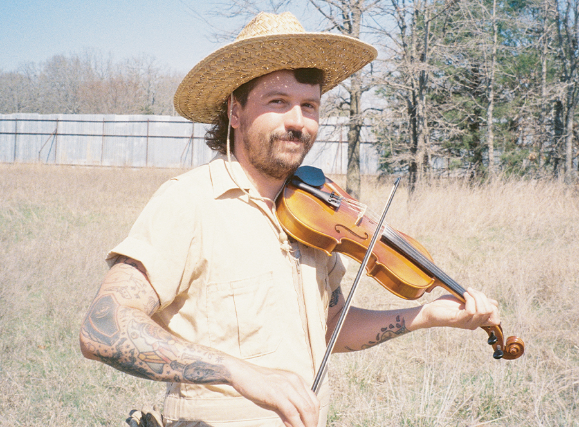
Nick Shoulders
Nick Shoulders
Country
Refugia Blues, the fifth album from Nick Shoulders, is a record of big ideas and small, intimate moments.
These nine songs are rooted in the stylings of Southern traditional music. Sparse, timeless, and unamplified, they're older than the sounds Shoulders saluted on albums like 2023's All Bad, with its loud, whooping anthems for roadhouses and sweaty dancehalls. Here, Shoulders isn't shouting over a band. He isn't bringing a crowd to its feet with dance-ready tempos. Rather, he's exploring another side of his craft by stepping up to a ribbon microphone as a solo performer, delivering each song with acoustic instruments and a voice that's equal parts country croon, Appalachian yodel, and high-lonesome field holler. As he explains it, Refugia Blues isn't just a call to action; it's a call to rest, too.
"This is my Nebraska," he says, nodding to Bruce Springsteen's lo-fi acoustic record from 1982. "Some people listen to Bruce for the E Street Band and the big radio hits, but I like the intimacy and rawness of Nebraska instead. I'd like to think of Refugia Blues as a little window into the heart, as opposed to the drumbeat of a revolution."
Even so, Refugia Blues resolutely pushes for change. Shoulders' interpretation of American roots music has always been more progressive and punky than the trucks-and-beers conservatism that passes for modern-day country, and he isn't checking his activism at the door anytime soon. Refugia Blues does dive into personal territory, from "Bored Fightin'" (a self-effacing look at Shoulders' reputation as a left-of-center radical) to the heart-on-sleeve love song "Tatum Spring," but it balances the micro with the macro, too. Topics like climate collapse, radical anthropology, generative disruption, and southern identity run throughout the record, adding weight to Shoulders' melodies, balancing his witty humor with topical weight. The purpose, he says, is to utilize his music as "a Trojan Horse that can be accepted by people who don’t hear anything to challenge their sense of comfort and superiority. That's always been the goal — to say what needs to be said, but to intersperse it with joy, humor, and melody."
It's a balance that Shoulders has struck in the past, but never so nakedly alone as he does on the opening track, "Apocalypse Never." He wrote the a cappella ballad in the front seat of his band's shuttle bus, taking a hard look at each passing town, noting all the "individualized apocalypses" — houseless encampments, impoverished communities, barren cornfields — that unfolded on the other side of the windshield. "Our world has been through countless apocalypses," he says. "The refusal to give in to the direness of our circumstances, while still acknowledging it, is key to surviving this moment in our history."
For Shoulders, singing isn't just a passion; it's practically a birthright. Born to a musical family with deep roots in Arkansas, Appalachia, and Louisiana, he grew up listening to old-world folk music, black gospel, and other sounds that existed long before genres were even invented. "My vocal style is rooted as much in growing up in mountainous Arkansas and having to shout across vast distances to greet my neighbors as it is in my family's very old way of singing," he says. "The way I sing is older than capitalism. Being part of this tradition isn't meant to be regressive; it's meant to be liberating. There were time before cash registers and factories, where people sang like this when they sowed their corn, and I'm trying to embody that."
Refugia Blues was recorded in a home studio outside of Fayetteville, Arkansas. Tracked to analog tape in two inspired days and laced with light touches of guitar, banjo, and fiddle, the album explores the slower, softer textures of Shoulders' music without pulling any punches. On his bare-boned cover of Randy Travis' "Diggin' Up Bones," he slows down the uptempo classic to a warbling waltz. On "Deux Hurry," he taps into his inner Roger Miller, using wordplay to make light of the darkness that lives within all of us. On "Hill Folk," he nods sympathetically to the southerners who've witnessed their cultural inheritance become commodified and commercialized over the past half-century. And on the brave, bold "Dixie Be Damned," he sings about "manifest destitution" and the sickness of contemporary American consciousness, packaging everything into a three-and-a-half minute country gem that's as tuneful as it is topical.
By bridging the gap between past and present, Shoulders speaks pointedly and poetically about today's problems, even as he nods to styles that existed long before the 21st century. "When you listen to the origins of country music in the '20s and '30s, you're hearing the voice of southern rural dissent against coal companies, repression, and depression," he says. "The old ballad singers of the Ozarks were conduits for current events, documenting not only their own lives, but also dispossession and economic strife on a much bigger scale. Being part of that great stream of rural protest music is something I'm trying to tap into. I want to say things that feel timeless, deep, and rooted, but also touch on topics like endless war and a government collapsing into dictatorship. I want to be part of that tradition of dissent."
At once academic and accessible, Refugia Blues isn't just a deep dive into southernness, but also into Shoulders himself. Released during an era of big-budget country-pop smashes, it stands tall as something else entirely: a raw, resolute version of American country music, punctuated with humor and heavy insights, stacked high with songs that go down easy but linger in the minds of those willing to invest the time.

Folk
Sabine McCalla
Sabine McCalla
Folk
While Sabine McCalla is living and creating during modern days, this nuanced artist’s songwriting takes the listener back several, to pre/post-war eras brimming with the sounds the Folk Music Revival. Combining elements of gospel, folk, soul, blues, and Americana, Sabine spins stories of heartbreak and hope through intimate arrangements and honest inflections. Having amassed a loyal following in New Orleans and beyond, Sabine’s music has been featured by the likes of Spotify Editorial Playlists, national tour dates, and collaborations with like-minded peers, such as Eli “Paperboy” Reed, & sister Leyla McCalla. Her half-crowdfunded, full-length album is set to release Spring 2025.