TICKET SALES TERMINATED
Tickets are currently unavailable on TicketWeb
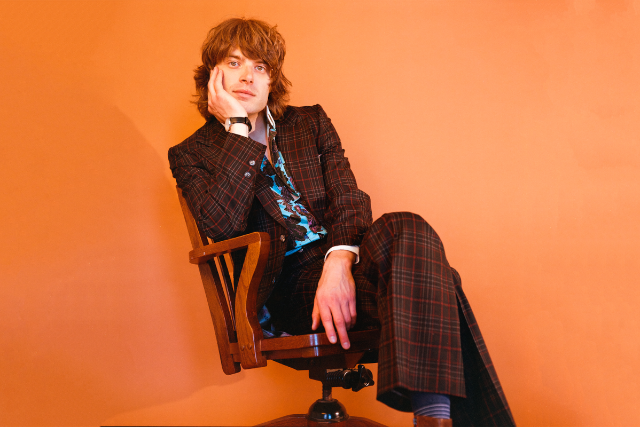
Belly Up Presents
Neal FrancisColor Green
Wed, 7 May, 8:00 PM PDT
Doors open
7:00 PM PDT
Belly Up
143 S. Cedros Ave, Solana Beach, CA 92075
TICKET SALES TERMINATED
Tickets are currently unavailable on TicketWeb
Description
General Admission Ticket Price: $27.50 adv / $30 day of
Reserved Loft Ticket Price: $49
Note: Loft & GA tickets available at box office. Convenience service charges apply for online & phone purchases. Loft Seating Chart / Virtual Venue Tour
Box Office: 858-481-8140 | Boxoffice@bellyup.com | FAQ
Not on the e-mail list for venue presales? Sign up to be a Belly Up VIP and you will never miss a chance to grab tickets before they go on sale to the general public again!
There are no refunds or exchanges on tickets once purchased.
All times and supporting acts are subject to change.
THERE IS A DELIVERY DELAY IN PLACE FOR THIS SHOW. Tickets will be delivered to your inbox 48 hours in advance of the show.
Event Information
Age Limit
21+
Refund Policy
There are no refunds for any tickets bought from the Belly Up, any time, without exception. In the event of a reschedule or show postponement there will be a refund window in which customers can request a refund by contacting boxoffice@bellyup.com - in these instances no fees incurred by purchasing over the phone or online will be refunded.
In the event of a full show cancellation - a full refund including fees will be refunded automatically at the point of purchase.
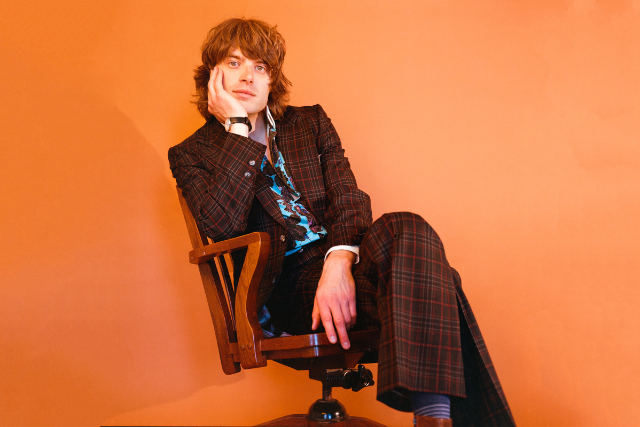
Rock & Roll
Neal Francis
Neal Francis
Rock & Roll
The latest album from Neal Francis, Return To Zero, emerged from the kind of visionary fever dream that only the most masterful and inventive artists are capable of bringing to life. Amid a grueling tour schedule that found him playing nearly 400 shows from 2021 to 2024, the Chicago-based singer/songwriter/pianist immersed himself in creating a beautifully strange entangling of timeless rock & roll and ’70s-era dance music, merging supremely heavy guitar riffs with lush and pulsating grooves—all constructed sans digital programming, in keeping with his devotion to all things analog. Worlds away from the glitzy fantasia of archetypal disco, Return To Zero inhabits a far moodier atmosphere and ultimately makes for the most thrilling manifestation of Francis’ peerless musicality yet.
Equal parts heady and hedonistic, pensive and euphoric, Francis’ third studio LP echoes both his deep-rooted psych-rock sensibilities and a lifelong affinity for classic funk. “I’ve always been intrigued by music that toes the line between funk and rock,” notes Francis. “In the past I’ve asked myself things like, ‘What would it sound like if Thin Lizzy cut a disco record?’ It’s something I’ve been fascinated with for a very long time, so I finally decided to really go for it.”
The follow-up to his 2023 double live album and concert film Francis Comes Alive, Return To Zero marks Francis’ first full-length studio effort since In Plain Sight—a 2021 release acclaimed by the likes of leading rock critic Steven Hyden, who praised its “throwback big-band sound that recalls the highs of 1970s funk and swamp rock.” With his past work also including his 2019 debut album Changes (hailed as “the reincarnation of Allen Toussaint” by BBC Radio 6), Francis began playing piano at the young age of four and became an in-demand sideman while still a teenager, touring with revered blues artists and beloved instrumental band The Heard before embarking on his solo career. Over the years, he’s sold out headline shows all across the globe, supported the likes of Wilco, Black Pumas, and My Morning Jacket, appeared at major festivals such as Bonnaroo, Fuji Rock, and Lollapalooza, and even performed at historic venues like Carnegie Hall.
Like all of his studio work so far (including his 2022 EP Sentimental Garbage), Return To Zero finds Francis co-producing alongside his frequent collaborator Sergio Rios and recording live with members of his touring band (drummer Collin O’Brien, bassist Mike Starr, guitarist Kellen Boersma), elegantly showcasing his prodigious talent and dazzling originality as a keyboard player. Mainly created at Rios’ L.A. studio, the album’s grandiose yet warmly inviting sound also took shape from his close collaboration with composer/conductor Dom Frigo (who aided Francis by transcribing the LP’s symphonic string sections), Say She She (a Brooklyn-based psychedelic-soul trio who adorn a number of songs with their beguiling backing vocals), and a stacked lineup of co-writers that includes Queens of the Stone Age bassist Michael Shuman and Wild Belle co-founder Elliot Bergman.
In the making of his most ambitious work to date, Francis faced countless moments of creative frustration—a factor that eventually gave the album its title. “I was cutting a lot of the vocals at home, using a hybrid process where I’d bounce the tracks from my computer to a tape machine and then record the vocals to tape,” he explains. “I’d be in my vocal booth in the closet with all our winter coats, and every time I needed to start over I’d press this button that says ‘RTZ,’ which stands for ‘Return To Zero.’ I was doing take after take and pressing that button over and over—it was a huge pain, but it also linked up with what I’ve learned in my meditation practice: no matter how frustrated you get, just remain calm and take inventory, and then begin again.”
Although executing Return To Zero’s highly elaborate arrangements often involved a very time-intensive trial-and-error approach, the album-opening “Need You Again” surfaced from an immediate burst of inspiration after Francis attended a DJ set by Derrick Carter (a Chicago house legend who created a 12-inch remix of “BNYLV” from In Plain Sight). “My girlfriend and I went out to a queer dance party called Queen! and stayed till about four in the morning, and Derrick played a track that was a big rock riff over a funk beat,” he recalls. “The next day I went into the studio on very little sleep and started working on the demo for ‘Need You Again,’ and after I finished I couldn’t stop listening to it.” Featuring a guest spot from Grammy-winning guitarist Eric Krasno (Soulive, Lettuce), the result is a glorious entry point into the album’s groove-heavy soundscape, unfolding in sinewy riffs and larger-than-life rhythms as Francis narrates a tale of ruinous infatuation. “It’s a song about a love affair, and the experience of projecting magical qualities onto another person and feeling almost addicted or beholden to them,” he reveals.
Another charmed moment in the album’s creation, “Broken Glass” was sparked from a session featuring Francis on bass and Shuman on drums, with the two soon conjuring the hypnotically potent riff that propels the track forward. With its viscerally charged depiction of lust and self-denial, the darkly majestic epic reaches a stratospheric crescendo at the bridge, when pounding drums meet with Say She She’s near-operatic harmonies. “Once we had that riff I started filling in some freeform poetry from my notebook, which had to do with the idea of taking direction in an intimate liaison,” says Francis. “It all came together so naturally because of how Michael was playing drums, bringing that Queens of the Stone Age heavy-rock thing I love so much.”
One of the most dance-ready tracks on Return To Zero, “Back It Up” glides along on glossy synth lines and a playfully swaggering riff, imbuing a carefree spirit into Francis’ deliberately over-the-top confession of romantic desperation. “That song went through a few different phases before we got to the final iteration,” he says. “It took me a while to accept that it’s okay to have fun with the lyrics, instead of making everything so serious all the time.” Meanwhile, on “What’s Left Of Me,” Francis presents a gorgeously sprawling power-pop anthem built on his resplendent piano work. Co-written with Nashville-based songwriter Chris Gelbuda, the track arose from a piano-and-vocal demo captured at Chicago’s Fine Arts Building, soon evolving into a piercingly candid reflection on life on the road. “Chris and I are good friends and we got to talking about the challenges of being in a committed relationship while you’re on tour,” says Francis. “A lot of these songs were influenced by Electric Light Orchestra and the way Jeff Lynne synthesizes classical music and pop songwriting, and ‘What’s Left Of Me’ was definitely one where I was going for an ELO vibe.”
Partly inspired by the funk and dance records he typically spins during his sets as an all-vinyl DJ, Return To Zero also encompasses everything from the spaced-out drama of “Dance Through Life” to the string-laced reverie of “Can’t Get Enough” (a collaboration with Durand Jones & The Indications’ Blake Rhein that is a sublimely mellowed-out homage to acid-jazz pioneer Roy Ayers). In creating such a complex body of work, Francis found his sense of perseverance repeatedly tested. “Most of these songs were pretty hard-won,” he says. “There was a feeling of pulling out all the stops to achieve what I was going for, and in the middle of that I was dealing with some depression and exhaustion. I ended up learning a lot about myself, and now I feel like I’m in a completely different place in terms of my priorities with mental health.” Despite its more daunting aspects, the writing and recording of Return To Zero also brought plenty of moments of pleasure, including composing with strings for the very first time and tracking songs with his longtime bandmates. “All those guys are like my brothers, and there was a feeling of us working together with an almost athletic desire to get better every time we did a new take,” Francis says. “Those were really long days at the studio, but they were also so much fun.”
Looking back on the making of Return To Zero, Francis points to certain crucial lessons absorbed while creating his most extravagantly realized work so far. “One of the main things I’ve learned is that every album is going to be its own journey; I can’t really take the arsenal of things I’ve learned in the past and expect them to save me from any kind of frustration with whatever I make next,” he says. “Creating art is always going to be a challenge, which maybe goes back to why AI-created music is never going to be all that compelling—it’s just too fucking easy. The best I can do is use what’s at my disposal and try not to freak out or despair when it gets difficult, and hopefully end up making something that gives people joy.”
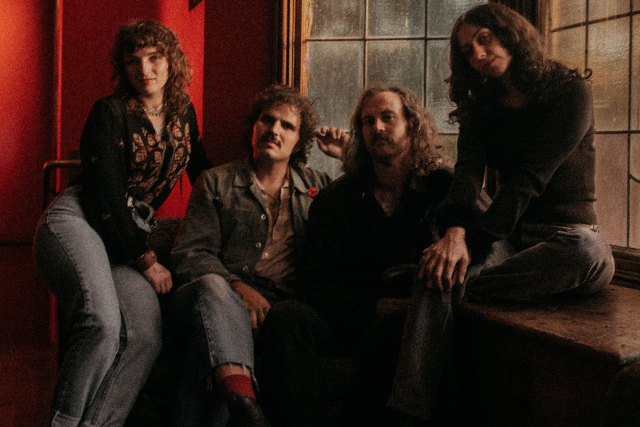
Rock
Color Green
Color Green
Rock
For the California-based quartet Color Green, playing music together is all about stepping into the unknown. “When we play live, I don’t really know what’s going to happen,” says Noah Kohll, one of the band’s two guitarists and four vocalists. “You really have no idea what you’re going to get with this band, which keeps things fresh for us and maybe makes the live experience special.” In a very short time, they have developed a word-of-mouth reputation as a dynamic and unpredictable live act, grounding their cosmic jams in earthy melodies and drawing from ‘60s SoCal folk-r0ck, ‘70s classic rock, ‘80s underground rock, ‘90s psychedelic dance-rock, and any other sound that catches their ears. Adaptable onstage and off, Color Green has shared stages with a range of groups that reflect both the sophistication and the wild malleability of their sound, including Fuzz, Kikagaku Moyo, Circles Around the Sun, Hiss Golden Messenger, and the Brian Jonestown Massacre. Yet, because they see boundless possibilities from one note to the next, they anchor their music in the urgent present rather than the distant past. Color Green can be a million different bands without losing their essential hue. They capture that wild, mercurial quality on Fool’s Parade, a meditation on loss, grief, confusion, frustration, and the clarity to which they all lead. The album has the dynamic of a tight live set, full of ebbs and flows, highs and lows, quiet moments like the devastating “5:08” and reckless jams like the epic “Kick the Bucket.” “Four Leaf Clover” bustles and shimmies like the kaleidoscopic dance rock of the Stone Roses, while closer “Hazel Eyes” recalls the elaborate orchestrations of Brian Wilson and the whimsical melodies of Buddy Holly. “We shaped it to showcase our range,” says guitarist Corey Madden. “All the songs were written together as a band. It’s the four of us in a room, and it features all of our voices. It’s one step toward what this band truly is. We spent a lot of time getting our shit together as a band, and now it’s set in stone for me.” Color Green started out as a very different, much more limited kind of group. “Me and Corey worked together in New York scooping coffee beans for a living and putting them into bags,” says Kohll. “I was living in a basement sublet, and he would come over to write and jam and record.” From those casual sessions came a self-titled EP in 2021, full of spectral jams and offerings up to Jerry Garcia, their spiritual guide. The next year they followed it up with a self-titled full-length via Aquarium Drunkard, with various friends helping to round out the songs. “These things happen in an interesting way,” says Kohll. “There’s been a lot of weird synchronization with this band. It’s all very organic. After we put out our first album, we thought, Oh, this needs to be a live band, too.” After running through a few different rhythm sections, they met drummer Corey Rose and bassist Kyla Perlmutter, who not only are kickass players but opened up all new possibilities within Color Green. “Our first practice together, everyone was like, This is so loud,” says Rose. “That became a really important part of the band, and we try to capture that dynamic when we record.” Perlmutter adds, “We all really value each other’s input. It doesn’t feel like there’s an unfair hierarchy in this band. We respect each other’s tastes and recognize that we’re all very, very much in love with music in our own ways.” After sharpening their attack on the road—playing DIY shows in small towns while opening for some of their heroes—the expanded Color Green began writing songs for what they considered a debut album. “One of us will come in with a riff or an idea, and the others will take it up and let it morph into something completely different,” says Perlmutter. “What we come up with together, I don’t think any of us could do by ourselves. The music we make is always surprising me.” The album’s title track, with its snaking guitar lines and parallax instrumental interplay, started out as an eastern jam when Rose came in with a very loose idea: “I wanted to write something in 6/8 time,” she says. “It was super awkward at first, but 40 minutes later, it sounded like Fairport Convention. It took everybody to get there.” Says Madden, “I like when stuff happens and it opens up the door to something else in my brain. We might spend a lot of time working on something and get nothing out of it, but then in the back of my head I’m thinking, if you take this and add it to that… Sometimes it takes hours to figure out two seconds of a song, but it’s always worth it.” The aching heart of Fool’s Parade is “5:08,” a moving expression of grief—not moving through it, necessarily, but simply living with it, moment to moment. “What’s it like, on the other side?” they all sing together, as though consoling one another. “Oh, the longing for the space to peer thru.” Inspired by the death of Madden’s father, it is rooted in a Spiritualized show. “I was going
through some gnarly personal stuff,” says Madden, “and it was all hitting me at once, all these emotions. I talked my way through some crazy shit, and by the end of the show I had ‘508’ hashed out in my brain. It’s about losing people very close to you and wanting to communicate with them and not really knowing how.”“It’s the quietest song on the record,” says Rose, “but it’s also the heaviest. We all cried while recording it. Everybody’s singing on it, and everybody’s crying on it. Sometimes we’re like, Let’s not play that song tonight. It all depends on how we’re feeling.”