TICKET SALES TERMINATED
Tickets are currently unavailable on TicketWeb
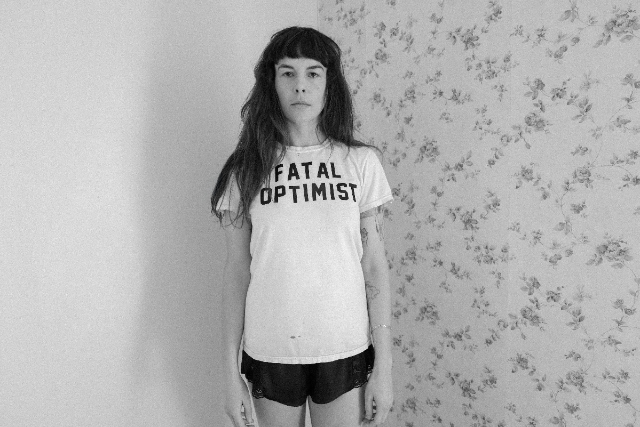
Madi Diaz - The Fatal Optimist Tour w/ Benjamin Francis Leftwich
Sat, 11 Oct, 8:00 PM CDT
Doors open
7:00 PM CDT
The Basement East
917 Woodland St, Nashville, TN 37206
TICKET SALES TERMINATED
Tickets are currently unavailable on TicketWeb
Event Information
Age Limit
18+
Refund Policy
All sales are final. No refunds unless a show is canceled.
Pop
Madi Diaz
Madi Diaz
Pop
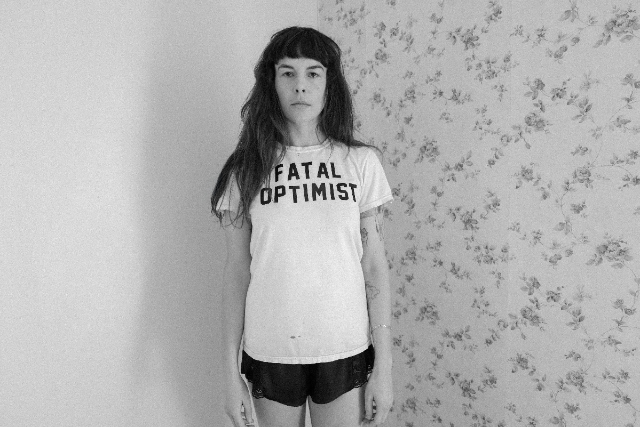
Madi Diaz is an artist who cuts to the emotional core of her own experiences with startling precision. Her last two albums, 2021’s History of a Feeling and 2024’s two-time Grammy-nominated Weird Faith, set off a breakthrough for the professional songwriter. These records won over critics, audiences, and other collaborators with well-crafted songs and a compelling arc: first there’s the difficult breakup, then a mourning period and slowly, a sense of reinvention; when love comes around again, Weird Faith seemed to say, it’s worth fighting through the fear and uncertainty. Fatal Optimist, the Nashville singer-songwriter’s forthcoming LP, could be considered the final chapter in this heartache trilogy, and also its rawest entry. This time Diaz is asking audiences to lean closer in to hear what she has to say.
After ending a relationship with someone she once envisioned marrying, Diaz turned away from everyone and everything she knew and took herself to an island. This heartbreak felt different. Every one of them does. Admittedly, she was embarrassed to be in this position again. How was she going to write about this? "I put myself on an island,” Diaz wrote in her journal during that time. “I was already describing myself as an emotional island swimming in so much of an ocean of feelings... It was the perfect physical manifestation, alone with all of my disappointment.” She began to navigate isolation, and the good things that can come from it. Although people often warn others about isolating, Madi's time alone emerged as a powerful, insightful period of introspection. Rage, embarrassment and romantic grief shifted into inner wholeness and the pieces of Fatal Optimist started falling into place. “I didn’t know that I hadn’t chosen myself yet,” she says. “The only person I’m never gonna leave is myself.”
Solitude called to Diaz again during the initial recording sessions for Fatal Optimist. After entering a New Jersey studio with friends to flesh out the songs, she later realized it wasn’t right. The album needed to sound like isolation, to mirror her experience of being completely alone. She wanted to capture the sound of self-soothing. Diaz started over in Southern California with a new co-producer, Gabe Wax (Soccer Mommy, Zach Bryan) at his Infinite Family Studio. “This was the first time in my career that I stayed in this heavy place with the songs after leaving the studio,” she says, “rather than trying to escape it.” While you’ll find subtle accompaniment from an occasional baritone guitar or bass, Fatal Optimist comes down to Diaz alone in a room with her acoustic guitar. This is her Unplugged moment, her stripped-down version, the Madi Diaz album most likely to haunt you with its starkness. Simplicity can be much more difficult to nail than camouflaging a song with layers of production. It is exactly what these songs needed.
Song by song, she traces the phases of dissolution and rebirth like the moon waxing and waning in the night sky for all to see. Opener “Hope Less” unpacks the experience of being offered less than you deserve and trying miserably to shrink your needs. On “Ambivalence,” Diaz makes a meal out of a shitty feeling and turns that four-syllable word into a quietly anthemic chorus about not being sure if crumbs are enough. The romantic spell is fully broken on “Feel Something,” where Diaz captures the futility of reaching for emotional connection after it’s already been lost. Instead of calling her ex, she wrote this song. It captures the oscillating emotions of post-break-up limbo with energetic acoustic strumming, languid electric guitar, and a final declaration, "Fuck my life, goddamnit I might!" She moves confidently and quickly in her vocal style, showcasing her mastering the craft of phrasing: ”I used to think I needed to read your mind/I’m only gonna find what I’m gonna find, and then we’ll fuck and then we’ll fight.”
The sparse, devastating “Heavy Metal” was a late addition to the album. It pulls off the songwriting trick of cleverly repurposing a common phrase into a personal mantra: her heart is not precious like gold or silver, it’s built to endure pain and battle like heavy metal and her mother. Here her voice aches with vulnerability. “I really wanted to write a song that feels as hardcore as I am,” she says. “I am emotionally heavy metal, but everything comes out soft.”
It’s not like there aren’t moments of weakness, backslides, as Diaz waits for time to heal all wounds. She chronicles her not-so-proud moments with just as much gall-force clarity, grabbing the listener from the very first line on melancholic country song “Why’d You Have to Bring Me Flowers”: “My toxic trait is hanging on, your toxic trait is showing up.” Just because Diaz chose herself doesn’t mean her heart isn’t broken, too. But she takes it as a sign that, at her core, she still believes in love.
The closing title track speaks to her innate hope for something magical despite all the known risks. Here, Diaz is enveloped by a noisy, full-band rock sound for the first time on the album, as if to switch from black and white to technicolor just in time for the story’s cathartic ending. “Making the record felt like walking through fire alone,” she explains of the sonic shift, “the reward was getting my friends back and the color back into my world and getting to have this communal sound.”
In Diaz’s words, “Fatal Optimism is the innate hope for something magical. It’s the weird faith that kicks in while knowing that there is just plain risk that comes with wanting someone or something. It’s when you have no control over the outcome, but still choose to experience every moment that happens, and put your whole heart in it.”
Alternative Folk
Benjamin Francis Leftwich
Benjamin Francis Leftwich
Alternative Folk
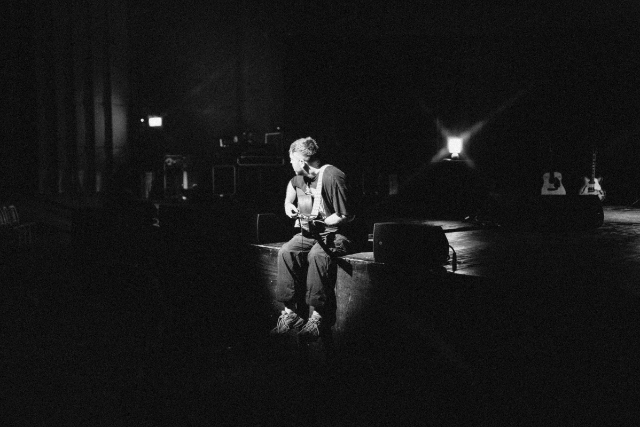
‘Gratitude’ is an apt title for Benjamin Francis Leftwich’s third album. On the first (and title) track, the York-born, London-based singer sings of new beginnings and a sense of inner peace. “Finally can see it, I've landed on the ground / Look at all the peace I've found,” he reflects over fluttering synths. “If somebody had told me then what I know now I would not have listened, I wouldn't have known how / Would have burned down all the bridges, put up walls around everything I needed so nothing could be found.”
In the wake of the world tour for 2016’s ‘After The Rain’, with sessions already underway for what would become his third album and after a particularly heavy New Year’s Eve alone in his flat, the singer gave in, and checked himself into rehab. "My mind was so fried, broken, depressed, addicted and fucked," he reflects now, “and I’d had enough.” The title track of the new album plays out like some sort of Eureka moment. “'Gratitude' was written in the madness, but I was predicting where I was gonna get,” he says. “It says 'I'm free now, and I'm accepting what I am and what I need to surrender to in order to change.'"
‘Gratitude’ is an album predicting and then reflecting on huge personal change, and this upheaval seeps into every sinew of the record. Lyrically, it sings of redemption, guilt and regret, and it’s transmitted via music that bursts forwards like water breaking a dam, expanding the singer’s palate into widescreen, epic new territories.
Recorded between Sleeper Sounds and The Bridge in London with frequent collaborator Lazy H alongside Joe Rubel, Josh Grant and Beatriz Artola of Electric Lady studios, who’s previously worked with A$AP Rocky, Common and J. Cole, ‘Gratitude’ takes the hushed acoustic base of ‘After The Rain’ and the singer’s lauded 2011 debut album ‘Last Smoke Before The Snowstorm’ and fleshes it out to create a record unlimited in its ambition, and a portrait of a singer no longer limited, in life or in his art. "As writers, sometimes our currency is pain,” Ben says, “and it can be such a dangerous place to exist in. I was giving so much of myself to the music that I had nothing left for myself."
It was during breaks from touring 'After The Rain' in early 2016 that the bones of what would become 'Gratitude' started to be created, alongside work on 2018 EP 'I Am With You'. Songs were built up from voice memos mumbled into a phone into concrete ideas in the Dalston flat of Lazy H and a writing room in Brixton, a process that Ben says was "just getting it all out and writing really honestly. Lazy H was able to catch me in a really early place." The sessions helped capture a vulnerability and willingness to reform that seeps into the fabric of the album, which was then sculpted into its final form in a calmer headspace. The process was overseen by Beatriz, who mixed the record and moulded the ideas of the handful of producers into something flowing and coherent.
The album’s second song is 'Look Ma!', the first song Ben wrote after getting clean, and, he says, a reflection on how "just being clean doesn't mean that everything is blessed". "There's more to a storm,” he sings in the intro, before breaking through to a new place via thunderous synthetic drums and shimmering production. His voice also takes on a new, more forceful quality in the song, tearing apart his signature hushed tone for something grander and more confident. “I'm over the fake love making,” he sings. “Over pretending I know it all as I hit the floor."
Across the album, the singer stretches his capabilities and ambitions in every possible way; ‘Sometimes’ is an acoustic jam more closely aligned to his earlier work, but fleshed out by choral backing vocals and synths that surge forwards at the track’s most urgent moments, while ‘Tell Me You Started To Pray’ thuds along like a drive-time radio heart-wrencher. ‘Blue Dress’, meanwhile, bursts out of its comfort zone into a sky-reaching chorus that harnesses the anthemic qualities of Jack Antonoff’s Bleachers. It’s the sound of a singer-songwriter casting aside all genre boundaries and limitations and entering a glorious new era.
So closely tied to the struggle that informed the album, every note of ‘Gratitude’ carries an extra power. It’s a deeply necessary album that serves as the redemption of one man, but is transmitted in such an open, giving way that it can also be a guiding light for thousands of others.