TICKET SALES TERMINATED
Tickets are currently unavailable on TicketWeb
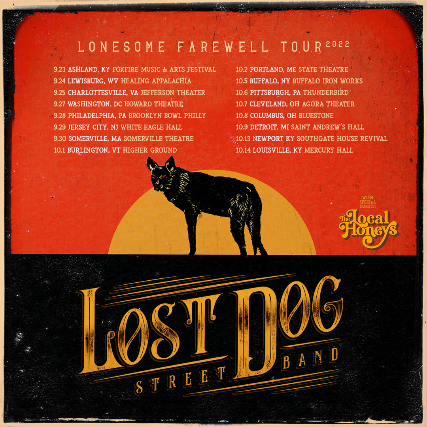
Lost Dog Street BandThe Local HoneysJoe's Truck Stop
Thu, 13 Oct, 8:00 PM EDT
Doors open
7:00 PM EDT
The Southgate House Revival - Sanctuary
111 E Sixth Street, Newport, KY 41071
TICKET SALES TERMINATED
Tickets are currently unavailable on TicketWeb
Event Information
Age Limit
18+
Country Folk
Lost Dog Street Band
Lost Dog Street Band
Country Folk
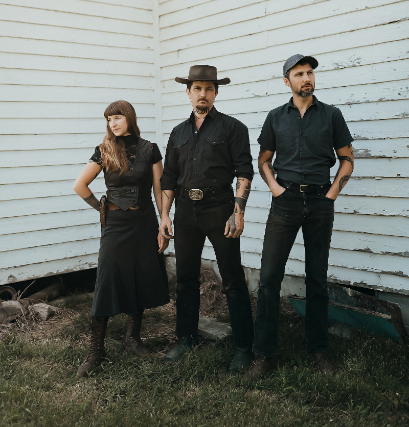
Returning to the stripped-back, string band sound of their busking years, Lost Dog Street Band’s new album Glory is a searing testament to recovery, redemption and resolve. Fronted by songwriter Benjamin Tod and his wife, fiddler Ashley Mae, the DIY band began out of desperation on the sidewalks of Nashville roughly a decade ago, but now sustains a significant national audience that’s drawn to their authentic songwriting, old-time instrumentation, and hard-won independence. “I wanted to make an album with the specific intention of being raw but full at the same time and to get back to our roots,” Benjamin Tod says. “Everyone on this album has been a busker. Douglas Francisco, who plays slide guitar — I met him on the streets busking. Jeff Loops, our bassist, was in a busking band, too. That flavor was important to me, just getting back to the root of things.” By centering the songs of Glory around acoustic arrangements, without the drums or steel guitar of prior albums, these harrowing personal stories become even more graphic. It’s a feeling that Benjamin Tod himself describes as “a logical glimpse of climbing out of hell.” He observes, “Something that was shocking to me was realizing that as soon as I got sober, that was really the beginning of the journey. Choosing to get sober was barely even a milestone.” Leading the album, “Until I Recoup (Glory I)” vengefully demands justice and describes the fight for glory after it’s been unjustly taken away. The lyrics read like a mission statement of redemption. Similar to Steve Earle’s influential Train a Comin’ album from 1999, Glory conveys the hard work that goes into getting clean, particularly in tracks like “Fighting Like Hell to Be Free,”“Beautiful Curse” and “Jalisco Bloom.” Calling to mind the skillful writing of Guy Clark or Townes Van Zandt, “What Keeps Me Up Now” views that phrase from multiple angles, from sleepless nights to a suicide attempt, where “the belt was a noose when I came to on the ground.” It’s one example of the “dark country” description that the band occasionally uses to describe their sound. In contrast, “End With You” finds Benjamin Tod feeling damn glad that he’s found a relationship that’s sustained him for a decade, through the achievements as well as the obstacles. Raised in Sumner County, just outside of Nashville, Benjamin Tod was primarily raised by his grandmother and grandfather. However, at age 7, his mother surprised him with a cheap electric guitar –then his competing father bought him a pawnshop classical guitar. With nobody to show him how to play, they were little more than toys. However, at 14, he and a friend each received a Fullerton parlor guitar from his friend’s father. The boys started getting interested in folk music and protest songs, which led Benjamin to the streets of Nashville to busk. Meanwhile, Ashley Mae was spending more and more time in Nashville, where her mother worked the overnight shift at rock station WKDF. She’d already tapped into the small punk scene in Rapid City, South Dakota, where she grew up, but found an even deeper community in Music City. At 20, she taught herself to play fiddle, shedding as much of her classical violin training as she could. When she met Benjamin Tod at a punk show, introduced by a mutual friend, they bonded immediately. At 17, they left Nashville together for a life of street performance, hopping trains, and scraping by on less than $300 a month. After four years of terrible gigs and almost no traction, Benjamin Tod decided in 2016 to abandon the band. “I’d been a hardly functioning drug addict and alcoholic for over a decade. I was sick of the lifestyle and it seemed like it was going nowhere,” he admits. An invitation from the band Devil Makes Three came out of the blue in 2016. Benjamin Tod found out about it in a train-yard, about to hop a train from Asheville, North Carolina, to Knoxville, Tennessee. “Without that, Lost Dog never would have moved forward from that point,” he says. Lost Dog Street Band gained traction through that tour, but when Benjamin Tod and Ashley Mae separated for a year and a half, the momentum evaporated. Instead of going back on the road, they filmed performance videos of songs from Benjamin Tod’s solo album, I Will Rise, and posted them to YouTube without much expectation other than promotional use. However, that decision proved to be the turning point, as curious listeners discovered the band and their ticket sales skyrocketed. Those early fans especially will embrace the spare but spirited sound of Glory, applied to tracks like “Cost of the High,” which directly addresses the fallout of addiction, as well as “Hayden’s Lament,” where the choice is given between “getting dead or getting tough.” Right after the plaintive country ballad, “Losing Again,” Benjamin Tod brings out the banjo for “I Believe (Glory II),” which basks in the emotion of finally finding that glory. Without touring in 2020, Benjamin Tod and Ashley Mae settled on a parcel of land in rural Kentucky that they bulldozed themselves, building a cabin with well water and solar panels. Every week, even now, Benjamin Tod says he takes account of his situation as a recovering addict. “In society as a whole, there’s a real lack in examples of actual recovery,” he says. “There’s not a brutally honest take on how painful the process is, but how rewarding it is at the same time. Every step that you make helps encourage you to meet the next milestone. It’s like a punch in the face and the kiss on the cheek every day. It’s very personal for me, the concept of digging out of hell, because I had to do that in order to gain my own dignity back. Everything follows after that. You have to earn your own respect of yourself before you earn it from anybody else
Bluegrass
The Local Honeys
The Local Honeys
Bluegrass
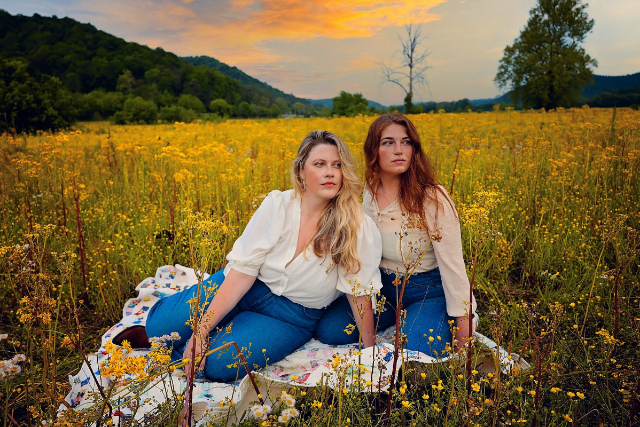
Though many artists are defined by place, only a handful of artists come to define the places they’re from. The Local Honeys are Kentucky and Kentucky runs through their veins like an unbridled racehorse. When a master songsmith like Tom T Hall calls an artist “a great credit to a wonderful Kentucky tradition” it’s time to pull up a chair and pay attention. As it pertains to The Local Honeys he was right on the money. For almost a decade the duo (Montana Hobbs and Linda Jean Stokley) have been an integral part of the Kentucky musicscape. They’ve paid their dues, garnering countless accolades and accomplishments (tours with Tyler Childers, Colter Wall, praise from the New York Times) and have become the defining sound of real deal, honest-to-god Kentucky music.
With their self-titled debut on La Honda Records, (home of some of today’s most gifted songwriters; Colter Wall, Riddy Arman, Vincent Neil Emerson) the duo have set forth on a journey to create something true to themselves while pushing the envelope within the traditions they hold dear. Carefully crafted vignettes of rural Kentucky soar above layers of deep grooves and rich tones masterfully curated by longtime mentor Jesse Wells, Grammy nominated producer and musician (Assistant Director at the Kentucky Center for Traditional Music at Morehead State). “Jesse grew up with sisters. He was cut from the same cloth as us and we knew he would understand what we wanted to do.” What they ended up with is the most nuanced, moody, deep-holler sound they have captured to date. “This is the first time we’ve actively gotten to express who we are and where we’re from” says Linda Jean, “The songs on the album speak for us,” adds Montana “they’re about what we know, reflections of us as people. We realized we have the power to add our own narrative into Kentucky music.” Through that realization the two were able to uncover and dissect themes unique to Central Appalachia and in turn their own lives, capturing small moments in time that deliver thunderous results.
Throughout The Local Honeys, the duo demand to be interpreted as creators and storytellers, not just purveyors of tradition. Similarly, the sounds captured within the project cement their place as innovators and rule breakers. Rollicking banjo meets overdriven guitar hooks and blue collar rural grit is met with lush melodies and nimble harmonies; it’s a project filled with juxtaposition and it isn’t by accident. It’s reflective of who they are and who they run with. Wells along with The Food Stamps rhythm section - Rod Elkins (percussion) Craig Burletic (bass) and Clay City, KY’s irreplaceably one-of-a-kind Josh Nolan (guitar) all lent their expertise and signature groove as collaborators during the session creating a fluidity, warmth and cohesion that can only be created through friendship. The project was engineered in Louisville at Lalaland by Grammy winner Anne Gauthier.
The songs on The Local Honeys speak to a new generation, a new Appalachian, the people who understand the beauty, the struggle and the complexity of contemporary Appalachian life. In “The Ballad of Frank and Billy Buck,” Hobbs describes the grace, humor and irony of an aging hillbilly leading up to the final moments of his unjust demise. Or there’s “If I Could Quit,” a song that grapples with the horrors of the ongoing opiate epidemic and the guttural pain of watching a friend deteriorate through addiction. Pride and sense of place runs deep on songs like “Throw Me in the Thicket When I Die,” a love letter about Linda’s family orchard in Central KY. Playful colloquialisms and regional idiosyncrasies also permeate throughout the record as illustrated on “Better Than I Deserve,” a song built around an informal greeting Montana’s Papaw used throughout her childhood. The album is rounded out with “The L and N Don’t Stop Here No More,” (the only cover on the record written by Appalachian royalty and kin to Hobbs, Jean Ritchie) a song highlighting the hardships of post coal communities painting an all too familiar scene of contemporary rural Appalachia. Reflecting upon these songs Linda notes, “Songwriting can freeze people in time like a photograph, preserving little nuances particular to specific cultures and I love that.”The
Local Honeys come from a long line of storytellers, a lineage of strong Kentucky women that aren’t afraid to tell it like it is and their self-titled La Honda debut is proof it’s in their bones. The duo have mastered the art of telling a good story. The narratives and landscapes they weave into song, the deep understanding and love they share for old time traditions, their undeniable charisma and charm, and their blatant disregard to follow the rules make it clear the duo is poised to become not only the defining voices of their home state of Kentucky but the defining voices of a new Appalachia.
Americana
Joe's Truck Stop
Joe's Truck Stop
Americana
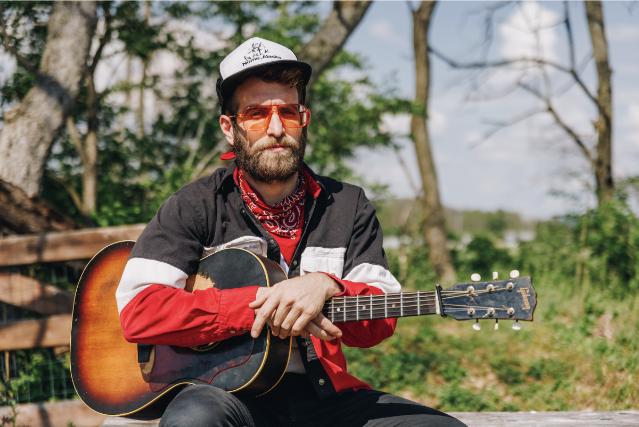
From a ridge in the Ohio River Valley, on a front porch where Kentucky’s visible through the winter’s bare trees, Joe Truck Stop conspires over a smoking blend of Bluegrass, Honky Tonk, Western Swing, and whatever else finds itself inhaled and manifested by way of a wood box and steel wire...Years of digesting so much of the Country Blues lexicon and traveling the country learning the numerous styles of fiddlers, writers, and travelers alike has led to the original music that comes by way of Joe’s Truck Stop.
The songs are stories of living on the road, love, temptation, heartbreak, family, banjo pickin' tobacco spittin' women, gas station sushi, and much more...
We've released a handful of self recorded demos and three studio albums, the Free Showers EP (2014), American Dreams (2018), and, Yonderings, released in April 2022, currently receiving positive praise from numerous outlets and publications.