TICKET SALES TERMINATED
Tickets are currently unavailable on TicketWeb
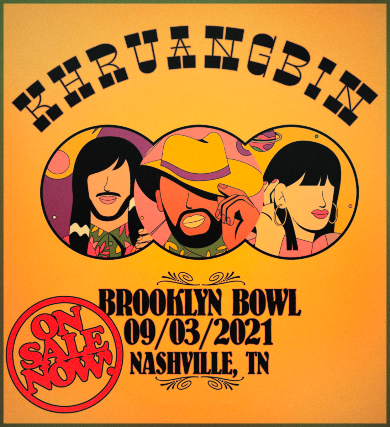
Khruangbin
Fri, 3 Sep, 8:00 PM CDT
Doors open
6:00 PM CDT
Brooklyn Bowl Nashville
925 3rd Ave North, Nashville, TN 37201
TICKET SALES TERMINATED
Tickets are currently unavailable on TicketWeb
Description
Because of the rise in cases due to the delta variant, a special COVID protocol is required for everyone that will be in attendance for Khruangbin on 9/3/21 at Brooklyn Bowl Nashville. You, and anyone accompanying you in your party, are required to provide ONE of the following:
Proof of your vaccination record (vaccination card or picture of your card with a matching ID card), demonstrating you were fully vaccinated at least two weeks in advance of the day of show. OR proof of a negative COVID test, administered within 72 hours of the day of show, with matching ID card.
The city of Nashville is offering free testing (Monday - Friday, 8am-2pm) at 2491 Murfreesboro Pike, Nashville, TN 37217 (former K-Mart parking lot). For more information on the specific testing site, please visit this link here: https://www.asafenashville.org/test-mask-resources/.
Khruangbin and Brooklyn Bowl encourages mask wearing and encourages you to get vaccinated if you aren’t already!
By purchasing a ticket you are acknowledging you will be required to show proof of vaccination or negative test result. There will be no refunds for tickets purchased, due to specific venue covid-19 protocol. If you receive a positive test before the show, please reach out to nashvilleboxoffice@brooklynbowl.com and we will help facilitate a full refund.
If you have any questions or concerns, please reach out to us at nashvilleinfo@brooklynbowl.com.
This event is 18+ Anyone under the age of 18 must be accompanied by a parent or guardian
Valid photo ID required at door for entry
This event is general admission standing room only.
Doors: 6:00 PM
Show: 8:00 PM
Onsale Schedule
Event Information
Age Limit
18+
Refund Policy
ALL SALES ARE FINAL
Alternative
Khruangbin
Khruangbin
Alternative
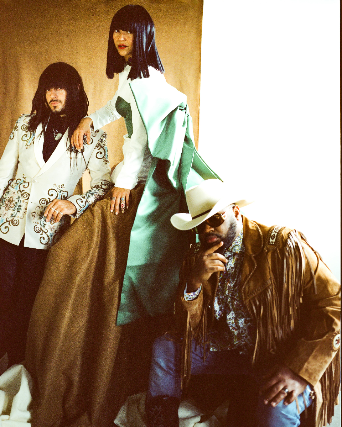
Khruangbin has always been multilingual, weaving far-flung musical languages like East Asian surf-rock, Persian funk, and Jamaican dub into mellifluous harmony. But on its third album, it’s finally speaking out loud. Mordechai features vocals prominently on nearly every song, a first for the mostly instrumental band. It’s a shift that rewards the risk, reorienting Khruangbin’s transportive sound toward a new sense of emotional directness, without losing the spirit of nomadic wandering that’s always defined it. And it all started with them coming home.
By the summer of 2019, the Houston group—bassist Laura Lee, guitarist Mark Speer, drummer DJ Johnson—had been on tour for nearly three-and-a-half years, playing to audiences across North and South America, Europe, and southeast Asia behind its acclaimed albums The Universe Smiles Upon You and Con Todo El Mundo. They returned to their farmhouse studio in Burton, Texas, ready to begin work on their third album. But they were also determined to slow down, to take their time and luxuriate in building something together.
It’s a lesson Lee had recently learned with the help of a new friend, a near-stranger who had reached out when she was feeling particularly unmoored, inviting her to come hiking with his family. That day, as they’d all made their way toward the distant promise of a waterfall, Lee had felt a dawning clarity about the importance of appreciating the journey, rather than rushing headlong toward the next destination—something she’d almost lost sight of during the band’s whirlwind rise. When they reached the waterfall at last, Lee’s friend urged her to jump, a leap she likens to a baptism. As she did, he screamed her name—her full name, the one she’d recently taken from her grandfather. In that instant, Laura Lee Ochoa was reborn. She emerged feeling liberated, grateful for what her friend had shown her. His name was Mordechai.
Ochoa’s rejuvenation found its expression in words—hundreds of pages’ worth, which she’d filled over a self-imposed day of silence. As Khruangbin began putting together the songs that would make up the next record, discovering in them spaces it seemed like only vocals could fill, they turned to those notebooks. Khruangbin had worked with lyrics before: the love-letter poetry of “Friday Morning,” the ghosts of conversations gone by in “Cómo Te Quiero.” But this time Ochoa had found she had something to say—and so did the songs. They needed each other. And letting those words ring out gave Khruangbin’s cavernous music a new thematic depth.
Chief among those themes is memory—holding onto it, letting it go, naming it before it disappears. Again and again the songs play on those notions, from the sun-dappled disco of lead single “Time (You And I)”—which evinces the feeling of a festival winding down to its final blowout hours—to the lilting “So We Won’t Forget,” which finds Ochoa filling her apartment with memories she’s scrawled on Post-Its to prevent them slipping away. It’s there, too, in “Dearest Alfred,” which was inspired by a trove of letters Ochoa’s grandfather wrote to his twin brother, as well as “If There Is No Question,” a metaphysical devotional (by way of Marvin Gaye) that harkens back to Johnson and Speer’s earliest days in a church band. And those same nostalgic wisps curl all around “Connaissais De Face,” a Middle Eastern vamp by way of Serge Gainsbourg that evokes all the ruminative romance of a French New Wave film, layered with its own tender dialogue of reminiscence.
Musically, the band’s ever-restless ear saw it pulling reference points from Pakistan, Korea, and West Africa, incorporating strains of Indian chanting boxes and Congolese syncopated guitar. But more than anything, the album became a celebration of Houston, the eclectic city that had nurtured them, and a cultural nexus where you can check out country and zydeco, trap rap, or avant-garde opera on any given night. The Roy Ayers funk of opener “First Class” created a lush bed for the band to stretch out on, singing wryly about popping champagne while jet-setting all over the world. But in the end, those brags are revealed to be a shoutout to the home that made all this possible, a love that’s evident in its hands-in-the-air refrain of “H-Town.”
In those years away from that home, Khruangbin’s members often felt like they were swimming underwater, unsure of where they were going, or why they were going there. But Mordechai leads them gently back to the surface, allowing them to take a breath, look around, and find itself again. It is a snapshot taken along a larger journey—a moment all the more beautiful for its impermanence. And it’s a memory to revisit again and again, speaking to us now more clearly than ever.
Indie Rock
Liz Cooper
Liz Cooper
Indie Rock
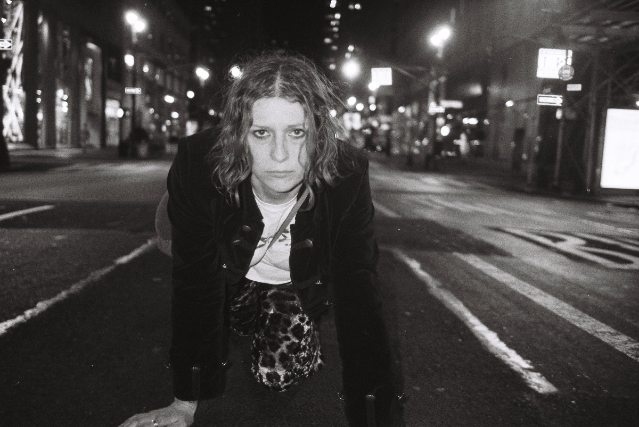
On the porch of her one-time Nashville home, Liz Cooper had a multimedia project that combined two of her loves: lips and cigarettes. She painted her own lips with red paint and kissed a canvas two or three hundred times, later dotting them with the detritus left behind in ashtrays by her friends. An overlap of intimacy, indulgence, cheekiness, and sensuality, the piece complements Cooper's roiling second record, Hot Sass. Over jagged, frenetic guitar parts, Cooper sets expectations aflame with the record's title track. Her songs unfurl like smoke spiraling off an incense cone late in the afternoon, with Cooper pushing deeper into psychedelic openness, punk ferocity, and beyond.
Hot Sass marks multiple departures for Liz Cooper: from her nine-year home of Nashville, from her band addendum of the Stampede, from any genre-burdened expectations she'd accumulated over the years. After heavy touring in support of 2018's Window Flowers, where her songs stretched out in live settings, she felt constricted by the Americana-adjacent associations that the Stampede carried. So with her bandmates' blessing, she dropped the moniker, pursuing sounds and songs that let her chase the inspiration lent to her by the likes of Courtney Love, Lou Reed, and David Bowie.
In Burlington, Vermont, Cooper and her cohort -- Ryan Usher, Joe Bisirri, and Michael Libramento -- recorded Hot Sass at Little Jamaica, the personal studio/private residence of producer Benny Yurco (Michael Nau). The intimacy of the space and the players' provided a wide-open approach to Yurco's live setup for rolling forward with minimal takes, a sensibility abetted by a whole lot of psychedelic mushrooms consumed in the process. Cooper recorded her guitar parts from the kitchen and living room while Usher played drums in a bedroom.
Completing Hot Sass, Cooper realized she needed a change of scenery from her longtime home of Nashville, where she'd lived in a freewheeling house of itinerant artists known as the Pennock Palace. She settled in Brooklyn at the beginning of March 2020, and found herself confronted with the new challenges of staying still as touring ground to a halt.
"I'm learning more about how to take care of myself -- just facing the darkness head on that I've been running from by being on tour and being so busy my whole life. It's taught me more about what kind of artist I want to be and what kind of person I want to be," she says.
But now, Hot Sass is crackling into public life, charging forward with Cooper's revitalized creative energy. Her Nashville confidant Daniel Yocum, a painter and friend who collaborated with her on the music videos for Hot Sass, first encouraged Cooper to pick up the practice for herself. She's finding new mediums to explore in paints and pedals, discovering even more exciting, untamed space to be herself.
Where did the concept of "hot sass" come from, and how did it become the central focus of your record?
It's something that scares me. It's another part of myself that I'd never really show. It's something that pushes me that goes hand in hand with me not hiding behind a band's name anymore. It is this other side of me, this wild side.
I feel like it is this madness that I've been more comfortable with accepting and like, this fucking attitude that I do possess that I've been hiding from. It's this confidence and sexiness, it's something that I've always been very afraid of. It's me learning about what kind of woman I am and It's not pretty all the time. It's not this thing that you can put in a box. I'm inspired by women who speak their mind, and who don't give a fuck what people think about them.
There's a sense of restlessness that carries across the record, and right after you finished it, you left Nashville for New York. How did that feeling make its way into the songs?
A big thing about touring is how you're not really able to reflect, you're just so in the moment all the time, and you're always surrounded by people. I am an introvert, and I feel like I have to refuel by being by myself, which is literally impossible when you're on the road. I was exhausted. But I think it's also a lot of growth and just learning about myself and trying to be confident. I've always struggled with my confidence and self worth, and facing that.
What was your approach with beginning to write Hot Sass? Where were you trying to push yourself musically?
Really what the beginning of it was, was, very organically and naturally, I met Benny Yurco, who is a fucking creative genius. I just texted him one day, and I was like, "I want to make a record with you." And he was like, "Let's do it." So really that was the beginning push for me to be creating with an artist that I really respected. I knew I had to really bring it for him and for myself.
I wrote this album on the road and any chance I could find, so in between soundcheck and the show, I would hide in the van, or I would write in motel bathrooms. Whenever I'd get home for however long, which is not usually very long, I would just dive in and write.
As soon as we got to Benny's, it was this complete safe haven. All of us trust each other so much, and we let our guards down completely. We flew through recording these songs and tracked the drums, the bass, guitar, and vocals all live. There was no intention besides just making the best song and without any ego.
You spent a few years touring pretty heavily, even by a lot of musicians' standards, and you recorded most of Hot Sass live as a group. How has it been going without that kind of in-person energy for the last year or so?
This is the longest I've gone without playing music my entire life. It's been really important for me, because music is my spirituality and my release, and I've never not had it. To take that away has been a total withdrawal, and an incredible emotional roller coaster to be in an unfamiliar city with that.
It affected me a lot. I know that I needed that break, because it made me learn more about myself: "Okay, well, if I can't just chase this thing all the time, who am I without music? I'm still learning."
What has picking up painting meant to you over the last few years?
I've just been finding my voice with it just like music. And I definitely have ideas of how I want to push boundaries with it. It's just another way to expose my insides which scares me but also makes me feel whole and healed. I love to paint because I don't feel any pressure from myself or from anyone else. It's just fun and it's pure. Purely expressive. If I make something that is horrifying and super shitty, I don't care. You move on, and you learn from it. And that's it. Daniel [Yocum] is the one that really made me fall back in love with it. We push each other, and we're gonna do some collaborations with visual art beyond videos, see what we can dream up in the painting world.
What do you most want to get across with this record?
I'm not sure if there's anything specifically that I'm aiming to get across. I'm still processing these songs. Still reflecting. And I think that's the thing -- Hot Sass is just a stamp in time of what was happening in my life. I just want to continue making art that displays myself, the moments, and the people around me.