TICKET SALES TERMINATED
Tickets are currently unavailable on TicketWeb
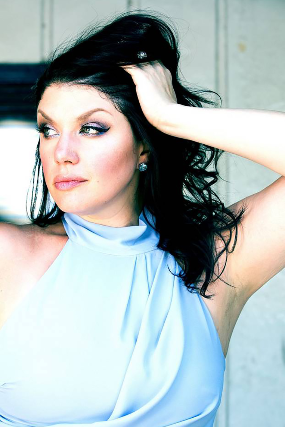
Jane MONHEIT "Home For The Holidays"
Thu, 22 Dec, 8:30 PM PST
Catalina Jazz Club
6725 W. Sunset Blvd., Hollywood, CA 90028
TICKET SALES TERMINATED
Tickets are currently unavailable on TicketWeb
Description
Come What May, her first album in five years, highlights her fresh takes on first-rate standards, with deft interpretations honed after years on the road. “There is a certain comfortability that comes from performing a song night after night to audiences around the world,” she says. “So by the time we finally got into the studio to make this record, I had the luxury of the arrangements being perfectly familiar, rehearsed, and polished. Putting together this project was a smooth, relaxed process and I think that’s reflected in the final product.”
Monheit has achieved two goals in both making an album that sounds timeless, yet still addressing the current moment. “So much of Come What May is really a way for me to cope with the pandemic in my own personal way,” she explains. “For example, ‘Let’s Take a Walk Around the Block.’ We would all like to visit the magical places listed in the song, but we don’t have any money right now – so let’s just enjoy where we are. I believe everyone can relate to that idea!”
Jane’s lifelong love affair with Brazilian music comes alive with another song about travel, the Antônio Carlos Jobim standard “Samba Do Avião,” also known as “Song of the Jet.” “Musicians are accustomed to traveling the world non-stop,” she comments, “and now that we’re all grounded, it feels very strange. I miss touring so much that I just can’t explain. I literally dream of being back on the road!”
On the flip side of the pandemic experience, the exuberant, feel-good medley of “On the Sunny Side of the Street” and “Get Happy” is an opportunity to lift spirits. “People stuck at home need a little encouragement and cheer,” Jane says, “The album has some sad, heavy tunes and I knew we needed to balance those with some levity.” That same notion inspired her lighthearted take on the musical theater classic “I Believe in You,” which opens this collection on a brisk high note.
Other selections reflect Monheit’s adoration of the legendary vocalists that preceded her. “I’ve worshipped Judy Garland my entire life, but the first version of ‘The Man That Got Away’ I ever heard was from Ella Fitzgerald. Her interpretation is so matter-of-fact. In my version, I tried to balance Judy’s glorious drama with Ella’s subtlety. This track is an homage to both my heroes.” She credits both Ella and Billie Holiday for introducing her to the lesser-known “When a Woman Loves a Man.” Jane recalls, “that’s another song I’ve adored since I was a tiny kid. I particularly love our recording since it has such a sophisticated and intelligent chart by our musical director Michael Kanan. I think you can tell just by listening how much we enjoy playing together.”
Event Information
Age Limit
All Ages

Classic Jazz
Jane MONHEIT
Jane MONHEIT
Classic Jazz
Blessed with “a voice of phenomenal beauty” (Stephen Holden, New York Times), Jane Monheit has had plenty of milestone moments in establishing herself as one of today’s best and most important vocalist-musicians.
With her new album, The Songbook Sessions: Ella Fitzgerald—the first to be released on her own Emerald City Records—the Long Island native has surprised even herself with her artistic leap. Jane had thought about recording an Ella tribute for a long time. Fitzgerald’s beloved songbook albums held “Biblical” importance for her when she was growing up and have never lost their hold on her.
On this new offering, Monheit pays joyous tribute to Ella while sharing a definitive portrait of herself, guided by her producer, arranger, and trumpet great, Nicholas Payton. Once she decided to make the dream project a reality, she had no trouble choosing titles. She jotted down a list of 25 titles “almost immediately.” She and Payton each narrowed the choices to a dozen and settled on the final list together.
“We met in the middle in a lot of ways,” Monheit says. “It all came down to trust. I had no idea what to expect from Nicholas because we had never worked together, but it was evident from the start that he is a sensitive soul and his knowledge and understanding of history was beyond compare. I felt an instant trust in him I had never felt before with any other producer.”
“This record is really different,” she adds. “It’s the first I’ve made a recording without a label and so I was able to make all the decisions myself. Honestly, when I listened back to the takes, I heard a different singer than I’ve heard before—a more mature one. It was a little scary because there’s a certain raw quality to some of the vocals but we gave no thought to fixing them. These were the vocals of a 38-year-old woman with a lot of life experience. These tracks really express who I am.”
“My first priority was to make Jane comfortable, so all she had to worry about was showing up and singing,” says Payton, who first met her in Brazil about five years ago and stayed in touch casually. “But on the other hand, I wanted to make her a little uncomfortable by pushing her into places she might not push herself. She is so multifaceted. I wanted to showcase a lot of different things she loves to do on any given night with her band that haven’t necessarily been brought forth on her recordings.”
Throughout the recording, Jane’s gorgeous upward swoop is pure Ella, her earthy wordless phrases pure Sarah, but this album is a classic example of a singer leading her influences rather than being led by them.
From the first song, “All Too Soon,” a highlight of Fitzgerald’s Duke Ellington Songbook, it’s evident that this album is not going to be your usual Ella salute—the kind that plays up the incomparable singer’s swinging, scatting, girlish side. Monheit is all woman here, pouring herself into the lyric with sultry savoir faire.
“I thought it was important to capture the side of Ella that sometimes gets played down, her warmth and sincerity and the depth of her singing,” says Monheit. “I’m closer to that side, as a musician, than the crazy swinging total genius side of her.”
[Jane Monheit by Bill Westmoreland] The Songbook Sessions was recorded during a tumultuous time for Monheit, who had suffered several shakeups in her personal life. The most painful was the death of her grandfather, her biggest fan and most devoted coach, who often would put together lists of the songs he wanted her to record and printed out the lyrics for her. Among those songs was Irving Berlin’s “I Used to Be Color Blind,” the one song she had to learn for the album. Her grandfather died before he could hear her version, but clearly, his spirit was in the room. “Like the artist that she is, instead of cowering away from life situations that were quite painful, Jane put that into the music,” says Payton.
When asked “Why now?” in starting her own label, Emerald City Records, Jane elaborates: “You have no idea how exhausting it was, bouncing from label to label,” she says. “I was on five labels in 13 years. Everyone wanted to mold me into something else. It was like, be this person, wear this outfit, sound like this. It became harder and harder to put trust in people and to be myself. They would take control and things didn’t turn out the way I wanted.” All the creative pushing and pulling Jane was subjected to as a young artist took its toll.
Fast-forward to today and enter Nicholas Payton: “For a long time, a lot of people didn’t take her seriously,” he says. “She was dismissed as a young sex kitten type of symbol with a pretty voice.” Having followed her career and spent some time with her socially, he knew how hard she had worked to develop as a singer, and how powerful of an individual she could be.
Monheit says: “From the start, Nick insisted that telling a story, a truthful story, laying it all out, was most important, not just playing to each other. He wasn’t planning on playing on the album, but after we discovered what strong chemistry we had, it was inevitable that we had to play together. It was a real honor and a thrill for me.”
As the arranger of eight of the songs, Payton also updated the harmonies and overall feel of several of the tunes. “I wanted to make them romantic and sexy,” he says. “We look at love and sex a lot differently today than we did 60 years ago.” Longtime band mates, pianist Michael Kanan and bassist Neal Miner, who each arranged two songs, also made contributions to the fresh arrangements on the album.
Jane Monheit was born on November 3, 1977. She was raised in Oakdale, New York, on Long Island’s South Shore. Her aunt and grandmother were professional singers. Her mother performed in musical theater and currently performs in local choirs, and her father plays banjo and guitar. His love of bluegrass, folk, and acoustic blues (Bonnie Raitt and Maura O’Connell were among his favorites) shaped her musical sensibility. “It all came down to storytelling,” she says.
[Jane Monheit by Bill Westmoreland] Jane spent her childhood summers at the Usdan Summer Camp for the Arts, from which she received a distinguished alumna award (other notable alumni include Natalie Portman, Mariah Carey, and Taylor Dayne). Throughout her years of public school, she studied clarinet and music theory and performed in theatrical productions both at school and with her local community theater group.
Jane went on to study voice at the Manhattan School of Music with Peter Eldridge, a founding member of the vocal group New York Voices. She graduated with honors in 1999 and received the William H. Borden Award for outstanding accomplishment in jazz. It was at MSM that she met her husband, drummer Rick Montalbano. They married soon after college.
At the young age of 20, Jane became first runner-up in the 1998 Thelonious Monk Institute’s vocal competition behind the late, great Teri Thornton. Soon after, Jane released her stunning debut album, Never Never Land, featuring Kenny Barron, Ron Carter, and Lewis Nash. The first of four recordings for N-Coded—a label founded by Dave Grusin and Larry Rosen with Phil Ramone—the album was voted Best Recording Debut by the Jazz Journalists Association and stayed on the Billboard jazz chart for a year.
Come Dream with Me (N-Coded) followed in 2001 with a No. 1 debut on the Billboard jazz chart and including a wider range of Jane’s influences as well as popular jazz standards.In the Sun (2002) was recorded with lush string arrangements and a repertoire of songs from the 40s through the 70s. Further highlighting Jane’s range and command as a vocalist-musician, Live at the Rainbow Room (2003, DVD/CD) documents a performance at the iconic New York club with a full band and Symphony Orchestra conducted by Alan Broadbent.
The albums kept coming, reflecting Monheit’s dual interests in jazz and cabaret: Taking a Chance on Love, a swinging survey of show tunes and her label debut for Sony (2004); the Christmas-themed Season (Sony, 2005); Surrender (Concord, 2007), which showed off her love of Brazilian music and paired her with none other than Ivan Lins, Sergio Mendes, and Toots Thielemans; and The Lover, The Dreamers and Me (Concord, 2009), with tunes by Paul Simon, Fiona Apple, and Burt Bacharach.
Home (EmArcy, 2010) was “a joy to do because it was just me and the working band with amazing guests who also happened to be our very good friends,” while Heart of the Matter(EmArcy/Decca, 2013) was “a really heavy emotional experience.” Monheit has also appeared on the albums of many other artists over the years, including Terence Blanchard, Tom Harrell, Freddy Cole, Mark O’Connor, David Benoit, and Ivan Lins.
As the representative for both Monheit and Payton, Anna Sala realized that Jane and Nicholas would work really well together. You can’t help thinking about them doing a follow-up album based on the classic albums Fitzgerald recorded with Louis Armstrong; Monheit is certainly thinking of it. And Payton, who envisions The Songbook Sessions as the first in an ongoing series of collaborations with her, is on board as well.
Dare we declare this the beginning of a beautiful friendship? “I told Jane, whatever you want to do, I’m there,” says Payton. “I’ve never felt more connected to an artist,” says Jane. “Working with Nicholas was a really big deal. I can’t wait to see what we do next.”