TICKET SALES TERMINATED
Tickets are currently unavailable on TicketWeb
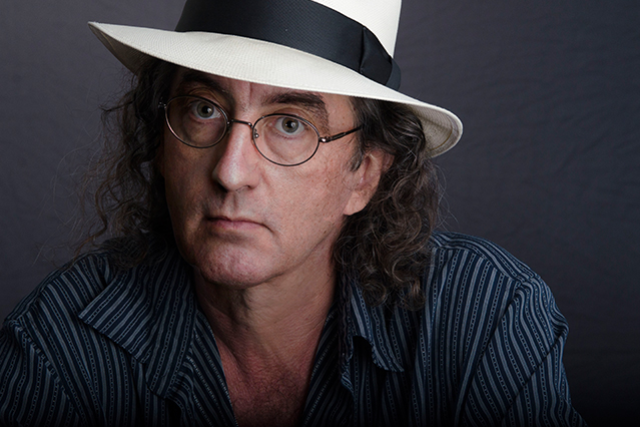
James McMurtry plus Bonnie Whitmore
Thu, 28 Feb, 8:00 PM EST
Doors open
5:00 PM EST
Daryl's House
130 NY-22, Pawling, NY 12564
TICKET SALES TERMINATED
Tickets are currently unavailable on TicketWeb
Description
"The simple fact is that James McMurtry may be the truest, fiercest songwriter of his generation..." -Stephen King
Event Information
Age Limit
All Ages
Pop
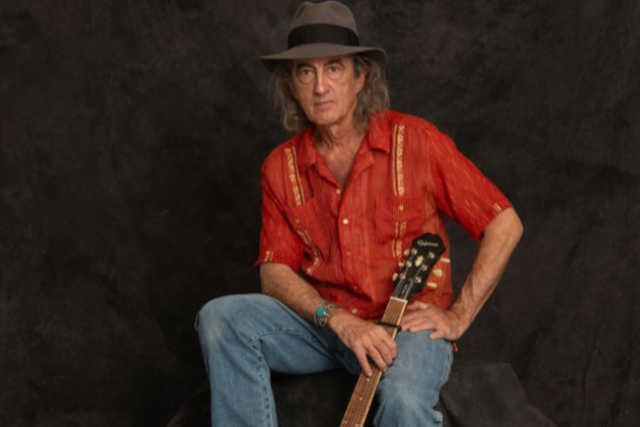
James McMurtry
James McMurtry
Pop
"One of America's greatest living songwriters" - Rolling Stone
"The consistency of such evocative, specific details has earned McMurtry the prestigious designation of songwriter's songwriter. He is the type of performer other musicians revere, cite as an influence, and love to collaborate with..." - Texas Monthly
"It is virtually impossible to denounce McMurtry or his writing talents, and, in that sense, The Black Dog and the Wandering Boy is one of his strongest efforts in years." - Far Out
James McMurtry
The Black Dog & the Wandering Boy
A Lone Star sheriff hunts quail on horseback and keeps a secret second family. A mechanic lies among the spare parts on the floor of his garage and wonders if he can afford to keep his girlfriend. A troubled man sees hallucinations of a black dog and a wandering boy and hums “Weird Al” songs in his head. These are some of the strange and richly drawn characters who inhabit James McMurtry’s eleventh album, The Black Dog & the Wandering Boy. A supremely insightful and inventive storyteller, he teases vivid worlds out of small details, setting them to arrangements that have the elements of Americana—rolling guitars, barroom harmonies, traces of banjo and harmonica—but sound too sly and smart for such a general category. Funny and sad often in the same breath, the album adds a new chapter to a long career that has enjoyed a resurgence as young songwriters like Sarah Jarosz and Jason Isbell cite him as a formative influence.
As varied as they are, these new story-songs find inspiration in scraps from his family’s past: a stray sketch, an old poem by a family friend, the hallucinations experienced by his father, the writer Larry McMurtry. “It’s something I do all the time,” he says, “but usually I draw from my own scraps.” As any good writer will do, McMurtry collects little ideas and hangs on to them for years, sometimes even decades. “South Texas Lawman” grew out of a line from a poem by a friend of the McMurtry clan, T.D. Hobart. Driven by gravelly guitars and a loose rhythm section, it’s a careful study of a man whose feelings of obsolescence motivate him to take drastic action in the final verse. “Dwight’d stay at our house way back in the ‘70s, when we lived in Virginia. During one visit he wrote this poem about his father’s attitude toward South Texas. He wrote it down on cardboard, and I came across it recently. There was a line about hunting quail on horseback, and that was the seed of the song. I’ve lost the poem since then.”
The rumbling title track, a kind of squirrelly blues, features two mysterious figures who appear only to those slipping from reality, yet it’s never grim nor especially despairing. Instead, McMurtry namechecks a “Weird Al” deep cut and depicts a tortured soul who doesn’t have to work a nine-to-five. He finds a defiant humor in the situation at odds with the gravity of the source material. “The title of the album and that song comes from my stepmother, Faye. After my dad passed, she asked me if he ever talked to me about his hallucinations. He’d gone into dementia for a while before he died, but hadn’t mentioned to me anything about seeing things. She told me his favorite hallucinations were the black dog and the wandering boy. I took them and applied them to a fictional character.”
Soon McMurtry had enough of these songs for a new record. “It happened like all my records happened. It’d been too long since I’d had a record that the press could write about and get people to come out to my shows. It was time.” What was different this time was the presence of his old friend Don Dixon, who produced McMurtry’s third album, Where You’d Hide the Body?, back in 1995. “A couple of years ago I quit producing myself. I felt like I was repeating myself methodologically and stylistically. I needed to go back to producer school, so I brought in CC Adcock for Complicated Game, and then Ross Hogarth did The Horses & the Hounds. It seemed natural to revisit Mr. Dixon’s homeroom. I wanted to learn some of what he’s learned over the last thirty years.” During sessions at Wire Recording in Austin, McMurtry observed firsthand Dixon’s grasp of digital recording technology as well as his instinctual approach to tracking. “What Don’s really good at is being able to sense when it’s happening. He can hear when it’s going down. If I’m producing myself and I don’t have him, I have to do three takes and then go in and listen to them. Listening to those three takes can take about 15 minutes. So Dixon’s ability to know when it’s happening is crucial, because it can cut 15 minutes out of the day. That can really save a session, because you only have so many hours in the day and only so much energy.
Working with McMurtry’s trusted backing band—Cornbread on bass, Tim Holt on guitar, Daren Hess on drums, BettySoo on backing vocals—they worked to create something that sounds spontaneous, as though he’s writing the songs as you hear them. They were open to odd experiments, weird whims, and happy accidents, such as the cover of Jon Dee Graham’s “Laredo” that opens the album. It’s an opioid blues: testimony from a part-time junkie losing a weekend to dope. “We were playing a benefit for Jon Dee at the Hole in the Wall there in Austin, and we thought it’d be good if we played one of his songs. We rehearsed the song in the studio, and it sounded good. The drums were ready. We’d already got the sounds up. Might as well record it.”
“Laredo” is one of a pair of covers that bookend The Black Dog & the Wandering Boy, the other being Kris Kristofferson’s “Broken Freedom Song.” “I did that one a few weeks after our initial sessions. It was just me and BettySoo, then we added drums and bass later on. Kris had just passed not too long before we recorded it. I guess that’s why I was thinking about him.” Like Hobart’s poem, it’s a bit of inspiration excavated from deep within his own life. “Kris was one of my major influences as a child. He was the first person that I recognized as a songwriter. I hadn’t really thought about where songs came from, but I started listening to Kristofferson as a songwriter and thinking, How do you do this? He was actually the second concert I saw. I was nine. He and the band were having such a good time, and that really solidified for me that this was what I wanted to do with my life.”
Once the album was mixed, mastered, and sequenced, McMurtry recalled a rough pencil sketch he had found a few years earlier in his father’s effects. It seemed like it might make a good cover. “I knew it was of me, but I didn’t realize who drew it. I asked my mom and my stepdad, and finally I asked my stepmom, Faye, who said it looked like Ken Kesey’s work back in the ‘60s. She was married to Ken for forty years.” The Merry Prankster’s—Kesey’s roving band of hippie activists and creators—stopped by often to visit Larry McMurtry and his family. “I don’t remember their first visit, the one documented in Tom Wolfe’s Electric Kool-Aid Acid Test. I was too young, but I do remember a couple of Ken’s visits. I guess he drew it on one of those later stops. I remembered it and thought it would be the perfect art, but I had to go back through the storage locker. It’s a miracle that I found it again.”
It's a fitting image for an album that scavenges personal history for inspiration. Even the songwriter himself doesn’t always know what will happen or where the songs will take him. “You follow the words where they lead. If you can get a character, maybe you can get a story. If you can set it to a verse-chorus structure, maybe you can get a song. A song can come from anywhere, but the main inspiration is fear. Specifically, fear of irrelevance. If you don’t have songs, you don’t have a record. If you don’t have a record, you don’t have a tour. You gotta keep putting out work.”
Country
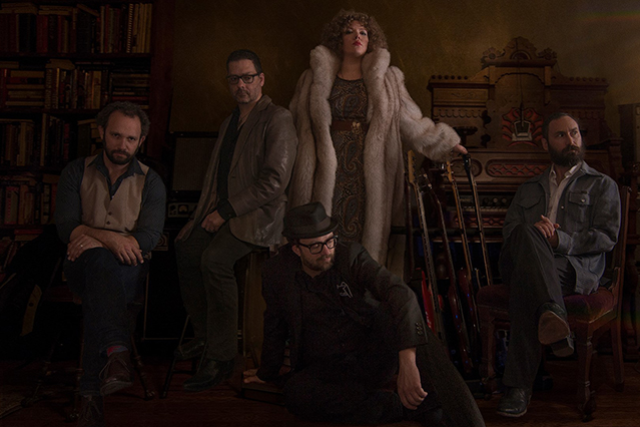
Bonnie Whitmore
Bonnie Whitmore
Country
Bonnie Whitmore may have a heart of gold, an outsize personality and a roof-raising laugh, but don't be fooled: her debut album has a body count. No fewer than two men die by Bonnie's own hand over the course of the record: one of them is burned alive, one the victim of a knife that, in Whitmore's own words, "just slipped." Take a look at that album cover and consider what secrets she's trying to get you to keep quiet. And then think twice before you spill 'em.
It's all part of a grand plan - one methodically designed by Whitmore – from album cover, to album content. The songs concerns themselves with the slow disintegration of a relationship, and the album's title – Embers to Ashes – is meant to represent that story's painful arc – from the first fires of young passion to the scorched ruin of heartbreak. As a killer, Whitmore's the last you'd suspect: Embers to Ashes is full of sly, spry country music, whiskey-soaked songs that recall prime Loretta Lynn and early Neko Case and, in their more uptempo moments, Miranda Lambert at her rowdiest. But be warned: those revelers carry daggers, and there's a bit of arsenic in that glass of cherry wine. As Whitmore herself puts it, "Nothing says 'go to hell' better than a uptempo, catchy song!"
Whitmore learned her way around country music early, touring at the ripe old age of 8 with her parents and her sister in a traveling roadshow cheekily titled "Daddy & the Divas." "Basically, my dad had children so he could have a band," she jokes. "He really wanted a bass player, so I learned how to play bass. My sister played the violin."
Whitmore's father had a pilot's license – an accomplishment Whitmore herself would later achieve – so he'd fly the family to their gigs at remote Texas bars and overcrowded fall festivals. And though they were a family act, Bonnie often stole the show: "As a little girl with a big voice singing 'Gold Dust Woman,' a lot of times I'd get the biggest applause."
As much as she loved playing with her family, the older she got, the more she wanted to strike out on her own. "I started to realize that I loved playing music," she says. "So when I was 16 I started writing my own songs." As her teen years progressed, Whitmore began working as a session player with other local musicians, while still continuing to perform with her family from time to time. For her first proper statement as a solo artist, she wanted to do something conceptual – something that told a story from beginning to end.
"I wanted to set up the album so it's: 'Boy meets girl, they breakup, but then there's the kind of postscript. At the end of the album, you have to deal with the lingering memory of that lost love."
Whitmore realized that vision to a striking degree. The title track is the kind of rough-and-tumble country song that would do Kathleen Edwards proud, but its rollicking rhythms conceal a sinister message: "Well, the preacher said until death to us part/ so you're gonna have to pay for this broken heart." "Tin Man" barrels forward like vintage Liz Phair, Whitmore using the classic Wizard of Oz character to pillory a heartless ex. Its lyric is built on a sly double-entendre: "Replaced by a girl named Mary who shares my middle name" (Whitmore's middle name is "Jane"). "She Walks" is a sparkling, mid-tempo number with all the ache of Lucinda Williams or Gillian Welch, while "Cotton Sheets" plays out like bright update of Mary Chapin Carpenter's "Passionate Kisses," Whitmore cannily using its central metaphor to stand in for the tension between upper and lower class.
She's just as adept on the record's softer numbers. "You Gonna Miss Me" is a slow ramble Whitmore wrote around the time she was moving from Texas for a brief stay in Tennessee. "I was really concerned about how leaving was going to be, and I think I was hopeful that I was going to be missed," she explains. "Sometimes, if I'm really emotionally involved when I'm playing a show, this song can get me to the point where I'm almost in tears."
The album was cut in a marathon two-day session in the studio, guided by the sure hand of producer Chris Masterson. "Chris produced my sister's record, Airplanes" Whitmore explains, "and it's unbelievable the things that he pulled together when we worked together. He had such great vision -– he could hear sounds that weren’t there yet. I went into the studio with the intention of doing an EP, and he pushed me to do a full album."
The gambit paid off – Embers to Ashes is full of ragged, rugged, instantly memorable country songs, a document of a relationship where passion burns hot, bright and quickly, and danger looms like a thunderstorm in the distance.
"I'm so grateful I have songwriting as an outlet, because it lets me relieve some of my darker emotions," Whitmore explains. "Instead of going and maybe being a bit destructive, I just write songs instead. I know sometimes I write angsty songs, but that’s how I get the angst out." Then she pauses and adds, with a why smile, "Kinda makes you wonder about the people who write all those happy songs!"