TICKET SALES TERMINATED
Tickets are currently unavailable on TicketWeb
Follow us on Twitter @tractortavern
Jake Blount w/ AJ Lee & Blue Summit *seated
Tue, 12 Apr, 8:00 PM PDT
Doors open
7:00 PM PDT
Tractor
5213 Ballard Avenue NW, Seattle, WA 98107
TICKET SALES TERMINATED
Tickets are currently unavailable on TicketWeb
Description
Please view our most up-to-date COVID-19 guidelines before entering the show: http://www.tractortavern.com/tractor-covid-guidelines
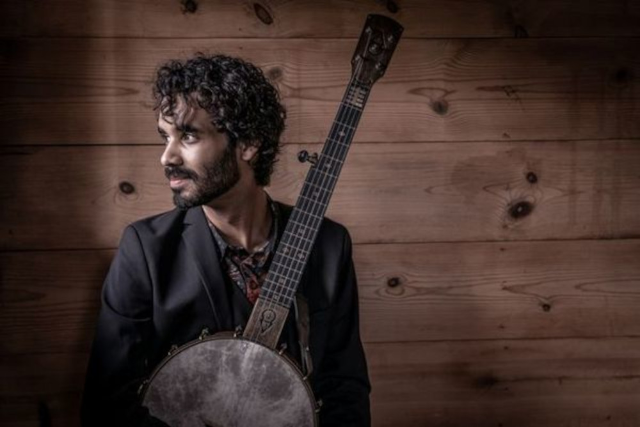
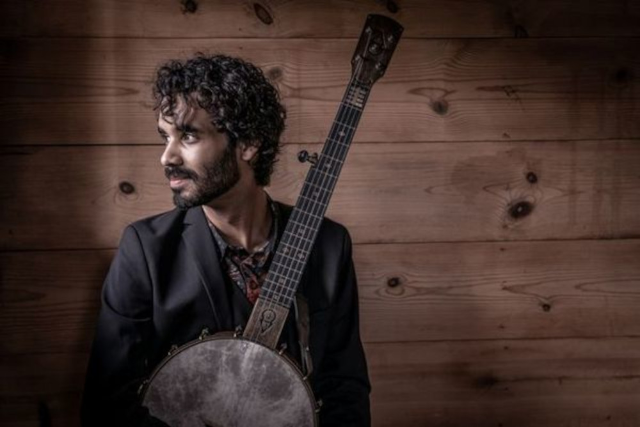
Jake Blount's incendiary album Spider Tales hit right in the middle of a global pandemic in 2020, during a period of massive unrest. Drawn from the lost Black and Indigenous histories of Appalachian roots music, Blount's timely vision showcased not only these lost voices, but the rage and anger that was encoded into the music early on and has remained ever since. It was, simply put, one of the most powerful explorations of American roots music in 2020, chosen as one of the Best Albums of 2020 by The New Yorker, NPR, Bandcamp, WNYC's The Takeaway, Folk Alley, Country Queer, Out Smart, The Vinyl District, PopMatters, Songlines, and more. Blount also received the Steve Martin Banjo Prize in 2020 in recognition in part of the power of his album! The music of Spider Tales is haunted, full of “crooked” instrumental tunes, modal keys, stark songs, and confounding melodic structures. Jake Blount spins effortlessly through this music, playing his instruments with a focus on subtlety and on relaying meaning even in the melodies that have no words.
To make the album, Blount assembled a band of mostly queer artists, including himself, digging deep into the roots of the music, pushing all the way back to Africa; the album’s title, Spider Tales, is a nod to the great trickster of Akan mythology, Anansi. “The Anansi stories were tales that celebrated unseating the oppressor,” Blount says, “and finding ways to undermine those in power even if you’re not in a position to initiate a direct conflict.” Blount is also drawing out the coded pain and anger in the songs to give voice to those who were shunned from America's musical canon. “There’s a long history of expressions of pain in the African-American tradition,” Blount says. “Often those things couldn’t be stated outright. If you said the wrong thing to the wrong person back then you could die from it, but the anger and the desire for justice are still there. They’re just hidden. The songs deal with intense emotion but couch it in a love song or in religious imagery so that it wasn’t something you could be called out about. These ideas survived because people in power weren’t perceiving the messages, but they’re there if you know where to look.” Blount is determined to show that this music didn't form in a vacuum, but in the face of ruinous hardship.
Event Information
Age Limit
21+
Americana
Jake Blount
Jake Blount
Americana
Jake Blount's incendiary album Spider Tales hit right in the middle of a global pandemic in 2020, during a period of massive unrest. Drawn from the lost Black and Indigenous histories of Appalachian roots music, Blount's timely vision showcased not only these lost voices, but the rage and anger that was encoded into the music early on and has remained ever since. It was, simply put, one of the most powerful explorations of American roots music in 2020, chosen as one of the Best Albums of 2020 by The New Yorker, NPR, Bandcamp, WNYC's The Takeaway, Folk Alley, Country Queer, Out Smart, The Vinyl District, PopMatters, Songlines, and more. Blount also received the Steve Martin Banjo Prize in 2020 in recognition in part of the power of his album! The music of Spider Tales is haunted, full of “crooked” instrumental tunes, modal keys, stark songs, and confounding melodic structures. Jake Blount spins effortlessly through this music, playing his instruments with a focus on subtlety and on relaying meaning even in the melodies that have no words.
To make the album, Blount assembled a band of mostly queer artists, including himself, digging deep into the roots of the music, pushing all the way back to Africa; the album’s title, Spider Tales, is a nod to the great trickster of Akan mythology, Anansi. “The Anansi stories were tales that celebrated unseating the oppressor,” Blount says, “and finding ways to undermine those in power even if you’re not in a position to initiate a direct conflict.” Blount is also drawing out the coded pain and anger in the songs to give voice to those who were shunned from America's musical canon. “There’s a long history of expressions of pain in the African-American tradition,” Blount says. “Often those things couldn’t be stated outright. If you said the wrong thing to the wrong person back then you could die from it, but the anger and the desire for justice are still there. They’re just hidden. The songs deal with intense emotion but couch it in a love song or in religious imagery so that it wasn’t something you could be called out about. These ideas survived because people in power weren’t perceiving the messages, but they’re there if you know where to look.” Blount is determined to show that this music didn't form in a vacuum, but in the face of ruinous hardship.
Bluegrass
AJ Lee & Blue Summit
AJ Lee & Blue Summit
Bluegrass
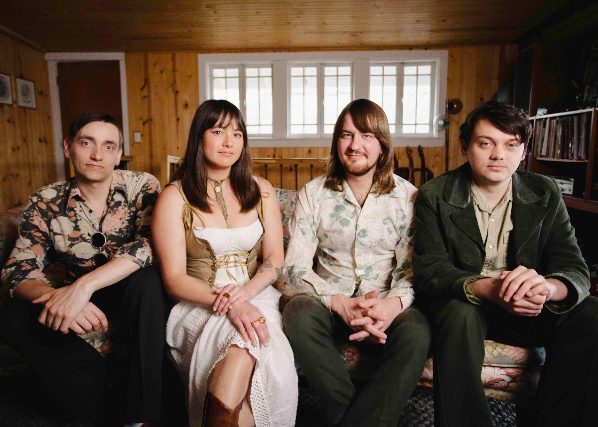
AJ Lee & Blue Summit are an award-winning energetic, charming, and technically jaw-dropping band quickly rising on the national roots music scene. Based in Santa Cruz, California, the group met as teenagers, picking and jamming together as kids at local music festivals and jams until one day, they decided they would be a band. “Our roots go really deep,” explains de facto band leader Lee. “We met when we were young kids… We definitely decided to choose each other as a chosen family band later on in life, but in a lot of ways it was naturally just like that in the beginning.” “It was like one of those late at night things,” she continued. “We were sitting on a trailer at Grass Valley” at the annual Father’s Day Bluegrass Festival held in the Sierra Nevada foothills – “Someone said, ‘All of us right here, we're a band now.’ We kind of didn't take it seriously, but we were like, okay, we'll be a band!” And thank goodness they became a band. Their first gigs were local, small venues, cafes, restaurants, coffee shops, where they’d play for multiple hours honing their set list and learning shared musical vocabularies. Now, as they criss-cross the country performing hundreds of shows a year to larger and larger audiences, you can sense the intention they had back then – to make music together not for just aspirational reasons, but because it’s fun – and it’s all you want to do as young musicians. Currently made up of Lee on mandolin, fiddler Jan Purat, and guitarists Scott Gates and Sullivan Tuttle, the band carries that youthful, festival-parking-lot energy with them still today, but at the same time there’s a genuine ease and confidence to their music making. This is not the bluegrass of ambitious musicians intent on industry success, this is music made firstly for the joy of making it and primarily made for each other. It’s part of why, as they ready their third studio album, City of Glass – their first label release, out July 19th via Signature Sounds – their product feels mature and fully realized, while deep in the Blue Summit pocket. City of Glass is a slow burn album, remarkable when considered alongside records released by their peers in recent years. Lee & Blue Summit seem unconcerned with mimicking hugely successful jamgrass bands, or making competitive and performatively intellectual new acoustic music, or wishing to establish themselves as the superlative string band in their bluegrass, old-time, and Americana communities. Instead, they’re most interested in discovering themselves, their own music, and sonics and textures truly their own. So, when they went into the studio to track City of Glass and its gorgeous twelve tracks, they once again forsook the roads most traveled by, looking to their local California community for collaborators that also feel right at home in their chosen family band. They brought in Lech Wierzynski, of the California Honeydrops, to produce; they tapped Bay Area steel guitarist Mikiya Matsuda for a couple of tracks; plus they had Californian banjo player, instructor, and Father’s Day Fest veteran Luke Abbott lend five-string to a number.The group is proud to be Californian, proud to represent the neo-traditionalist bluegrass and folk from the state and the mighty communities surrounding them. Their music shines with this “think global, act local” sort of approach. On a track called, “Can’t Find You At All,” they even included a sort of reunion of “The Tuttles featuring AJ Lee” – the true family band from their early childhoods that also included Lee, Sully Tuttle, Grammy Award winner Molly Tuttle, and their father Jack Tuttle – who wrote “Can’t Find You At All”. “I thought, Sully's on the track and Jack wrote it,” Lee explains. “So, I would love for Molly to sing on it, because it does feel like a mini reunion of The Tuttles… It just feels like coming back to where technically my career started, with them.” Throughout City of Glass, an overarching sense emerges that this is a band who knows who they are, what they are trying to say, and who can help them say it. They know they don’t “need” a banjo to be a bluegrass band. They know they, like so many bluegrass groups with mainstream appeal, know how to make two flatpicking guitarists work in concert, together. And, with Wierzynski at the control room helm, they were able to preserve that feeling of grounded self-assuredness indelibly through these songs, while still challenging themselves outside of their comfort zones and outside of the musical box. Focusing on these qualities and bringing in creatives they trusted, they were able to craft an album that sounds exactly like AJ Lee & Blue Summit while still breaking endless new ground. “Having a powerhouse vocalist and someone we trusted in the control room was really valuable and really fun,” Jan Purat says. “I think it removed a lot of the headiness and back and forth… It felt like it was streamlined, in certain ways, being able to trust his judgment, even though he was from a different genre.” Wierzynski also brought songs to the band, a stunning cover of the soul classic “He Called Me Baby” and a song he wrote, “Bedside Window,” which is rendered by the band as an archetypical bluegrass “fast waltz.” Wierzynski prioritized making the band sound exactly like themselves, producing the vocals to be and sound live whenever possible, moving the band along when a take checked all the boxes, and still bringing in genre and aesthetic inspirations that feel brand new. City of Glass, as a result, is an album that’s just as much country soul and gritty, bluesy Americana as it is bluegrass, all framed through a California folk lens while clearly primed for a much wider audience. The title track is a beautiful and evocative metaphor that conjures the climate crisis and holds an inspiring degree of self-awareness, from this group of young folks. As they sing of a wonderful monument to human kind’s achievements, an awesome and temporal city made of glass, grain by grain, shard by shard, they put the fleeting and intangible qualities of a life as professional musicians under the same lens, once again reinforcing that their priorities in music cannotsimply be achievements and success. After all, they know that, someday, all of this will fade away. As such, as much as possible, they have their eyes trained first and foremost on the present moment. “I've learned through songwriting and creating music that you shouldn't hold anything as precious as you think you should,” Lee says, speaking about writing “City of Glass.” “We're all happy to experience life with each other and to see what this band turns into, but there's no expectation that this monument we've built will stand forever.” Perhaps this is why it feels like, whether on stage or in the studio, Blue Summit pours all of themselves into every song, every lyric, and every note. “I think it would lose meaning if it did last forever,” Gates agrees. “For so long making music for a living was ‘ride or die,’ but now we’re very much in the moment and we understand that nothing lasts forever. All I care about is just the next step and not skipping any steps in between.” The slow burn of City of Glass certainly reaches its tenor, but never in a performative, belabored, or corny way. There are many moments of tension and release, of musical climaxes that are tender and subdued or silly and winking – and yes, absolutely barn burning, too. “Seaside,” written by Sully Tuttle, feels pulled directly from a Steinbeck paean to coastal California. “Bakersfield Clay,” penned by Gates, could have been divinely implanted in his head from Haggard or Owens or any number of lonesome troubadours longing for their southern California home while also longing to leave it behind. “I Still Think of Her” is one of the album’s jewels, a delicious and pining love song with a queer throughline that wrinkles its common, countryfied format in a truly one-of-a-kind way. Like “Can’t Find You At All,” the band finds power here with a less is more approach, building energy without necessarily raising the volume or tempo. Each song demands your full attention, builds intentionally to the next, and gently guides their listeners through exciting and heartfelt twists and turns, musically, lyrically, and melodically. AJ Lee & Blue Summit’s City of Glass is statuesque, while living and breathing. It’s a monument not to ego and virtuosity and self-absorption, but to what beauty can exist when a handful of musicians who know each other so deeply and care for each other so innately choose each other, show after show, day after day, song after song. AJ Lee & Blue Summit are an exemplary band so unconcerned with being remembered, with being enshrined, that they have gone about making a set of songs that will surely be held onto and cherished forever. City of Glass may one day crumble, but this music will never fade away.

Blues
Tractor COVID Policy
Tractor COVID Policy
Blues
In response to a surge in the number of cases of COVID-19, we have changed our entry guidelines for upcoming shows. Please view our website for the most updated information. https://bit.ly/TractorCOVIDGuidelines
Highlights:
*Masks required while inside until 3/12/22. After that date, we still highly encourage you to wear a mask. Please be respectful of those that do!