TICKET SALES TERMINATED
Tickets are currently unavailable on TicketWeb

Luckyman Presents
Interpol
Thu, 28 April
Doors open
6:30 PM MST
Marquee Theatre
730 N Mill Ave, Tempe, AZ 85281
TICKET SALES TERMINATED
Tickets are currently unavailable on TicketWeb
Description
THIS SHOW IS GENERAL ADMISSION. NO SEATS ON THE MAIN FLOOR. STANDING ROOM ONLY.
NO REFUNDS/ EXCHANGES UNLESS HEADLINER CANCELS.
ALL TICKET SALES ARE SUBJECT TO SERVICE FEES.
PARKING IN THE MARQUEE LOTS IS AN ADDITIONAL $10.00 PER SPACE USED. CASH ONLY AND PAID TO THE PARKING ATTENDANTS NIGHT OF THE EVENT
_________________________
Based on the latest local guidelines, attendees are no longer required to provide proof of negative COVID-19 test AND/OR vaccination for entry into this event. Be sure to check your venue website for the latest updates and guidelines as entry requirements are subject to change.
To reduce staff contact with guest belongings, we have implemented the following bag policy: we will allow clear plastic, vinyl, or PVC tote bags no larger than 12" x 5" x 12" and / or small clear clutch bags (4.5" x 6.5").
Event Information
Age Limit
All Ages

Alternative Rock
Interpol
Interpol
Alternative Rock
“Still in shape, my methods refined,” sings Paul Banks on ‘Toni’, the opening track and lead
single from Interpol’s 7th LP The Other Side of Make-Believe. The album breaks fresh ground
for the group: parallel to exploring the sinister undercurrents of contemporary life, Interpol’s
new songs are imbued with pastoral longing and newfound grace. Daniel Kessler's
serpentine guitar arrangements crest skywards, Samuel Fogarino shatters his percussive
precision into strange metres, while Paul Banks’ sonorous voice exudes a vulnerability that is
likely to catch most long-term fans of the band off guard. After all, says Banks, “there’s
always a seventh time for a first impression.”
The Other Side of Make-Believe began remotely across 2020. In early 2021, Interpol
reconvened to flesh out new material at a rented home in the Catskills, before completing it
later that year in North London, working for the first time with production veteran Flood
(Mark Ellis), as well as teaming up again with former co-producer Alan Moulder.
If fate didn’t quite ordain the circumstances for Interpol’s seventh album, it was at least
fortunate that the band had happily concluded their Marauder cycle on stage in front of 30
thousand-odd Peruvian fans. Rather than be sent scrambling like so many other musicians,
when the first lockdown clamped Interpol had no new release to promote and no tour to
rearrange. They quickly got into a productive mood.
Writing on their own in those geographically-dispersed early stages gave the members a
way out of their respective heads: “We really extracted the honey out of this situation”, says
Fogarino. Kessler echoes the sentiment: “Working alone was raw at first, but has opened up
a vivid new chapter for us.” In the Interpol Venn Diagram, each member found a way of
expanding their individual circle in perfect harmony.
As Banks was grounded in Edinburgh for close to nine months, he got cosy in a window-
side chair with a pen, pad and atypically cream-coloured bass guitar. “We usually write live,
but for the first time I’m not shouting over a drumkit,” he says. “Daniel and I have a strong
enough chemistry that I could picture how my voice would complement the scratch demos
he emailed over. Then I could turn the guys down on my laptop, locate these colourful
melodies and generally get the message across in an understated fashion.” Banks adjusting
his personal volume dimmer to a hush chimes with a period of global disquiet and the yearn
for reconnection: “It’s like Mickey Rourke in Barfly, singing to a patron at the end of the
tabletop, and we never felt the need to flip that smoky intimacy into something big and
loud when it came to rehearse and record. I got a real kick out of doing the opposite.”
Coming from a group whose early material was characterised by Polish knife-wielders and
incarcerated serial killers, you might expect Interpol’s take on the present day to be an
emotional tar pit — perhaps doubly so, given the towering credentials of Flood and
Moulder’s history with Nine Inch Nails, Curve, Gary Numan, Depeche Mode and more.
Yet Banks felt the call to push in a “counterbalancing” direction, with paeans to mental
resilience and the quiet power of going easy. “The nobility of the human spirit is to
rebound,” he says. “Yeah, I could focus on how fucked everything is, but I feel now is the
time when being hopeful is necessary, and a still-believable emotion within what makes
Interpol Interpol.” Kessler concurs: “The process of writing this record and searching for
tender, resonant emotions took me back to teenage years; it was transformative, almost
euphoric. I felt a rare sensation of purpose biting on the end of my fishing rod and I was
compelled to reel it in.”
Even with spare piano caressing the intro of ‘Something Changed’, open-hearted cyclical
chord progressions on ‘Passenger’, or anthemic waves of Kessler’s cresting guitar on ‘Big
Shot City’, it doesn’t mean Interpol are entirely stopping to smell the roses, though. The
Other Side of Make-Believe’s title, cover and a frequent lyrical lean toward fables,
smokescreens and the mutability of truth reflect Banks’ disgust with the curdling of the
information age. “I feel like the slipperiness of reality, and being willing to get violent on
the basis of a factual disagreement, has had a super strenuous effect on the psyche of
everyone in the world. Although,” he laughs, “I was talking about it so often that it kind of
spooked my bandmates, so I found a way to express my concerns more through the lens of
human beings' non-rational faculties, and less civilizational collapse.”
On The Other Side of Make-Believe, a deep interpersonal understanding means each member
respects the other’s respective strengths better than ever, letting Interpol’s elemental qualities
shine through. Song by song, Kessler sketches the architectural blueprint (invariably while
watching a film — locus of inspiration for almost every song in the band’s catalogue), Banks
frames artwork on the wall, then Fogarino arranges the furniture to have a certain
positioning and intent.
Fogarino highlights Flood’s part in this equation “was to hyperbolise all of our good
qualities. Our band has never exploited rock ‘n roll tropes, no big drum fills or wailing solos,
so he located the core honesty in our sound and found a way to widen it. There’s a phrase I
love about drumming: ‘the rhythm hates the melody’ — the best kind of drumming either
totally accentuates what’s being conveyed, or ploughs through it.” So what does the splashy,
dramatic beat on songs like ‘Renegade Hearts’ and ‘Gran Hotel’ imply? The answer comes
back with a grin: “I guess Flood gave me room to plough.”
The band found themselves struck by the producer’s egoless way of operating and the
breeziness of recording in his North London studio. They also seem charged by how much
Flood and Moulder complimented, rather than challenged, their kinetic energy when
performing. “I wouldn’t change a thing,” Kessler states. And though he means Flood and
Moulder’s contributions, that sentiment extends to Interpol’s work as a whole.
The Other Side of Make-Believe will soon feel as familiar in the public consciousness as it is to
Paul Banks, Daniel Kessler and Sam Fogarino. Ever the paradox, the noirish trio have
weathered nearly seven albums’ and several line-ups’ worth of rollercoasters far better than
anyone might have predicted, never letting their sense of purpose escape. Over time, tags
like ‘alternative’ and ‘indie’ have even faded from view. They are simply a rock group
nowadays; one of the most distinctive, consequential and enduring rock groups of the 21st
century so far. And a quarter-century into their lifespan, the band are all fired up again.
Interpol: their methods refined, still in terrific shape.
– Gabriel Szatan
Ambient
Tycho
Tycho
Ambient
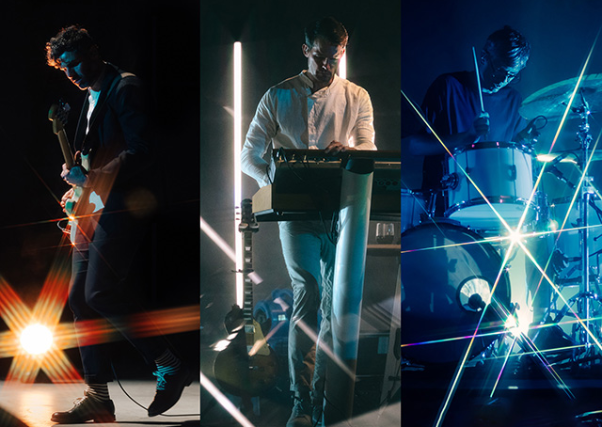
Tycho — the Grammy-nominated electronic music project led by primary composer Scott Hansen — unveils a wholly new iteration of sound with the release of their fifth studio album, Weather, via Mom + Pop Music x Ninja Tune.
The highly anticipated release follows 2016’s Epoch and diverges markedly from Tycho’s previous output with the introduction of vocal led tracks, while still maintaining the foundation of Hansen’s signature sound. New collaborator Hannah Cottrell, aka Saint Sinner, lends her voice to multiple tracks on the record and will join Tycho’s live band for the Weather World Tour.
“When setting out to record Weather, I wanted to finally fulfill what had been a vision of mine since the beginning: to incorporate the most organic instrument of all, the human voice,” says Hansen. “I met Hannah Cottrell, and the vocal component of the album immediately came into focus. Her vision folded effortlessly into mine and her voice integrated seamlessly into the sonic landscape, opening new spaces for me as a songwriter and producer.”
In many ways, Weather is the culmination of Tycho’s career as a whole – each prior step taken with intention to land on this new creative ground. The past 13 years have seen Tycho evolve from a part-time solo project of a graphic designer into a massively successful and world touring live band.
Longtime collaborators Zac Brown (bass/guitar) and Rory O’Connor (drums) along with touring member Billy Kim (keyboards/guitar/bass) will join Hansen on the Weather World Tour. Saint Sinner will also join the live band on all dates as the first touring vocalist with Tycho. Weather intends to reveal a more human side to the live show with the new energy of a vocalist.
Glitch
Matthew Dear
Matthew Dear
Glitch
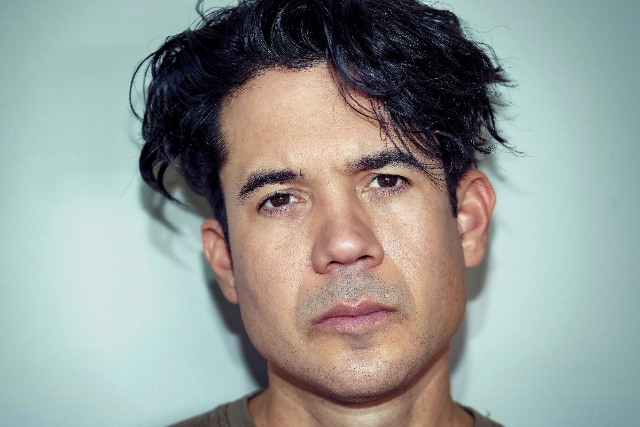
Matthew Dear is a shapeshifter, oscillating seamlessly between DJ, dance-music producer, and experimental pop auteur. He is a founding artist on both Ghostly International and its dancefloor offshoot, Spectral Sound. He writes, produces, and mixes all of his work. He's had remixes commissioned by The XX, Charlotte Gainsbourg, Spoon, Hot Chip, The Postal Service, and Chemical Brothers; he's made mixes for DJ Kicks, Get Physical's Body Language, and Fabric mix series. He maintains four aliases (Audion, False, Jabberjaw, and Matthew Dear), each with its own style and distinct visual identity. He straddles multiple musical worlds and belongs to none, now nearly 20 years into his kaleidoscopic career, with five albums and two dozen EPs plus millions of miles in the rearview of his biography.
Dear's 2003 full-length debut, Leave Luck to Heaven, is a suite of sparse, wickedly funky house laced with Dear's deep, distinctive vocals, and includes the much-loved single "Dog Days" (voted one of Pitchfork's Top 100 Songs of the Decade). The record was met with rapturous acclaim from both the dance-music establishment and the critical press, including a four-star review in Rolling Stone. The 2007 follow-up, Asa Breed, is a considerable departure from Heaven's dancefloor excursions, incorporating the polyrhythms of Afrobeat, the irreverent pop sensibilities of Brian Eno, and the austere beauty of Krautrock. More four-stars reviews followed, and Dear subsequently began touring with a live three-piece band, Matthew Dear's Big Hands, in which Dear acted as frontman, commanding the stage with a Bryan Ferry-like swagger and a gentleman's grace.
2010 saw the release of Dear's watershed third album, Black City, a darkly playful sound-world that envelops the listener like the arms of a malevolent lover. Black City was met with near-unanimous critical praise, earning top marks from Mojo, Uncut, Q, URB, and the Village Voice, ending up on countless year-end lists, and earning Pitchfork's coveted Best New Music nod. A worldwide tour followed, in which Dear and a newly expanded band continued to hone their live chops with vicious focus, as well as a remix EP in 2011 and a run of live dates with Interpol.
In 2012, Dear released Beams, a collection of weird and wild rhythm-driven pop songs. Equal parts optimistic and uneasy, it was both a drastic departure from and a worthy successor to Black City's gothic masterwork. "A forward-looking moment that also serves as the closing on the latest chapter in Dear's evolution," said Resident Advisor in their 4.0/5 review. Over the next five years, Dear would tour internationally with Depeche Mode and Hot Chip, DJ and release music under his Audion alias, and embrace a life of studio tinkering and family time back home. He also accepted a lecturing position at the University of Michigan School of Music and explored creative partnerships with General Electric (a music experiment sampling thousands of their machines, bundled by BitTorrent) and Microsoft (a Cannes Lions award-winning installation called DELQA, premiered at New Museum).
In the summer of 2017, he shared two slyly different singles under his own name: the moody, urgent "Modafinil Blues” and the buoyant, blithe, Tegan and Sara-featuring “Bad Ones." Next came a tour with MGMT and the announcement of Bunny — his fifth full-length released October 2018 — which follows both modes, among others, parading down a rabbit hole of unhinged phrasings, dreams, and interludes. A dual vision of avant-pop; an artistic reckoning from a 21st-century polymath; persona splintered, paradox paraphrased, a riddle rendered. Bunny further confirms that Dear occupies a rarified corner of the musical universe: no longer tethered to any one genre, respected by his peers, and blessed with a bottomless well of creative energy.