TICKET SALES TERMINATED
Tickets are currently unavailable on TicketWeb

Highly Suspect
Sun, 5 Feb, 8:00 PM CST
Doors open
6:30 PM CST
Club LA
34876 Emerald Coast Pkwy, Destin, FL 32541
TICKET SALES TERMINATED
Tickets are currently unavailable on TicketWeb
Description
VIP PKG Details:
Highly Suspect Early Entry Package
One GA Ticket
One Autographed Commemorative VIP Laminate
One Exclusive VIP Merchandise Item
Early Entry
Early-Access Merchandise Shopping
*Details of the VIP Experience will be emailed to buyers about 3-5 days before the show from Warner Music Artist & Fan Experiences. If you do not see a VIP PKG ticket option available for purchase, then that means they are already sold out.
Event Information
Age Limit
16+

Alternative Rock
Highly Suspect
Highly Suspect
Alternative Rock
Never content to follow, Highly Suspect push rock music forward by trusting their instincts and raising a middle finger to everything else. The multi-GRAMMY® Award-nominated and gold-certified band - Johnny Stevens [vocals, guitar], Ryan Meyer [drums, vocals], Rich Meyer [bass, vocals], Matt Kofos [guitar] and Mark Schwartz [synths] - don’t just talk about burning the rules and breaking the mold; they actually do so. The band’s chemically imbalanced mix of gritty guitars, haunting piano, off-kilter synths, hip-hop production, cinematic vision, and beautifully possessed vocals transformed them into a phenomenon beloved by a diehard global fanbase known as “MCID” [My Crew Is Dope].
After grinding it out as an underground curiosity, they scraped a path to mainstream infamousness with their 2015 full-length debut, Mister Asylum. It earned a GRAMMY® Award nomination in the category of “Best Rock Album” as the single “Lydia” received a nomination for “Best Rock Song” was certified gold by the RIAA. The 2016 follow-up The Boy Who Died Wolf roared to life with the gold-selling “My Name Is Human,” which catapulted to #1 on the Billboard Mainstream Rock Chart and garnered a GRAMMY® Nomination for “Best Rock Song.” 2019’s MCID affirmed them as the rare outfit who could collaborate with Young Thug and Gojira on the same album. Loudwire hailed the latter among the “50 Best Rock Albums of 2019.” With hundreds of millions of streams and sold out shows on multiple continents, Highly Suspect charge ahead of the pack again on 2022’s The Midnight Demon Club with no compromises and no apologies as they challenge rock to be dangerous and maybe even life-changing again.
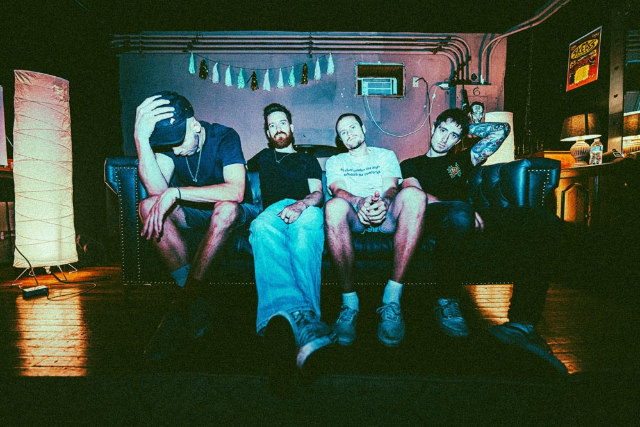
Alternative Rock
Dead Poet Society
Dead Poet Society
Alternative Rock
Asked what it is he wants audiences to take away from “FISSION”, the forthcoming second
album from Dead Poet Society, Jack Underkofler offers eight small but powerful words: “We
want to leave them with the truth.”
The affable and engaging 30-year-old delivers these words with the forthrightness that
marks his discussions about the band he fronts, completed by Jack Collins (guitar), Will
Goodroad (drums) and Dylan Brenner (bass), and the art this collective of college friends
have exhaustively dedicated themselves moulding, too often to their own detriment.
It’s an answer that epitomises the dedication with which the quartet approach their craft,
and the search for its purest, most meaningful form. “It’s not as simple as saying we want
our music to leave people with a positive outlook,” Underkofler explains. “You want music
to speak to wherever you find yourself. We want to leave people feeling that whatever they
are experiencing is valid, no matter what place they are at in their lives.”
After a decade defining, redefining and perfecting their art, where Dead Poet Society find
themselves on the eve of their sophomore release is much clearer. Make no mistake: Dead
Poet Society are a uniquely captivating group, rock’s next great breakout act, with “FISSION”
set to capture the hearts and challenge the minds of fans old and new on the journey
ahead.
Following on the heels of their acclaimed debut full-length “–!–“ (2021), “FISSION” seeks to
unpack the personal journey its creators have been on during that ride to date. “FISSION”,
as its title hints, is a 13-track study of personal change and the turbulence of growth that, as
Underkofler attests, takes “a microscopic and broad look at the events that changed who
we are.” To that end, there are deep rakings over the coals of relationship breakdowns,
examinations of addiction in all its guises, ruminations on the responsibilities and challenges
of adulthood, and struggles with the evolution, loss and continual search for self. “In a lot of
ways this album is about unpacking those emotional pains that come with being an adult,”
Underkofler says.
“The past few years have left me in a constant state of growth through the life events of
which I’ve had little control, or which didn’t pan out the way I wanted them to,” the
frontman admits. “There’s a ‘before’ you, and an ‘after’ you, and there’s no going back. Life
tends to force your hand, and it’s futile to fight it. You have to accept that things that
happen to you will change you, and let them build you into the next phase of who you are.
“There is a constant battle to not mourn who I was, because the things you go through
define you as a person and turn you into a person worth being,” he adds. “But that can be
difficult to wrestle with. There is a positive to it, but it is birthed through a lot of pain.”
“It’s both exciting – ‘Fuck you. I’m gonna take this head on’ – and at the same time, you’re
terrified how you’re going to get through the next month,” adds Goodroad. “One day
you’re super confident about where life is going, the next you’re second-guessing
everything. It’s like the myth of Sisyphus: it’s a boulder you have to push up the hill every
day.”
Twinned lead singles “Running In Circles” and “Hurt” weave through fears of following the
wrong path while hiding behind false fronts. “How Could I Love You” and “I Hope You Hate
Me” tackle the sometimes bittersweet, more often simply bitter fallout from a tumultuous
relationship. “81 Tonnes”, meanwhile, sees Underkofler revisit a time of particular
helplessness and instability. ’I need peace now slow my body down can you pull me out?’ he
pleads. ‘Too afraid of fission and faith to save me from myself.’
It’s that track which gave guitarist Collins his clearest understanding of the emotions he and
his bandmates share, which were coming to the fore in song. “Jack described “81 Tonnes” to
us as about being left with ‘a permanently altered state of mind’, which felt like the perfect
summary of so many of those songs on the album to me,” he says. ”They all lead you to the
finish line of, ‘I’m a different person now because of all this...’”
To some extent, through “FISSION”’s creation Dead Poet Society have become a different
band, too. A more attuned one; more accomplished, certainly. “We were really trying to
define our sound more on this record,” Collins nods. “We worked a lot more on guitar
tones, bass tones and drum sounds, and paid close attention to melody. The aim was to
make our sound bigger – we wanted a more dynamic record, where you could hear the best
representation of us live. I feel like the evolution is us maturing a little bit, and wanting to
create a sound that was less an obvious reflection of our influences – Muse, Queens Of The
Stone Age, Nothing But Thieves, Royal Blood – and more definitively our own. We don’t
control where the inspiration comes from. We just had to obey the songs and what they
were telling us to do next.”
“We hone in on a feeling, rather than a sound,” adds Underkofler. “This album is the
defining moment of when we truly became Dead Poet Society. It’s the closest we’ve come
to realising the essence of the ideas we’ve always had for this band.”
The result is a compelling record of depth and substance, which weaves through the
spectrum of anthemic alternative, dark hard rock and progressive indie. “FISSION“ is at once
comfortingly familiar and disconcertingly alien; raw and analogue – “Profoundly human,” as
Goodroad says – while possessing a colder, digital inflection. Unexpected turns and
deviations reveal themselves often; repeat listens reveal greater secrets yet. It’s a
multifaceted record of contrast and cohesion, on which the bright glow of the ballad
“Tipping Point” and album-highlight “My Condition” – the sort of infuriatingly hooky
earworm anthem with which alternative radio airwaves are dominated – can coalesce with
the industrial-leaning mechanics of the piston-driven “Hard To Be God” and “KOET”.
“I think the best way to make other people feel something is to make yourself feel
something. The best songwriters are people who can take a particular emotion and feeling,
and create the most narrow translation when someone hears that song,” Underkofler says.
“If someone hearing a song can be taken to the exact headspace that the person who wrote
it was in at the time, for me that is the mark of a great songwriter. And I feel with these
songs, we’ve achieved that better than we ever have before.”
It’s a headspace you’re left to ruminate in long after Underkofler is finished protesting ‘But
what if I’m always alone? / And I don’t like who I am anymore’ on the closing “Black And
Gold”. Because when all is said and done, the truth is that the impact of “FISSION” and Dead
Poet Society will reverberate now and in years to come.