ON SALE SOON
Wednesday, Nov 18 2026, 10:00 AM MST

Live Nation Presents
GANG OF YOUTHS
Tue, 13 April 2027, 7:30 PM MST
Doors open
6:30 PM MST
Crescent Ballroom
308 North 2nd Ave, Phoenix, AZ 85003
ON SALE SOON
Wednesday, Nov 18 2026, 10:00 AM MST
Description
Live Nation Presents
GANG OF YOUTHS
Tue Apr 13, 2027
Doors 6:30 / Show 7:30
21+
Advance General Admission Tickets: $29.50- $32 + fees
Bleachers (21+ only) Tickets: $39.50 - $42 + fees
Event Information
Age Limit
21+
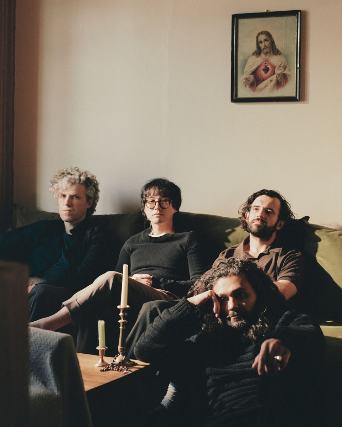
Indie Rock
Gang of Youths
Gang of Youths
Indie Rock
For the first time, Gang Of Youths were doing alright. The quartet’s frontman and primary songwriter, David Le’aupepe, had spent ten years mining all the heaviest experiences of his life for music that made its name on visceral catharsis and open-hearted vulnerability. But after all the exorcisms across the first three Gang Of Youths albums, Le’aupepe and his bandmates — Jung Kim (keys, guitar), Donnie Borzestowski (drums), and Tom Hobden (violin, guitar, keys) — all found themselves relatively content. No longer would the next Gang Of Youths album be a diaristic exploration of trauma, identity, and grief. It necessitated a nearly complete overhaul of how they made music, resulting in the evolution of their fourth album, Compañero.
“I had this realization that I didn’t need to channel all this brutality anymore,” Le'aupepe says. “I used to do that out of some shame about being an artist. But I began looking at my life and experience, and began to think that making art is a worthwhile thing to continue exploring in itself.” [Text Wrapping Break][Text Wrapping Break]Ever since Gang Of Youths’ 2015 debut The Positions, the band have established a kaleidoscopic style influenced by their multiracial and multicultural heritage, the organizing principle being big emotions and big sounds. Acclaim greeted them immediately in their native Australia, with a host of nominations for ARIA and J Awards. Their 2017 sophomore outing, Go Farther In Lightness, served as a breakthrough — winning four ARIA Awards, but also garnering broader notoriety abroad. In an era dominated by smaller-scale indie bands, Gang Of Youths stood out: bombastic, overflowing, all the darkness coursing through their lyrics countered by soaring choruses and volcanic instrumentation. Even on 2022’s Angel In Realtime, Le’aupepe processed the loss of his father and dissected his Samoan identity through skyscraping melodies. But in the five years since, the band decided it was time for Gang Of Youths to be something else, and that Compañero would open that next chapter.
Le’aupepe first had to overcome a bout of writer’s block. This soon became an intriguing artistic challenge. “I had never really developed the instinct to take my own perception of the world and apply it to stories and songs that weren’t a hundred percent about what I’m going through,” Le'aupepe says. “I had to embrace the identity of actually being a songwriter and musician.” The process was not without growing pains, and Le'aupepe revisited some of his favorite artists for inspiration, particularly literary-grade songwriters the likes of Leonard Cohen, Warren Zevon, Tom Waits, David Berman, and Bill Callahan. If he wasn’t purging his own demons this time around, Le’aupepe sought a new goal: erudite lyrics, tighter structures, classic pop melodies blended with old-school Americana. Fragments of songs began to appear.
For much of the initial writing, Le’aupepe holed up in the garden behind Hobden’s London home during the summer months. You can hear that setting across Compañero, where a shift in emotions and approach also yield a shift in aesthetic. There Le’aupepe indulged fascinations of mid-century crooners with lives split between Palm Springs and Hollywood Boulevard, and of the Laurel Canyon folk-rock community of the late ‘60s and early ‘70s, and of the worn desert highways of the American Southwest. The band also took cues from spaghetti westerns, retro-futurism, surrealism, and Blue Note records.
Once Le’aupepe brought sketches to Kim, Borzestrowski, and Hobden, the project of figuring out Compañero truly began. “The writing process was fairly arduous, but ultimately freeing,” Kim recalls. “The most difficult stage was discerning what the hell we wanted to make.” Compañero’s sonic palette is as vast as any past Gang Of Youths outing, but this time the band collided various strains of Americana for a subtler, gentler sound as dusty and sunlit as the scenery that inspired it. “We were so used to writing from this place of overt earnestness and sincerity, but we felt like we’d grown out of the need to make something overly rambunctious,” Kim adds. “We wanted to experiment with arrangements that were more refined, more lean. Every element had to earn its place on this record.”
Once the songs cohered, Gang Of Youths embarked on a patient, multi-part recording process split between sessions in various studios around the UK: partnering with in-house engineer Robert Sellens at Decoy Studios, with additional sessions primarily produced and engineered by Kim at Redchurch, Urchin, Hoxa, and Cloud 9 — the latter being the cheeky nickname for the mini-studio in Hobden’s backyard. Throughout, Gang Of Youths worked not to chase one specific style or genre as before, but allow everything they loved to mingle. “The process of our albums is never really the same,” Borzestowski explains. “It’s rare for our songs to take shape quickly. Usually there are months of reworks, edits, re-tracking, scrapping, redoing the song, then scrapping it again.” But in the instance of Compañero, Gang Of Youths’ rigorous self-editing paralleled a sense of adventure and looseness.
“We’re actually incredibly goofy and light-hearted, and I think we wanted this to be felt in what we made next,” Kim says. “It was definitely a long process of adjusting to making music with a sense of levity, but it was reflected in the studio. The approach was often quite whimsical, leading to uncharted territory sonically.” The band recorded as much of Compañero live as possible, channeling the collaborative, freewheeling energy at the new material’s foundation, as well as the warm, lived-in tone these songs adopted.
Though the music across Compañero often plays as unburdened, Gang Of Youths lost none of their ambition or scope. “Most of the album is a meditation on death, and the different forms in which death presents in our life,” Le’aupepe says. The title itself, often translating to variations of “friend,” also nodded to this, with Le’aupepe considering death as an ever-present companion.
Sometimes, that’s with violence, as in the gruesome car crash scene of “Street Value,” or in how the propulsive synth churn of “Benny’s Video” belies influence from an unnerving Michael Haneke film of the same name. Yet Le’aupepe’s use of the word “meditation” is telling. More often than not, his vocals are conversationally pretty, and the band’s music is welcoming, each giving space for reflections on mortality that are more abstract and spiritual than the gaping wounds of Compañero’s predecessors.
“I think we’ve established by now that mortality and death are never going to be far from the surface of a Gang Of Youths song, but the prism through which they’re observed has shifted,” Hobden says of the album’s thematic range. “You might as well face death with a wry smile, because you can’t outrun it. The darkness doesn’t need to diminish the warmth, and the warmth doesn’t have to disguise the darkness. There’s no reason a record about death shouldn’t also be a celebration of being alive, however ridiculous and unremarkable that might sometimes be.”
An eternal topic of human fascination in turn gets the appropriate, multi-faceted stylistic breadth. “Desert Life Museum” inverts lounge pop into an arid shuffle, sitting comfortably alongside the barn-burning “Manila ‘98,” the sprawling epic “Future Be Kind,” the fusion of jazz-pop and baroque art-rock in “This Machine, It’s A Classic,” or the languid groove of “Yeyu.” When Gang Of Youths released the 2026 single “Things Take Time,” it almost suggested a sharp pivot. In the end, the song’s merely a glimpse of the new horizons the band chase throughout Compañero.
There is no specific conclusion offered by Compañero’s final moments. Gang Of Youths, like so many great artists before them, look at the biggest questions of life and death, and know there’s no way to know until you get there. Instead, Compañero becomes a tapestry of vignettes, the open-ended nature being part of the point. “Real life doesn’t dictate anything, it just throws things at you and expects you to trip over them occasionally” Le’aupepe says. “That’s how I want to create, and to enjoy my life and my relationships. It’s always a process of becoming.” For Gang Of Youths, Compañero is the companion on the next leg of that journey of becoming, an intentional ellipsis that embraces the beauty of both the mundane and the unknown — whether in creating art, or in life itself