TICKET SALES TERMINATED
Tickets are currently unavailable on TicketWeb
Live Nation Presents:
Florist + Skullcrusher
Tue, 8 Aug, 8:00 PM PDT
Doors open
7:00 PM PDT
Cafe Du Nord
2174 Market St., San Francisco, CA 94114
TICKET SALES TERMINATED
Tickets are currently unavailable on TicketWeb
Description
For any event that is listed as 18 or 21 and over, ANY ticket holder unable to present valid identification indicating that they are of age will not be admitted to this event, and will not be eligible for a refund. Any event listed as All Ages, means 6 years of age or older. ALL tickets are standing room only unless otherwise specified. If you need special accomidation, contact info@cafedunord.com.
Support acts are subject to change without refund.
--
Proof of Vaccination: NOT required for entry.
Proof of Negative Test: NOT required for entry.
Masks: Staff and patrons are not required to wear masks though many do. Touring artists often request that patrons in close proximity wear masks. We recomend bringing a mask if you are able. We remain respectful to artists, staff, and patron's comfort level and safety.
--
COVID Warning: An inherent risk of exposure to COVID-19 exists in any place where people gather. You assume all risks, hazards, and dangers arising from or relating in any way to the risk of contracting COVID-19 or any other communicable disease or illness, whether occurring before, during, or after the event, however, caused or contracted, and voluntarily waive all claims and potential claims against the Event Organizers, and their affiliated companies relating to such risks. You expressly agree to comply with all laws and the rules of the Event Organizers when attending the event.
**The health screening protocols above are subject to change per show at the artist’s request. Any show specific changes will be updated via email prior to the show. Thank you for your patience and cooperation.**
Event Information
Age Limit
21+
Alternative Rock
Florist
Florist
Alternative Rock
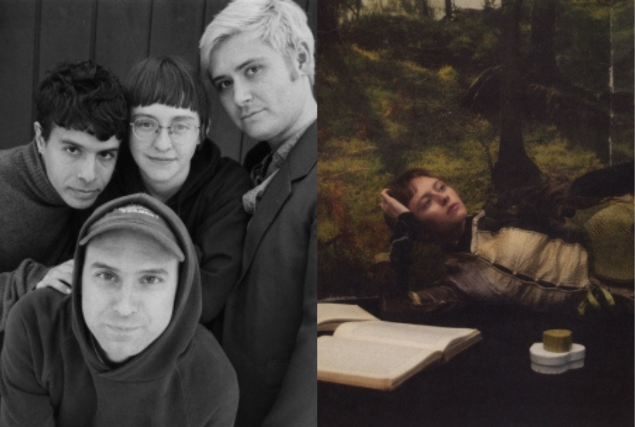
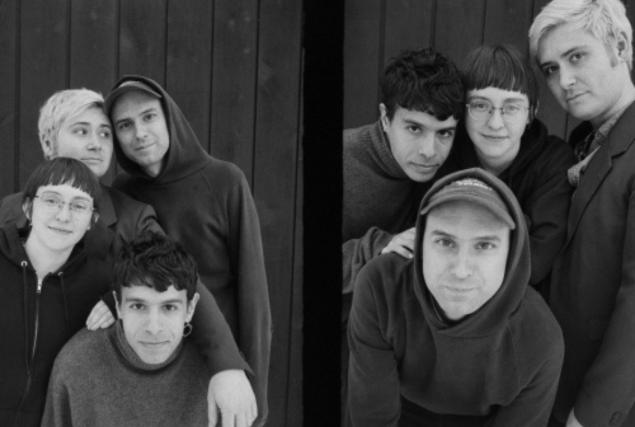
“It’s a portrait of who we are as collaborators, as really long term friends and as extended family as well,” leader Emily Sprague says of her band’s new self-titled album. Florist is also the strongest album of the band’s decade-long career, an immersive work that conveys the magic of the earth and of family, and the whole of the band’s heart. It arrives just after the cap of a winding journey. In 2017, shortly after the release of the band’s sophomore record, If Blue Could Be Happiness, Sprague sequestered herself in Los Angeles, thousands of miles away from friends and family, and from the physical void and spiritual crisis left in the wake of her mother’s death. There, she took up surfing and released Emily Alone, which was essentially a solo album released under the Florist moniker. Only after months of self reflection and therapy did Sprague realize that life in a silo is no way to live. That a life directed by fear is not much of a life. “The trauma response to losing my best friend, my mom, was to feel really afraid to get close to anybody ever again,” she says. “It’s sort of cheesy, but I realized that life is better when you share it. The answer isn’t to isolate yourself and be alone.” So she began writing Emily Alone’s companion, the other side of the binary, a record that rings distinctly of Sprague’s tender and poetic spirit, filled with nature and wonder and tears, but without all the loneliness and seclusion. She also adopted a dog, who, she says, “completely changed my life.” “My mind just started exploding with all these thoughts about what it means to live with others, and live with love and care collaboration.” Then, for all of June of 2019, amid a hot and rainy summer, Sprague (guitar, synth, vocals), Jonnie Baker (guitar, synth, sampling, bass, saxophone, vocals), Rick Spataro (bass, piano, synth, vocals) and Felix Walworth (percussion, synth, guitar, vocals) convened in a rented house in the Hudson Valley, to live and work together. It was the first time the quartet recorded that way, and for that long. “In the past we’d meet up for a couple of days, or one day here and there,” Spague recalls. “Living together for a month is a really big part of why the arrangements are the way they are, and also why the instrumentals are such a huge part of the record.” They set up their gear on the screened-in front porch, which looked out onto a canopy of trees, allowing the sounds of nature to play a leading role through out. Then, they experimented. The production and recording of the album directly reflects the organic ways in which the band worked that month, with whispering voices, crickets, rain and birds accenting the aleatoric quality of the instrumentation, each player drawing from the communal energy of the woods and their interpersonal bonds. Poignant, guitar-centric meditation “Red Bird Pt. 2 (Morning)” carries on Sprague’s concern with love, loss and the natural world. “She’s in the birdsong/She won’t be gone,” she sings of her late mother, proffering a merciful sense of resolve. “Feathers” finds her facing her fears over threads of bowed guitar while “Dandelion” meditates on the beauty of our finite existence, pairing synth and fingerpicking with the spirit of Emily Dickinson. “Sci Fi Silence” occupies a liminal space between soul baring confession and contemplative new age, a swirl of analog synth that culminates in a full-band meditation. “You’re not what I have, but what I love,” the band sings over and again until the words grow into a kind of mantra, a thing that at once pierces and heals. The quartet played through muggy days and breezy nights, and often impromptu. “In between working on songs specifically, somebody would be sitting on the porch playing a little instrumental piece, and somebody else would be in the kitchen making dinner and stop, and go to the porch and pick up a random instrument,” Sprague explains. These creative bursts became the album’s ambient instrumental bridges, like “Variation” and “Jonnie on the Porch,” gentle moments that portray their life together in that particular moment. The bells heard throughout the album are from a collection housed in the rental, the animals were their neighbors. The result is 19 tracks that feel like the culmination of a decade-long journey, their fourth full-length album, but the first deserving of a self-titled designation. “We called it Florist because this is not just my songs with a backing band,” Sprague explains. “It’s a practice. It’s a collaboration. It’s our one life. These are my best friends and the music is the way that it is because of that.” After making the record they always knew they could, together, as one, Sprague could no longer live on the west coast without her band and blood. So, she returned home. Last year, she moved back to The Catskills to be closer to her father and her creative collaborators. She misses surfing, but finds peace in the area’s natural landscapes, and through a strengthening sense of physical reconnection. “A goal is to share the band’s connectedness and relationship, but also how we’re all connected,” she says. With Florist, Emily is no longer alone.
Alternative
Skullcrusher
Skullcrusher
Alternative
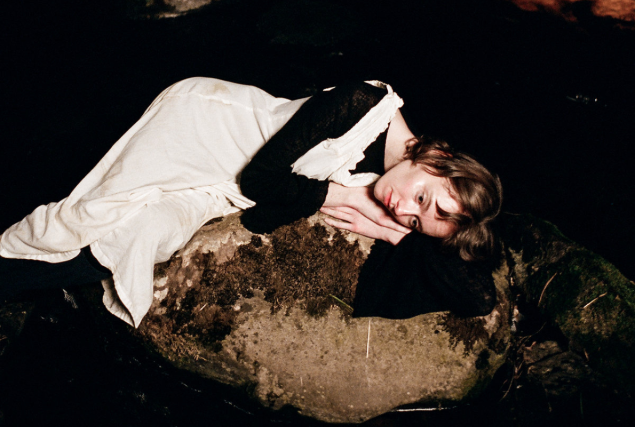
And Your Song is Like a Circle, the second album from New York-based artist Skullcrusher, a.k.a. Helen Ballentine, winds its way into an everchanging, unstable core. Recorded piecemeal over a period of years following the release of her celebrated 2022 debut, Quiet the Room, And Your Song is Like a Circle does not capture experience – it gestures toward the imprint of an experience that is uncapturable. Swaying between vaporous folk and crystalline electronics, landing somewhere in the snowfields shared by Grouper and Julia Holter, Circle probes the ways that grief turns itself inside out. Loss itself becomes as real and substantial as what's been lost.
Ballentine began writing Circle after leaving Los Angeles, a city she’d called home for nearly a decade. She ended up returning upstate to New York’s Hudson Valley, where she was born and raised. Several years of intense isolation followed, and Ballentine immersed herself in films, books, and art that reflected the rupture of relocating cross-country and its dissociative aftershocks.
Throughout the record, the line between human and machine blurs. On "Maelstrom," voices crash between echoing drumbeats like water through a cavern. The vocal filigrees on "Exhale" fan out into a haze of synthesizers and strings. "Dragon" lets piano echo over tight, gritted percussion.
If Skullcrusher’s first album rendered the detailed intimacies of domestic space, Circle finds itself vaporized across the landscape: swirling, drifting, searching. It skirts an event horizon in long, slow strokes. These are songs that vibrate with the fervency of an attempt to capture a moment, to draw a circle around it. "I like thinking about my work as a collection," Ballentine says. "Eventually it might form a circle. Each time I make something, I’m putting another line around the body of work. It feels like I’ll be trying to trace it for my whole life."
Music
Adelyn Strei
Adelyn Strei
Music