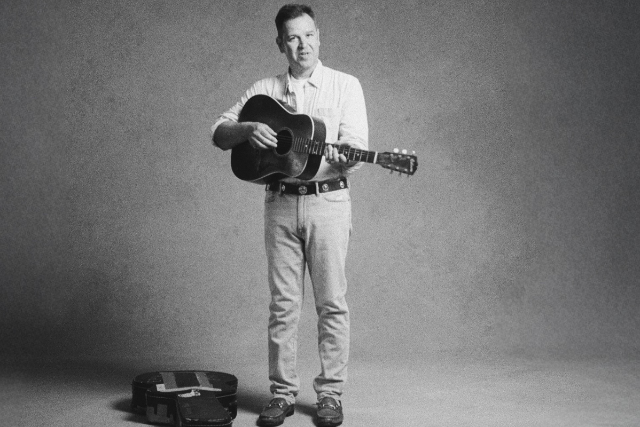
Eli Paperboy Reed
Fri, 2 Oct, 7:00 PM EDT
Doors open
6:30 PM EDT
Regattabar
1 Bennett Street, Cambridge, MA 02138
Description
Seats are assigned by date of purchase. Tickets purchased the night of the show at the door will be seated first come, first served at remaining tables.
Groups larger than 8 must purchase a group package at regattabar@charleshotel.com or by calling 617-661-5099.
Event Information
Age Limit
All Ages
Soul
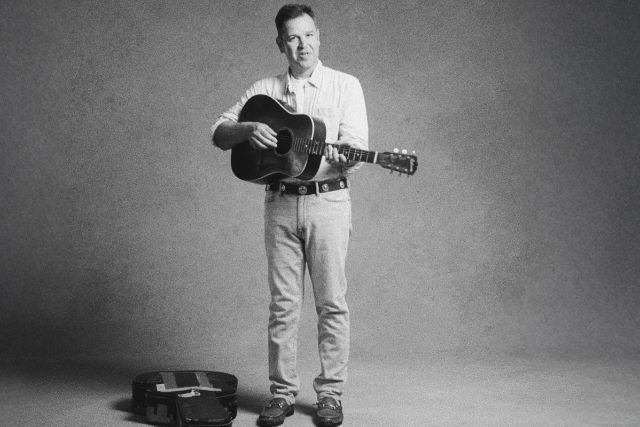
Eli Paperboy Reed
Eli Paperboy Reed
Soul
Somewhere between the initial spark of infatuation and the gentle twilight of growing old together lies the real work of any relationship. Sure, the thousandth kiss may not carry the same novel thrill as the first, but, if you do it right, the grown-up stuff—building a home, raising a family, committing your lives to each other—is the most rewarding part.
“There’s plenty of music out there about falling in love,” says Eli Paperboy Reed. “I wanted to write about staying in love. I wanted to get to the heart of what it takes to go the distance, of what it means for two people to walk side by side, through good times and bad, and still choose each other every single day.”
Those romantic meditations form the bedrock of Reed’s intoxicating new album, Getting There. Produced by legendary R&B iconoclast Swamp Dogg, the collection is a joyful dose of timeless soul and roots music, but it’s also a deeply mature and insightful work of lyrical craftsmanship, one that’s full of sly, poetic twists and clever turns of phrase. The songs here reckon with the vagaries of love in the long term, contemplating the subtle acts, grand gestures, and hard work that goes into keeping the fires burning well after the honeymoon is over. The performances, meanwhile, are similarly nuanced, carving their own unique path through the last century of American music to illuminate the myriad throughlines connecting soul, gospel, and R&B music with folk, country, and rock and roll. Add it all up and you’ve got an infectiously charming take on the work that follows the fireworks, an ode to the extraordinary endurance of the ordinary, everyday love that makes the world go around.
“This is grown folks music,” Reed reflects. “I’m not 25 anymore, and I don’t want to make records that sound like I am. I want to make music that’s reflective not just of where I’ve been, but where I’m at right now.”
For Reed, the journey to his current home in Brooklyn, NY, where he now resides with his wife and two children, was full of scenic detours. Born in Brookline, MA, he made his way to Clarksdale, MS, as a teenager, immersing himself in the juke joint culture of the Delta before heading for the south side of Chicago, where he played piano and organ in the church of famed gospel singer Mitty Collier in his twenties. In 2008, Reed returned to the Boston area and began turning heads with a series of studio albums that earned widespread critical acclaim, with NPR hailing his music as “inspired, raw and powerful” and Uncut lauding its “urgent, electric energy.” The records landed Reed multiple major label deals, scores of song placements in film and television, and festival dates around the world as he established himself as one of the most compelling and consistent soul men of the modern era. The New Yorker raved that he had “energy to burn and a vocal attack that could knock you over,” while Rolling Stone celebrated his "classic soul and horn-heavy R&B soaked with the blues," and MOJO simply called him the "king of rhythm & soul."
“I haven’t heard many white boys who can do what Eli does,” Swamp Dogg says with a laugh. “We were on tour together in Spain the first time I heard him perform, and I said to myself, ‘Now that’s a singing motherf*cker right there.’”
The admiration was mutual—Reed had long been a fan of Swamp Dogg’s remarkable catalog as a producer, songwriter, and artist—and the two immediately hit it off as kindred spirits. Over the course of the next decade, the pair would share stages again several times, always ending each performance with a duet on Swamp Dogg’s “Mama’s Baby, Daddy’s Maybe.”
“I knew Swamp had been focusing on his own material for quite some time and probably hadn’t produced another artist in thirty years,” Reed explains, “but when I came up with this batch of songs, he was the first person I thought of. If anybody knows how to make grown folks music, how to weave all these genres together, how to be serious but also tongue in cheek at the same time, it’s Swamp Dogg.”
After meeting for pre-production sessions in LA, where they bonded once again over their shared love of everything from ’50s vocal groups to ’90s country, the pair began work on the album with Reed’s band at Restoration Sound in the Bushwick neighborhood of Brooklyn, tracking most of the record live on the floor in just ten days.
“Sometimes we could get ahead of ourselves and overexcited,” recalls Reed, “and Swamp would always pull things back and get us to chill out and let the song play itself. I did a bunch of the keyboards on this record, but we convinced Swamp to play some piano with us, too, because I just love his feel and his groove and his phrasing. He’d ease us into this perfect, lazy pocket every time.”
Album opener “Every Once In A While” sets the stage, with a mix of raw, punchy horns and languid pedal steel blurring the lines between country and soul as Reed spotlights the often-overlooked moments that go into keeping romance alive. “A look or a touch, a wink or a smile,” he sings with the devotion of a preacher. “All you gotta do is hold me, every little once in a while.” Like much of the album, it’s timeless piece of art, both musically (the recording sounds like it could easily be some long lost Vee-Jay hit) and lyrically (Reed comes across as personal and vulnerable, while at the same time speaking to the human condition in a way that would ring true in any generation). The yearning “Like We Used To” reminds us to make time for our loved ones, even when life gets in the way, while the Laurel Canyon-tinged “Hardworking People” finds comfort in facing the unknown with a partner, and the effervescent “Love You More (feat. Zaniah)” doubles down on sticking together through thick and thin.
“When I was 21 and still living in Boston, I sang with a gospel group called The Silver Leaf Gospel singers,” Reed recalls. “The group had been founded in 1945, and all of the members were at least 50 years older than me. I became close with the main lead singer, Deacon Randy Greene, who’d been married close to 60 years at the time, and right before our wedding, my wife asked him how he did it. He said, ‘You just stay married.’ That’s what a song like ‘Love You More’ is about. Whatever hard times you go through, you respond with more determination, more commitment and more love. That’s the only way to make it last.”
Elsewhere on the record, Reed contemplates what happens when the work falls by the wayside and love fades away. The aching “Asking For Friend” wonders how to go on in the wake of losing your whole world; a slowed down cover of the soul classic “How Can I Forget” (best known for recordings by Jimmy Holiday and Ben E. King) struggles to let go of the memories of better times; the heartfelt “I Can’t Even Walk” wrestles with even just the thought of saying goodbye; and the bittersweet “Knock, Knock Memories” (written specifically for the album by Swamp Dogg) can’t seem to shake a past full of missed opportunities and squandered chances.
“I count the fact that Swamp Dogg wrote a song for me among my highest honors,” says Reed. “It’s a perfect fit for this album, but still sounds like classic Swamp Dogg, which is why I gravitated toward it immediately.”
“I wrote that song for the way I’ve always wanted to hear Eli’s voice,” Swamp Dogg adds. “It’s a simple song, but he can really get down and sing his ass off on it. And by the way, I consider myself a pretty damn good songwriter, so that tells you how great I think Eli’s songs are that we only ended up cutting one of mine.”
Indeed, the title track showcases a perfect example of Reed’s gifts as a writer, taking the same phrase and subtly shifting its meaning throughout the song as its protagonist moves through the phases of his life. “Watch where you're going, not where you been,” a child hears his father say before eventually repeating the same advice to his own children. “Keep one eye on your enemies, and one eye on your friends / Always look 'em in the eye, but it's impolite to stare / That's it son, you're getting there.”
“We’re always ‘getting there,’ right?” asks Reed. “That’s what life is, especially when you realize that even when you’ve got a family and kids—or whatever the ‘goal’ was—that the race isn’t run and that it won’t ever be.”
Maybe it’s experience. Maybe it’s maturity. For Eli Paperboy Reed, it’s just grown folks music.