TICKET SALES TERMINATED
Tickets are currently unavailable on TicketWeb
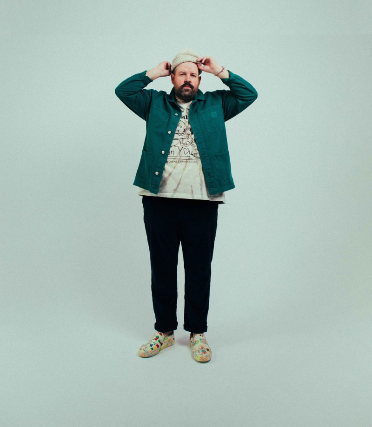
Donovan Woods: The Living Well Tour w/ Hunter Metts
Thu, 13 Mar, 7:30 PM CDT
Doors open
7:00 PM CDT
The Basement East
917 Woodland St, Nashville, TN 37206
TICKET SALES TERMINATED
Tickets are currently unavailable on TicketWeb
Description
Donovan Woods has partnered with PLUS1 to donate $1 from every ticket to MusiCares: music's leading national charity that provides a safety net in times of need, and supports the overall health and well-being of the music community.
Event Information
Age Limit
18+
Refund Policy
All sales are final. No refunds unless a show is canceled.
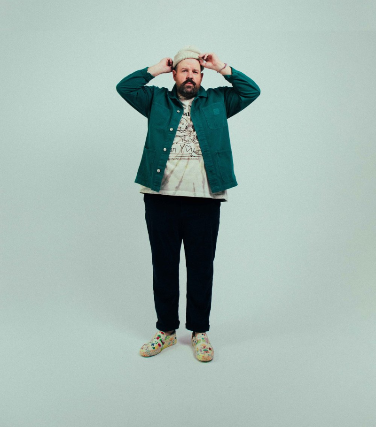
Country Folk
Donovan Woods
Donovan Woods
Country Folk
Since he released his first album a decade ago, singer-songwriter Donovan Woods’ blend of
folk, country and pop has resonated with audiences all over the world. In recent years, the
acclaimed, award-winning singer-songwriter has seen his profile grow with his breakthrough
album, Without People.
Touring behind (2020’s) Without People saw Woods play to his largest audiences to date. That
included a stint opening for New Jersey-based retro rockers Gaslight Anthem on their recent
reunion tour.
Throughout his distinguished career, Donovan Woods has built a devoted following who cling
to the acclaimed songwriter’s every word. Never one to mince words, Woods is one of music’s
most vulnerable storytellers and on his forthcoming studio album, Donovan takes that a step
further. Honest and unflinching, on Things Were Never Good If They’re Not Good Now, his
upcoming seventh studio album, Woods takes a long look inside and isn’t necessarily thrilled
with what he sees. For an artist who isn’t afraid to bear his soul, this is as emotionally gritty as
he has ever been.
Long known as a masterful storyteller, Woods is at his absolute best on Things Were Never
Good If They’re Not Good Now. Across the album’s 12 sparse, intimate songs, Woods finds
himself reflecting on the ups and downs he has been through since 2020. His writing allowed
him to open up and address the complexities of life that he has been going through.
The album, he notes, serves as “a funeral to the life he was living.”
Sonically, Woods decided to take a different approach.
“We had our boundaries and made things sound beautiful within them,” he says. “And what’s
left is scrappier than Without People, but I feel like moments of creation are much more
accessible on this record.”
Many of the songs that comprise Things Were Never Good If They’re Not Good Now focus on
the intricacies of friendships and relationships, and looking at the little moments in life.
Co-produced with longtime collaborator James Bunton over much of 2023, the album’s
delicate nature is reflected in its lyrics.
The psychology of people’s actions always fascinated Woods and informs much of Things
Were Never Good If They’re Not Good Now. Focusing on happy, party feelings doesn’t appeal
to him.
Once he gets down these darker paths (“It was a warts and all album in a way that I never had
done before”), which he admits can be uncomfortable, the songs flow and are universal.
In particular, on the heart-wrenching “Rosemary”. Co-written with Connor Seidel, “Rosemary”
contemplates what happens in the aftermath of a heated argument.
“Have you ever had a fight by text message? And it’s long, and existential,” he says. “Someone
did something wrong and maybe that’s it.” Continuing, he explains that “Rosemary” is about
“finally admitting all your faults, showing your actual self and asking, can you still love me? And
really wanting an answer either way.”
Not everything is doom and gloom.
On “When Our Friends Come Over,” Woods sings lovingly about a couple who rediscover their
affection for one another. Featuring Madi Diaz on vocals, the song highlights how two partners
are able to appreciate each other in the presence of others. Even though they're going through
a rocky patch, Woods shows how even the tiniest of gestures are the true signs of love.
Throughout an album of heart wrenching songs, none hit harder than “Back for the Funeral.”
Taking place in a small town, a group of friends who haven’t seen each other in years return to
memorialize a schoolmate after they overdosed on pills.
“There's so much writing done about being back in your hometown and what it does to you,”
Woods explains. “But there’s the idea that you only go there with bad news—which can be
true—and what it does to your feelings about your hometown.”
However, the song poignantly shows that even though someone may return to their hometown
for unfortunate reasons, reconnecting with old friends is a positive byproduct of the
circumstance.
As Woods continues to work on himself, Things Were Never Good If They’re Not Good Now is
the portrait of a songwriter at his creative best. Addressing the truths and pains of life is never
easy, and here, he does so in a way that’s brutally honest. After all, that’s what great
songwriters do.
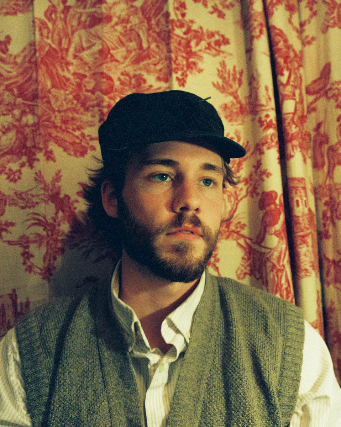
Country
Hunter Metts
Hunter Metts
Country
In an era of fast content and endless sensory overload, Hunter Metts believes in the beauty of following your own chosen timeline. Born into a family with a deep reverence for music, the Nashville native got his start composing songs on his grandmother’s upright piano as a little kid, later learning guitar and slowly dreaming up his spellbinding form of indie-folk. Since the breakout success of his 2024 viral hit “Weathervane,” the singer/songwriter/producer has embarked on a steady rise that’s included touring North America as support for multi-platinum hitmaker James Bay and launching his own debut headline run in fall 2025. On his new EP A Crater Wide, Metts shares the boldest manifestation yet of his one-of-a-kind artistry: a selection of songs both emotionally intimate and sonically vast, instantly drawing the audience into his sublimely enchanted world.
Raised on bluegrass and gospel and heavily inspired by Americana artists like Ben Howard and Gregory Alan Isakov, Metts immersed himself in songwriting at a young age but initially held back from diving headfirst into a music career. “Both my parents moved to Nashville from small Southern towns to try to make it in music, but it never really panned out for them,” he explains. “I’d seen how that affected my family financially, so right after high school I went to a trade school for coding.” After graduating, Metts worked full-time for several years while devoting his off-hours to penning songs and self-recording with friends. “I have so many good memories of my friends coming over and setting up microphones in strange places to try to get cool reverb or whatever,” he recalls. “We were just making everything for fun, but it felt completely true to who I am as a songwriter.” With his debut single “The River” released in 2021, Metts quit his day job in 2023 to focus solely on music and delivered his debut EP Monochrome in 2024. Within months of the EP’s arrival, he returned with “Weathervane”—a hauntingly lovely track that landed on nearly every viral chart across the globe, introducing listeners all over the planet to his poetic songcraft and soul-stirring vocals.
Released via Position Music/Interscope Records, A Crater Wide finds Metts co-producing alongside Andrew Berlin (a producer/engineer/multi-instrumentalist whose credits include Gregory Alan Isakov and Rise Against) and recording at the legendary Blasting Room in Fort Collins, Colorado. In bringing the EP to life, Metts and Berlin enlisted a stacked lineup of guest musicians (on pedal steel guitar, viola, fiddle, banjo, piano, upright bass, drums, harmonium, and more), imbuing each song with a sonic depth that’s nothing short of mesmerizing. “Early on in the process I decided I didn’t want to make any choices based off what’s cool to me right now; I wanted to create something more timeless and pure,” says Metts, who plays acoustic guitar and mandolin on A Crater Wide. “The way that Andrew and I worked together felt very organic: nothing was ever forced or rushed, and we took all the time we needed to make the best art possible.”
Deeply informed by his lifelong love of wandering in nature, A Crater Wide opens on the sweetly drifting rhythms of “Telescope Lovers”—a warm and wistful track that channels a majestic sense of wonder. “I wanted that song to feel like you’re driving off into the middle of nowhere and seeing something beautiful for the first time,” says Metts, noting that he and Berlin achieved its spacious sound by recording at a church next door to the studio. Co-written with Henry Brill (Phantogram, Joy Oladokun), “Blue Ridge Run” embodies a glorious intensity in its full-hearted homage to the Appalachian landscape, ultimately building to a free-flowing instrumental at the bridge. “I’m really proud of the moments where we let the music express what needs to be said, instead of filling up all the space with words,” Metts points out. One of several exquisitely tender love songs on A Crater Wide, “Center Of The Universe” takes the form of a stark but captivating portrait of once-in-a-lifetime romance (from the chorus: “They say love can move a mountain/I think ours can move two or three”). And on “Heavy, Heavy Love,” Metts offers up a harmony-laced, brightly swaying track that perfectly encapsulates the EP’s undercurrent of joy. “So many folk songs are about heartbreak, but that doesn’t ring true for me at this point in my life,” says Metts. “There are a lot of happy moments in these songs, and I like that we’re creating a space for those more hopeful or positive feelings.”
As he reflects on the making of a crater wide and his overall journey to date, Metts reveals that music and the natural world have long formed a powerful alliance in his mind. “When I look back on the music I first fell in love with, whether it was Novo Amor and Tom Waits or whoever else, so much of it is tied to the memories I made while listening to that music on trips to the mountains as a teenager,” he says. “Being out in nature has always been really inspiring and grounding for me, and it’s always made me feel so free. From the first song of mine that I ever produced, I’ve tried to capture that sense of freedom—I want to make people feel like they can go wherever they want and do whatever they feel like and remind them that there’s so much life to live out there.”