TICKET SALES TERMINATED
Tickets are currently unavailable on TicketWeb

Deer Tick w/ Country Westerns
Sun, 15 Oct, 8:00 PM CDT
Doors open
7:00 PM CDT
The Basement East
917 Woodland St, Nashville, TN 37206
TICKET SALES TERMINATED
Tickets are currently unavailable on TicketWeb
Event Information
Age Limit
18+
Refund Policy
All sales are final. No refunds unless a show is canceled.

Alternative Rock
Deer Tick
Deer Tick
Alternative Rock
The ninth studio album from Deer Tick, Coin-O-Matic casts a bright light on a little-known facet of the American mythos: the hidden histories of the band’s home state of Rhode Island, where the everyday dramas of working-class families long collided with the menace of the mafia underworld. As they tapped into their infinite fascination with that strange duality, singer/guitarist John McCauley, guitarist/singer Ian O’Neil, drummer/singer Dennis Ryan, and bassist Christopher Ryan assembled a batch of songs exploring desperation, grief, redemption, and resilience with both cinematic detail and lived-in emotionality. A sharp new turn from one of indie-rock’s most enduringly vital forces, Coin-O-Matic arrives as a complicated love letter to a way of life slowly slipping from the collective memory.
The follow-up to Emotional Contracts (hailed by Uncut as one of 2023’s best albums), Coin-O-Matic takes its title from a cigarette-vending-machine company that served as the headquarters of Raymond Patriarca—a legendary mobster who ran one of the most ruthless crime families in U.S. history. “If you grew up in Rhode Island years ago, you’d see all these mobsters on the news and then run into them at a restaurant on Federal Hill,” says McCauley, referring to Providence’s version of Little Italy. “They were criminals but also very colorful characters, and I wanted the album to partly reflect a certain nostalgia for that kind of seediness.”
Recorded at Deer Tick’s home studio, Coin-O-Matic marks their first self-produced album in their two-decade-plus lifespan, during which they’ve enlisted A-list producers like Dave Fridmann (a Grammy-winner known for his work with The Flaming Lips and Spoon). “At first it was daunting not to have that extra ear in the studio, but it felt like the right time to peel off the Band-Aid and fully trust ourselves,” says O’Neil. “Since we were working in our own space and there weren’t any limitations on time, we had the freedom to take these four-guys-in-a-room rock songs and experiment with different ways of decorating them.” Featuring guest musicians like Los Lobos’ Steve Berlin (on baritone saxophone) and former Deer Tick member Rob Crowell (on organ), Coin-O-Matic frequently brings a live-wire immediacy to their finespun storytelling. “We’ve never been so comfortable making a record, and I think you can feel that in the performances,” says Dennis, who engineered the LP. “We weren’t beholden to anyone else’s idea of what Deer Tick sounds like, and because of that this album feels like an unfettered capturing of who we are as a band.”
Centered on a series of vignettes that merge personal memory and extravagantly nuanced fiction, Coin-O-Matic opens on “Dog Years”—a quietly devastating track that begins in folky intimacy before building to a sorrowful catharsis. In dreaming up the song’s storyline, McCauley looked back on an assisted-living facility near his childhood home, where his own grandfather spent the final years of his life. “The main character of ‘Dog Years’ is based on the guys I used to watch playing chess outside that building or hanging out at the bus stop, smoking cigarettes and shooting the shit,” says McCauley. “I imagined an older gentleman losing his partner and that loss accelerating his aging—almost like he was doing seven years of damage with every passing year.”
Deeply informed by the singular experience of growing up Irish-Catholic, Coin-O-Matic next jolts into the ramshackle jangle-pop of “Mary Singletary” and its tender but irreverent tale of interfaith teenage lust. “Most of the stories on the album are from my parents’ generation and the generation before that, when the idea of a Catholic and a Protestant getting together was very scandalous,” says McCauley. “With that song in particular, I liked the idea of writing about Catholic guilt and pre-marital sex and adding in a little bit of Looney Tunes-style violence—sometimes as a young Catholic boy, I did imagine a vengeful God cutting me down in a cartoonish kind of way.”
Graced with all the grit and warmth of a classic heartland-rock anthem, “ACI” channels a raw desolation and its first-person portrait of a man imprisoned at the Adult Correctional Institutions outside Providence. “When we were working on the album, I used to drive past the ACI a couple times a week and think of all the stories I’ve heard about the mobsters who ended up there,” says McCauley. “That song started with us throwing ideas around in soundcheck, and over time I realized it was meant to be a prison song about the getaway driver of a robbery gone wrong.” Later, on “Exit Door,” Coin-O-Matic inhabits a gut-punching melancholy as Deer Tick depict an ex-con’s return to a world he barely recognizes. “I pictured someone who’s maybe in his 70s, and he’s getting out of prison and all his favorite restaurants are gone, everything’s completely different now,” says McCauley. “On one level it’s a celebratory moment of getting your freedom back, but I imagine it’s also really unsettling and confusing for a lot of people.”
Lending a more intimate layer to Coin-O-Matic’s underlying theme of impermanence, “Everything Born” finds O’Neil taking the lead and delivering a bittersweet meditation on the inextricable nature of love and grief. “I started that song pretty soon after my son was born, and I was thinking about how anything that comes into existence will eventually be lost and therefore mourned,” says O’Neil, who now has a seven-year-old son and five-year-old daughter. “It’s tough to view the world through that lens, but I wanted to write a song for my children that also speaks to that feeling of precariousness.” Another look at the delicate arc of life and love, “Candy Cigarettes” closes out Coin-O-Matic with a gorgeously devastating love song partly inspired by a local monument to those who died in the 1981 hunger strike (a protest of British policy against Irish political prisoners). “It’s a song about childhood sweethearts, one of whom comes from Northern Ireland and maybe has a family connection to one of the hunger strikers,” McCauley explains. “There’s some allusions to recent Irish history but in a very subtle way—mostly I wanted to write a pro-immigrant song, and a song about a love that lasts an entire lifetime.”
In its soulful contemplation of recklessness and consequence, longing and devotion, Coin-O-Matic ultimately joins the canon of rock albums whose geographically rooted storytelling reveals deeper truths about the human experience. “I think there’s something universal in stories of regret and loss and poor decisions, even if they’re told through the lens of all the odd characters in this little state of ours,” O’Neil points out. “One of the reasons I wanted us to make this album is that I think Rhode Island deserves to be a contender for a place that people sing about,” McCauley adds. “Sonically there’s nothing country about it, but to me it almost feels like a country record set in an urban environment—there’s definitely some outlaws in there. I hope that people see themselves in it, and that they understand a little more about the place that we come from.”
Alternative Roots
Country Westerns
Country Westerns
Alternative Roots
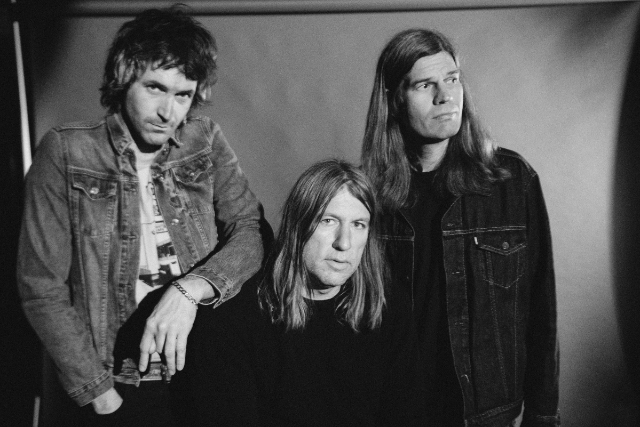
Nashville rockers Country Westerns are excited to announce their self-titled debut album, to be released on May 1, 2020 via Fat Possum Records. American Songwriter [LINK] broke the news of the signing and shared new track “Gentle Soul,” calling it “[QUOTE].” Hear “Gentle Soul” HERE, and pre-order the album HERE.
The band has also announced a slate of performances spanning from February to May of this year, which includes stops in Nashville, Atlanta, Philadelphia, Brooklyn and more. See below for the full itinerary of upcoming dates.
Even if you don’t know their names, you likely know their work. Drummer Brian Kotzur starred in Harmony Korine’s film Trash Humpers and was a member of Silver Jews. Singer, guitarist, and songwriter Joseph Plunket led Brooklyn legends The Weight, with a bass-playing side-hustle for Atlanta’s Gentleman Jesse. Plunket relocated to Nashville ten years ago and opened a bar. It was there, in a town teeming with solo artists and hired guns, that the two bonded over their shared desire to be in an actual band.
In 2016, Plunket and Kotzur spent a year in Kotzur’s garage writing riffs and tracking demos. During those hazy, late nights they began to hone their sound. Eventually, with a handful of songs and the encouragement of their friends, they began their quest for the third ‘Country Western’. After some time playing with different lineups—early recordings feature Reece Lazarus from Bully—their friend Sabrina Rush, another rock-n-roller for life, joined them on bass. Rush plays violin and is a member of the Louisville band State Champion, but had never played bass. The instrument came naturally to her and her harmonic bass lines were a perfect fit.
The first recordings with the complete lineup were made in Nashville with engineer Andrija Tokic, but the band was soon convinced to leave Nashville to record a couple of songs with Country Westerns enthusiast Matt Sweeney. With Sweeney as the band’s producer they set out for New York and did their first session at Brooklyn’s Strange Weather Studios, with Daniel Schlett. The Strange Weather recordings piqued the interest of indie record label Fat Possum. The band returned to Strange Weather to finish the record and, shortly afterward, signed a deal with Fat Possum Records.
On their debut album, Plunket delivers his words with a cool, raspy bravado and a hint of twang, summoning the spirits of the cities in which the tracks were made. The lyrics bend towards poetry and punk rock sneer in equal measure and lines such as “Maybe I ain’t smart, but I ain’t lying” set the tone for the entire album. The songs are full of insistent guitar riffs played on an electric twelve-string, the jangle either mitigating the edge or pushing it further.
Kotzur and Rush form a tight-knit rhythm section, alternately weaving around and syncing up with one another. They build the foundations of the songs with dynamic tempo, creating a full sound with Plunket—one that is bigger than you might expect for a three-piece.