TICKET SALES TERMINATED
Tickets are currently unavailable on TicketWeb
Union Stage Presents:
Deafheaven – “Sunbather” 10th Year Anniversary Show
Sat, 2 Dec, 8:00 PM EST
Doors open
7:00 PM EST
Howard Theatre
620 T Street NW, Washington, DC 20001
TICKET SALES TERMINATED
Tickets are currently unavailable on TicketWeb
Event Information
Age Limit
All Ages
Death Metal/Black Metal
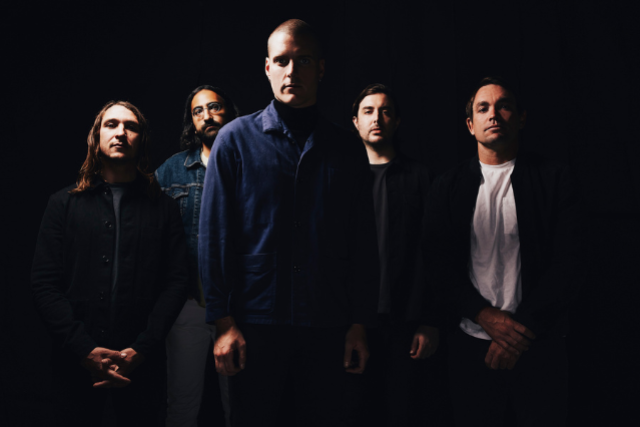
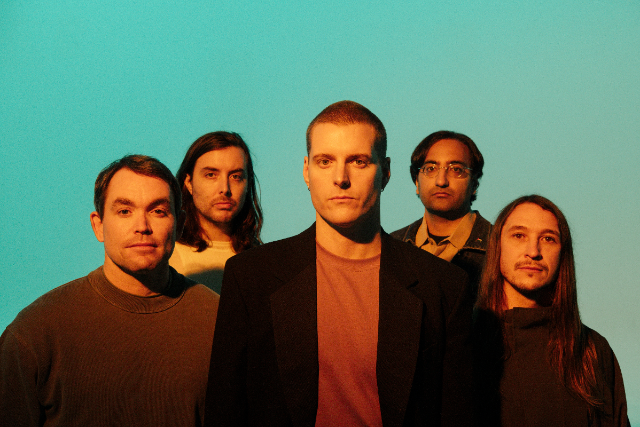
Deafheaven
Deafheaven
Death Metal/Black Metal
For the past ten years, the seminal San Francisco band Deafheaven has been driven by evolution and innovation within themselves and their respective genres. With their forthcoming album Infinite Granite, available August 20th via Sargent House, they’ve taken another giant leap forward. With production from Justin Meldal-Johnsen, known for his stellar work with M83, Wolf Alice, Paramore, Metric, among others, Deafheaven embarks on a new chapter of defiant beauty.
Across the album, vocalist George Clarke showcases a startling vocal range; falsettos, whispers, multi-part harmonies, and other adventurous vocal treatments, with his trademark black metal-inspired howls mostly absent. Guitarists Kerry McCoy and Shiv Mehra expand their sonic palette to include synth textures using them to enrich their astral guitar work rather than outright replace it. Drummer Daniel Tracy has always been a force to reckon with behind the kit, but where he used to floor audiences with his speed and stamina, he’s now free to broaden his approach and lay down authoritative drum patterns that together with bassist Christopher Johnson’s punchy bass lines anchor the band’s lofty arrangements. Ultimately, Infinite Granite is Deafheaven’s most goosebump-inducing album to date.
Jack Shirley, who recorded all the previous Deafheaven albums, remained on board to engineer part of Infinite Granite at his Atomic Garden East studio in Oakland, CA with additional engineering and mixing coming from nine-time Grammy Award winner Darrell Thorp (Foo Fighters, Radiohead, Beck).
Hardcore Punk
Touché Amoré
Touché Amoré
Hardcore Punk
Touché Amoré has been burrowing through angst, alienation, cancer, and heartbreak throughout four adored studio albums. After over a decade of working through darkness, the band’s gorgeously gruff fifth album, Lament, finds the light at the end of the tunnel. Through 11 songs, Touché Amoré looks back at its past and uses hard-won optimism to point its fans toward light, and love.
Last year, the Los Angeles quintet re-recorded its 2009 debut, ...To the Beat of a Dead Horse, to cele- brate the decade gone by. It was a straightforward reflection of a time when the band’s songs rarely surpassed the two-minute mark and hooks were accidental if existent. A striking contrast to the band in 2020, as their evolution with every step in their oeuvre has lead to this moment. Lament is their masterstroke. Its longer, structured songs soar with a ferocious but delicate musicality and powerful, gut-wrenching storytelling that smashes previous heights. Yet as much as the band has grown and matured via everything they’ve endured, it’s perhaps equally impressive how they’ve managed to stay true to their core…
“I’ve always stood by the idea that if you’re gonna raise your voice and you’re gonna yell,” Bolm says, “and somebody is kind enough to listen to you do that—then I would not half-ass anything. I would be as honest as I possible”
The band’s critically acclaimed 2016 release, Stage Four, found Bolm mourning and paying tribute to his late mother, which in turn, challenged his emotional bandwidth to converse with an upswell of fans responding with their own stories of grief. Along with the duty of being empathetic, the band had to deal with their own lives. Personal relationships bloom, members’ families change either by marriage or fractured bonds. A new president takes office, and personal turmoil turns political.
“I sort of look at this record as a companion piece to Stage Four, in the sense that I’m not writing songs about [my mom] anymore,” Bolm says. “But the songs on this record are about what my life’s been like since doing that.”
Lament captures all of this. A widescreen view at the constant fragility we face as people, as well as, life-after-jarring-trauma that we all must endure at some time or another.
After 10 years together, the band have developed a family-like bond that has enabled them to with- stand it all. “When you play music with people for this long, you can kind of anticipate their moves,” Steinhardt says. “If I’m writing a song or thinking of a drumbeat, I’m subconsciously thinking of some- thing that [drummer] Elliot Babin would play.”
Lament marks a number of milestones for the post-hardcore rockers. For one, Nick Steinhardt gets to try out his newly learned pedal steel skills on album centerpiece “Limelight.” Four years is also the longest wait between studio albums, but the bandmates found they were still in-sync.
After working with Brad Wood for its past two efforts, Touché Amoré sought to break out of the prover- bial comfort zone and get the famously demanding Ross Robinson (Slipknot, Korn, At the Drive-In). Both Robinson and Touché Amoré are known for their trademark intensity, which caused some hesi- tancy for Bolm. Ultimately, Robinson agreed to a rare one-song “test recording” last summer, which resulted in the song “Deflector,” released last fall. While Bolm remembers how Wood felt almost like a member of the band, he didn’t immediately find a mensch in Robinson. Getting out of the comfort zone clashed with straight-up being uncomfortable. Robinson made Bolm read out all of his confes- sional lyrics to his bandmates to make sure they understood their emotional content. He also invaded personal space by standing directly next to Bolm in the vocal booth as he sang. Those, along with his other abrasive, hands-on methods, took some getting used to.
“I believe there was an unspoken learning curve between Ross’s methods and the understanding that I’ve poured myself into the words and mean every one of them,” Bolm says.
In the end, “Deflector” proved the producer/band combo was undoubtedly the right fit; making Bolm read those lyrics turned out to be what helped make their emotions palpable in the final recording. With its ruminations on the draining human connection (“I’ll test the water/I won’t dive right in/That’s too personal/I’m too delicate”), Lament’s first helping is a sharp intro to the album’s themes.
The emotional frankness on which Touché Amoré (“Touch Love”) stakes its bilingual name makes it- self apparent across the entirety of Lament. Bolm has grown from his roots as hardcore kid traveling the world in a van to finding comfort in his longtime partner. As described in the album’s blazing open- er “Come Heroine,” where Bolm publicly declares love and emits this confession: “From peaks of blue/ Come heroine /With open arms you brought down the walls I defend.”
It’s on “I’ll Be Your Host,” where Bolm, amid the jangling guitar, grapples with the aforementioned mounting uneasiness that comes with having to connect to fans’ pain. With its acerbic slogans (“Pin a black ribbon on/We’re the mourning campaign/I didn’t ask to lead this party/I explain”), Touché Amoré cuts right through the complexities of being a vehicle for grief as its driver tries to maintain his sanity. In the vein of Bright Eyes’ poetic blend of political and personal insight, “Reminders” captures Touché Amoré trying to find some respite amid the constant stream of President Trump’s failings. Julien Bak- er’s elegiac backing vocals lends pathos to that desperate search.
Perhaps Lament’s biggest point is that Touché Amoré are still human. On “Limelight,” the solemn gui-tar plucks work almost as a solace for Bolm as he works through the deaths of his beloved dogs over the past two years and an understandable outward cynicism. The song also finds him praising his partner for supporting him through it all, and the overwhelming feeling becomes one of hope. “So let’s embrace the twilight/While burning out the limelight,” he shouts against the climaxing chords. He may still be broken but he’s trying, as we all are.
The album’s closer ties it all together, as “A Forecast” is fittingly a precise update on Bolm’s life. He speaks to the listener as an old friend, perhaps because they are. Where he professes not feeling supported when he needed it most by those he figured would care the most. Mentions his new found love for Jazz, an obsession for the Coen Brothers… Before the song ends, he admits “I’m not sure what I’m after/but it couldn’t go left unsaid.” The album ends with the confession “I’m still out in the rain/I could use a little shelter/now and then.”
Ultimately, the message from Lament? Bolm sums it up best: “That time doesn’t heal. That love can nurture. That it’s okay to not be okay.”

Pop
Mary Jane Dunphe
Mary Jane Dunphe
Pop
Mary Jane Dunphe is a poet and musician who tells stories–not through direct narrative but through embodied presence and performance, through cinematic and fragmented memory, the wild transmission of feeling. Her versatile songwriting has garnered critical acclaim in past projects such as the visceral punk of Vexx and Gen Pop, the minimal dream pop of CCFX and CC Dust, and the lonesome country-rock of The County Liners–and now Dunphe’s debut solo album, Stage of Love, is the start of a captivating new chapter.
The process of making Stage of Love began in 2019 at FEAL Studios in Brooklyn. At first the pace was slow, as Dunphe set out to define the sound of her solo project, but her self-assurance grew with each new song. “I think I was feeling tired of relying on bandmates’ consistent engagement and was also feeling more confident in my ability to write on my own, and was curious to discover what kind of sounds I would make,” she explains. “I think the kind of music you make is partially intentional and partially something that’s innate and you can’t control it. If you believe this then you can relax into listening to yourself rather than forcing some hyper-specific sound.”
The songs began to progress, influenced in part by the wide range of music Dunphe was enjoying in solitude–Robert Wyatt, Section 25, Tones on Tail, Harold Budd, Operating Theater, Bowie, Prince, Bjork, The Blackbyrds, Marvin Gaye, and Gloria Ann Davis - music that she describes as “both maximal and sincere,” a quality that she sought to capture on Stage of Love. Recording continued in 2021 in Los Angeles with longtime friend Todd Berndt (The Berries) along with Jimmy Dixon (The Berries, Local Natives) at Kingsize Studio, and was finally completed in 2022 with Ben Greenberg (Uniform, The Men), before being mastered by Heba Kadry (Björk, Slowdive, Beach House). “I think it’s kind of antiquated to try and make an album like I did,” Dunphe says. “To spend all my money trying to write in the studio, to take years to do so, to slow cook it. We live in a very anti-masterpiece culture today–I’m not saying that this is a masterpiece at all, it’s more a document of me getting to know myself on a creative level, but it’s an attempt at it, there’s an ambition in it stemming from my adoration for the heroes of music’s days of yore.”
That ambition–the all-encompassing desire to make something truly great–is palpable throughout Stage of Love, and upon listening it’s clear that Dunphe’s patience and commitment in the studio has paid off. The resulting album is an idiosyncratic assemblage of pulsating drum machines, shimmering synths and guitars, and Dunphe’s singular soaring voice–all coalescing into highly danceable avant-pop songs. Sequenced as a long walk alone that starts at midnight and ends at 5:00 am with the birds chirping, the album’s ten tracks are full of longing but also questioning. What do you do at night that you can’t do during the day? When at night you plead, who do you plead to? What don’t you have, yet still you give away, tirelessly? “It’s me ruminating on desire and its stickiness,” Dunphe says. “It’s me feeling so alone and simultaneously celebrating it and damning myself for it. It’s the freedom and the prison of living a life in solitude which is how I have felt the past three years for sure. It’s dreams too, and sleep demons, and open fields, and meaningful pauses.”
The songs tremble with the contradictions of human emotion–want and detachment, tension and relief, connection and escape, power and powerlessness–all reverberating together in Dunphe’s otherworldly version of pop. The album opening title track sets the mood with an effects-drenched bass line and thumping beat that build into a euphoric chorus. The track encapsulates many of the album’s themes, Dunphe explains: “It’s about longing and trying to understand the difference between desiring love and just desiring. It’s about the pleasure and the suffering of the lack, and breathing into it.”
The motif of breathing reappears in other songs like the hooky, “Always Gonna Be The Same”, which draws on a period of physical and emotional pain–specifically, an emergency dental surgery. “While I was in surgery the dental surgeon shouted at me, ‘Open up your eyes, you are in control!’” Dunphe recalls. “I was panicking and choking and they couldn’t numb me because my tissue wouldn’t take it. It was gruesome but a wake up call–the idea of breathing into things that were causing me extreme pain.” The song crests into a triumphant refrain to match the mental recontextualization in Dunphe’s lyrics. “Giving up actually can be a victorious act. I don’t have to hold onto the pain in order to honor my journey, I can release it and everything else that doesn’t serve my growth, without a grudge. It’s about forgiving yourself for getting hurt.”
Tracks like “Phantom Heart” and “Moon Halo” highlight Dunphe’s ability to bridge dreamy atmosphere with expert songcraft, while elsewhere a cover of Roland S. Howard’s “I Know A Girl Called Johnny” fits right in with her own lyrical observations of devotion and desire. On album-standout “Longing Loud” Dunphe paints a gentle fantasy of being read to in bed by someone you love. “It’s about someone who inspired me to be a better version of myself just from a chance meeting,” she says. “This sort of reaching that you feel inside yourself when someone wakes you up to the feeling that maybe you deserve it—’it’ being everything.”
Stage of Love begins to come to a close with “Starless Night,” a haunting piece that forgoes the widescreen synths for scattered, discordant notes. The song’s sparse arrangement feels loose and exposed compared to the tight drum machine heartbeat of much of the record, leaving the floor open for Dunphe to unleash the full power of her voice. It’s a striking moment, and as it fades into the chirping morning birds of “Saint Dymphna” it feels like some kind of freedom has been achieved in the release–even if there’s no answers yet, there’s always the next night.