TICKET SALES TERMINATED
Tickets are currently unavailable on TicketWeb

Celebrity Etc presents & WCBE welcomes
Dave Hause & The Mermaid* Two Cow Garage
Wed, 25 Feb, 7:00 PM EST
Doors open
6:00 PM EST
Rumba Cafe
2507 Summit St, Columbus, OH 43202
TICKET SALES TERMINATED
Tickets are currently unavailable on TicketWeb
Event Information
Age Limit
All Ages
Music
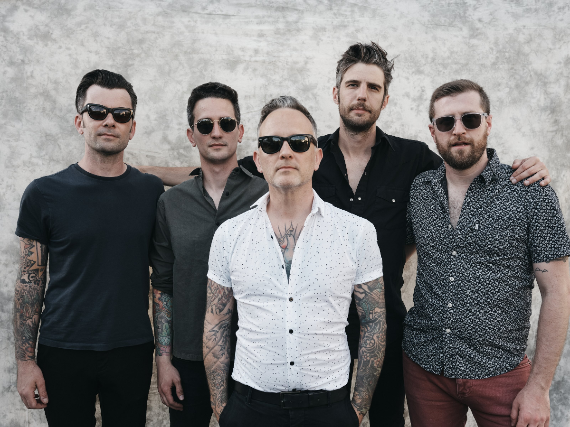
Dave Hause & The Mermaid
Dave Hause & The Mermaid
Music
Dave Hause…And The Mermaid
“As far back as I can remember, I always wanted to be in a rock and roll band.”
Dave Hause had an epiphany rewatching Goodfellas. “There's that scene in the beginning where Henry Hill says, ‘As far back as I can remember, I always wanted to be a gangster.’” The Philly-bred, California-based singer-songwriter always longed to be in a different kind of mob.
“This is the first time I've taken that band into the studio and been like, ‘No matter what, damn the torpedoes, we are going to sound the way we sound. I'm not going to Nashville and getting the murderers row of players. This is our sound,’" says Hause of the mission statement for …And The Mermaid, which is being released on Hause’s Blood Harmony label.
Nearly 20 years into his career, the collection also represents a number of other firsts. It is the first album in his solo career where the entire band has been invited to contribute to the songwriting process. It contains Hause’s first cover on an album of originals, a harmony-laden rendition of “Bible Passages” by Tim McIlrath of Rise Against — “I finally was just totally comfortable enough to put a song I believe in that someone without the last name Hause wrote on my record." And it’s the first time he’s recorded outside the U.S.
With a little help from the Canadian government (in the form of a grant), The Mermaid decamped to Vancouver in January 2025 to co-produce the album with Jesse Gander (Japandroids, White Lung) who also served as engineer and mixer. “Jesse is about my age, so he's just as fired up on Minor Threat as he is on Bryan Adams,” says Hause of the obvious kindred spirit, with whom he had been chatting over the years. “The sonic references were really aligned, and I love his acumen and his approach. It's also a great studio, in one of my favorite towns, with tons of gear.”
The band and Gander tracked over 20 songs in two weeks, and Hause found himself grateful for the varying point of views that having other voices in the studio offered, even as he retained final say as bandleader. “It went really well,” he says of the creative collaboration. “We've cultivated a ton of trust and transparency. I would be an absolute fool to be this far in and assume that an idea shouldn't at least be considered. The older you get, the closer you can stay to the river of creativity, the better your life is. I had full faith that these four people that I've been working with in various iterations over the years are trying to do just that.”
It was Tim, who is also one of his older brother’s biggest fans, who helped Hause rediscover his inner rock and roll animal. “One of the things that Tim said when we were four or five songs into making this record was, ‘wow, I'm most excited for the fans for this one,’” Hause says. “‘Without hindering your creativity or making some preconceived decision to go back to your roots, you are going to stoke out every Loved Ones fan who we might've lost on a finger-picked gentle version of something. Every rock fan of ours, this is what they want.’”
Brother Tim was right, and the album wastes no time announcing itself. “A Knife in the Mud” kicks off with a trumpet herald that gives way to a galloping groove that feels very much like the rock and roll cavalry is on the way even as Hause announces that vultures are circling to attack and balefully intones “There’s no knight coming in on horseback/It’s a fight for a knife in the mud.” The first of the album’s several anthemic choruses kicks in just when all hope is lost as Hause defiantly sings “We ain’t going down easy/We ain’t going down at all/We’re never gonna die.” But Hause wonders, is that a good thing? “Maybe it might not be the best thing that this cockroach-like species that we are is going to keep proliferating,” he muses.
The full-tilt fist-pumping pummels through the next four tracks. “Cellmates,” a fast and furious chronicle of survival complete with galvanizing “Whoa-oh-oh” refrain, balances the tension between the triumph of surviving and the rueful surveying of the wreckage of that survival as “we mainline nostalgia like amphetamine.”
“The initial inspiration was getting sober,” say Hause. “A lot of us made it out of really bleak times where we were in a lot of pain; using and abusing drugs and alcohol to mitigate that pain. I'm almost 10 years sober and I found myself running into old friends. We'd end up being like, ‘Hey, remember that time?’ And what we’re describing was fucked.”
Burning guitars undergird the emphatic vocals of “Look Alive” with Hause contemplating the end of the world and hollering “If I’m gonna pay for my sins/Goddamn I wanna sin some more” and engaging in another round of righteous “whoa-ohs” that will no doubt lead to robust singalongs at live shows. He lets them come organically, he says of choosing just the right spot for an exclamation. Then he runs it by his twin six-year-old sons, noting, “If they're pumped and they can remember this, everybody will.”
“I really do believe that songs are best when we all sing them,” he says of the community of the live space. “Everybody's busy, so remembering every single one of my little lyrics might be a lot for your average person with a job,” he says with a laugh. “But if you give them a ‘whoa,’ it gives them something to latch onto.”
“Mockingbird Blues” is a restless ode to feeling unmoored that takes a pleasingly dissonant left-turn with some saloon piano licks that amp up the song’s sense of displacement. And “Revisionist History” — inspired in part by Ta-Nehisi Coates’ book The Message — is a dizzying, punk-inflected rocker that careens through the last 60 years with a look at how the good old days weren’t always good for everyone and maybe we shouldn’t be trying to turn back time.
“That song ties to ‘Enough Hope,’” he says of a deeper cut that takes the POV of those in power laughing at the working class. “And it ties also to ‘We mainline nostalgia like amphetamine’ from ‘Cellmates.’ That's the common thread, that the personal can become political. If we're so afraid of the future, not only are we going to hang around like we're cellmates in a prison yard, but we're also going to revise history to make it look rosier than it actually was.”
The album downshifts ever-so-slightly with the skittering ‘Yer Outta My Hair,” leading into the burbling guitars and soul-searching of “Bible Passages” and the midtempo pop-punk stomp of the delightful “Rumspringa,” which took a few musical cues from his pals the Dropkick Murphys. “May Every Last Fever Break,” a poignant parent’s wish for their children, fittingly featuring more interlaced sibling harmonies from Tim, brings the album to a soft landing as the faint trumpet herald from the album start fades out, signaling it may be time to put the weapons down and rest awhile.
Hause says that venturing into — and being fully embraced by — the Americana/singer-songwriter space for a few years ended up leading him back to a version of where he began. “It gave me enough confidence to come back to the rock and punk thing and be like, ‘I got nothing to prove. I'm just going to do me.’"
Fortunately he is not doing it alone and is eagerly looking forward to taking these songs and his band on the road, plugging in and turning it up and reveling with an even bigger gang, his fans.
“The band is called The Mermaid because being in a band has always felt like something I’ve had for a moment, and then the whole myth of it just swims away. If that keeps being the case, I want a musical document of the time we spent together.”
He hopes those fans have a similar epiphany when listening to…And The Mermaid that he had in making it: that being part of something larger than yourself can bring a different sense of meaning to your life.
“I hope people take away the belief that we can do things that are greater than ourselves when we decide to work together,” he says. “That's what a band promises. That's what a live music event promises. It's what a festival promises. It's what relationships promise. If you can work together, it's better than being isolated and living in fear. It's messy. It can be ugly. You're going to get into arguments. Somebody's going to get the last piece of cake and you're going to give that person shit but, hopefully, there's enough goodwill in the mission that you can forgive each other and know ‘This is greater than I could do on my own.’”
Alternative Rock
Two Cow Garage
Two Cow Garage
Alternative Rock
A fierce and edgy alt-country band from Columbus, Ohio, Two Cow Garage takes the twangy melodies of vintage country music and fuses them with a muscular, amped-up attack that recalls or as much as or . Two Cow Garage was formed in the fall of 2001 by guitarist and singer, who was born and raised in the rural Midwestern community of Bucyrus, Ohio. Weaned on vintage country, didn't care much for the mainstream rock that dominated radio, preferring harder and edgier sounds. At 18, he moved to the relatively big city of Columbus and started playing with drummer Dustin Harigle. Chris Flint, a guitarist and lawyer who used to manage, saw an early version of Two Cow Garage and was struck by their passionate energy and songs; he signed on as the band's manager and part-time guitarist, and with the addition of bassist, the group's lineup was complete.
In the fall of 2002, Two Cow Garage released their first album, Please Turn the Gas Back On, through ; the band supported the disc with a relentless tour schedule that put 332,000 miles on their van's odometer over the course of two years. 2004 saw the release of their second album, The Wall Against Our Backs, which received rave reviews from critics while the band kept up their punishing tour schedule, which was captured on video by fan and filmmaker John Boston in his documentary The Long Way Around: One Badass Year with Two Cow Garage. Two Cow Garage's third album, aptly titled III, was released in April 2007.
In 2008, Two Cow Garage dropped their fourth album, Speaking in Cursive, which was released in tandem by and . By this time, Dustin Harigle and Chris Flint had left the group, and drummer and keyboardist Andy Schell joined the lineup as Two Cow Garage maintained their busy touring schedule. brought out another Two Cow Garage album, Sweet Saint Me, in 2010. The following year, and Andy Schell departed the band, and David Murphy signed on as the group's new drummer. After launching a successful crowd-funding campaign, the band released The Death of the Self Preservation Society through in 2013. In 2015, Two Cow Garage became a quartet again when Todd Farrell, Jr. became their new guitarist. The following year, the band returned with another new project, 2016's Brand New Flag. ~ Mark Deming, Rovi