TICKET SALES TERMINATED
Tickets are currently unavailable on TicketWeb
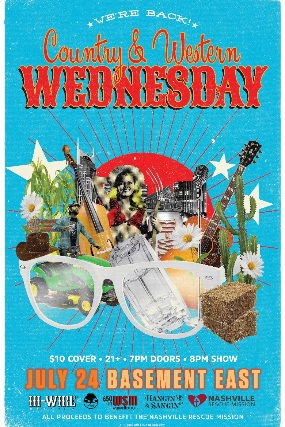
Country & Western Wednesday ft. Andrew Combs, Shelly Colvin, Bobby Bare Jr., Cory Younts (of Old Crow Medicine Show), Parker Gispert (of the Whigs) and more
Wed, 24 Jul, 8:00 PM CDT
Doors open
7:00 PM CDT
The Basement East
917 Woodland St, Nashville, TN 37206
TICKET SALES TERMINATED
Tickets are currently unavailable on TicketWeb
Description
Come support the cause and enjoy a night filled with great music and dancing. Each show will be different and you never know who’ll pop in to sing a song or two!
Event Information
Age Limit
21+
Refund Policy
All sales are final. No refunds unless a show is canceled.

Pop
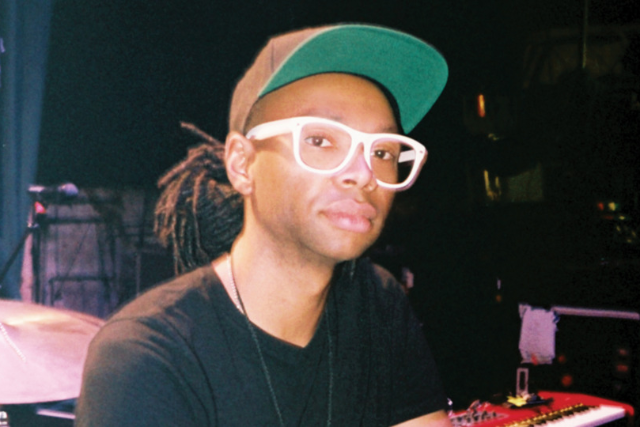
Bobby Bare Jr.
Bobby Bare Jr.
Pop

Folk Rock
Shelly Colvin
Shelly Colvin
Folk Rock
Described as “wildly earthy,” Shelly’s earliest collaborations were in Los Angeles, writing and performing with groundbreaking, genre-bending pioneers of the California country-rock movement, Herb Pederson, Chris Hillman and JD Souther. Now in Nashville, Shelly has written and recorded two full-length albums – her latest, Longshot, is set to release in late 2015 – and, most recently, appears in the much-anticipated music documentary, Heartworn Highways Revisited, which pays homage to the original cult-classic film by focusing on the unique characters and talent bubbling up from the quirky and substantial East Nashville music scene.
Country
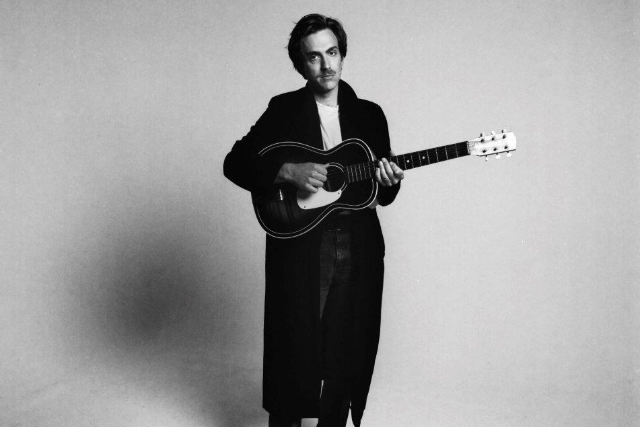
Andrew Combs
Andrew Combs
Country
Andrew Combs, a Dallas native now living near the same Nashville airport immortalized in the opening sequence of Robert Altman’s country music odyssey, is a singer, songwriter, guitarist, and heir to that 1975 film’s idea of the Nashville troubadour as a kind of musical monk. Here in the twenty-first century whorl of digital narcissism, where identity can feel like a 24/7 social media soft-shoe performance, Combs makes music that does battle with the unsubtle. Like the pioneering color photographer William Eggleston, he sees the everyday and the commonplace as the surest paths to transcendence, and he understands intuitively that what is most obvious is often studded with the sacred.
Alternative
Parker Gispert (of the Whigs)
Parker Gispert (of the Whigs)
Alternative
Alternative Country
Cory Younts (of Old Crow Medicine Show)
Cory Younts (of Old Crow Medicine Show)
Alternative Country
Blues
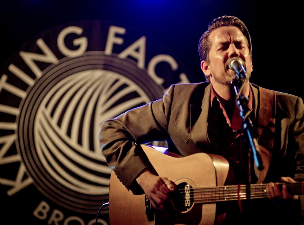
Patrick Sweany
Patrick Sweany
Blues
On a given night (or on a given album) he'll swing through blues, folk, soul, bluegrass, maybe some classic 50s rock, or a punk speedball. He's a musical omnivore, devouring every popular music sound of the last 70 years, and mixing 'em all together seamlessly into his own stew. Yet, the one thing that most people notice about Patrick isn't his ability to copy - it's his authenticity. Like his heroes, artists like Bobby "Blue" Bland, Doug Sahm, Joe Tex, Patrick somehow manages to blend all of these influences into something all his own.
It's no wonder that as a kid he immersed himself in his dad's extensive record collection: 60s folk, vintage country, soul, and, of course, blues. Patrick spent hours teaching himself to fingerpick along to Leadbelly, Lightnin' Hopkins, and other folk-blues giants.
In his late teens, Patrick began playing the clubs and coffeehouses around Kent, OH. He quickly gained a reputation for the intricate country blues style he was developing: part Piedmont picking, part Delta slide - with an equally impressive deep, smooth vocal style.
But Patrick wouldn't stay in the acoustic world for long. His love of 50s era soul and rock fused with the adrenaline-soaked garage punk revival happening throughout the Rust Belt pushed him to form a band.
After 6 critically acclaimed records (two produced by longtime collaborator Dan Auerbach of The Black Keys), Patrick has expanded his touring radius to 49 states and Europe. He's played premiere festivals (Newport Folk Fest, Merlefest, Montreal Jazz Fest, Telluride Blues & Brews) and supported international acts such as The Black Keys, The Tedeschi Trucks Band, The Wood Brothers, Hot Tuna, and others on tour.
His latest record, Daytime Turned To Nighttime, comes out in September 2015. It was recorded in his adopted community of E. Nasheville, TN and features contributions from long-time collaborator and producer Joe McMahan (Allsion Moorer, Webb Wilder), Ron Eoff (Cate Brothers, Levon Helm), Bryan Owings(Tony Joe White, Solomon Burke), among others. For Daytime Sweany took a fairly different approach than his usual raw, intense blues sound, opting for more subtle textures and playing. Seminal 70s records by Bill Withers, Bobbie Gentry and Bobby Charles & The Band provide the sonic blueprint, while Sweany wraps his trademark baritone and impeccable acoustic slide work around songs of longing, redemption and growing up.
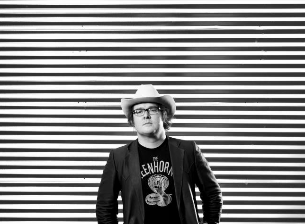
Country
Derek Hoke
Derek Hoke
Country
Derek Hoke has crafted a collection of equally endearing and infectious songs for his long awaited sophomore release – Waiting All Night. Out August 21, 2012 on Electric Western / Thirty Tigers, Waiting All Night picks up right where Hoke left off with his first release Goodbye Rock N Roll. There is a significant difference here though. If Goodbye Rock N Roll was slow crafted, simmered in Hoke’s brain on low, and came to life on a lazy saw dust floor one night in town, then Waiting All Night was born under the lights on stage. It’s clear that Hoke and his band have been affected by the past years of playing week after week. Nashville has a way of doing that to a singer. A way of molding a voice around the lingering smoke and whiskey hanging in the air night after night. And first and foremost, Derek Hoke is a singer. The songs, even the ballads, reach out and yearn for a late night in a dark room. It’s the same feeling you get when you leave the house at 2am to catch last call…because if you don’t you might miss something. You might miss the steel guitar or meandering piano solos and telecaster riffs. Well, get out of the house, because you won’t want to miss a tune on Waiting All Night.
Born in Brunswick, Georgia – a self taught guitarist, composer, singer, and loner – Derek’s first love was the theatrics of KISS, but not until his grandfather planted the country music seed in his brain by playing it constantly while he was young. Not your dad’s country, your granddad’s country. The REAL country.
After one listen to Waiting All Night, it is apparent young Derek was listening. Like most in his line of work, Derek has moved around. While growing up in Florence, South Carolina, his parents divorced when he was 6. He cut his teeth playing guitar in bars around the state, moved to Greenville, North Carolina when he was 18, worked in record shops and movie theaters, immersing himself in art and music.
After a few years and visit to Nashville, Tennessee to see the likes of Steve Earle, Lucinda Williams, and Los Straightjackets, Hoke decided to move to Nashville. He slept on floors in crowded houses, played around town in almost every venue that would have him, went on tour working for Ricky Skaggs for three years and saw almost every state in the union. While these all seem to sideline Derek on his way to becoming the artist he is these days, they were clearly important on his body of work and sound. He is a man that embodies his experience, both with his constant relationship with music and his travels in life.
Continuing on their work with Goodbye Rock N Roll, Derek has once again paired up with long-time producer Dexter Green. On keeping the same crew but trying to craft something altogether different Hoke explains: “Songs like “Hope We Make It On Love” were definitely part of the afterglow of GBRNR. "Dex and I were pretty keen on not repeating ourselves so I took a different approach to most of the material. Mainly writing it on a ’68 Telecaster as opposed to an acoustic guitar. The White Album was a big influence on the change of styles.” Amongst the usual cast of characters in Derek’s band, this album sees some wonderful appearances by Jason Isbell, The Greenhornes, Chris Scruggs,Cory Chisel, and Caitlin Rose. “We employed most of the same cast as before, but added some folks whom we met after the last record. Dex was recording a single for The Greenhornes and asked if they’d stick around a do a few with me. We all had a blast and it turned out really great. Scruggs is an evil genius. He plays the steel guitar so effortlessly and with a sense of wonder and amusement.”
The record’s opening track, “Lonely Street”, carries a melancholy with it only obtained by experience. The opening lines set the stage perfectly:
“Well, nobody talks around here, they just listen. Hoping to hear about this thing called love. And every heart in this town, there’s something missing. Everyone praying to the stars up above.”
Hoke doesn’t let the listener dwell on it too long though, soon enough the piercing bluesy intro riff to the title track Waiting All Night cuts through and it’s very clear the band is locked into something really, really great. Even the fiddle, country pickin’ dance number “Sweetheart Letter” sits right at home next to the blues and the lonely crooner songs. Hoke seems to have a masterful way of taking all those influences, those early Americana sounds of southern delta and Appalachia, and crafting something completely all his own. If you can say anything about it, his music is all his own, it’s honest.
With “I Hope We Make It On Love” Hoke once again tells the entire story in one line: “I hope we make it on love, ’cause the money’s all gone”. Those classic turns of phrase are this songwriter’s specialty. “Gone Gone Gone” and “So Quiet” might find you humming their melodies for days, but “Love May Die” is clearly where Hoke starts to push outside his own comfort zone. “Love May Die is a glimpse of things to come.
Even Hoke’s version of Bob Dylan’s classic 1969 love ballad “Tonight I’ll be Staying Here With You” seems brand new. Anytime an artist covers a hero, the intent is to honor the song while letting your own voice bleed through, and Derek along with Michah Hulscher’s masterful piano have done just that. “Mean Mama” and “Cumberland Blues” could both have been written and been hits over 50 years ago in music city, but once again they are clearly and unmistakably Derek Hoke songs.
By the time you get to the end of Waiting All Night, you just want to start it over. It creates such a specific, unforgettable mood that I’m afraid it won’t last unless I keep it playing. Over and over again. Maybe it’s Hoke that is the evil genius after all. Either way, Waiting All Night is here and music is that much better off for it.
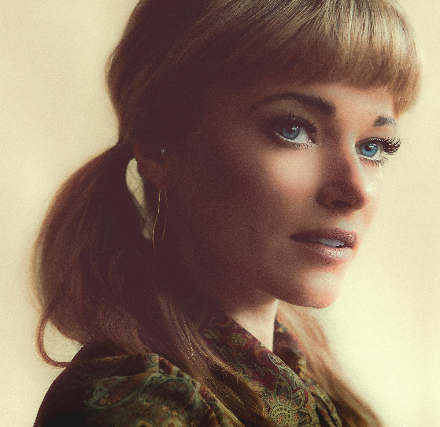
Alternative Folk
Leah Blevins
Leah Blevins
Alternative Folk
Imbued with the grit of vintage country music and the grace of gospel, Leah Blevins’ debut album is a scrapbook of sorts, a collage of feelings and memories from a decade spent working in the big city of Nashville while missing the small town she left behind. “It’s a timestamp of my twenties,” says the Sandy Hook, Kentucky, native. “Here are all the stories and all the experiences from that decade. Here are all the mixed emotions I’ve felt about things I’ve gone through and people I’ve met along the way.” First Time Feeling turns tribulations into what Blevins calls “bundles of triumphs,” which lend weight to her well-observed lyrics and gravity to her soulful vocals. “It’s about coming into womanhood, but it’s more than just a coming-of-age story. It’s me discovering that I’m capable of writing a song on my own. I’m capable of staying sober. I’m capable of all these things that once felt so far out of reach. Within those walls these songs had to be unapologetically honest.”
Or, as she puts it on the bluesy opener “Afraid,” “Have you ever been afraid, with nowhere to hide? Scared of nothing, but you’re running inside?” The growling guitars—played by friends and co-producers Paul Cauthen and Beau Bedford—sound like wolves at the door, as Blevins introduces the themes that drive this record: the reality that we’re all afraid of something, that we’re all running from it even though we’ll never get away from it. She summons those fears in songs that are both plainspoken and artful, which is apt for someone who considers herself a poet first, a singer second. “Back when I was seven or eight, I was just fascinated with words. Writing was always an outlet for me. It always felt like a release and a relief, almost like going to church.”
Church and music were the family business, especially on her mother’s side. Her grandparents, aunts, and uncles sang in a gospel group called the Harbor Masters, touring throughout Appalachia in the ‘70s and ‘80s. Once Leah and her twin sister Lacey were old enough, her Papaw taught them to sing harmony. “He would sit us down and we’d rehearse. ‘Okay, he’d tell us, this is the part where you come in.’ My grandparents were two of the best people on the earth, and I have so many fond memories of being with them.”
Blevins describes her parents as free spirits who nurtured their children’s musical talents. Her mother was a dental assistant and phlebotomist who cranked the Dixie Chicks loud; her father, a dentist and Elvis impersonator turned state politician, brought home instruments and equipment he found at estate sales and flea markets. But they split when the twins were young, so Leah and her sister shuttled back and forth between her parents’ houses, her grandparents’ farm, and her older sister’s home. She spent a lot of time singing in churches, but she also spent a lot of time around drugs and alcohol. “I’ve had a lot of misfortune in my life,” she says, “but I look at it now with peace in my spirit because I know my parents both went through a lot in their own lives.”
Blevins addresses them directly on “Magnolias,” with its sharp piano shuffle setting the scene as she sketches out the “picture-perfect Sunday morning” in the first verse: “Sister’s on a low note. Mama’s playing piano keys. Papaw, won’t you teach us that sweet harmony?” It’s a beautiful tableau, summed up perfectly on the chorus: “You are magnolias, roses on a chainlink fence.” While the music they sing together and the churches they visit promise redemption, Blevins understands that she must find her own way. “Leavin’ all that mess I made to burn behind me,” she sings, hitting those final syllables forcefully and soulfully, as though leaving makes her lighter and allows her to soar. It feels like a full, nuanced autobiography in just four minutes.
First Time Feeling is an album about leaving. Just as she had to leave Kentucky, she had to leave her beloved Nashville—a city that has nurtured and inspired her over the past ten years—to make this record. At the invitation of Cauthen, whom she met at a Van Morrison tribute concert in 2016, Blevins booked sessions at Modern Electric in Dallas. “I fell in love with Texas. I stayed at this old hotel in a room with no TV, so it was just me and my notepads and journals. It was totally quiet—a really beautiful time.”
In the studio she, Cauthen, and co-producer Bedford (of the Texas Gentlemen) recorded fast, using mostly first takes to the capture the spontaneity in her vocals, to preserve the intensity and immensity of the emotions in these songs. With its sanctified organ and Byrdsy riff, the title track recalls both the sensuality of Lucinda Williams and the everywoman perspective of Loretta Lynn, as Blevins sings about making the mundane feel momentous again: “Kiss me like you don’t know all my secrets, touch my body like you’ve never seen it.” “I was in a relationship with someone when I wrote that song, and I remembered wanting that feeling of young love, that excitement you had in the initial stages. Everybody wants that spark.”
Blevins leaves “First Time Feeling” open-ended: Finding that sensation will be difficult but not impossible. Even the darkest songs on this record hold out hope for a happy ending. “I want people to find something relatable within these ten songs. But for me they’re a reminder that all the pain that I went through—which isn’t that different from the pain every human goes through—it’s all mine. By making this album, I’ve taken it, I’ve owned that pain, I’ve made it mine, and I’ve wrapped it up with a bow on top.”
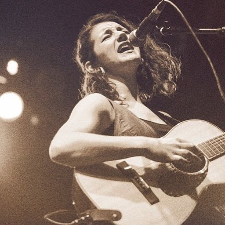
Country
Michaela Anne
Michaela Anne
Country
Upon releasing her 2014 album, Ease My Mind, singer-songwriter Michaela Anne garnered considerable acclaim for her introspective songwriting. The New York Times praised the “plain-spoken songs of romantic regret and small-town longing” and the Village Voice listed it among its Top 5 Country Albums of the year. Since then, however, this once-solitary diarist has transformed herself into a gregarious storyteller. Michaela Anne has discovered her inner extrovert.
Bright Lights and the Fame, recorded at Farmland Studio in Nashville, is full of sharp observations and easy wit, with several upbeat numbers tailor-made for the dance floor of the nearest honky-tonk. While there are gentler, more personal aspects to it that recall her earlier work,Bright Lights and the Fame displays a newfound brashness, starting with the album’s cover image, in which Michaela Anne sports a bedazzled denim outfit, a vintage find that’s perfect for catching the spotlight.
Having recently relocated from Brooklyn to Nashville, Michaela Anne took advantage of the many collaborative writing opportunities Nashville has to offer as she developed her repertoire for the album. She’d met the Grammy-nominated producer Dave Brainard (Brandy Clark, Jerrod Nieman) after opening for singer Clark at the Highline Ballroom in Manhattan and co-wrote two tracks, strikingly different in mood, with him: the heartbreak ballad “Everything I Couldn’t Be” and the up-tempo “Won’t Go Down,” a deceptively barroom-worthy number about the lines the narrator just won’t cross. Michaela Anne and Brainard had a lot in common: they both were raised in very disciplined military families but were drawn to the more freewheeling world of the musician. The song reflects that intriguing dichotomy in Michaela Anne’s own life: “It’s about being a bit of a square. I have boundaries. When I was a teenager, I was afraid of getting in trouble but I was attracted to the people who would. I always dated the bad boys. Dave and I were talking about treading this fine line. It’s a pretty autobiographical song.”
Their collaboration also illustrates the two sides of Bright Lights and the Fame. It’s pensive and tender on songs like the rueful “Easier Than Living” and the soul-baring “Star,” but upbeat and swinging on tunes like the two-stepping title track and the hell-raising “Liquor Up.” Explains Michaela Anne, “My intention was to be honest with my songwriting but not just in a super-reflective way. I wanted to try and show the fun, free-spirited side of it as well. We can have all of these different parts to us and still be one person. You can want to go out to a bar and not worry about anything, but also sit and think, how am I going to buy a house and raise a family? I want to have all these different things and to reconcile that, to be deeply intuitive and emotional and self-aware, but also to throw caution to the wind at some point and pursue what some might call irrational dreams.”
Bright Lights and the Fame was produced by Dan Knobler, a guitarist who’d often performed live with Michaela Anne. He had run the successful Mason Jar Music audio-video company in Brooklyn before opening his Gooseland Palace studio in Nashville, where the album was mixed. When it was time to start recording, Michaela Anne and her band mates worked together in one room, cutting basic tracks live at Farmland. That gives the album a feeling of immediacy, a congenial spontaneity, as if you’re in the bar while Michaela Anne and her cohorts play. But she spent considerable time doing pre-production, even heading out for a string of gigs with Knobler before they hit the studio: “Between shows we’d woodshed songs, going through my repertoire, taking about arrangements. We had so much prep before we got into the studio that it was a very natural progression. We had a real understanding of each other, a respectful rapport, and we were able to bring out the best in everyone.” She took an equally careful approach to overdubs, spending a couple of months to add more instrumentation and vocal harmonies.
Along with producer Knobler, a few more Brooklyn ex-pats join Michaela Anne on Bright Lights and the Fame. Punch Brother Noam Pikelney plays banjo on “Worrying Mind” and singer Kristin Andreassen co-wrote “Luisa.” Other guest stars include singers Corey Chisel and Erin Rae, and Rodney Crowell, arguably the progenitor of today’s Americana sound, lends his distinctive elder statesman’s voice to the rollicking “Luisa.”
In fact, Crowell was an accidental inspiration for “Liquor Up,” a good-natured exhortation to let the good times roll: “I had written most of that song in New York and I think it was the night before we started rehearsals, my husband was watching a video of Emmylou Harris and the Hot Band from, I think, 1978, when Rodney was in the band. They were playing ‘Feeling Single, Seeing Double’ and I was in my office and I could hear it from the living room. I said, I want a song that has that vibe. It’s a really fun song, and it has such interesting lyrical content. Plus, I’m obsessed with the movie Urban Cowboy; I’ve watched it a million times. I love the music and the dancing -- the two stepping. So I went back to my notebook, picked out that song and finished it. I wanted to have an original song in my set that would make me want to dance. And to write it from a female perspective, about just wanting to have fun tonight.”
Given her dad’s military service, Michaela Anne’s upbringing was an itinerant one. As she recalls, “Growing up, I felt like a chameleon. I wanted to quickly fit in wherever I could. I would look around and figure out whom I needed to be friends with to survive. And that informed my musical tastes, I liked everything. Depending on who I was hanging out with, that’s what I listened to. My dad loved country and so did I, but I also listened to pop and hip-hop. I was a typical kid of the nineties and the early oughts.” Coming on her own to New York City, she enrolled in the School of Jazz at the New School in Manhattan, thinking that jazz, which she loved, was where her talent lied. “But I very quickly realized that was not for me. “ A chance introduction to the Brooklyn-based folk-bluegrass guitarist Michael Daves, who tutored some of her fellow students as part of their curriculum, changed her musical path forever. “I went to his house and we would transcribe harmony parts from Bill Monroe records. He taught me bluegrass harmony and we would sing together. And then he helped me pick out my first guitar and he taught me how to play it.”
That’s the circuitous way Michaela Anne found her voice and her calling as a musician –and earned a diploma. And with her move to Nashville in 2014, she may have found a home.
“I was in New York for ten years and I still feel like a New Yorker in many ways,” Michaela Anne admits, “but a lot of things about New York were stressful for me. A lot of my more introspective, self-reflecting songs probably dominated my records because that was what was dominating my mind. Moving to Nashville was kind of a dream experience, almost like I was experiencing my younger days. It’s such a vibrant, intimate and creative community. People actually want to get together and play music together every day and write songs. You go out and see the same friends you saw the night before. You start to get to know people. You go to a local bar and see the songwriters who wrote George Strait’s biggest hits or you run into Gillian Welch and Dave Rawlings. You can’t help but be inspired and changed.”
Bright Lights and the Fame clearly reflects Michaela Anne’s experience in Music City: It welcomes you in. Her work is candid and convivial, heartfelt and fun, like a night on the town or an intimate conversation with a friend. You’re definitely going to want to hang out a while.
Michael Hill