TICKET SALES TERMINATED
Tickets are currently unavailable on TicketWeb

Follow us on Instagram @tractortavern
Cory Branan w/ Kasey Anderson *partially seated*
Sun, 15 Mar, 7:30 PM PDT
Doors open
7:00 PM PDT
Tractor
5213 Ballard Avenue NW, Seattle, WA 98107
TICKET SALES TERMINATED
Tickets are currently unavailable on TicketWeb
Event Information
Age Limit
21+

Music
Cory Branan
Cory Branan
Music
Over the last two decades Cory Branan has released five albums to much critical acclaim from NPR, Pitchfork and Rolling Stone among others, who called him, “A country boy with a punk-rock heart.” He has toured extensively, appearing on stages from Letterman and the Ryman to your town’s shittiest punk bar.
“...a career stacked with lonesome country anthems to life on the road, delivered in a voice that's pleasantly weathered.” - NPR
Branan’s songs have been covered by such artists as Tyler Childers, Frank Turner, and Dashboard Confessional. He has also collaborated with the likes of Jason Isbell, Laura Jane Grace (Against Me!), and Craig Finn (The Hold Steady) who have been included as featured guests on previous records. Branan has even been mentioned in the Lucero song, “Tears Don’t Matter Much” with the lyrics, “Cory Branan’s got an evil streak, and a way with words that’ll bring you to your knees.”
“It’s rad”, says Branan, “to have a new home with nice folks at Blue Èlan who’ve threatened to turn me loose to make my kind of weird American music, and I’m really looking forward to getting into the studio this fall and giving it hell.”
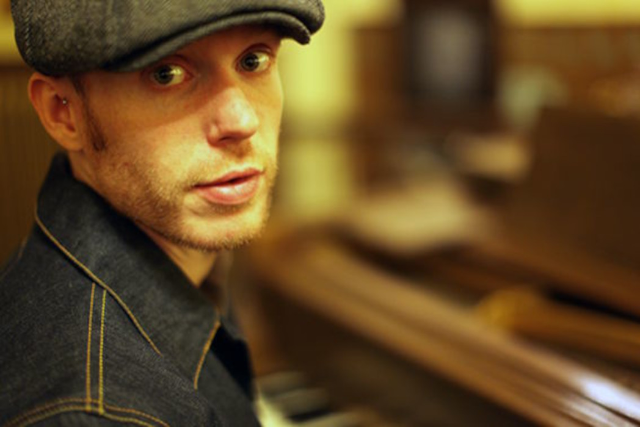
Pop
Kasey Anderson
Kasey Anderson
Pop
Kasey Anderson is set to release his final solo album, To the Places We Lived, on October 4, 2024 (Nervous Kid/In Music We Trust Records). This album marks a reflective conclusion to Anderson’s career, which has navigated the rock, Americana, and alt-country genres over the past two decades.
Anderson describes To the Places We Lived as “a sort of spiritual sequel” to his 2010 album Nowhere Nights. He explains, “I wrote To the Places We Lived to be my last record. I thought a lot about Nowhere Nights while we were making To the Places We Lived because this record picks up where Nowhere Nights left off; a sort of spiritual sequel, I suppose.” Reflecting on his decision to conclude his solo career, Anderson notes, “One of the privileges of being a writer is I get to decide how and when any given story ends. I’m glad I hung around long enough to finish this one.”
Hanif Abdurraqib’s reflection on Anderson’s work underscores the depth and nuance of this final album: “What I love about Kasey Anderson is what you will undoubtedly grow to love about Kasey Anderson as you sink into the world of this record. There is a world within To the Places We Lived, and the magic of that world is that it is already yours, in a spiritual sense, at least.” Abdurraqib emphasizes that Anderson's writing is characterized by its "deep specificity" and its ability to leave "a wide enough doorway for you to enter, to find something familiar."
The creation of the album involved a collaborative approach that reflects on the people who have been part of Anderson’s musical journey. Anderson recalls, “I thought about the time that had passed since Nowhere Nights and about everyone who had been woven into my life, musically and otherwise, during that time.” Abdurraqib praises this collaborative spirit, noting, “To the Places We Lived is not only a labor of love, but it’s a collective labor. Friends are present within the work. This, too, is why the album feels like it is an invitation. It sounds like a miracle long in the making, with a bunch of people also chasing the same miracle.”
The recording process began in early 2019 at Jackpot! Recording Studio in Portland. However, personal events and the COVID-19 pandemic led to delays. Anderson reflects, “When we finally did get back together again, the record no longer felt done to me and so, following Kurt’s line of thinking (or Andrew McKeag's, whatever), I decided to just keep making cool shit with my friends until it did feel done.” Anderson’s dedication to the project is evident as he notes, “I kept asking friends to play on the record, and they kept saying yes. We made room for everyone, and nothing felt crowded.” The album’s final touches were provided by Eric Ambel and Kurt Bloch, whom Anderson credits with “really sav[ing] the record; kind of took it away from me after I’d been tinkering with it for years, for way too long.”
The album integrates multiple artistic elements with an essay by Hanif Abdurraqib and a new poem by Kaveh Akbar, both included in the liner notes. Anderson shares, “I’m forever grateful, too, to Hanif Abdurraqib, who let me borrow a few lines for 'Leave an Echo' and then wrote an essay for this record’s liner notes. That essay sits alongside a new poem by Kaveh Akbar who, like Hanif, has helped me stay alive over the last several years. I don’t take that for granted, being alive.”
Abdurraqib’s essay in the liner notes adds depth to the understanding of the album: “Songs that are, in my mind, several short stories that braid together to form a joyfully cohesive collection, echoes of a life lived, and a life to come.” He reflects on the concept of home and memory, noting, “Home is not only where you’ve been, but it’s also where you stop moving, temporarily or permanently. Home is something that happens to you, at first. The thing you don’t choose and learn to love or learn to leave.”
Anderson’s career includes a range of solo recordings and band efforts. His solo discography is: Dead Roses (2004), Reckoning (2007), Nowhere Nights (2010), Daytrotter Sessions (2021), and To the Places We Lived (2024). His work with The Honkies includes two records: Heart of a Dog (2011) and Let the Bloody Moon Rise (2012). Hawks & Doves did one record, From a White Hotel (2018). Anderson observes, “I said I wrote To the Places We Lived to be my last record, and it is. That’s another reason I wanted my own name on it. I thought a lot about Nowhere Nights while we were making To the Places We Lived because this record picks up where Nowhere Nights left off; a sort of spiritual sequel, I suppose. That’s my voice, those two records. That’s my life.”
As he concludes his solo career, Anderson will undertake a series of final tour dates this fall and next spring, offering one last opportunity for fans to experience his music live. The album and tour provide a reflective close to a significant chapter in Anderson’s career, capturing “the reality of being seen by someone. Being accounted for in a way that involves someone pointing, waving, or giving a nod,” as Abdurraqib insightfully puts it.