TICKET SALES TERMINATED
Tickets are currently unavailable on TicketWeb
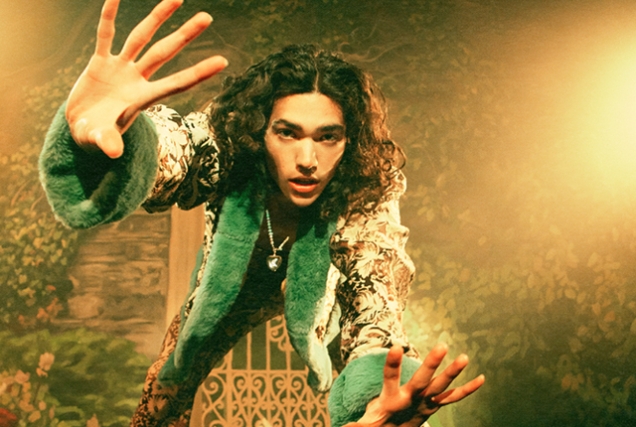
Live Nation presents...
Conan Gray Superache Tour
Sat, 22 Oct, 8:00 PM PDT
Doors open
7:00 PM PDT
SOMA - Mainstage
3350 Sports Arena Blvd, San Diego, CA 92110
TICKET SALES TERMINATED
Tickets are currently unavailable on TicketWeb
Description
Conan Gray
Superache Tour
Special Guests
Baby Queen
Conan Gray Q&A Package
One general admission ticket
Early entry into the venue
Access to an intimate, moderated Q&A with Conan Gray
Limited Edition Superache candle with lyrics chosen by Conan (exclusive to VIP only!)
Custom Footnote notebook
‘Movies’ commemorative bookmark
Official VIP laminate; autographed by Conan Gray
Limited availability
Superache VIP Package
One general admission ticket
Early entry into the venue
Limited Edition Superache candle with lyrics chosen by Conan (exclusive to VIP only!)
Custom Footnote notebook
‘Movies’ commemorative bookmark
Official VIP laminate
Limited availability
Package Details subject to change**
Event Information
Age Limit
All Ages
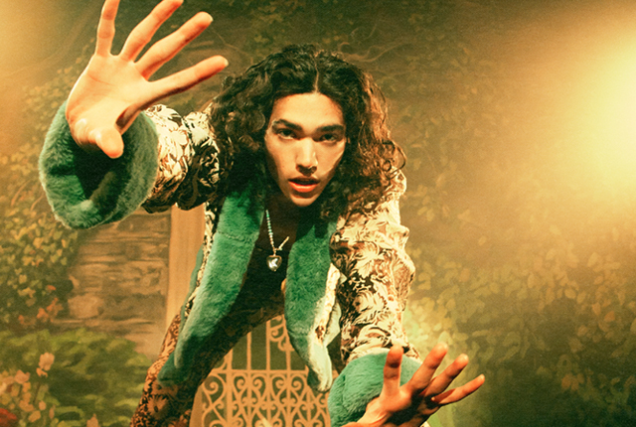
Pop
Conan Gray
Conan Gray
Pop
“I’m a professional overthinker,” says nineteen-year-old Conan Gray. “As a songwriter, I’m always thinking all the time.”
Growing up in the small-town retirement community of Georgetown, Texas, Conan Gray had a lot of time on his hands to think. So, at age twelve, he began writing songs to kill some time. “I think every small-town kid is just really bored,” says Conan. “And I was just a lonely, bored kid.”
Influenced by artists like The Dixie Chicks, Adele, and Lorde, Conan began cultivating what would later become his unique style of dreamy alternative pop. Bedroom pop tinged with raw, high school nostalgia - songs about kids grappling with regular life.
“Hearing the Lorde album was a cataclysmic experience for me,” says Conan. “It was the first time I’d heard pop music that was about normal suburban life.”
As Conan navigated middle school and high school with little money and a rocky home life, he poured his energy into his songwriting and cultivated an online community along the way. No matter how hard things were, he always found that the internet was an outlet for his creative expression, and a place where he could find larger community and support.
Conan’s senior year got especially hard when he was kicked out of his parents’ house. but it was also at that time that he caught the attention of LA based managers, Colette Patnaude and Eddie Wintle (Expand Entertainment), who reached out after watching his videos and hearing his original music on YouTube. In spring of his senior year, while living on friends’ couches, he wrote a song called “Idle Town” as an ode to his small town. Recorded in his bedroom on a cheap mic taped to a lamp, and produced on garageband, Conan shot the music video on a tripod while driving through the streets of the local retirement community. Almost immediately, “Idle Town” began to gain traction on Youtube, racking up over 10 million views and over 13 million streams on Spotify. Later that year, Conan was accepted into UCLA, moved to Los Angeles, and signed a record label deal with Republic Records. ‘“Idle Town” is a love song for my hometown and for my friends,” says Conan. “And turned out to be my ticket out.”
In the midst of the whirlwind, Conan linked up with producer Dan Nigro (Carly Rae Jepsen, Sky Ferreira, Kylie Minogue) to add some final touches to the songs he had self-written and recorded demos of back in Texas. The result was his debut EP, released in November, 2018, which received widespread critical acclaim from The Fader, Billboard, Ones to Watch, and landed him a debut performance on Late Night with Seth Meyers.
His lead single off the EP, “Generation Why”, is the perfect introduction to Conan Gray and his raw, genuine approach to songwriting - the song is a commentary on the way older generations and media have unfairly depicted his peers as being chronically selfish, sad, and lazy. With a sarcastic tone, a common theme throughout the EP, Conan juxtaposes the negativity projected by those older generations with a light-hearted approach as a way of shedding light on his generation’s resilience and positivity.
Whether he’s singing about the intensity of teenage emotion in upbeat songs like “Crush Culture” or in sad ones like “Lookalike,” Conan is fiercely honest, and offers a refreshing perspective.
“I want it to feel like a big bedroom dance party,” says Conan. “Like a high school prom - familiar, nostalgic.”
His secret genius is his undeniable knack for writing relatable music. Yes, for his generation, but also well beyond. Even if it’s been 30 years since high school, his lyrics ring timelessly true for anyone who listens. Everything Conan does - on social media, in conversation, or through songwriting - carries this exact air of sentimental value.
Even a song like “Greek God,” written about the popular mean kids, glistens in its ability to comment on a more serious topic like bullying, while maintaining its positive undertones.
“There are people who seem larger than life, who are so mean because they can get away with it. They hurt people because they are hurting” says Conan. “But once you’re older and wiser, they fade into nothing and just become stories from high school, just folklore.”
Conan’s journey hasn’t been an easy one, but through it all he remains a force for optimism for his “Generation Why” - a generation that isn’t afraid to ask the hard questions, to stick up for one another, and to build relationships outside the norm. His followers, fans, online friends, hometown friends - he speaks of them all as family.
And if there’s one thing Conan hopes to achieve for that family, it’s is to give kids who are struggling or hurting the hope that t there are people who care, and that things are going to be ok.
“I didn’t have a home or money, but I knew that I was going to be ok,” says Conan. “I want people to know that kids from small towns can do great things.”
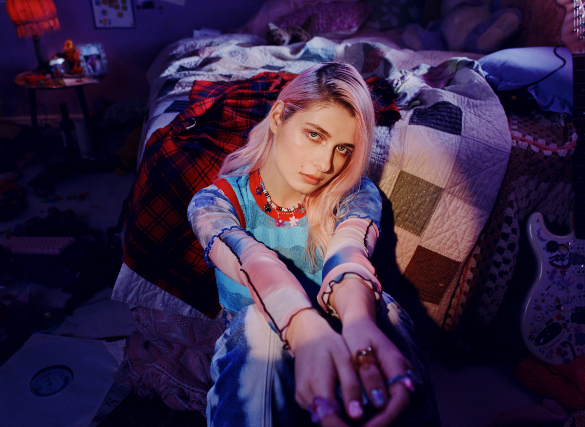
Ambient Pop
Baby Queen
Baby Queen
Ambient Pop
Baby Queen has seen some shit. Since she moved to London from South Africa aged 18, the musician (real name Bella Latham) has lived in boats on Regents Canal, gotten messy at raucous house parties, and spent a lot of time looking out into the city with a sense of sharp-edged cynicism.
For much of her teenage years and early twenties, she used all of this to write alternative pop songs that transformed her into her genre’s reigning star; a fiery totem for a generation falling out of love with social media, the pressures of adhering to an “ideal” body image, and adult responsibilities. But now, Baby Queen finds herself growing up too, learning how to grapple with the realities of leaving angst and adolescence behind. She’s not quite ready to fully let go, though: “I want to be a reprobate again,” she says.
As the musician enters a new era, having spent the best part of the 2020s taking over London’s anarchic pop scene, she’s leaning into that feral mood to make new art. At the same time, she’s discovering the more grounded and introspective side of herself too, leading to the creation of some of the most pure, excellent and affecting music of her life so far.
Blending her pop hook tendencies with the punkish aggression she’s made her own, her new single “Dream Girl” is the perfect, compromise-free meeting of these two sides of herself. An achingly honest song, it chronicles a kind of unrequited love she felt for a woman who was in a relationship with a man. She wrote it a few years ago – lovelorn and pining for someone out of reach – on the same trip that inspired The Yearbook single “Dover Beach”. But back then, she didn’t feel ready to release it. “I actually had, like, heart palpitations over it,” Baby Queen says. For one, such an open expression of sapphic love felt dangerous; but it was also an unabashed pop song, antithetical to the sound she was trying to put forth. Now though, she’s learned that leaning into either of these sides of herself doesn't have to be a personal betrayal. “When I first started making music, I was like, ‘No one can know that I'm bisexual. I have to keep it a secret’.” She shrugs. “I just don’t give a fuck anymore.”
It’s a personal progression that ties in perfectly with a moment that marked a new movement in Baby Queen’s career. In the early summer of 2022 – just before she joined pop behemoth Olivia Rodrigo on her UK tour – a Netflix show named Heartstopper had an unexpected break-out moment. A queer TV series based on the blossoming relationship between two high school boys in England, it became a global hit. To date, it’s racked up over 53 million watch hours; two more seasons are on the way, the next one dropping in August. But Baby Queen was there when it was a modest prospect for the streaming giant. “I remember being invited into their offices to watch the first three episodes, and they were like, ‘Oh, do you want to make a song for this?’.” She wrote the wistful and romantic track “Colours of You” for the soundtrack, while her own tracks, “Want Me”, “Dover Beach” and “Buzzkill”, were synced for it. “At the time it was so cool, but you have no idea about the size or the weight of what you're signing up to.”
No one did really, but it made stars of its cast, and Baby Queen’s fanbase widened, with a new gaggle of queer fans entering her oeuvre. “So many kids said ‘Colours of You’ made them come out to their parents,” she says. “I would never have imagined that for myself. The music means so much to them, you know? They really feel like it's their stories.”
There is this deep, introspective burrowing that Baby Queen is doing in pop songs that traditionally don’t warrant it. Big, mind-bendingly good choruses and hooks; euphoric production – the word of an artist in full command of her sound. If the inspirations have shifted somewhat, her output has always remained staunchly Baby Queen. You hear a song and instantly know who made it.
It all filters back to a childhood spent seeking refuge in the songs of Taylor Swift. Growing up in Durban, South Africa, Taylor’s music was a refuge from the conservative community around Baby Queen. She began playing guitar and piano, enlightening herself to a life in which she could not only listen to music but make it, and the subsequent lo-fi demos she recorded were sent to local radio stations. She was so dogged and relentless that, when she asked to move to London and stay with her aunt and uncle, her parents accepted.
She joined rock bands and made herself a mainstay presence in all the right music circles when she arrived, dropping demos at the doors of major labels and working in Rough Trade. Eventually, she landed a creative collaborator who believed in her message, Ed King. (They still work on everything together today.) They made the songs that would put Baby Queen on the map – she was signed to Polydor in 2020.
Songs like “Internet Religion” and “Buzzkill” were her career’s “introductory essay” she called it; part of the Medicine EP that acted as a tonic for the torrid state of the world we are all forced to live in. But by shaking off all that bullshit, she found beneath it a person willing to speak more openly about how she felt. The Yearbook mixtape, released in 2021, did just that: her version of an American coming-of-age movie in sonic form.
But time passes, and from it, new ideas bloom. In the process of making the music she’s creating right now, she’s learned things. “I had to grow up to write this all out,” Baby Queen says. Now, she’s ready for you to hear it.