TICKET SALES TERMINATED
Tickets are currently unavailable on TicketWeb
The Crocodile Presents:
Cate Le BonMega Bog
Thu, 17 Feb, 8:00 PM PST
The Crocodile
2505 1st Ave, Seattle, WA 98121
TICKET SALES TERMINATED
Tickets are currently unavailable on TicketWeb
Event Information
Age Limit
21+
Refund Policy
All sales are final. There are no refunds unless the event is cancelled or postponed
Alternative Folk
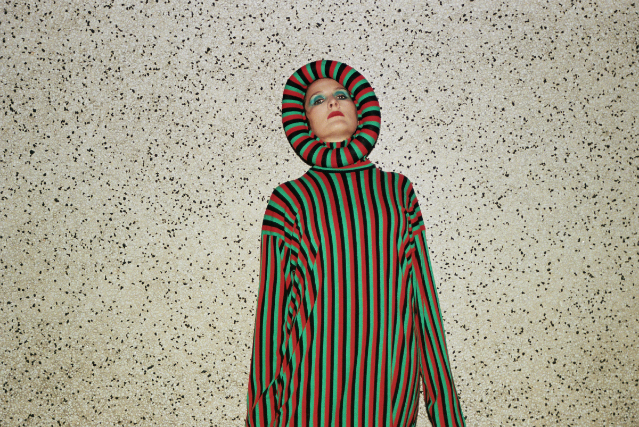
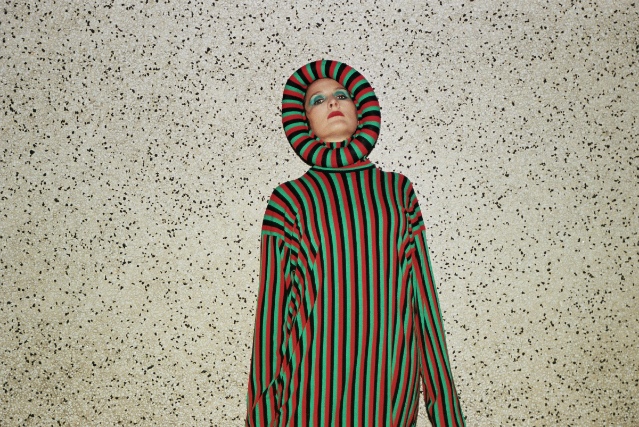
Cate Le Bon
Cate Le Bon
Alternative Folk
Pompeii, Cate Le Bon’s sixth full-length studio album and the follow up to 2019’s Mercury-nominated Reward, bears a storied title summoning apocalypse, but the metaphor eclipses any “dissection of immediacy,” says Le Bon. Not to downplay her nod to disorientation induced by double catastrophe — global pandemic plus climate emergency’s colliding eco-traumas resonate all too eerily. “What would be your last gesture?” she asks. But just as Vesuvius remains active, Pompeii reaches past the current crises to tap into what Le Bon calls “an economy of time warp” where life roils, bubbles, wrinkles, melts, hardens, and reconfigures unpredictably, like lava—or sound, rather. Like she says in the opener, “Dirt on the Bed,” Sound doesn’t go away / In habitual silence / It reinvents the surface / Of everything you touch.
Pompeii is sonically minimal in parts, and its lyrics jog between self-reflection and direct address. Vulnerability, although “obscured,” challenges Le Bon’s tendencies towards irony. Written primarily on bass and composed entirely alone in an “uninterrupted vacuum,” Le Bon plays every instrument (except drums and saxophones) and recorded the album largely by herself with long-term collaborator and co-producer Samur Khouja in Cardiff, Wales. Enforced time and space pushed boundaries, leading to an even more extreme version of Le Bon's studio process – as exits were sealed, she granted herself “permission to annihilate identity.” “Assumptions were destroyed, and nothing was rejected” as her punk assessments of existence emerged.
Enter Le Bon’s signature aesthetic paradox: songs built for Now miraculously germinate from her interests in antiquity, philosophy, architecture, and divinity’s modalities. Unhinged opulence rests in sonic deconstruction that finds coherence in pop structures, and her narrativity favors slippage away from meaning. In “Remembering Me,” she sings: In the classical rewrite / I wore the heat like / A hundred birthday cakes / Under one sun. Reconstituted meltdowns, eloquently expressed. This mirrors what she says about the creative process: “as a changeable element, it’s sometimes the only point of control… a circuit breaker.” She’s for sure enlightened, or at least more highly evolved than the rest of us. Hear the last stanza on the album closer, “Wheel”: I do not think that you love yourself / I’d take you back to school / And teach you right / How to want a life / But, it takes more time than you’d tender. Reprimanding herself or a loved one, no matter: it’s an end note about learning how to love, which takes a lifetime and is more urgent than ever.
To leverage visionary control, Le Bon invented twisted types of discipline into her absurdist decision making. Primary goals in this project were to mimic the “religious” sensibility in one of Tim Presley’s paintings, which hung on the studio wall as a meditative image and was reproduced as a portrait of Le Bon for Pompeii’s cover. Fist across the heart, stalwart and saintly: how to make “music that sounds like a painting?” Cate asked herself. Enter piles of Pompeii’s signature synths made on favourites such as the Yamaha DX7, amongst others; basslines inspired by 1980s Japanese city pop, designed to bring joyfulness and abandonment; vocal arrangements that add memorable depth to the melodic fabric of each song; long-term collaborator Stella Mozgawa’s “jazz-thinking” percussion patched in from quarantined Australia; and Khouja’s encouraging presence.
The songs of Pompeii feel suspended in time, both of the moment and instant but reactionary and Dada-esque in their insistence to be playful, satirical, and surreal. From the spirited, strutting bass fretwork of “Moderation”, to the sax-swagger of “Running Away”; a tale exquisite in nature but ultimately doomed (The fountain that empties the world / Too beautiful to hold), escapism lives as a foil to the outside world. Pompeii’s audacious tribute to memory, compassion, and mortal salience is here to stay.
The past few years have seen Le Bon emerge as a much lauded and sought-after collaborator, producing albums for contemporaries such as Deerhunter (Why Hasn’t Everything Already Disappeared?), John Grant (Boy From Michigan), and forthcoming albums from both Devendra Banhart and H. Hawkline. She’s not so much a gun for hire as a multi-faceted artist and producer who can both steer the ship and tap into a collective mindset; in 2019, she joined John Cale for a three-night live stretch in Paris, and 2021 will see a bass appearance on the track "If I Don't Hear from You Tonight" from Courtney Barnett's Things Take Time, Take Time. As Bradford Cox aptly notes about Le Bon, "there are artists who look inwards or outwards, and then there are the very rare ones who transcend either location."
Dream Pop
Mega Bog
Mega Bog
Dream Pop
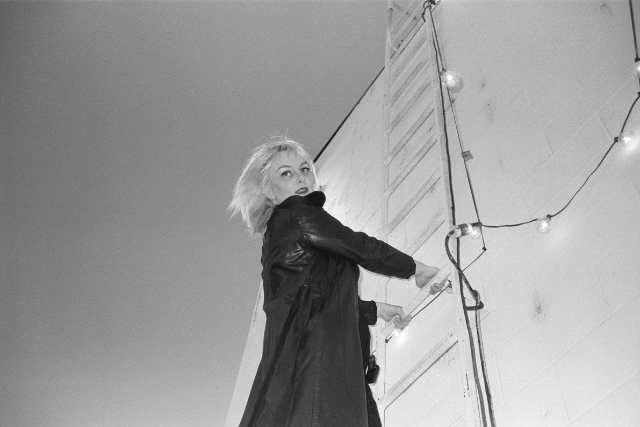
On Life, and Another, Mega Bog (the world-inhabiting moniker of song-animator Erin Birgy) tends a succulent garden full of plants that the unwitting passerby might mistakenly perceive as extraterrestrial, but which are in fact very much of this Earth. Departing from the humid Holodeck spider plant nursery of previous record Dolphine (2019), Mega Bog’s new album brings us back to our home planet, into the rarefied air pressure of a dried-up desert valley where its fourteen songs were written and scattered like stones in the landscape. But true to Birgy’s alchemical writing practice, these bright stones simply refuse to blend into their arid environment, each one a precious gem chiseled by the anti-capitalist geologist’s hammer to reveal the impossible, dazzling life that inheres under the dusty exteriors of both the northern Nevada of her youth and the rural New Mexico of the album’s birth.
Cohabiting with Life, and Another’s co-producer, engineer, and percussionist James Krivchenia (Big Thief) in a small cabin near the Rio Grande off of NM State Route 68, Birgy found herself often alone, suspended between their separate touring schedules. In these silent time passages, Birgy experienced a complete loss of self amid the expanse. Frequently thinking about death in the middle of nowhere opened a familiar black hole of troubling projections, and any desire to find freedom or remain positive continued to fold back into self-destructive thought and fear. Strange long days were spent pacing the property with a rake, befriending ants and spiders and struggling with the instinct to poison them if they ventured into the home. Comfort was occasionally found in internet reruns of Frasier and Star Trek Deep Space 9, texts on the ethics of terraforming and space colonization, and Ken Liu’s Remembrance of Earth’s Past trilogy. Over time, a budding interest in mindfulness, attachment theory, Dialectical Behavior Therapy, and rage gave way to new productive brain processes. These creative juices followed Birgy on the road and into subsequent lonely bedrooms as the songs continued to flow. New, northern landscapes, like the woods and rivers outside of Seattle, Washington, provided further inspiration during odd sublets in the area. Dark as everything may actually be, Birgy always manages to stay with trouble and conjure the extraordinary resulting music.