Reaction Presents
Bodysnatcher: Hell Is Here, Hell Is Home Tour
Tue, 17 Nov, 7:00 PM CST
Doors open
6:00 PM CST
The Hall
721 West 9th Street, Little Rock, AR 72201
Description
All tickets on the floor & mezzanine are general admission, standing room only. Limited seating will be available for mezzanine ticket holders on a first come, first served basis. The mezzanine is 21+ ONLY.
--
Ticket prices include all fees and taxes. Tickets purchased at the box office have reduced fees.
The Box Office at The Hall is open every Friday from 10am-4pm.
Address: 721 W 9th St, Little Rock, AR 72201
--
PLEASE NOTE - The Hall is a cashless venue. Only debit or credit cards are accepted at our bars, box office and guest services window. Please plan accordingly.
PLEASE RIDESHARE - Parking is limited around the venue. We strongly recommend using rideshare apps like Uber or Lyft for transportation to and from the venue. There is a designated rideshare pick up / drop off location near the entrance for your convenience.
Need an Access Code? Sign up for our newsletter to get new show announcements, exclusive presale codes, rental discounts and more. Sign up HERE.
*Presale codes are usually sent out on Thursdays at 10am as part of our weekly newsletter.
Event Information
Age Limit
All Ages
Refund Policy
No refunds - no exceptions.
Death Metal/Black Metal
Bodysnatcher
Bodysnatcher
Death Metal/Black Metal
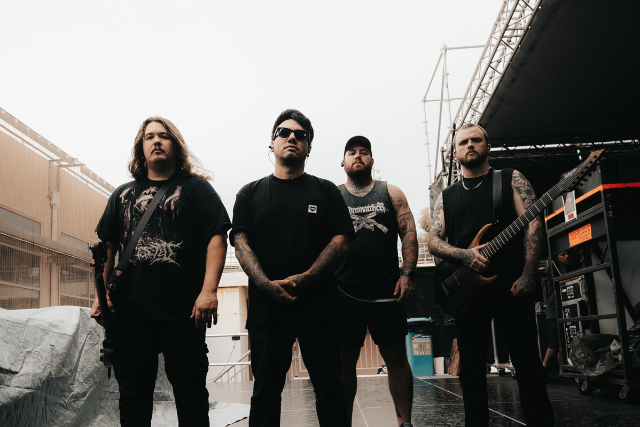
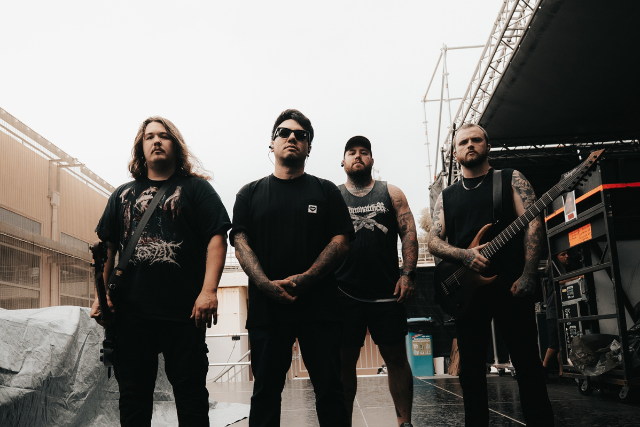
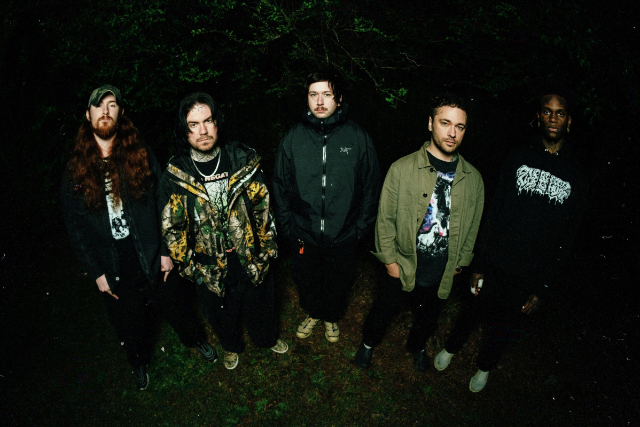
Hell Is Here, Hell Is Home is the fourth full-length from Melbourne, FL deathcore outfit Bodysnatcher. It follows 2024’s brutal Will Putney-produced EP, Vile Conduct and serves up another powerful barrage of uncompromising deathcore across 10 incredible tracks that see the four-piece—Kyle Medina (vocals), Kyle Carter (guitar), Kyle Shope (bass) and Chris Whited (drums)—turn the catharsis up as loud and as visceral as it will go.
Of course, that’s nothing new for the band. If you’ve heard Vile Conduct, or any of the three albums that preceded it—2017’s Death of Me, 2020’s The Heavy Void or 2022’s Bleed-Abide—you’ll know this is a band who have always pitted themselves against personal tragedy, who have fought on individual levels against the dark depths of a despair (often inspired by their own experiences of death). Hell Is Here, Hell Is Home is no less harrowing.
“The band has always had roots lyrically in themes of betrayal, overcoming hardship, and moving on from things that happen in life and how to cope with them,” explains Medina. “Ever since the inception of Bodysnatcher, that was the theme. I do think, though, as the band has matured and we as people have grown, so have the ways to dig into the themes more. With more life experience, there are more things to draw from.”
Yet while this is still a viciously personal record, Hell Is Here, Hell Is Home is also a dark reflection of the world at large, and its current dystopia. It doesn’t just dwell on what’s happening, though. It lashes out at the way things are with a terrible, violent rage.
“I’d say a lot of today’s world plays into this album,” says Whited. “We really feel that listeners across the globe can find something to connect with in these songs. There’s a strong sense of retaliation this time around; it feels like choosing violence, fighting back against a world that feels morally lost right now.“
That manifests itself from the very beginning of this record, from the opener “The Maker.” A sheer assault of rage, noise, and skull-crushing riffs, it multiplies Bodysnatcher’s intensity to a degree that, even by their already intense standards, is off the charts. “'The Maker' is a raw, visceral song,” says Shope. “Bodysnatcher has always been known for unrelenting heaviness, but ‘The Maker’ seems to be an even darker, more intense direction. Revenge and retaliation are themes we often use in our lyrics, however ‘The Maker’ is a more direct approach. This song is as heavy as we could make it, and I know the energy is going to be electric when it is played live.
That direct darkness continues throughout the entirety of the next nine songs, from the unforgiving vengeance of “Writhe And Coil” and “Violent Obsession” through to the blistering defiance of “Blade Between The Teeth” and “Survive Or Die.” The latter features vocals from Scott Vogel, the frontman of hardcore legends Terror, a band very close to Bodysnatcher’s blackened heart. It follows the previous impressive cameo on Vile Conduct by Hatebreed’s Jamey Jasta.
“Scott Vogel is such a pivotal and legendary voice in hardcore and heavy music,” says Medina. “Many of us in the band grew up listening to Terror, so having him appear on a song is huge for us in terms of morale and making the album feel even stronger. We had the idea when we were thinking of another voice come from the hardcore side of where the band draws from; we had Jasta on the previous EP, so we thought of another that is of equal stature, and were able to make it happen.”
Vogel’s appearance shows just how much of a mark Bodysnatcher have made on the scene. But it’s not distracting them from their intent and purpose. In fact, that only seems to have been refined as time has passed. One of the most obvious examples of that here is “May Your Memory Rot”, an intensely personal song full of spite, venom and trauma about somebody who was very close to Whited. “That song was written the first night we got to the studio,” says the drummer. “It was Father’s Day, which has a lot of baggage for me. I was thinking about my nephew, who lost both parents when my sister overdosed and their gang member father was murdered, and is now being raised by my mom, and my nieces, who lost their dad when my brother passed.
That spiral eventually led me to someone who is, without question, one of the worst people I’ve ever known. I was lying in bed angry, so I started writing. That song is pure rage—a very direct fuck you to Mike Whited.” Yet—like the rest of this record—it’s rage with a purpose, rage full of intention, rage with hope still attached to it. Because even though it was born out of incredibly difficult circumstances, both personal and universal, Bodysnatcher’s hope is that people listening to it can find some kind of solace in it alongside all the anger and the rage.
“I won’t lie,” says Carter. “This was a hard album to put together. Every writing session was met with dead ends for months, but we were able to come out the other side with 15 demos and ended with 10 of the best songs we’ve ever made. The album is based around revenge and not bending over for people. I hope others can hear these songs and come to the same realizations we have while putting this together. Life is too short to let people walk on you or take advantage of you. Humans are monsters who betray, abuse, neglect, murder, and sometimes it feels like we’re too comfortable in the Hell that we’re in.”
Heavy Metal
Gideon
Gideon
Heavy Metal
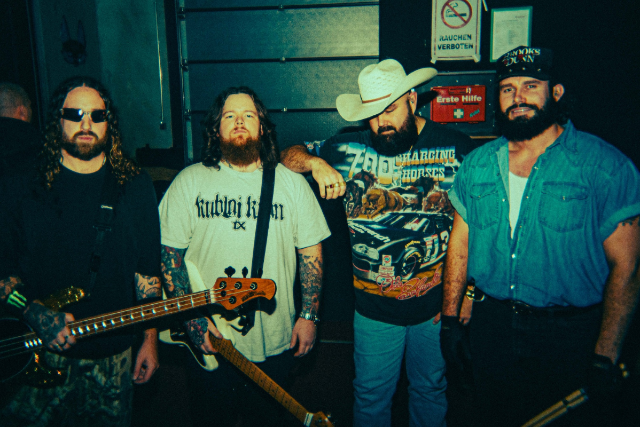
Since forming in 2008 in Tuscaloosa, AL, Gideon had been making a name for themselves by defying convention, creating their own distinct sound and never settling for anything that was just run of the mill or ordinary. Rather, the band—completed today by founding member and drummer Jake Smelley, vocalist Daniel McWhorter, guitarist/vocalist Tyler Riley and bassist Caleb DeRusha—kept stretching the boundaries of their sound to great acclaim and to increasing commercial success. 2011’s debut album, Costs, established them as powerhouse of the metalcore scene, but that’s something the band simultaneously pushed away from it, incorporating elements of melodic hardcore and hardcore punk into the fold of their songs, but always with an underlying sense of positivity and defiance. Impressively prolific, the band released their next two full-lengths, Milestone and Calloused, on Facedown Records in 2012 and 2014 respectively, before signing to Equal Vision Records.
Their first album for EVR was 2017’s Cold, followed by Out Of Control in 2019, a record that deservedly saw the band’s profile rising steadily. And then, of course, the pandemic hit. And all that hard work and dedication, and the progress they’d made vanished in an instant. In fact, Gideon were mid-tour on that album cycle when touring came grinding to a halt and forced the band to return home to Alabama, frustrated and disillusioned with a situation that—like most touring bands—thought might mean the end of what they do. Thankfully, it didn’t, which brings us to Gideon’s 6th full-length studio album. Recorded/mixed/mastered by Randy Lebouef at Graphic Nature Audio, MORE POWER. MORE PAIN. is a brutally intense burst of violent noise that both nods to the band’s past, musically and thematically, but also establishes itself in its own context.
“We had to walk through fire and break down walls to get to this chapter” says Smelley, “We’re done explaining why we are the way we are. This album is for the misunderstood, the dreamers, the broken, the damned, the ones that refuse to fall in line. When everything and everyone tells you to give up, your mind can take you to dark places. We came to realize that there was strength in that. Instead of letting it consume us, we fought like hell.”
One of the best examples of that is “Too Much Is Never Enough”, the first single from the album. A pummeling blast of vicious, metal-tinged hardcore, it’s full of acerbic guitars and chugging riffs, over which McWhorter viciously spits ‘Nothing was given to me, that shit was earned the hard way.’ It’s a line that sums up not just the song, but also much of the album as well—and the underlying positivity that underpins all of it.
“That song really encapsulates what the theme of the record is,” says Riley. “It talks about how much work it takes to stay ahead. Especially when it feels like there are people around you that don’t believe in you, and that may not believe you’ve earned your place, even though the pain of sacrifice is felt deeply every day—and how you have to let that fuel you. It's about how much shit we took just to get here, but trying to embrace that process as a positive instead of a negative—that no matter how much is coming at us and distorting our vision, we’re still looking at goals beyond it, and letting the pain fuel us to the finish line.”
“You can go through all our albums,” adds Smelley, “and see the chapters of pain and the other things we've dealt with through the years. But where MORE POWER. MORE PAIN came from was us genuinely understanding that in order to gain more control over our lives, we have to be willing to bite the bullet and go through whatever it takes to get there.”
That defiance, however, isn’t just present in that one song. It’s a running theme throughout the whole album, from the punishing first song proper “Locked Out Of Heaven” through to the bruising final song proper “Back To Basics”. On both, the band unleash their full unrelenting power. In between, the title track is an intense surge of sacrifice and determination on which you can literally feel the band living out its lyrics, “Take Off” continues the band’s uncanny knack for subverting the genre by incorporating turntable scratching into its folds, while electronic soundscapes and almost psychedelic guitars underpin the harsh burst of noise that is “If You Love Me, Let Me Go”. And then there’s “I Will Carry You”, and which—despite the euphoria of its guitar lines and the ferocity of both its guitars and vocals—is drenched with sadness at the loss of a close friend who passed away when the band were locked away—literally, because of Covid—in the studio making this record.
“A week before we went to the studio,” says Smelley, “I had seen my friend Sam at a restaurant. We sat in the parking lot afterwards and we talked for what must have been three hours. It was one of those just like 'Man, I'm so glad you're here right now.' He was expressing to me the pain that he was dealing with being a musician and not knowing how to get it off the ground. We even talked about starting an outlaw country band and writing some music together after I came back from the studio, which I couldn’t wait to do because he's such a light to be around. But the day we got to the studio my girlfriend called me and told me that he'd been in a car wreck and he'd passed away the night before. He was just a really good guy, so I wrote “I Will Carry You” for him. I've never been in the studio and written about some traumatic experience like as it's happening, but the emotions were very real and raw as could be. There are a lot of references in that song to Sam--I didn't write it so much for me as for Sam's other friends, as an anthem to remember him by.”
Like the other songs on this album, and in typical Gideon style, “I Will Carry You” doesn’t dwell on the darkness. It fully absorbs it, and then transcends it, seeking out some semblance of hope, light and comfort. That’s a pattern accentuated by the samples that punctuate this album. Taken from an interview with a singer the band wish to leave mysterious for now, these snippets resonate with the themes running through this album, and complement its songs, which in turn enhance the potency of the clips. It all serves to create a powerful and cohesive whole that celebrates the past while looking forward to the future. That spirit is captured in the final track, another excerpt from that interview but one backed with weird electronic noises that turn the music and the emotion of everything that came before on its head. The contrast only serves to make the whole album more powerful, while at the same time showcasing how it redefines who and what and why Gideon are. The result is the most uncompromising expression of the band’s existence to date, and probably their most important message to date.
“If you want to move forward in your life and if you want to take control of your life,” says Riley, “you really have to determine what direction you're going. That comes along with a lot of a lot of sacrifice and a lot of pain. This whole album is an acknowledgment of the suffering and pain that sometimes has to just happen to achieve great things in your life, or things that you want to be great. It's a very real trade-off, you know? And as a band, Gideon isn’t going anywhere. We won’t compromise on quality ever moving forward. We're just going to continue to build on what we've built so far.”
Metal
PSYCHO-FRAME
PSYCHO-FRAME
Metal
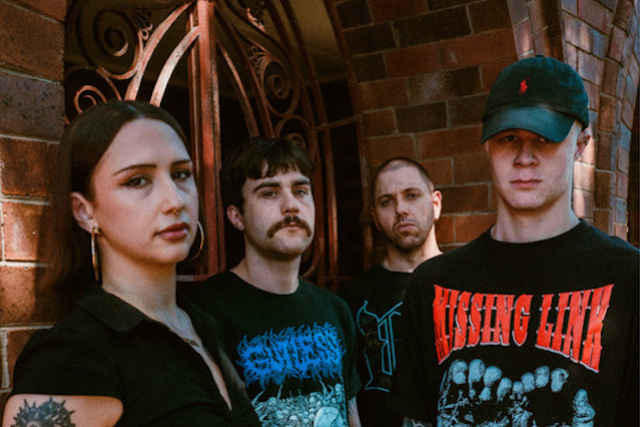
PSYCHO-FRAME delivers a raw, unfiltered take on modern deathcore with their full-length debut, SALVATION LAUGHS IN THE FACE OF A GRIEVING MOTHER [SHARPTONE]. Drawing influence from classic American death metal while channeling a chaotic, present-day urgency, the band’s sound is as deliberate as it is aggressive—built on tightly executed riffs, relentless drumming, and vocals that refuse to hold anything back.
What began as a casual collaboration between guitarist/producer Hunter Young and vocalist Mike Sugars quickly grew into something more serious. “Hunter and I were both getting off tours from our respective bands, playing games together a lot, and just got to talking,” Mike recalls. “The more that happened the more we said, ‘Let’s make something that we actually want to hear.’” The result was a series of early releases that gained fast traction, including 24 HOURS LEFT, REMOTE GOD SEEKER, and AUTOMATIC DEATH PROTOCOL, all of which helped land the band among Revolver’s “Top 5 Deathcore Bands Right Now.”
As the music evolved, so did the lineup—welcoming Colter Cuthbertson on vocals alongside Sugars, Aiden “Dave” Bessent on guitar and Leo McClain on drums. Together, they recorded the new album throughout 2024, with a focus on clarity, heaviness, and a refusal to overcomplicate the message.
“This album feels like accomplishing everything we wanted to achieve sonically since the band’s inception just a short couple years ago,” Mike says. “I’m confident that anyone who’s been with us since the beginning, or newcomers that listen to the back catalogue, will see that we’ve honed in on our vision for P-F.”
The vision is clear: make a record that hits hard and says exactly what it means. “They’re my favorite songs we’ve done yet,” Mike continues. “There’s a more baseline sense of realness in the lyrics on this one too. There’s no room for metaphor, or beating around the bush. We said what we meant.”
That lyrical shift is deeply reflected in Colter’s contributions, written during major life transitions and personal upheaval. “Lyrically this record spans from borderline satirical hyper-aggression to genuine, sentimental and personal doctrines,” he explains. “Written during monumental life changes and in the midst of panic attacks, we’re proud to present the body of lyrical work rendered. Sonically, I believe it’s one of the most aggressive and unrelenting pieces of music ever made without a second of filler.”
From the grind-influenced rhythms of “INVERTED SPEAR OF HEAVEN” to the dual guitar solos and intensity of “THE PORTAL,” each track builds on the foundation the band has carefully laid since day one. One of the album’s standout moments, “BLACK_WAVE II,” acts as a spiritual continuation of Hunter’s work with his other project, Moodring. With its layered tremolo-picked guitars and volleying vocal exchanges, it serves both as a nod to the band’s broader creative roots and as a sharp critique of idol culture. “Much of the record is very anti-religious.” says Young. “But that extends to idols in politics and the music scene. No one is above you.”
The album’s title originated from a lyric in “STILL WATER SALVATION,” and reflects the overall tone of the record. “So many people are looking for someone to save them,” says Young. “No one is coming to save you at the end of the day though.
That’s where ‘SALVATION LAUGHS IN THE FACE OF A GRIEVING MOTHER’ comes in. You’re on your own.”
Despite the members being spread across North America—from Florida and Georgia to New York and Canada—they’ve committed fully to making this band a priority. “Most of the members quit jobs to pursue this full-time,” says Young. “There’s a lot of flying, but we’re pretty bent on domination nonetheless.”
With no gimmicks or unnecessary polish, PSYCHO-FRAME stands as a band driven by a shared purpose—to make extreme music with precision, intent, and honesty. As Mike puts it: “We tested the waters, grew from it, and found we actually had something. SALVATION LAUGHS IN THE FACE OF A GRIEVING MOTHER is that ‘something’ at its absolute limit.”