TICKET SALES TERMINATED
Tickets are currently unavailable on TicketWeb
Catalina Jazz Club presents
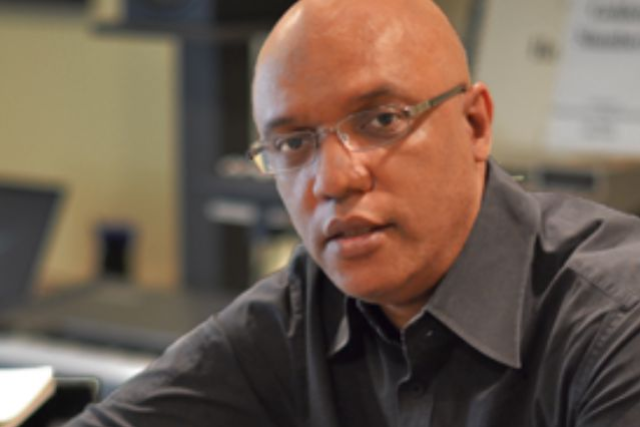
Billy CHILDS Quartet w/ special guest: Sean Jones
Sat, 29 Apr, 8:30 PM PDT
Catalina Bar & Grill
6725 W. Sunset Blvd., Hollywood, CA 90028
TICKET SALES TERMINATED
Tickets are currently unavailable on TicketWeb
Description
Billy Childs is one of the most critically acclaimed pianists in contemporary jazz and among America’s most awarded and commissioned modern classical composers. He writes music for small and large jazz groups, chamber ensembles, choral groups and symphony orchestras. His albums have earned him 16 Grammy nominations and five Grammy Awards, including, most recently, in 2018 for his album Rebirth, which was named Best Jazz Instrumental Album. His 2014 Grammy winner, Map to the Treasure: Reimagining Laura Nyro paid tribute to one of his earliest and most profound inspirations.
Among the distinguished artists Childs has recorded and performed with are Yo-Yo Ma, Renee Fleming, Freddie Hubbard, Wynton Marsalis, Sting, Leonard Slatkin, Dianne Reeves, the Ying Quartet, Joshua Bell, Jack DeJohnette, Dave Holland, Ron Carter, and Chris Botti. His commissions include works for the Los Angeles Philharmonic, the Detroit Symphony Orchestra, The Kronos Quartet, The Lincoln Center Jazz Orchestra, The Los Angeles Master Chorale, The American Brass Quintet, and The Dorian Wind Quintet.
Over the years, his awards include the Doris Duke Performing Artist Award (2013), a Guggenheim Fellowship (2009), and the American Academy of Arts and Letters Music Award (2015).
Event Information
Age Limit
All Ages
Jazz
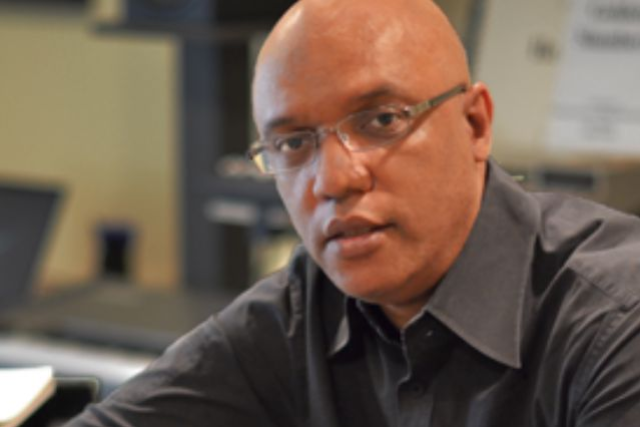
Billy Childs
Billy Childs
Jazz
On The Winds of Change, Five-Time Grammy Winner and
16-Time Grammy Nominee Billy Childs Leads a Dream Quartet
Featuring Trumpeter Ambrose Akinmusire,
Bassist Scott Colley and Drummer Brian Blade
Much of the Music on The Winds of Change Is Inspired by Film Noir and Nostalgia for the Los Angeles of Childs’ Youth
Available March 17 via Mack Avenue Records
As a composer, Billy Childs is a master of two genres: jazz and modern classical music. Simultaneously, he is one of our most dazzling jazz pianists. In between writing violin concertos, chamber music and other pieces for classical ensembles of various sizes, the highly sought-after composer puts on his jazz pianist hat, records Grammy®-winning jazz albums, and plays the world’s leading clubs, concert halls and festivals with his exceptional jazz groups.
Childs draws upon all of his considerable talents as pianist, composer, arranger and bandleader on his latest Mack Avenue album, The Winds of Change. Employing an extraordinary all-star quartet consisting of the phenomenal trumpeter and composer Ambrose Akinmusire, four-time Grammy nominee bassist Scott Colley and the incomparable drummer Brian Blade, the album contains some of the most evocative and haunting compositions of his career.
Much of the music, including the title track, was inspired by film noir; great film composers like Jerry Goldsmith, Bernard Herrmann and John Williams; and nostalgia for the Los Angeles of Childs’ youth.
Reflecting on the album’s title, Childs muses that “as you get older and observe life, the only constant is change. I’ve lived in L.A. my whole life and I remember the city in the ’60s and ’70s. The title track is bittersweet, wistful and nostalgic,” Childs says, in the spirit of movie themes like Chinatown by Jerry Goldsmith and Taxi Driver by Bernard Herrmann, both of which “create a feeling of melancholy about an entire city (L.A. in the former case, New York in the latter).” Both of those films summoned “a sense of an almost mythical urban landscape, one only possible in the movies,” he says. Childs originally wrote the piece for trumpeter Roy Hargrove and what is now the Symphonic Jazz Orchestra. “Here, we attempt to have the trio sound like the accompanying orchestra; my piano is like a condensed orchestral accompaniment for Ambrose’s trumpet.”
Childs cites another influence on the album: Kenny Wheeler’s 1976 album Gnu High, which featured Keith Jarrett, Dave Holland and Jack DeJohnette. “That pointed me in the direction of an interactive conversation with the other musicians,” he says.
To realize this concept, Childs needed a band of jazz superstars, and found them in Akinmusire, Colley and Blade. “I have been doing all of these lofty projects, chamber things, symphonic things…I wanted to just get back to being a jazz pianist. Fortunately, these extraordinary musicians find my music interesting enough that they want to be a part of it.”
The music, although highly composed and structured, also involves the type of conversation with the other musicians he was seeking. “Lately, I’m a composer first, then a pianist,” Childs says, “but I wanted to do something that emphasizes how the band interacts.” Even though there’s a lot of “specificity” in the compositions, he says, “there’s a lot of conversation as well. I thought it would be extremely interesting to have that kind of conversation with these musicians.
“I’ve always wanted to work with [Akinmusire]. He plays the trumpet compositionally, and, of course, he’s an incredible composer as well. I love his sound – it invites you in and wraps itself around you. And he’s fearless. His solo in ‘Master of the Game’ just says, ‘I’m not gonna deal with changes, just sounds.’ He’s a master of changes, too. But he just feels at that moment it’s more important to explore different sounds, and he makes the rest of us start to play atonally,” despite the fact that the piece was written as “a third-stream kind of thing…That’s why I wanted to play with these guys, because things like that could happen.”
Childs describes bassist Colley as “a spiritual player…He’s always trying to play something that enlightens you, that opens another door to the unknown. His decisions make logical sense, but they open doors – there’s a lot of possibility in his playing.
“Brian is the same way, and so is Ambrose,” Childs says. “Brian to the drum set is like what Ravel was to orchestration. He always knows how to enhance the composition. He’s got a full palette of colors, and he’s brilliant at knowing what to do with all those sounds in the context of the song and the improvisation, always choosing the right colors at the right time.”
The album, replete with strong melodies and cinematic flourishes, dazzles right out of the gate with the high-intensity, kinetic opener, “The Great Western Loop,” named after the 7,000-mile hiking trail from Southern California, to Vancouver, to the Grand Canyon. It’s “a song with a lot of motion in it, lots of quartal harmony, that is, involving fourths,” Childs says. “The End of Innocence,” a melancholy paean to lost childhood, was originally recorded by Childs on one of his four Windham Hill albums from the ’80s, now hard to find. “Master of the Game” is another film noir-inspired tune. “A lot of this stuff has to do with movies,” Childs says, citing Henry Mancini’s score for Charade and Michel Legrand’s The Thomas Crown Affair as inspirations.
The album also includes two covers: Kenny Barron’s “The Black Angel,” made famous by Freddie Hubbard, with whom Childs played for six years; and Chick Corea’s iconic tune, “Crystal Silence.” “Chick was a dear friend of mine,” Childs notes. “His music brings tears to my eyes. I wanted to do a tribute to him. It’s one of his most beautiful compositions. Ambrose nailed the melody on it, and Scott takes a beautiful solo.”
Childs describes the experience of making The Winds of Change as a peak artistic experience. “When you do things that are intuitive, that aren’t encumbered by too much thought but just what feels right, then you’re getting in tune with something that’s larger than just four guys playing music. That’s what we were going for.”

Jazz
Sean Jones
Sean Jones
Jazz
Music and spirituality have always been intertwined in the artistic vision of trumpeter, bandleader, composer, educator, and activist Sean Jones. Mr. Jones sang and performed as a child with the church choir in his hometown of Warren, Ohio, and switched from playing the drums to the trumpet at the age of 10.
Mr. Jones is a musical chameleon, comfortable in any musical setting no matter the role or genre. After a six-month stint with the Jazz at Lincoln Center Orchestra, Wynton Marsalis offered him a permanent position as lead trumpeter of the ensemble, a post he held from 2004 until 2010. In 2015, Mr. Jones was tapped to become a member of the SFJAZZ Collective. During this time, he has managed to keep a core group of talented musicians together under his leadership, forming the foundation for groups that have produced and released eight recordings on Mack Avenue Records. His most recent is the 2017 release Sean Jones: Live from Jazz at the Bistro.
Mr. Jones has been prominently featured in recordings and performances with many major figures in jazz, including Illinois Jacquet, Jimmy Heath, Frank Foster, Nancy Wilson, Dianne Reeves, Gerald Wilson, and Marcus Miller. He was selected by Mr. Miller, Herbie Hancock, and Wayne Shorter for their A Tribute to Miles tour in 2011. He has also performed with the Cleveland, Pittsburgh, and Youngstown symphony orchestras, as well as Soulful Symphony in Baltimore and a chamber group at the Salt Bay Chamberfest.
Mr. Jones is an internationally recognized educator. He is president of the Jazz Education Network and holds the Richard and Elizabeth Case Chair in Jazz Studies at The John Hopkins University’s Peabody Institute in Baltimore. As well as artistic Director for the NYO JAZZ Program of Carnegie Hall. Previously, he served as chair of the Brass department at Berklee College of Music in Boston.