Lightning 100 Nashville Sunday Night Presents
Billy Allen + The Pollieswith Kristina Murray
Sun, 13 Sep, 7:00 PM CDT
Doors open
5:30 PM CDT
3rd and Lindsley
818 3rd Ave. S, Nashville, TN 37210
Description
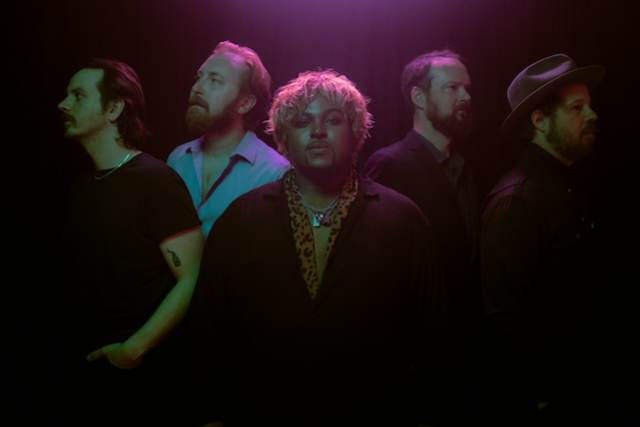
There is a ferocious Southern engine inside of Billy Allen + The Pollies’ debut album Black Noise. It thrums to life atop a classic rock chassis and expertly weaves in and out of gospel, grunge, funk and soul along its eleven-song journey. From the explosive top of the album (a liberating anthem of self-worth called “All of Me”) to the spiritually haunting final track (the wurlitzer fueled “Go on Without Them”) Black Noise is a genre-defiant haymaker that lands.
The band is a hybrid of four piece rock outfit The Pollies and fellow Alabamian, and frontman, Billy Allen. The story of what fused Allen and The Pollies is one that begins in a bar 8 years ago. This particular bar was on Allen’s gig circuit and it just so happens to be where Jay Burgess (founder of The Pollies) was having a drink that evening. While there was intrigue and potential in that first chance meeting, the two would remain ships in the night, each building their own careers, until years later when the stars would align at FAME studios in Muscle Shoals. As the story goes, both Allen and The Pollies, who were all occasional session musicians at Fame, were finally in the room together and the track on deck was Little Richard’s “Greenwood, MS”. To hear Allen retell this part of the story is to hear a man talk about the beginnings of a priceless friendship. “There was an immediate romantic musical connection,” Allen said. “This is my band.” To hear Burgess tell it, the feeling was mutual. Over the subsequent year, the two groups rehearsed, toured, wrote, and gelled together under the moniker Billy Allen + The Pollies. The joining of Billy and Jay (along with the other charter members of The Pollies: Spencer Duncan, Jon Davis & Clint Chandler) was like the clicking of a dislocated bone back into true.
Named after a theoretical sound bomb with the power to destroy whole cities, Black Noise was written almost entirely during the pandemic, beginning as voice memos between Burgess and Allen. With the lockdown in full swing, the musicians became each other’s micro-community, and voice memos progressed to writing sessions in Jay’s garage, and continued to full band rehearsals at Jay’s Greenhill, Alabama, sanctuary Studio 144. When the time to cut the record arrived, they tapped long-time friend and Grammy winning musician Ben Tanner to produce and engineer. Tanner (co-owner of SingleLock Records and former Alabama Shakes keys player) brought the band to Sun Drop Sound in Florence where the bulk of the recording was done. The band was so deeply meshed that the album they captured between April and November of 2021, other than a small overdub section, was recorded fully live, without a click, and 3 takes or less per song.
Listening to Black Noise feels like walking on the alien terrain of a new genre. It sounds like garage grunge by way of Jackie Wilson. The very same kerchief Billy Allen uses to wipe sweat from his brow on stage could be carrying DNA from Wilson Pickett, Joe Cocker, D’Angelo, Ziggy Stardust, or any of the Spiders from Mars. Theirs is a gritty and trailblazing sound. They are a band full of smiling time travelers, able to visit and draw from a multitude of eras and styles. Black Noise is an album that devastates you to the point of remembering why you love music.This is the type of band you root for. You can’t help it.
Event Information
Age Limit
All Ages
Classic Rock
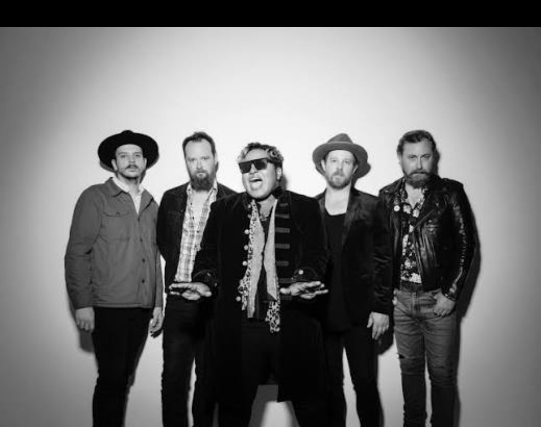
Billy Allen + The Pollies
Billy Allen + The Pollies
Classic Rock
There is a ferocious Southern engine inside of Billy Allen + The Pollies’ debut album Black Noise. It thrums to life atop a classic rock chassis and expertly weaves in and out of gospel, grunge, funk, and soul along its eleven-song journey. From the explosive top of the album (a liberating anthem of self-worth called “All of Me”) to the spiritually haunting final track (the wurlitzer fueled “Go on Without Them”) Black Noise is a genre-defiant haymaker that lands.
The band is a hybrid of four piece rock outfit The Pollies and fellow Alabamian, and frontman, Billy Allen. The story of what fused Allen and The Pollies is one that begins in a bar 8 years ago. This particular bar was on Allen’s gig circuit and it just so happens to be where Jay Burgess (founder of The Pollies) was having a drink that evening. While there was intrigue and potential in that first chance meeting, the two would remain ships in the night, each building their own careers, until years later when the stars would align at FAME studios in Muscle Shoals. As the story goes, both Allen and The Pollies, who were all occasional session musicians at Fame, were finally in the room together and the track on deck was Little Richard’s “Greenwood, MS”. To hear Allen retell this part of the story is to hear a man talk about the beginnings of a priceless friendship. “There was an immediate romantic musical connection,” Allen said. “This is my band.” To hear Burgess tell it, the feeling was mutual. Over the subsequent year, the two groups rehearsed, toured, wrote, and gelled together under the moniker Billy Allen + The Pollies. The joining of Billy and Jay (along with the other charter members of The Pollies: Spencer Duncan, Jon Davis & Clint Chandler) was like the clicking of a dislocated bone back into true.
Named after a theoretical sound bomb with the power to destroy whole cities, Black Noise was written almost entirely during the pandemic, beginning as voice memos between Burgess and Allen. With the lockdown in full swing, the musicians became each other’s micro-community, and voice memos progressed to writing sessions in Jay’s garage, and continued to full band rehearsals at Jay’s Greenhill, Alabama, sanctuary Studio 144. When the time to cut the record arrived, they tapped long-time friend and Grammy winning musician Ben Tanner to produce and engineer. Tanner (co-owner of SingleLock Records and former Alabama Shakes keys player) brought the band to Sun Drop Sound in Florence where the bulk of the recording was done. The band was so deeply meshed that the album they captured between April and November of 2021, other than a small overdub section, was recorded fully live, without a click, and 3 takes or less per song.
Listening to Black Noise feels like walking on the alien terrain of a new genre. It sounds like garage grunge by way of Jackie Wilson. The very same kerchief Billy Allen uses to wipe sweat from his brow on stage could be carrying DNA from Wilson Pickett, Joe Cocker, D’Angelo, Ziggy Stardust, or any of the Spiders from Mars. Theirs is a gritty and trailblazing sound. They are a band full of smiling time travelers, able to visit and draw from a multitude of eras and styles. Black Noise is an album that devastates you to the point of remembering why you love music. This is the type of band you root for. You can’t help it. They're that damn good.

Neo-Traditional Country
Kristina Murray
Kristina Murray
Neo-Traditional Country
Not long after Kristina Murray moved to Nashville in summer of 2014, she accepted a friend’s offer to start singing at the American Legion Post 82. Tucked away on the fringes of East Nashville, the Legion had not yet become the city’s best destination for hearing traditional country music from a new generation of aspiring artists. From the stage, she watched as the crowds during Honky-Tonk Tuesdays grew over time, from about a dozen listeners to a full dance floor. All the while she nurtured her natural talent for songwriting and performing, collecting and crafting material that would form her second album, Southern Ambrosia.
Resplendent with pedal steel and electric guitar, the project draws on her love of classic country and Southern rock – and both influences get their rightful due on Southern Ambrosia (produced by Nashville musician and producer Michael Rinne). The album title comes from a lyric in “Strong Blood,” nestled between references to the famous peaches of her native Georgia as well as the Allman Brothers’ iconic album, Eat a Peach.
She explains, “In classic mythology, Ambrosia is the nectar from the gods – and to me, Southern Ambrosia is something that the South gives us that the rest of the world can't, which are these incredible, delicious peaches. And the Allman Brothers were very significant in my musical development—my folks always listened to their records and growing up in Georgia, that's such a huge influence all around. Duane Allman is still my favorite guitar player! So I wanted to honor those two truths.”
Murray was raised in a blue-collar neighborhood of Atlanta, where her mother and father spent long working days making a modest home for their daughters. Blessed with an authentic, expressive alto voice, Murray always aspired to be a singer and she sang whenever and wherever she could – at home with Joni Mitchell records, at summer camp, and in school and church. When she needed an internship credit to finish her degree, she happened to find one in Boulder, Colorado. “Some friends had been talking about the music scene out there and I was just getting into pickin’ bluegrass; honestly, I think that was the true impetus for my move to Colorado.”
To her surprise, she stayed out West for six years. Finding a new circle of friends and musicians, she started gigging around Colorado with a couple bands. Not only did she learn stage presence and the nuances of harmony singing, she also emerged as an confident acoustic guitarist and bandleader. And while she appreciated the storytelling in the bluegrass canon, her own songwriting lent itself more to Americana and traditional country music. She made the leap to singing mostly country in 2010 and released her debut album, Unravelin’, in 2013 to regional acclaim.
The move to Nashville the following year enabled her to truly find her voice -- in more ways than one. She has performed on the Grand Ole Opry with Nashville musician JP Harris, while her 2017 single “How Tall the Glass” led to an Ameripolitan Award nomination. However, Southern Ambrosia decidedly pulls Murray out of the honky-tonks and country dives and onto the main stage.
“I always considered myself more of a words person,” she says. “I am really in love with words. I love reading. I love writing. And usually I'll think of lyrics first. But in the last couple years I've come to realize that I do have an ear for melody. I'll sit with my guitar and mess around, pull ideas from art that inspires me, until something new tumbles out, something that I can sing well.”
A couple years after settling in Nashville, a relationship of nearly a decade dissolved, leaving Murray to stand on her own feet and chart her own course. The uphill battles of starting over and staying afloat are dominant themes in Southern Ambrosia and the album’s lead track, “Made in America,” sets up this thread that weaves through the record. The lyrics convey the duality of being Southern and of heartbreak: the desperation and the hopefulness, the pride and the shame.
Elsewhere on Southern Ambrosia, she constructs a cinematic tale titled “The Ballad of Angel and Donnie,” which she wrote after reading about a meth bust in Statesboro, Georgia. The hard-charging narrative wouldn’t sound out of place on a Drive-By Truckers album. Meanwhile, “Tell Me” sounds like a long-lost gem from 1970s Nashville, perfectly suited to Honky-Tonk Tuesdays.
Murray’s childhood is set to music in “Pink Azaleas,” and is told from a nostalgic perspective. She notes, “That is the house that I grew up in, and that's the house that my momma still lives in. When we were real little, we didn't have air conditioning through the whole house so we would sleep on the floor in my parents' room because they had a window unit. Everything in that song is a hundred percent true. It’s a jarring memory I have when I was 8 or 9 of my mom getting so upset about money, or lack thereof. It’s a hard truth to swallow, especially when you're young. And, for better or worse, I think it created the worldview and the work ethic that I still have today.”
When Murray was in her mid-20s, her father died unexpectedly in his sleep after a full day of work. This tragedy and its effect on her is felt throughout Southern Ambrosia both sonically and lyrically; it was her father who gave her a guitar when she was 16 and passed along albums like Graceland and At Fillmore East.
While bluesy number “Lovers and Liars” and spacey “Potter’s Field” contrast musically, they each touch on the struggles to rise above tough times and the faith of hard work and self-reliance. The record concludes with the devastating heartache of “Joke’s on Me.” Murray doesn’t always have the fortitude to sing the song live, but when she does, the weeper draws in even the most hardened listeners.
“I have to remember that I am a songwriter and artist with something to say, but, ultimately, the muse just works through me and it isn’t necessarily about me anymore. And that's powerful and profound and important in this world that we live in,” she believes. “Not everybody can stand on the stage and play guitar and sing about their life and deliver that. If I can do that for others while singing my truth—and that moves and speaks to people—then that's what my life is supposed to be about.”