TICKET SALES TERMINATED
Tickets are currently unavailable on TicketWeb
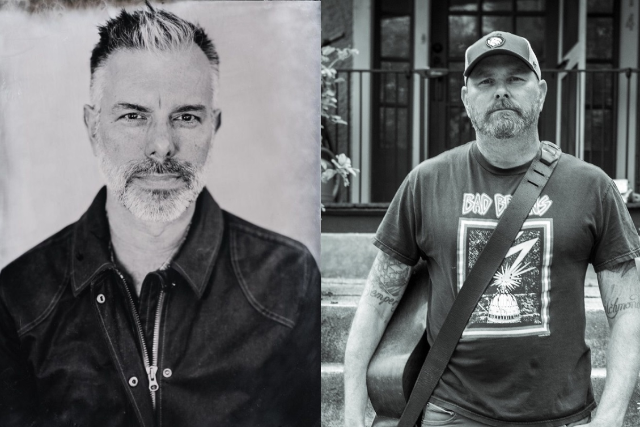
BEN NICHOLS and TIM BARRY
Fri, 30 Aug, 8:30 PM EDT
Doors open
7:30 PM EDT
Grog Shop
2785 Euclid Heights Boulevard, Cleveland Heights, OH 44106
TICKET SALES TERMINATED
Tickets are currently unavailable on TicketWeb
Description
BEN NICHOLS (Lucero) and TIM BARRY (Avail) with Maxwell Stern (Signals Midwest) LIVE at the Grog Shop
Friday, August 30th
7:30pm doors / 8:30 show
$25 advance / $28 day of show
All Ages
+$3 at the door if under 21
BEN NICHOLS
Singer, songwriter, and guitarist Ben Nichols is the frontman for the Memphis alt-country band Lucero. Lucero formed in the late '90s and the band has released a half-dozen or so albums since 2001, each drawing praise for the group's gritty, rootsy, and almost punk approach to country-rock and for Nichols' smoky, emotional vocal style. During breaks from Lucero, Nichols began recording more acoustic-based material, and an EP featuring a stripped-down trio of Nichols on acoustic guitar, Rick Steff (Cat Power) on accordion and piano, and Todd Beene (Glossary) on pedal steel and electric guitar appeared under Nichols' name in 2009 from Liberty & Lament Records. Titled The Last Pale Light in the West, the EP's seven songs are all based on characters and situations drawn from Cormac McCarthy's novel Blood Meridian.
TIM BARRY
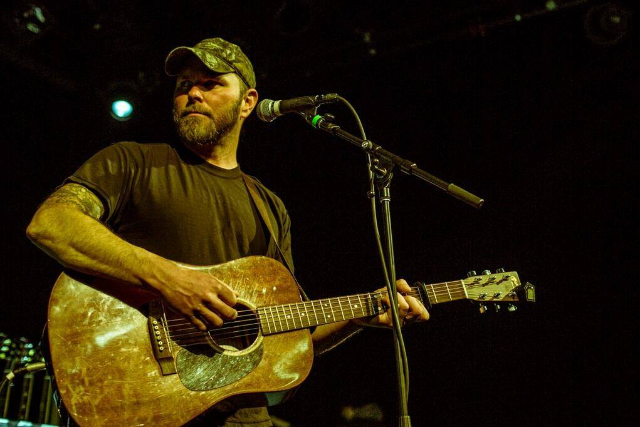
And so begins “Ain’t Much For Talking,” the opening salvo on Tim Barry’s latest album, Spring Hill. In a fashion that can only be called “perfectly Tim Barry,” the line carries with it some rather immense weight and rather eloquently and succinctly sets the table for what’s in store, both on the remainder of the song and on the album as a whole. If you’re expecting a baker’s dozen tales of introspection and honest reflection and occasional pointed-tongued humor and a handful of lines that’ll punch you right square in the solar plexus, you’ve come to the right place.
It’s been just about three years since Barry’s last studio album, The Roads To Richmond, a span that pretty nearly matches the longest break between albums in a solo career that’s now closer to the end of its second decade than it is to its start. And while it’s fair to say that the years since The Roads To Richmond have seen the world-at-large continue to unravel in ways that are as varied as they are tumultuous, much of that turmoil is absent from Spring Hill. Instead, what follows, both on the remainder of “Ain’t Much For Talking” and on Spring Hill as a whole, as a real and thorough examination of where Tim’s been, a little of where he’s headed, and perhaps most importantly, where all of the many hard-earned miles on the above-mentioned tires have brought him to right now.
Event Information
Age Limit
All Ages
Pop
Ben Nichols
Ben Nichols
Pop
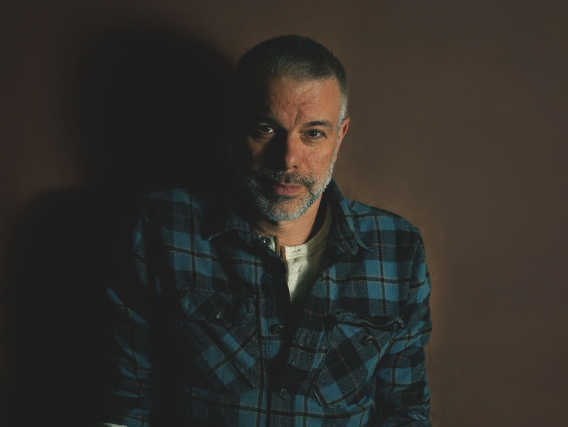
Ben Nichols is best known as the frontman and songwriter for the long-running Memphis rock band Lucero. Now, at age 50, he is releasing one of his most personal pieces of work, a rare solo album titled In the Heart of the Mountain.
After getting a history degree in his home state of Arkansas, Nichols moved to Tennessee and started Lucero in 1998. Since then, the band has released 12 studio albums and kept up a constant touring schedule throughout the U.S. and overseas.
In 2008, Nichols started playing more solo acoustic shows and was part of Chuck Ragan’s original “Revival Tour”. The same year he released his first solo effort, The Last Pale Light in the West.
The Last Pale Light in the West was a seven song concept album inspired by and written about Cormac McCarthy’s novel Blood Meridian. A copy of the vinyl record is kept with the Cormac McCarthy Papers at Texas State University in San Marcos, Texas. The title track was used in an episode of the TV show The Walking Dead (season 4, episode 6). The album was primarily acoustic guitar and Nichols’ vocals with piano and accordion by Rick Steff and pedal steel and electric guitar by Todd Beene.
In the Heart of the Mountain is Nichols' first solo album since The Last Pale Light in the West. Although not a concept album, the song titles in sequence do read as a kind of poem.
“A few years ago, a stranger mailed me a copy of What About This, Collected Poems of Frank Stanford. He sent it because he knew I was from Arkansas and Stanford had lived and died in Arkansas and he thought my lyrics shared something in common with those poems. Frank Stanford died in 1978 at the age of 29. Even at the age of 50, I’ve never read much poetry, but there was something about Stanford’s writing I fell in love with. Not because it reminded me of my own lyrics, but because it made me want to write. There was something alive and dangerous in his words. Nothing safe about the way he wrote. Soaked in Southern tones but not backwards, more unconventional and pushing at the edges of Southern decorum. It was mythology and everyday life, it was an exotic landscape and it was home. It was not quite like anything I’d read before.
Frank Stanford’s poems made me want to write in a style I’d never written in before. I’m not sure if I actually achieved that, but I ended up creating my own everyday-life-mythology of where I was from. I also ended up writing some of my favorite lyrics in years.
I had a handful of guitar parts that I was holding back from the band. They were acoustic-based and had a quieter feel to them and I wasn’t ready to turn them into Lucero songs. In my head I was hearing different instrumentation and a different approach than what the band usually does. And I had these new lyrics I was working on. Before I knew it, I’d written an album’s worth of songs and fashioned the song titles into a poem unworthy of Frank Stanford but still inspired by him.”
In the heart of the mountain
The darkness sings
A bleak overture
From a western or a war movie
While the stars disappear
Fading back into the night
I’m in over my head
She’s starlight in the river
The prayer
The swamper’s lament
The devil takes his leave
“I’d say In the Heart of the Mountain is the closest I’ve come to making an album completely on my own terms. I had help from a great engineer and great friends who also happened to be amazing studio musicians, but it was self produced. I wrote it without input from anyone else. There were no band members to negotiate parts and approaches with. It wasn’t based on a novel or a theme. The only inspiration was that desire to create something that lived in my memories of those rivers, fields, and mountains, in that mythological Arkansas my family called home, where I grew up. I haven’t been able to get back there nearly as often as I would like.”
The album features Nichols on acoustic guitar and vocals, as well as the occasional electric guitar solo and percussion. He is accompanied by Morgan Eve Swain (The Huntress and the Holder of Hands, The Devil Makes Three, Brown Bird) on violin and backing vocals, Cory Branan on electric and acoustic guitars, and Todd Beene (Chuck Ragan, Glossary) on pedal steel and electric guitars. It was recorded at Southern Grooves studio in Memphis, Tennessee with Matt Ross-Spang as the recording and mixing engineer.
Music
Max Stern
Max Stern
Music
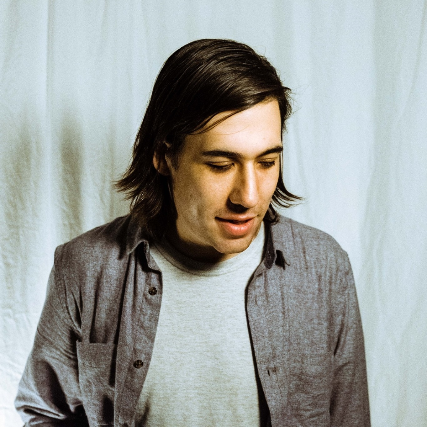
Hailing from the post-industrial shores of Cleveland, OH, Maxwell Stern has been writing music and touring since the early 2000s. He has released a slew of LPs and 7"s, and has played shows pretty much everywhere including an abandoned restaurant in Wyoming, a mall in China, several squats in Germany and a pretty nice bookstore in Australia. He is definitely not the person writing this.