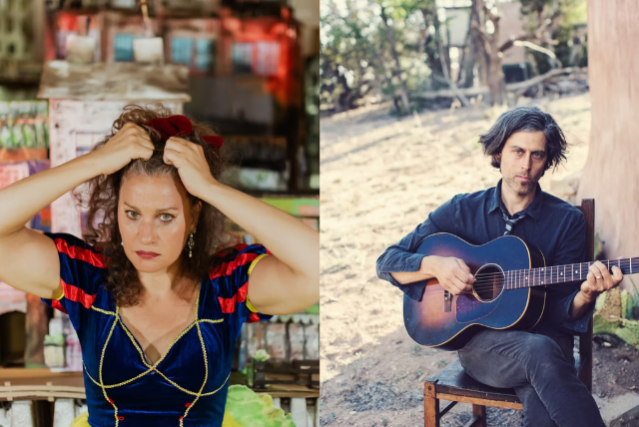
Antje Duvekot and David Berkeley
Wed, 13 January 2027, 7:30 PM CST
Doors open
6:30 PM CST
SPACE
1245 Chicago Avenue, Evanston, IL 60202
Description
Originally born in Germany and transplanted to the U.S. as a young teen, Antje Duvekot began honing her observational skills through a lens of biculturalism when she picked up a guitar in high school. Some years later, the confessional folk of Dar Williams and Ani DiFranco gave her license to share those observations, no matter how personal, in her first emerging songs. She has never let go of the tenet of vulnerability, building a celebrated career around songs that transform deeply personal experiences into something universal.
Antje has released six studio albums, including her latest, No, produced by Seth Glier, as well as five previous albums produced by Mark Erelli, Seamus Egan of SOLAS, Richard Shindell, and Scott Petito. Her recordings feature support from Anaïs Mitchell, Dar Williams, Rose Cousins, Heather Maloney, John Gorka, Meg Hutchinson, Lucy Kaplansky, Sean Mullins, Liz Longley, and others.
_________________
David Berkeley’s gift as a songwriter and storyteller is that he sees the tragedy and comedy in life, writing songs capable of both breaking and healing the heart. Berkeley has been called a “musical poet,” by the San Francisco Chronicle, and the New York Times praises his “lustrous, melancholy voice with shades of Tim Buckley and Nick Drake.” That voice and his gift with words is what first sets Berkeley apart from all other guitar-slinging songwriters. But it is his onstage charisma and unparalleled between-song repartee that truly puts him in a class by himself. Each show is completely unique, and David’s humanity shines through every note he sings and every word he speaks. Berkeley has released seven studio albums, one live album, and authored two books, each of which pairs with one of his albums. He was a guest on This American Life,telling an outrageous story of a private serenade he was once hired to perform, and he has won many songwriting awards and honors including ASCAPs Johnny Mercer Songwriting Award. His 2017 release was a never-before tried concept: a novella comprising ten intertwining stories and an album of ten accompanying songs (one for each story). His latest release is Oh Quiet World, an album written during the lockdown. It’s an intimate, uplifting collection that we all should hear.
Event Information
Age Limit
All Ages
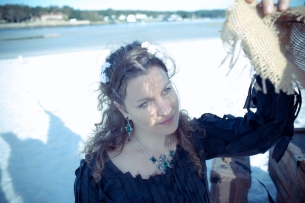
Singer-Songwriter
Antje Duvekot
Antje Duvekot
Singer-Songwriter
Former Rolling Stone music editor Dave Marsh says: "This is a brilliant, brilliant album. I have had this reaction once in the last 10 years and that was the first time I heard Patty Griffin."
Antje Duvekot has solidified her reputation as one of Boston's top singer songwriters with "Big Dream Boulevard" her debut studio release and "the Near Demise of the Highwire Dancer" and "New Siberia" her follow-up albums. The debut CD was produced by Seamus Egan, founder of the Irish super group, SOLAS and the project was released on songwriter Ellis Paul's label and quickly attracted international attention for Antje. It was voted "#1 Folk Release of 2006" by the Boston Globe and was named to the "Top10 Releases of the Year" by National Public Radio's, Folk Alley. Her follow up albums "the Near Demise of the Highwire Dancer" and "New Siberia" were produced by Richard Shindell and along side with Richard feature other "folk royalty" such as John Gorka, Lucy Kaplancky and Mark Erelli.
"What a blessing to have worked with someone as talented as Antje. With a voice like hers, and songs as good as these, a producer (especially a first-time producer!) just tries to get out of the way, to do no harm, and to let the artist speak for herself." - Richard Shindell
"Duvekot has gotten hotter, faster than any local songwriter in recent memory. Her songs feel at once fresh faced and firmly rooted, driven by the whispery sensuality of her voice. She believes in the redemptive power of the shared secret; and is utterly unafraid to mine the darkest corners of her life for songs that turn fear into resilience and isolation into community". The Boston Globe
Antje has won some of the top songwriting awards including the Grand Prize in the John Lennon Songwriting Competition, the prestigious, Kerrville (TX) "Best New Folk Award" and in one of the nation's top music markets, she won the Boston Music Award for "Outstanding Folk Act", three of the top prizes in the singer songwriter world.
Antje has extensive touring experience, criss-crossing the US and Europe many times. She is a compelling live performer and has been invited to play some of the top festivals including The Newport Folk Festival as well as the Mountain Stage, Philadelphia and Kerrville Festivals. Internationally, she's headlined the The Celtic Connections Festival in Scotland and the Tonder Festival in Denmark.
In December of 2007, The Bank of America featured Antje's song "Merry Go Round" in a national TV advertising campaign seen by millions, including a Super Bowl audience. Antje's fast growing fan base, the viral spreading of her music and a track record of sold-out shows are a testament to her growing popularity. Neil Dorfsman, the producer of Bob Dylan, Bruce Springsteen and Sting says, "When I first heard Antje I knew I was witnessing something very special. She creates an entire, detailed world in verse, and takes you there with beautiful and understated melody. Her songs are stunning paintings of color and shade and always generate the heat and light that real art should. In an unpoetic and 'in your face' world, she is lyrical and subtle"
In 2010, Antje played the TEDMED conference in san diego (among the unveiling of ozzie osbourne's genome). according to CNN: "Then, this morning, the tone of the conference turned from intellectual to deeply emotional when Antje Duvekot got up with her guitar and sang about her grandmother descent into Alzheimer's disease. Twitter revealed that I wasn't the only one who was holding back tears - Duvekot's song was all too relatable for those of us who have watched loved ones slip away. 'And Anna tries to form a thought / But at the end she's forgotten where she started from / There's something she would like to say / But the words in her head seem to have got away' she sang".
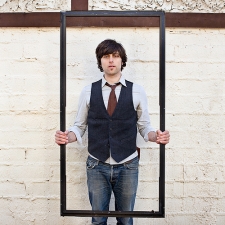
Pop
David Berkeley
David Berkeley
Pop
David Berkeley is a romantic realist, known for his ability to look at the human condition in all its complexity and give us luminous songs full of sunshine and anguish, melancholy and delight. He brings the people and situations he sings about to vibrant life with a warm, rich tenor that often slips into an aching falsetto to underline the overwhelming emotions that can move us to tears or laughter. On Some Kind of Cure, his fourth studio album, Berkeley delivers some of his most heartfelt tunes blending folk, rock, and classic pop to create timeless expressions of love and longing.
The majority of songs on Some Kind of Cure were written while Berkeley and his family were living in a remote 35-person village in the mountains of Corsica. The silence and wild island landscapes seeped into Berkeley’s soul, bringing forth a collection of lingering beauty. “There were no stores in our tiny town,” Berkeley explained. “No cafes. No post office. No Internet. It was silent. I had very few distractions, which was quite different from life in a big city. Because no one spoke English, I could sing rough drafts of lyrics without being embarrassed. When I played songs for the villagers, I had to make sure the emotion came through in the music, as well as the words. That had a big effect on the way I wrote my songs.”
Berkeley recorded the album after returning to the States, working in Atlanta with producer Will Robertson. The project was entirely funded by Berkeley’s fans. “We took our time making this record. We went through the lyrics, almost line by line, translating words into music and emotion.” The core band for the project was Robertson on piano and bass; drummer Kevin O’Donnell (Andrew Bird); Kim Taylor (Over the Rhine) on background vocals; Jordan Katz (De La Soul, Sara Bareilles) on banjo and horns; and Lex Price (Mindy Smith) on mandolin and guitars. Most tracks were cut in the studio with Berkeley singing and playing guitar live while Will played piano or bass. “The recording has a lot of breadth and a natural, relaxed feel,” Berkeley explains. “It sounds more like I do in concert than my previous recordings.’
“The best of the young American songwriters, a voice full of feeling and a big, big heart. And the balls to say what he thinks.” —Boston Phoenix
The words and music on Some Kind of Cure capture a wide range of emotion, employing shifting tempos, a dynamic range and diverse arrangements that suggest traditional folk, British Invasion pop, and rock. “George Square” opens the album with its subtle cinematic arrangement. Berkeley’s hushed staccato vocal and Robertson’s distorted Rhodes create a delicious tension that’s resolved by the soaring strings that lift the last verse to the clouds with Jordan Katz playing an almost subliminal trumpet line to hold the song together. “It’s a relationship song,” Berkeley says. “Love is the solution, but the resolution is often deeper and more mysterious than we know.” The tinny sound of music coming through an old fashion car radio sets up “Parachute,” a bright, bouncy rocker with an irresistible chorus. The voices of Berkeley and Kim Taylor dance through the mix like hesitant lovers, finally coming together in celebratory harmony for the hook: “Your heart is like a parachute, it only opens when you fall.”
Peter Bradley Adams adds subtle piano accents to “The Blood and the Wine,” a quiet love song Berkeley wrote for his wife. It’s one of Berkeley’s most intimate vocals and shows off his remarkable range as it shifts from a low vulnerable whisper to a wordless, plaintive falsetto on the chorus to express a sense of emotional fragility. The song’s intricate lyrics, sophisticated rhymes and overlapping images use simple language to convey love’s emotional complexity. Katz adds a sense of poignant yearning to the track with his melancholy flugelhorn.
The dark, sparse opening of “Hope for Better Days” slowly builds to a rousing rocking climax, ending with a vocal round that is tough not to sing along to. “Shenandoah” is a timeless frontier ballad; understated piano and electric guitar and the close harmonies of Berkeley and Taylor underscore the song’s gentle beauty. The album closes with “Winter Winds,” a song that imagines a father’s deathbed conversation with his son. A simple, repeating melody keeps your attention on Berkeley’s aching vocal singing a heartbreaking lyric, sounding more and more desperate as the song draws to a close, echoing the father’s reluctance to leave this life. Ominous strings and woodwinds rise up to intensify the song’s drama, then fade away leaving Berkeley and his acoustic guitar alone to deliver the final benediction.
Some Kind of Cure shows Berkeley at his best, delivering songs marked by warm, rolling melodies, fervent lyrics and his genuine desire to connect with his audience and his own soul. “I work long and hard on every song,” Berkeley explains. “I don’t write throw away lines; there’s a reason for every word in every song. Will did an amazing job finding the essence of these songs and layering the arrangements to create a sensual landscape that does each piece justice.”
“Dashing singer-songwriter David Berkeley delivers his warm, thoughtful songs, along with a reliably hilarious line in onstage banter.” —Time Out New York
In concert, Berkeley wins crowds over with his low-key charisma and hilarious between song banter. He usually introduces songs with long, intricate anecdotes and branching commentaries, using a manner that’s more front porch than show biz, relaxing people without any apparent effort to be funny, a difficult balance to achieve. He weaves together fact, fiction and hyperbole into stories that often leave audiences in hysterics without resorting to obvious punch lines. His on stage narratives rarely repeat themselves and are full of the same astutely observed details that propel his songs.
As you might expect from his witty and erudite stage patter, Berkeley is a talented prose writer. He kept a diary of his stay on Corsica, which became the basis of his accompanying book, 140 Goats and A Guitar: The Stories Behind Some Kind of Cure. Like his songs, the stories are well-constructed pieces filled with revealing details and poetic language. Berkeley’s concept is a unique one: The book will include a download code for the album, and readers are encouraged to move through the book reading each story and then listening to the corresponding song. Berkeley explains, “The stories give you a look behind all the songs on the record. I often tell stories that explain a song or that led to a song. When I got back from Corsica, I realized that many of the songs were created out of situations and events--some funny, some awkward, some painful.” He writes these stories with an openness and honesty that matches his music. “Ultimately, I believe my music conjures an eerie optimism, a mysterious kind of hope,” Berkeley says. “I think that sentiment hovers over most of the album and most of the book.”
David Berkeley never intended to become a professional musician. “I sang all the time, almost before I could talk,” Berkeley recalls. “My parents didn’t take me to anything like Star Search performances, but they did take me to New York a lot to see Broadway shows. I had a good ear and could remember the words and melodies to the songs I liked, but I didn’t start playing music myself until fairly late.” Berkeley grew up in New Jersey. He usually took the lead in class musicals, but he’s modest about his early success. “I don’t think that was a formative experience. I started on guitar when I was 15, like a lot of teenagers, mostly to get girls. I was happy singing other people’s music, greats like Neil Young; Crosby, Stills and Nash; the Grateful Dead and other California sounds. I loved Paul Simon’s lyrics, but my chops weren’t that good. They still aren’t. I do have a style, but I’m a singer before I’m a guitarist.”
Berkeley played in various bands in high school and during his years at Harvard, where he studied philosophy and literature. He busked in Harvard Square, but he didn’t get serious about music until he fell in love. “I started writing songs in my last years of college, when I had my heart broken. My first songs were written in an attempt to get my girlfriend back. I ultimately did, and married her, but it took a while. “When I graduated, I wanted to be a travel writer. One summer, I went to Alaska and wrote for Let’s Go Alaska. I worked five summers as a whitewater rafting guide in Idaho. After college, I moved to Santa Fe to work for Outside magazine. While I was there, I managed a band and that got me excited about the music business. By the time they broke up, I’d amassed a lot of songs and wanted to make a record. I decided I wanted to be onstage, not backstage.”
Berkeley recorded his first album, The Confluence, in the fall of 2001. He started playing live to support the album, working days as a teacher in a public school in Brooklyn. “I was allegedly teaching creative writing, but mainly I tried to control the kids and not get hurt. I played shows on nights and weekends.”
Berkeley’s second album, 2004’s After The Wrecking Ships, featured “Fire Sign.” The next year, Berkeley made Live From Fez, recorded at his favorite club just before it closed, but working day and night was taking its toll. “I was losing my voice and exhausted. I decided I had to do music full time.”
Berkeley’s music started getting national attention when a producer of the CBS drama Without a Trace saw him play live. Berkeley wrote “Fire Sign” for the show and went on to perform on World Café, Mountain Stage, XM’s Loft Sessions and radio stations across the country. He has toured in support of Dido, Don Mclean, Billy Bragg, Ray Lamontagne, Rufus Wainwright, Ben Folds, Nickel Creek and many more. He received ASCAP’s Johnny Mercer Songwriter Award and, perhaps most notably, performed on PRI’s This American Life, telling the awkward and hilarious story of a private serenade he was hired to perform to help a guy win back an ex-girlfriend. Berkeley moved from New York to Atlanta “so my wife could go to grad school. We survived on my wife’s stipend and record sales.” While living in Atlanta, Berkeley wrote the songs for Strange Light (2008), which he recorded in Chicago with producer Brian Deck (Iron and Wine, Modest Mouse). While there, Berkeley started the ATL Collective, an organization of local musicians that put on productions that recreated classic albums with food or beverage hooks. “We did Johnny Cash’s Live at Folsom Prison with prison food (grits and refried beans served on cardboard). We had bloody marys for Blood on the Tracks. We did Dr. Pepper’s Lonely Hearts Club Band. The shows are still going on in Atlanta, and hopefully I’ll start doing them in the San Francisco Bay Area as well.”
Berkeley relocated to the San Francisco Bay Area with his young family after returning to the States and will be touring nationally to support the album.
Though unexpected, Berkeley’s music has also made its way to the world of dance music. Club remixes of his “Fire Sign” have attracted the attention of major DJs like Tiesto, Sean Tyas, and Pedro Del Mar, and Berkeley has begun collaborating to create new original dance music with his signature vocals.
Some Kind of Cure showcases Berkeley’s melodic and lyrical gifts, but the album is held together by his unique, expressive voice. “I was singing almost before I could speak,” he says. “I’m more natural singing than I am doing anything else.” His ease is apparent as his vocals glide from a warm, high baritone to a rich full tenor, sometimes slipping into an aching falsetto. “It may be pop music, but my goal is to be open and honest. I’m not afraid to show fear and weakness. I want my songs to convey hope without denying the hard times we all face.”