TICKET SALES TERMINATED
Tickets are currently unavailable on TicketWeb

The Crocodile Presents:
Andy ShaufKaty Kirby
Wed, 8 Mar, 8:00 PM PST
Doors open
7:00 PM PST
The Crocodile
2505 1st Ave, Seattle, WA 98121
TICKET SALES TERMINATED
Tickets are currently unavailable on TicketWeb
Event Information
Age Limit
21+
Refund Policy
All sales are final. There are no refunds unless the event is cancelled or postponed
Indie Pop
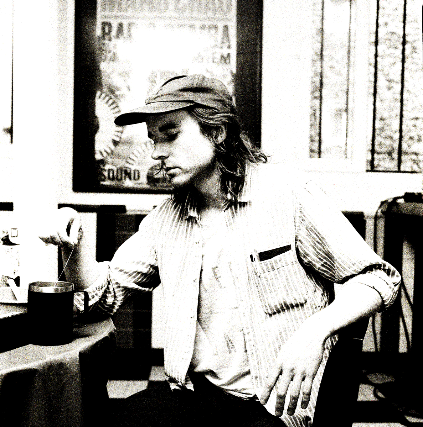
Andy Shauf
Andy Shauf
Indie Pop
Few artists are storytellers as deft and disarmingly observational as Andy Shauf. The Toronto-based, Saskatchewan-raised musician's songs unfold like short fiction: they're densely layered with colorful characters and a rich emotional depth. On his new album The Neon Skyline (out January 24 via ANTI-), he sets a familiar scene of inviting a friend for beers on the opening title track: "I said, 'Come to the Skyline, I’ll be washing my sins away.' He just laughed, said 'I’ll be late, you know how I can be.'" The LP's 11 interconnected tracks follow a simple plot: the narrator goes to his neighborhood dive, finds out his ex is back in town, and she eventually shows up. While its overarching narrative is riveting, the real thrill of the album comes from how Shauf finds the humanity and humor in a typical night out and the ashes of a past relationship.
His last full-length 2016's The Party was an impressive collection of ornate and affecting songs that followed different attendees of a house party. Shauf's attention-to-detail in his writing evoked Randy Newman and his unorthodox, flowing lyrical phrasing recalled Joni Mitchell. Though that album was his breakthrough, his undeniable songwriting talent has been long evident. Raised in Bienfait, Saskatchewan, he cut his teeth in the nearby Regina music community. His 2012 LP The Bearer of Bad News documented his already-formed musical ambition and showcased Shauf's burgeoning voice as a narrative songwriter with songs like "Hometown Hero," "Wendell Walker," and "My Dear Helen" feeling like standalone, self-contained worlds. In 2018, his band Foxwarren, formed over 10 years ago with childhood friends, released a self-titled album where Pitchfork recognized how "Shauf has diligently refined his storytelling during the last decade.”
The Party earned a spot on the Polaris Music Prize 2016 shortlist and launched Shauf to an appearance on The Late Late Show with James Corden as well as glowing accolades fromNPR, The Washington Post, The Guardian, and more. "That LP was a concept record and it really made me want to do a better album. I wanted to have a more cohesive story," says Shauf. Where the concept of The Party revealed itself midway through the writing process, he knew the story he wanted to tell on The Neon Skyline from the start. "I kept coming back to the same situation of one guy going to a bar, which was basically exactly what I was doing at the time. These songs are fictional but it's not too far off from where my life was," Shauf explains.
For The Neon Skyline, Shauf chose to start each composition on guitar instead of his usual piano. He says, "I wanted to be able to sit down and play each song with just a guitar without having to rely on some sort of a clever arrangement to make it whole." The resulting album finds its immediacy in simplicity. While the arrangements on folksy "The Moon" are unfussy and song-centered like the best Gordon Lightfoot offerings, his drive to experiment is still obvious. This is especially so on the unmoored relationship autopsy "Thirteen Hours," which boasts an arrangement that's both jazzy and adventurous.
Like he's done throughout his career, Shauf wrote, performed, arranged, and produced every song on The Neon Skyline, this time at his new studio space in the west end of Toronto. Happy accidents like Shauf testing out a new spring reverb pedal led to album cuts like the woozy closer "Changer" and experimenting with tape machines forced him to simplify how he'd arrange the tracks. Over the course of a year-and-a-half, Shauf ended up with almost 50 songs all about the same night at the bar. Though paring down his massive body of work to a single album's worth of material was a challenge for Shauf, the final tracklist is seamless and fully-formed.
As much as The Neon Skyline is about a normal night at a bar with friends and a bartender who knows exactly what you'll order before you sit down, the album is also about the painful processing of a lost love. Lead single "Things I Do" examines the dissolution of the narrator's past relationship. Over tense and jazz-minded instrumentation, Shauf sings, "Seems like I should have known better than to turn my head like it didn't matter. Why do I do the things I do when I know I am losing you?" He explains, "a lot of this record is a breakup record. I haven't had a breakup in a long time, but a lot of relationships have had one of those nights where one person shows up somewhere when they weren't supposed to and then picks a fight with their partner." Elsewhere, songs like "Clove Cigarette" explore the better times, honing in on a memory that "takes me back to your summer dress."
With any album about a lost love, the key ingredient is a generosity and kindness that can only come from a writer as empathic as Shauf. On the standout personality-filled single "Try Again," the narrator, his friends, and his ex find themselves at a new bar. The former lovers' reunion is awkwardly funny and even sweet, as he sings, "Somewhere between drunkenness and charity, she puts her hand on the sleeve of my coat. She says 'I’ve missed this.' I say “I know, I’ve missed you too.” She says, 'I was actually talking about your coat.'" It's a charming moment on a record filled with them. Shauf's characters are all sympathetic here, people who share countless inside jokes, shots, and life-or-death musings on things like reincarnation when the night gets hazy.
On top of heartbreak, friendship, and the mundane moments of humanity that define his songwriting, Shauf makes music that explores how easy it is to find yourself in familiar patterns and repeat the same mistakes of your past. His characters wonder, "Did this relationship end too soon? Would going to another bar cheer my friend up?" Or in the case of the foreboding "Living Room," where a character asks herself, "How hard is it to give a shit?" the songs on The Neon Skyline ultimately take solace in accepting that life goes on and things will be okay. Shauf says, "there's moments on the album where the characters are thinking 'this is the end of the world.' But there are also moments with some clarity and perspective: Nothing is the end of the world."

Alternative Folk
Katy Kirby
Katy Kirby
Alternative Folk
Katy Kirby is a songwriter and indie rock practitioner with an affinity for unspoken rules, misunderstanding, and boredom. She was born, raised, and homeschooled by two ex-cheerleaders in small-town Texas and started singing in church, amidst the pasteurized-pop choruses of evangelical worship, about which she shares acute perceptions.
Like many bible belt late-millennials, Katy grew up on a strict diet of this dependably uncool genre. She recalls, “In the mid-90s, the American evangelical church was making music of an extraordinarily digestible, almost unprecedentedly easy-listening kind, stylistically void and vaguely dubbed Christian Contemporary Music, or CCM. It was pop that wasn’t quite pop, determinedly hanging on to the openhearted melodies of a decade prior, straightforward so as to be easily memorable, and in a key that an average churchgoer could sing along to.”
Accordingly, Cool Dry Place finds her dismantling it. “I can hear myself negotiating with that worship-ish music, fighting that deeply internalized impulse to make things that are super pleasant or approachable.” She hasn’t fully overcome the itch to please, but to a listener’s benefit. Instead of eradicating the pop sensibilities of her past, she warps them, lacing sugary hooks with sneaky, virulent rage, twisting affectionate tones into matter-of-fact reproach, and planting seemingly serene melodies with sonic jabs. The fun is in the clash.
Take “Portals” for example, a song of country-traditional chords and gentle vocal delivery that might have easily materialized as a placid ballad. Rather, Katy drenched its soft core in metallic noise and oscillating string textures. You can imagine someone bussing glassware from a table nearby, while Katy sits you down at a booth and trusts you with notes on a pre-breakup, the first couple of minutes living in the last part of a relationship.
With the same masterful trickery, “Traffic!” juxtaposes sound and sentiment, a jittery combination of saturated pop and Rainforest Cafe’ faux-tropicalia projecting (arguably false) sympathy toward a character absorbed in his own self-inflicted misery. Though her chorus wails jubilant, Katy weaponizes its catchy gusts to criticize privilege: “Nobody has it better than you.”
Katy’s residual ties to church life are audial alone; spiritually, she has worked to detach. “Until a couple of years ago, I spent much of my time falling out of love with God. My life until then hadn’t just been participating in a church so much as completely, profoundly believing—youth group, sure, but also a few attempts to cast out demons. Learning how to think or see things outside of that very intense, clarified space was like rewiring my brain. I guess that if there’s one thing that unifies these songs, it’s that they’re figuring out what to do, or how to love, or who to rely on outside of that context.”
The nine tracks that make up Cool Dry Place are miscellaneous in subject (motherhood, late capitalism, disintegrating relationships,) but unified by the angle from which they’re told, from a person re-learning to process life with intense attention. Each song is a catalog of fragments, the number of segments in an orange or the cut of an obsessively-worn shirt, distilled into meditations on the bizarre and microscopic exchanges that make up modern life — a relationship splintering, an uncomfortable pause, an understanding finally found. These emotional dioramas are moderated by the angular storytelling that unites Gillian Welch and Phoebe Bridgers, a favor for the conventions of short fiction over confession.
Kirby readily admits that Cool Dry Place feels like a late-bloomer’s record. “These songs were written and recorded over an embarrassingly long period of time, by a few different versions of myself.” The album began in Nashville years ago. Kirby had moved there for college, changed majors five times, briefly dropped out, and finally graduated with a handful of songs, a circle of artistic allies, an amorphous collection of leftist beliefs, and an English degree. She flailed in the solo-artist archetype for a period of time before turning to friends capable of constructing a satisfying full length. Kirby, Alberto, Hunt, Logan, and Zook spent over a year carving out bits of spare time to record in bedroom studios, living rooms, and a now-demolished former residence of Keith Urban. Tracking was finally completed over Thanksgiving 2019 at Kirby’s childhood home outside of Austin.
As its title track flips the advisory on a package of Tylenol into a hymn to human need for protection and acceptance, Cool Dry Place asks a listener to embrace the precious and contradictory nature of being a person. Katy Kirby is an artist simultaneously tender and angry, vulnerable and protected, calculated and resigned.