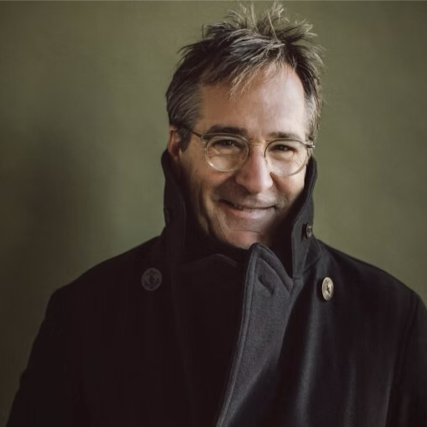
An Evening With Richard Shindell - All Acoustic
Tue, 20 Oct, 7:30 PM CDT
Doors open
6:30 PM CDT
SPACE
1245 Chicago Avenue, Evanston, IL 60202
Description
Originally from New York, now living in Buenos Aires, Argentina, Shindell is a writer whose songs paint pictures, tell stories, juxtapose ideas and images, inhabit characters, vividly evoking entire worlds along the way and expanding our sense of just what it is a song may be. Meticulously recorded over three years in New York and Buenos Aires, his most recent release, Careless, offered an ambitious, luxurious, full- length statement. Shindell immersed himself in the studio, allowing the time and latitude to explore, experiment, take risks—to play—as each of these eleven songs was given form and substance. While his signature acoustic guitar style is used to good effect, Careless also found Shindell plugging in more. “The wider sonic and dynamic range of the electric has been a real inspiration. Rejuvenating.”
Event Information
Age Limit
All Ages
Folk
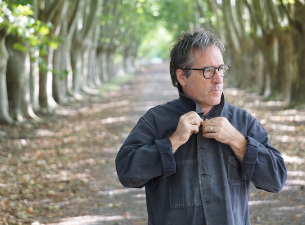
Richard Shindell
Richard Shindell
Folk
Originally from New York, now dividing his time between Buenos Aires, Argentina and New York's Hudson Valley, Richard Shindell is a writer whose songs paint pictures, tell stories, juxtapose ideas and images, inhabit characters, vividly evoking entire worlds along the way and expanding our sense of just what it is a song may be. From his first record, Sparrow's Point(1992) to his upcoming release, Careless (September 2016), Shindell has explored the possibilities offered by this most elastic and variable of cultural confections: the song.
The path that led him to songwriting was both circuitous and direct. Taking up the guitar at the age of eight, he spent his formative years learning the instrument - first acoustic, then electric. And he listened: Beatles, Dylan, Joni Mitchell, Motown, Bowie, Hunter-Garcia, King-Goffin, Paul Simon, Bill Monroe, Rogers & Hammerstein. Their songs gave the impression of having always been there, so solid and self-evident were their melodies, hooks, grooves, and lyrics. Listening to WNEW or WLIR in 1970s NY felt like a kind of anamnesis. So it seemed completely out of the question to imagine that a song could be written - by anyone, anywhere, anytime, about absolutely anything. If he sang, it was just to sing along, or harmonise to the hymns in church.
On the other hand, a good song seemed like such a simple little thing. A voice in the back of his head kept whispering that surely it must be possible to write one. He would make his first attempts at it during college, where he studied Philosophy. According to him, these early songs were "abysmal: pointless, self-indulgent drivel. It's a wonder I ever allowed myself to try again."
After college and a nine month stint in a Zen Buddhist community in Upstate New York, he headed to Europe with his guitar, finding something not approaching a livelihood performing in the Paris Metro, where his repertoire consisted of Fahey-tinged fingerpicking, Blakian flatpicking and "endless droning along in open tunings." Evincing an early inclination toward self-imposed commercial exile, he sought out the less-travelled corners of the Metro. "I loved the acoustics in those tunnels, but only when they were empty."
Upon running out of money, and despite being an atheist, he applied to and was accepted by Union Theological Seminary (NY), beginning his studies in 1986. Three years in an M.Div. program did nothing to cure him of his atheism, however it did provide him (thanks to a friendly sexton) with late-night access to the neo-gothic expanses of Union's St. James Chapel, whose celestial acoustics inspired his first "keeper": On a Sea of Fleur de Lis. Ostensibly a paean to the Virgin Mary, the song marked his rupture from the church and the beginning of his creative life. Its underlying themes - immanence and transcendence, human love and divine love, the particular and the general - have continued to resonate through subsequent work, right up to the present. In many ways, his new album Careless, though in no way a concept record, represents a further exploration of those ideas.
More songs followed. He began frequenting a well-known songwriters circle on Houston Street in New York City. Hosted by the late Jack Hardy, every Thursday night writers would gather to debut new songs, give and receive constructive criticism, take the songs back to the drawing board to try again the next week. It was a tough crowd, but also a supportive one. And beyond the concrete benefit to one's craft, those gatherings offered the fledgling writer a sense of community, and thus identity. He began to think of himself as a songwriter, abandoning his theological studies.
It was right about then that Shanachie Records called with an offer for a three record deal.
That deal resulted in Sparrows Point (1992), Blue Divide (1994), and Reunion Hill (1997). The latter, produced by multi-instrumentalist Larry Campbell (credits too numerous to mention here), won the AFIM (NAIRD) award for "Best Contemporary Folk Album" in 1998. Its title track was covered (along with two other of Shindell's songs) by Joan Baez on her 1997 release, Gone From Danger. In 1998, Shindell joined forces with his friends Dar Williams and Lucy Kaplansky to make CryCryCry (Razor and Tie), a collection of covers by writers such as Robert Earl Keen, Michael Stipe, Ron Sexsmith, Greg Brown, Julie Miller, and James Keelaghan. Over the course of two years, the group toured in support of this highly acclaimed (and eponymously titled) album, leaving audiences spellbound by their gorgeous three-part harmonies.