TICKET SALES TERMINATED
Tickets are currently unavailable on TicketWeb
Tipitina's & ALT 92.3 Present
ALT 92.3 Day!
Sat, 23 Sep, 7:30 PM CDT
Doors open
6:30 PM CDT
Tipitina's
501 Napoleon Ave, New Orleans, LA 70115
TICKET SALES TERMINATED
Tickets are currently unavailable on TicketWeb
Event Information
Age Limit
18+
Refund Policy
All sales final
Alternative Rock
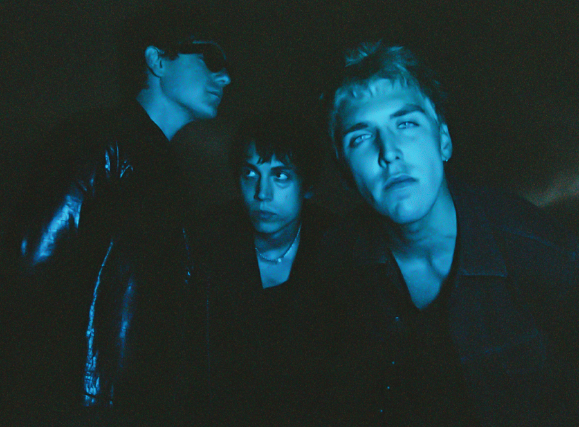
Bad Suns
Bad Suns
Alternative Rock
"When we were done touring our second record, we were exhausted being Bad Suns," admits singer/guitarist Christo Bowman. "We just decided to do whatever the fuck we wanted."
It's not surprising that BAD SUNS felt burned out: After forming as teenagers in 2012, a pair of beloved albums (2014's Language & Perspective, which peaked at #24 on the Billboard 200, and 2016's Disappear Here) launched the LA-based quartet onto tours with the likes of the 1975 and Halsey, festivals like Coachella and the homepages of Alternative Press and NYLON — with the latter hailing Bad Suns as "the sort of rock that we just never get enough of."
By the time their 2019 Epitaph debut, Mystic Truth, rolled around, the band — Bowman, guitarist Ray Libby, drummer Miles Morris, and bassist Gavin Bennett — needed a breath, a proverbial gap year after the crash-course education they received going straight from high-school halls into the indie-rock pressure cooker.
As a result, LP3 was a little softer around the edges, more contemplative, introspective, and somber but still resonant enough to introduce Bad Suns to some of the largest audiences of their career, including a slot on Lollapalooza's main stage and on the soundtrack of Jason Reitman's 2020 COVID-confined miniseries remake of The Princess Bride.
"We loved making Mystic Truth," Bowman says. "We did a lot of growing up during that time. It was really important for us to make that record, but we were also really eager to get back to being Bad Suns again."
It's that unmistakable Bad Suns sound — dreamy '80s pastiche flanked by Stratocasters through cranked Vox amps, pulsing synths, and palpable rhythmic energy — that endeared listeners to the band in the first place, and their fourth LP, APOCALYPSE WHENEVER, uses that musical foundation as the jumping-off point for their next evolution.
Conceived as "the soundtrack to a movie that doesn't yet exist," the 13-track album, helmed by longtime producer Eric Palmquist (MUTEMATH, Thrice) at his Palmquist Studios and the band's North Hollywood rehearsal spot, is more conceptually rigorous than anything they've ever attempted — but no less compelling or accessible.
"We wanted to make something very poppy and forward-looking while not abandoning the past," Bowman explains. "We also knew we wanted the album to have a through-line, a story from beginning to end."
So the band did what any good directors would: They assembled a mood board, filtering their neo-noir version of Los Angeles through the dreamlike haziness of author Haruki Murakami, the futuristic flair of Terminator 2: Judgment Day and Blade Runner, and the lifted cinematography of Spike Jonze's HER.
These disparate influences don't just offer APOCALYPSE WHENEVER an expanded palette of sonic choices to color Bad Sun's airtight hooks — they help give the songs an emotional complexity that works on a multitude of levels depending on how listeners choose to receive them.
Read one way, the title track is a jocular kiss-off to pandemic-era anxieties as well as the realization that, at some point, normalcy must start again. But on a much deeper level, it serves as the scene-setter for the cinematic story ahead, as the album's protagonist washes up on the shores of a fictionalized LA after a near-death experience at the hands of the turbulent ocean.
From there, the band dovetail into flashbacks, tracing the totality of the character's life through a soft-glow vignetting: blissful summer romance ("Peachy"), aching nostalgia ("When The World Was Mine"), hurts-so-good Smiths-ian hubris ("Life Was Easier When I Only Cared About Me"), heartbreaking disaffection ("Wishing Fountains"), and unconditional love ("Symphony Of Lights," originally written during the Mystic Truth sessions).
"Throughout the course of the album, the main character is forced to re-evaluate everything that's happened in their life," Bowman explains. "Ultimately, the takeaway they're left with is, 'This could all end at any time, so instead of moaning about things, I'm going to make the most of it.'"
A salient parable for the last year, sure, but ultimately a universal mantra we'd all be wise to adopt long into the future. Bad Suns have been there themselves, brave enough to take a sonic detour when they felt the pull of something more, then confident enough to follow that muse back to the unimpeachable qualities they were founded on nearly a decade ago.
It's this maturity to let the internal compass guide the way that's gotten them to this point, and it's what keeps them pushing toward the most fully realized version of Bad Suns possible on APOCALYPSE WHENEVER — that, and a little friendly competition.
"There are bands out there that sound like us, but none of them do it as well as we do," the singer says with a laugh. "If that's the case, we might as well keep doing it."
Alternative Rock
Colony House
Colony House
Alternative Rock
Colony House lead singer, Caleb Chapman, reflects on a conversation with his dad concerning the notion that he’s not sure if their new album is the best thing they’ve ever done or just more of the same - “And wouldn’t that be great...” his dad replies.
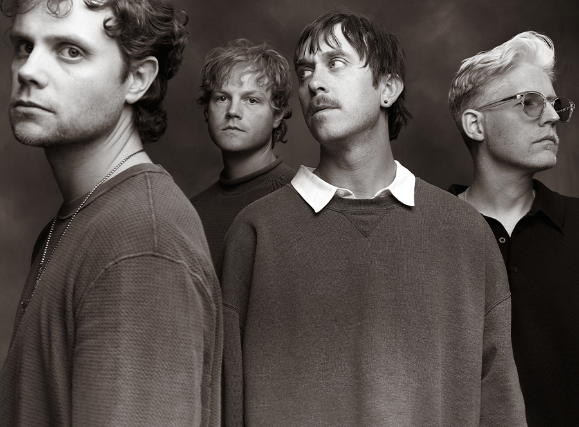
Colony House’s fifth studio album, 77, is both a sonic departure and a spiritual arrival; a retro-futurist meditation on eternity, nostalgia, and the invisible threads that hold us together. Rooted in the aesthetics of ‘90s sound, 77 finds the Franklin, Tennessee-raised four-piece—brothers Caleb and Will Chapman, alongside Scott Mills and Parke Cottrell—reaching beyond what can be seen, touched, or even easily explained. "77, the number, means a lot of things to a lot of people,” Caleb explains. “Biblically, it’s the number of forgiveness. Spiritually, it represents reassurance and provision. For us, it's become a symbol of eternal perspective—a lens to look at love, loss, and life with a little more intention and remind us that we are right where we’re meant to be.
While their previous record, The Cannonballers, celebrated the rush and recklessness of youth—“A short ride with a couple twists and turns,” as Caleb described it—77 slows the pace without losing momentum. Where The Cannonballers sprinted through the backroads of Tennessee chasing down freedom, 77 invites listeners on a soul-searching cruise. Sonically, 77 represents the no-nonsense, band-forward approach that mirrors the raw energy of
Colony House’s live performance. “We meet people all the time that comment about how our records don’t always fully capture the sound and energy of a Colony House live show,” says guitarist Scott Mills. “So we're trying to close that gap.” Lyrically, it remains consistent with their past work. It is earnest and sincere but avoids taking itself too seriously. Themes of faith, forgiveness, and the journey through time run like power lines through the record. “It’s about looking backward and forward at the same time,” adds frontman Caleb Chapman. “We’ve always wanted our music to bring people together—and this album is asking: what does that look like in a world that feels more divided and distracted than ever?”
For a band that built its name on emotion-driven, heart-on-sleeve rock and roll, 77 is a natural evolution - a record marked by maturing and longing. It doesn’t pretend to have all the answers, but it’s brave enough to keep asking the questions.
Since their 2014 debut When I Was Younger - which featured the breakout single “Silhouettes”—the #1 most-played track on Sirius XM’s Alt Nation for four consecutive months—Colony House has become an influential voice in modern indie rock. Their 2017 follow up, Only the Lonely, expanded their sonic palette, fusing vintage surf rock with heartfelt storytelling. The standout track “You Know It” became a viral hit on TikTok and Instagram Reels, and its inclusion in the global Samsung Mobile campaign helped propel it past 100 million streams.
In February 2020, just before the world came to a standstill, Colony House released Leave What’s Lost Behind - a cinematic and ambitious album that highlighted the band’s growing creative range. The project culminated in a self-produced full-length feature film, Everybody’s Looking For Some Light, which premiered at two sold-out drive-in events in their hometown of Franklin, Tennessee. The film was also an official selection at both the Nashville and Knoxville Film Festivals.
Colony House has brought their electrifying live sound to some of the country’s most iconic stages and festivals, including Bonnaroo, Lollapalooza, Austin City Limits, Shaky Knees, Firefly, and WonderBus. Their national broadcast appearances include The Today Show, MTV Live, VH1’s Morning Buzz, and multiple appearances on CONAN and Late Night with Seth Meyers, showcasing their ability to translate the power of their live show to the screen.
Punk Revival
ALEXSUCKS
ALEXSUCKS
Punk Revival
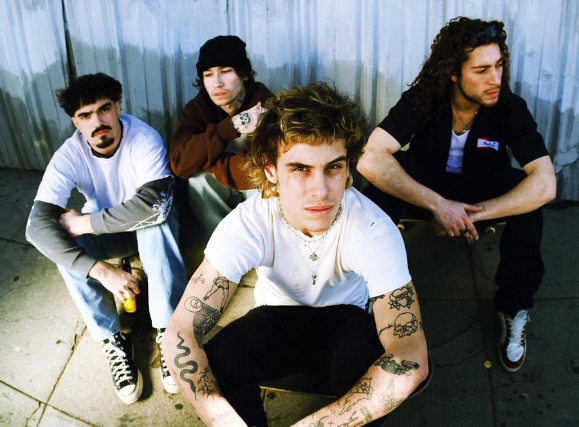
Los Angeles' ALEXSUCKS are the unpredictable wildcards, quickly making a name for themselves in the LA rock scene. Front-man, Alex Alvarez, who has been skating since he was three, is known for his unapologetic style inspired by the garage dance-punk revival featuring catchy singalong lyrics. ALEXSUCKS' music is striking a chord with audiences, drawn to their authenticity based on just a handful of released songs made in Alex's room. ALEXSUCKS organic groundswell is reminiscent of the stronghold the grunge movement had on the Sunset Strip in the 90s and is poised to be amplified on their forthcoming album produced by the legendary Brendan O'Brien (Pearl Jam, Incubus, Rage Against The Machine).