After Dark Presents
AJJ
Sat, 10 Oct, 8:00 PM EDT
Doors open
7:00 PM EDT
The Song & Dance
115 E Jefferson Street, Syracuse, NY 13202
Description
After Dark Presents
AJJ - Dirty Old Power Tour
with special guest Greet Death
Age Restriction: 16+ Admitted with ID / Under 16 Admitted with Parent or Legal Guardian
Delivery Delay: Tickets will be digitally sent 2 days prior to the event.
Event Information
Age Limit
16+
eTicket Delivery
Your tickets will be e-mailed closer to the event date.
Refund Policy
All sales are final. There are no refunds unless the event is cancelled or postponed.
Folk Rock
AJJ
AJJ
Folk Rock
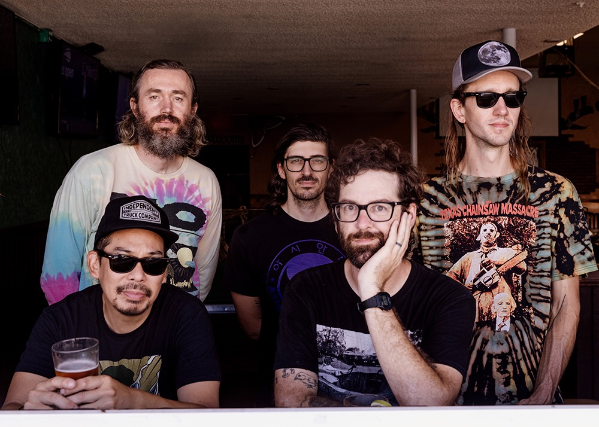
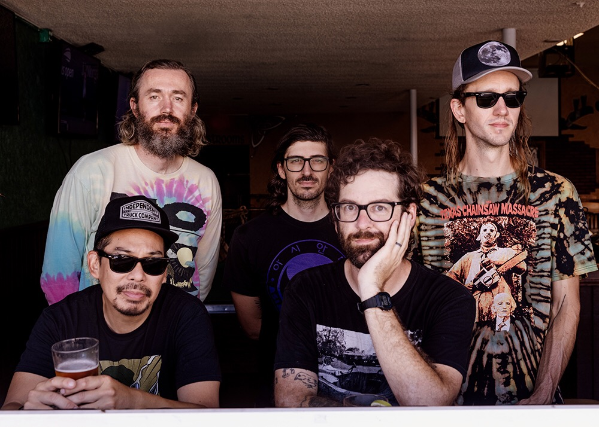
Ever since Sean Bonnette and Ben Gallaty formed AJJ back in 2004, it’s felt like the world has been playing catch-up. That’s because the band—completed these days by guitarist/keyboard player Preston Bryant, cellist Mark Glick and (relatively) new drummer Kevin Higuchi—has always woven apocalyptic themes and imagery into many of its songs and lyrics. They even self-released a record called Good Luck Everybody in January 2020, as if they knew what was coming. Now though, in 2023, with their eighth studio record and debut on Hopeless Records, Disposable Everything, it feels like the world is finally aligned with AJJ’s doom-laden prophecies – albeit one that still shimmers with hope.
For singer Sean Bonnette, the record is less a prophesizing mirror held to a burning world than one inspired by personal grief. In fact, for him, this record is about what happens after the collapse—on both an intimately personal level and a much broader scale. “A large part of Disposable Everything is the terrible thing I’ve been imagining finally happened,” he explains. “A big theme is my mom’s death, which is something I think everyone lives in terror of. But once it happens and you’re still alive, you figure out how to move on. It is, in some weird way, our happiest record.”
Anybody familiar with the band knows that juxtaposition—between apocalyptic despair and the warm comfort of an electric blanket—is nothing new for AJJ, but these 14 tracks are the most firm example of that to date. Recorded with David Jerkovich over the first half of 2022 in various studios across the Southwest, Disposable Everything truly captures the simultaneous terror and wonder of being alive. Throughout the nearly 20 years since the band’s inception, AJJ’s music has always found its way to the irreverent, optimistic pessimists of the world. For example, 2020’s “Body Terror Song” became a viral hit on TikTok, an app that no one in the band was even on at the time.
Their unparalleled live show has always been the bedrock of AJJ, with memorable tours with Joyce Manor, Against Me!, ROAR, Jeff Rosenstock, Kimya Dawson, and huge indie punk festivals, like The Fest. And it’s that live energy and sense of community and collaboration that made its mark on the recording of Disposable Everything. For the first time recording as a full five-piece, the goal was to have fun, open up a free exchange of ideas, and just be together. That overriding sense of solidarity pervades this album, exaggerated by the way the band look at it more like a mixtape than a record in the traditional sense–fully indulging AJJ’s wide musical range and their tendency to play with genre, while also defying expectations as to what songs about certain subjects should sound like. Indeed, this feels more like a band record than AJJ have ever made before. Probably because it is.
It kicks off with “Strawberry (Probably)”, an uproarious blast of fast, glorious, carefree quasi-punk that descends into a warped blur of dissonance. That that leads into a song called “Dissonance” was, Bonnette says, unintentional, but nevertheless highlights the synergy that flows through these songs. Then take “Death Machine”, for instance – the song distills the current environmental and political crises propelled by a capitalist society into one minute 53 seconds of jittery, feel-good, punk rock urgency, in only the way that AJJ can do. “The Baby Panda” – despite spitting a horrific truth about what humankind has done to the planet, is an enjoyable singalong anthem. And the title track “Disposable Everything” spells out the damaging impact of late capitalism while still shimmering with hope. There are moments of pure levity, too—in the humor of “White Ghosts”, the self-aware wordplay of “Schadenfreude” and the offbeat romanticism of “Candles of Love”. Combined, it all offers a quintessentially AJJ-esque vision of the world, which Bonnette, both jokingly and seriously, refers to as like “The Beatles on bath salts.” As the lilting “In The Valley” brings the record to an end, it defies—save for one ominous moment—the reality of the present moment, transforming its chasm of nothingness into something resplendent. It’s a powerful final statement that renders Disposable Everything anything but. Rather, it’s a vital, important and beautiful album that’ll make you feel better about everything while telling you just how terrible everything is.
Bonnette has a simple explanation for that paradox. “And maybe where some sort of hope can be is within love, because no matter how fucked the world can get, people can love each other still.” That AJJ are still able to offer up their unique brand of humor and irreverence as a solution to the world’s ills almost two decades into their career isn’t lost on them, either. “I didn’t ever expect AJJ to be what it’s become,” says Gallaty, “but I’m really happy with it. Some of my favorite people play in the band, and the whole larger community we get to be part of just blows my mind. It’s honestly hard to imagine a life without it.”
Rock
Greet Death
Greet Death
Rock
True to the band’s name, death creeps into nearly all of Greet Death’s songs. And yet, through this ever-present certainty, the band finds the absolute core of what it means to be alive.
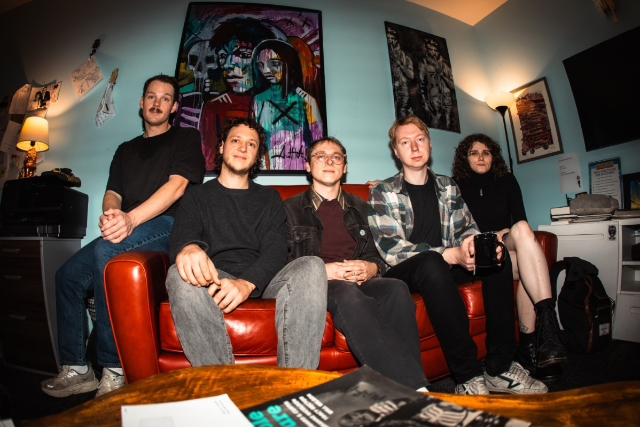
Since 2011, elementary school friends Logan Gaval and Harper Boyhtari have been writing songs full of big ideas and everyday details. Their music, loud and full of melodic sensibility, draws from shoegaze, doomgaze, and a little-bit-of-everything-gaze, creating an emotionally maximalist palette. Writing separately but playing together (think of them as small-town Michigan’s Tom DeLonge and Mark Hoppus), they’ve been drawing in a devoted crowd ever since their unexpectedly successful debut Dixieland in 2017, followed by their next-level opus New Hell in 2019. You’d be hard-pressed to find albums with such heart: ones flooded both with full-bloom feelings and the dumb stories we tell ourselves in order to get through the day.
Returning six years later with Die In Love, their third and best album, Greet Death faces the great human problem—that we must go on living despite knowing we’re going to die, and loving despite knowing we’re going to lose it all—with great sensitivity, humor, and flourish. With this album, Greet Death has found a way to anthemize our suffering, to turn it into one great, big, beautiful singalong: we’re all gonna die, woo!
“Everybody struggles in a roundabout way,” goes the album’s opening lyric. No longer just honing in on their own pain, the band is now using suffering as a jumping-off point, a way to connect, and ultimately love one another. “Emptiness is everywhere, so hold each other close,” Harper sings later on, another of the album’s key lyrics. After years of performing their songs live, the band has seen firsthand how keenly their audience connects to their music. “So I wanted to try to write something less fatalistic, because I feel some kind of responsibility to help,” says Logan.
Prior to recording, Logan had been listening to a lot of The Beatles and Paul McCartney’s solo work, “because I was trying to figure out how to write a song that wasn’t just depressing,” he says. He and Harper had been talking for a while about the direction of Die In Love; why not a bunch of love songs?" They tried to do just that, but of course, death came creeping in as usual. Die In Love speaks to the most tragic and beautiful scenario possible: dying beside the person you’ve spent your whole life loving. Tragic, because we have to die. Beautiful, because we might be able to do it together.
They recorded the album in Harper’s parents’ basement in Davisburg, Michigan, the place where she and Logan spent much of their preteen and adolescent years. They cut their teeth in that basement, learning how to be a band around the time School of Rock came out and inspired in aughts kids a new possible life path. Logan and Harper covered Metallica and Blink-182 and wrote songs about batteries and frozen yogurt. Returning to that basement well over a decade later to record their third album felt like the back-to-basics moment they needed, something that would take the pressure off after years away from the studio.
Ever since they were kids, music has been the primary form of communication for Logan and Harper. Between them, they’re able to mine the absolute essence of everything both through big picture ideas and small vignettes of life. In Logan’s songs we hear the former, and in Harper’s the latter. While Logan takes big, beautiful hits at existence, Harper focuses on small shards. On her songs — ‘Country Girl’, ‘Emptiness Is Everywhere’ and ‘Love Me When You Leave’ — she takes us through DVD viewings of Halloween, buckets at KFC and family gatherings soundtracked by ‘Hotel California,’ “that bullshit Eagles song”. Then, she’ll deliver a Loganism in quick succession, one absolutely devastating lyric that blitzes it all to pieces: “family is everywhere ‘til it’s not there.”
Die In Love asks how we can possibly cope with all the inevitable loss we’ll experience in this life. How on Earth can anyone survive it? The point is that none of us do. So, enjoy the bullshit Eagles songs while they last; the cheap beer, the disappointing New Year's Eve celebrations, the family members and the lovers who choose to stay a little while.
“Pain and loss. Everyone feels it, it’s a very human thing,” says Logan. “At the end of the day, we’re lucky to lose people we care about,” says Logan.