TICKET SALES TERMINATED
Tickets are currently unavailable on TicketWeb
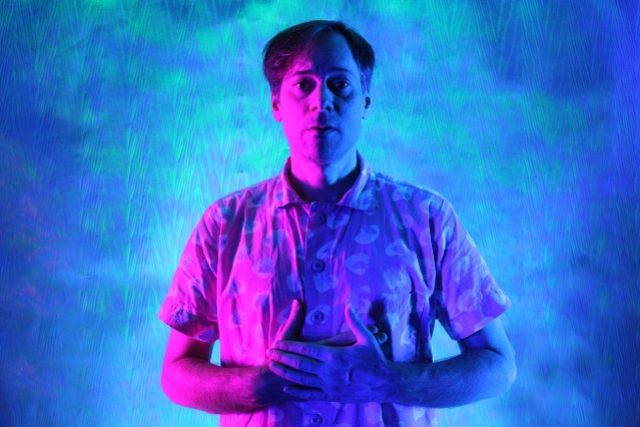
Opus One & 91.3 WYEP Presents
of Montrealwith Special Guests Locate S,1and Chariot Fade
Tue, 12 Sep, 8:00 PM EDT
Doors open
7:00 PM EDT
Mr Smalls Theatre
400 Lincoln Ave, Millvale, PA 15209
TICKET SALES TERMINATED
Tickets are currently unavailable on TicketWeb
Description
All Ages
Event Information
Age Limit
All Ages
Alternative Rock
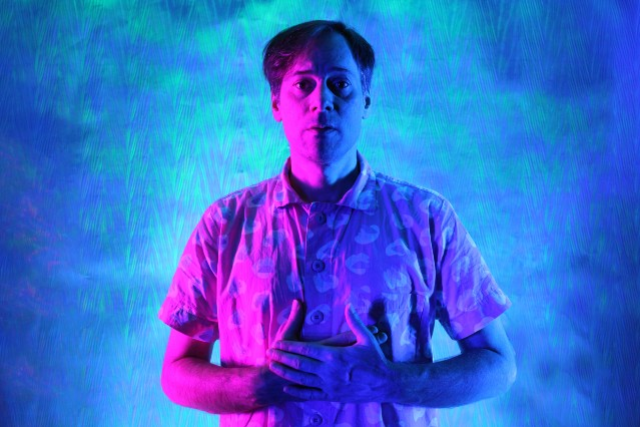
of Montreal
of Montreal
Alternative Rock
When creators fImajica, Andrei Tarkovsky's sci-fi classic Solaris, and Godard's Alphaville. But what happens to artists when the flow of time gets f^cked up IRL? When an hour stretches into eternity, and the voices in your head begin to echo through empty rooms?
If you’re Kevin Barnes, the creative visionary behind of Montreal, Freewave Lucifer fck happens.
Isolation and uncertainty loomed throughout the genesis of the band’s latest studio album. “The experience of just trying to keep my head above water and navigate through the last couple years played a huge role in this record,” says Barnes.
These expansive selections contrast markedly with the focused pop of 2020’s UR FUN, which was crafted for visceral thrills and the concert stage. As it was for countless musicians around the world, the inability to tour eliminated one of the linchpins of Barnes’ creative process. “I didn’t know if we’d ever tour again, so I didn’t consider that side of things.” Denied social interaction and diverse experiences, Barnes delved inward.
Barnes contemplated how time functions in music and experimented accordingly. These new songs, dense with ideas but short on repetition, feel epic in scope despite reasonable running times. Like the staircases of M.C. Escher’s Relativity, the discrete sections of “Marijuana’s A Working Woman” and “Blab Sabbath Lathe of Maiden” crisscross and pivot, confounding the senses yet commanding attention.
The imagery and sentiments that bubble forth from Barnes’ lyrical wordplay prove equally disorienting. “Is it important to say black chrome rodents?,” asks Barnes on “Après The Déclassé.” Phrases borne of free association took on new meaning when introduced into a song. “It’s like collaborating with my subconscious in a way. It feels deeply personal, even though I don’t necessarily understand it at that moment.”
“Marijuana’s A Working Woman'' juxtaposes oddball funk a la Zapp or Rick James with nods to Alice Anne Baily’s 19th century spiritualism. “Modern Art Bewilders” zigzags between baroque psychedelic idyll and synthpop tantrum, equal parts Sgt. Pepper’s and Gary Numan. Other influences woven throughout include realist painter Edward Hopper, fantasy author Ursula K. Le Guin, cinéaste Pedro Almodovar, and erotic illustrator Toshio Saeki.
Barnes likens their compositional process to making collages from seemingly unrelated source materials, combining them in provocative ways to reveal new meanings. “I wasn’t working with specific themes that I wanted to try and stretch over a three-minute pop song. It was sewing together a lot of fragmented thoughts,” which ties in nicely to the ‘freewave’ aspect of the album title’s meaning. As Barnes explains,
“Freewave is my term for wild and intractable artistic expression. Lucifer is the angel of enlightenment and elucidation. Fuck is something we say when things are going really well, or really badly.”
As for anything else going on behind the scenes during the genesis of Freewave Lucifer fck, Barnes opts to preserve the mystery. “Sometimes in the past, I felt it was important for people to know certain things, so they could get into a specific headspace.” Not this time. “The last couple of years laid a heavy trip on everybody’s psyche. There are plenty of universal things here to identify with.”
Alternative Rock
Locate S,1
Locate S,1
Alternative Rock
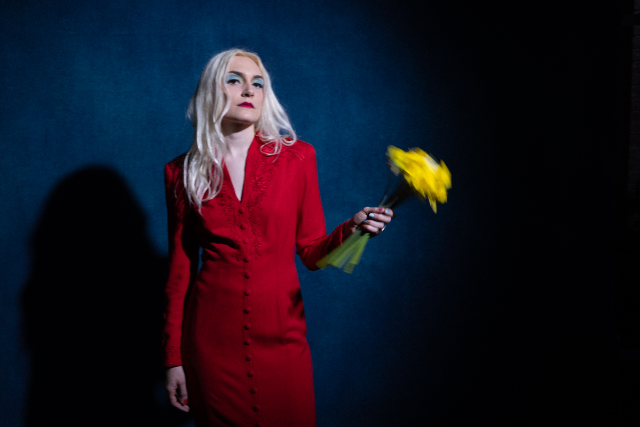
From teddy grahams to pussy hats, California forest fires to cash cabs, the stuff of American nostalgia and horror adorns a personal reckoning on Christina Schneider’s triumphant third album as Locate S,1. With a name culled from a Daschel Hammitt noir novel, Wicked Jaw pulls from wildly disparate references and textures to survey the history of American pop music. Like Carly Simon soundtracking an Adam Curtis documentary, the album trades in dramatic juxtapositions across its kaleidoscopic ten tracks. Only Schneider could pull off singing a line like “season finale 2020 death machine” as a soothing lullaby, but jarring contrasts echo the tumultuous personal journey woven throughout.
“I was in hell … and loving it,” Schneider said of her childhood, describing a murky cocktail of sentimentality and despair. “It’s like when you escape the matrix and then you remember your wonderful time in the matrix.” The Athens, Georgia based songwriter, producer, and virtuosic pop connoisseur authored the album over two years while beginning treatment for childhood sexual abuse by a relative. “I was using these songs as an expression valve for all of these different parts (of myself) that I was trying to integrate,” she explained. The result is a surprisingly tender and often jubilant set of conversations with the ghosts of painful memories, Schneider transforming her metaphysical scars into gleaming armor as she redefines herself on her own terms.
Following 2020’s Personalia, an album Schneider created in collaboration with producer and romantic partner Kevin Barnes (Of Montreal) – where reviews often displaced credit for Schneider’s intricate electropop to Barnes – Wicked Jaw finds Schneider decidedly and unequivocally at the helm, as the album’s sole producer. It's a stylistic departure from Personalia in many ways, beyond personnel. Spanning decades and genres from doowop to cold wave, disco to soft rock, Wicked Jaw has the vitality of full band tracking at its core. Recorded to a 24 track tape machine during a weeklong session in the summer of 2022, it features deft and magnificently wackadoo performances from players including Ross Brand (guitar, percussion), Jojo Glidewell (piano, synth, percussion), Zack Milster (bass, percussion, pedal steel), and Clayton Rychlik (drums, percussion, sax) among others.
Wicked Jaw both is and isn’t a pandemic album. The dystopic terror of COVID-19 is an omnipresent touchpoint in the songs, which Schneider began writing in the summer of 2020, but the virus functions as a gateway for interpersonal analysis and reflection. What does it mean to be an American in the 21st century? What does it mean to be a woman? What does it mean to be a survivor? Schneider digs tunnels into collective memory on songs like “Go Back to Disnee,” a devastating bossa nova track that could soundtrack an episode of White Lotus. “Under the blankets, into the plastic dreams / Into the comfort of parental regimes,” Schneider purrs with a delivery so gentle that you might not detect the venom seeping through. On this tune and others, Schneider’s exceptional songcraft is most evident through her ability to excavate the toxins lingering beneath the surface in a way where they begin to shine and radiate a strange beauty.
“Beauty throws darkness and pain into relief so you can see it more clearly,” Schneider said of this songwriting tendency. While her lyrics do a sort of time traveling alchemy on past wounds, the sonic palette of the record is the real time machine. The running joke in the studio was that Wicked Jaw should be called “Radio Free Christina,” since it felt like turning the radio dial from song to song. How else would we get an album that boasts both Dido and Thin Lizzy as musical references? But the breadth of its melodic toolkit is held together by the singularity of Schneider’s compositional voice. Although Wicked Jaw is among her most accessible releases yet, chock full of infectious hooks, these songs still feature what her bandmates call trademark “Christina-isms” – the odd metered phrases and unusual time signatures that keep the listener on their toes and the songs firmly rooted in a space of experimental sophistipop.
Lead single “You Were Right About One Thing” is a case in point. Composed with the aim of harkening classic Christine McVie hits, the easiness of this song for the listener belies an innovative underlying architecture, where complex rhythms and wild chordal leaps are somehow smooth as silk. Meanwhile, Schneider applies the same tender veneer to the song’s challenging lyrical content. “Wrote all my worst fears down when i conjured you,” she sings to a past lover who treated her badly. These memories aren’t recounted with resentment or anger, but with compassion for the ways that intergenerational trauma bears out on relationships, shaping the patterns we struggle not to repeat. “In the end, it's like, ‘can I really hate you for hurting me when I chose you to hurt me?” Schneider said, explaining that the song came from a place of “trying to reconcile forgiveness for yourself and for the other person, so you can both grow.”
Wicked Jaw offers a similar therapeutic release upon repeat listens as it did for Schneider when she wrote it. It’s a portrait of commanding and loving resilience in the face of victimization and apocalyptic doom. The potency of these songs resides not in their grasping toward the heavens, seeking escape or transcendence, but rather from digging in the dirt, sitting with it, and really seeing the worms and rot and entropy in vivid technicolor. “This is about me, but I hope other people relate to it,” Scheider said. “I have all these emotional problems that make me react like a fucking monster, but that is also forged by my experience and there’s something there that I can be proud of, that’s part of my survival. I can’t just cut the head off – I have to integrate it into myself.”

Music
Chariot Fade
Chariot Fade
Music
Chariot Fade, "is an interesting meeting point of sample-heavy, groove-based indie rock and the nuanced psychedelics of ’60s-era French pop", according to music journalist Justin Vellucci.
This ever-expanding pop ensemble attempts to blur the boundaries of the sonic landscape by dismantling rock archetypes and recontextualizing them into dance-friendly, melodic vignettes. The result, oftentimes, is a product that is both hauntingly familiar and distinctly unique.